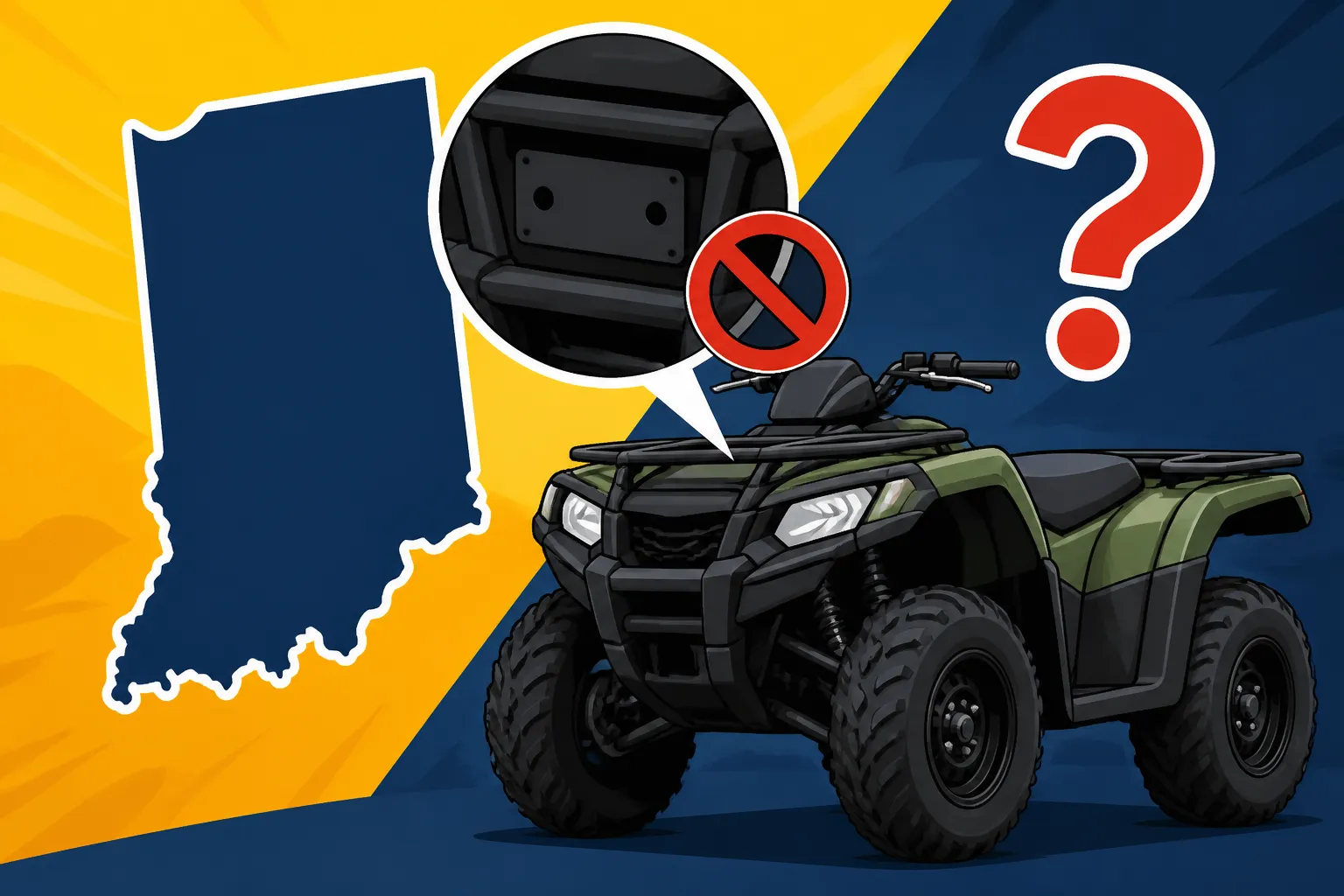
When an Indiana Quad Has No Serial Number
Finding yourself with an ATV or UTV that doesn't have a visible serial number can feel like hitting a brick wall, especially when you're just trying to do the right thing and get it registered and titled in Indiana. It's a frustrating situation that many Hoosier off-road enthusiasts encounter, whether they've just bought a used machine, inherited one, or are dealing with an older quad. This guide will walk you through the necessary steps to navigate the Indiana Bureau of Motor Vehicles (BMV) process, ensuring your machine can get its proper identification and you can ride legally.
The Frustration of a Missing Serial Number and Why It Matters
You just bought what you thought was a great deal, or perhaps you've pulled an old family machine out of storage, only to realize that the most fundamental identifier – the serial number – is either missing, illegible, or was never there to begin with. It's a common hurdle, and it can instantly make you feel like you're stuck in bureaucratic quicksand. Without this critical number, you can't officially prove ownership, register your machine, or even get a title if one is required. It's more than just a number; it's the DNA of your off-road vehicle in the eyes of the law.
Why Serial Numbers Disappear or Were Never There
Serial numbers can vanish for a variety of reasons, and it’s rarely as nefarious as you might initially fear, although that possibility always exists. Often, it's simply the passage of time and the harsh environments our ORVs operate in. For older machines, especially those that have seen countless mud bogs and dusty trails, corrosion is a huge culprit. Rust can eat away at stamped numbers on the frame, making them completely unreadable. Sometimes, previous repairs or modifications might have accidentally obscured or removed the area where the serial number was located.
Another common scenario involves homemade machines or custom builds. Perhaps a well-meaning enthusiast built a one-of-a-kind off-road vehicle from scratch, never envisioning the need for a formal identification number. In other cases, a machine might have been recovered after theft, and the thieves intentionally ground off the numbers to prevent identification. Damage from an accident could also render the number unreadable. Whatever the reason, discovering this absence can be a real headache, especially if you're eager to hit the trails at Redbird or Interlake.
The Importance of a Serial Number for Indiana ORVs
In Indiana, the serial number (often referred to interchangeably with Vehicle Identification Number or VIN for these purposes) is the cornerstone of your machine's legal identity. It's what differentiates your ATV or UTV from every other machine out there. When you go to [Registering an ORV in Indiana], the BMV absolutely needs this number to create a unique record for your vehicle. Without it, they literally have no way to log your machine into their system.
Beyond simple registration, the serial number is vital for proving legitimate ownership. If your machine was manufactured after December 31, 2009, Indiana requires a title, and that title is directly tied to the serial number. Trying to get [Titling an ORV in Indiana] without one is impossible because the serial number is the primary identifier on the title document itself. It's also crucial for insurance purposes, theft recovery, and even when you eventually decide to [Selling an ORV in Indiana]. Imagine trying to sell a machine without a clear VIN; most savvy buyers would, understandably, walk away, fearing it could be stolen or unregisterable. The serial number connects all the dots, providing a chain of ownership and ensuring your machine is legally recognized.
Initial Steps When You Discover No Serial Number
It's easy to panic when you realize your ORV is missing its serial number, but taking a deep breath and systematically approaching the problem is key. The Indiana BMV has processes in place for these situations, but you'll need to do some legwork first. Your initial steps should focus on confirming the absence of the number and gathering any and all existing documentation related to the machine, no matter how minor it seems. This foundational work will be invaluable as you move through the official channels.
Thoroughly Inspecting Your Machine
Before concluding that your machine truly has no serial number, you need to conduct a thorough, almost forensic, inspection. Manufacturers typically stamp VINs or serial numbers in specific, often standardized, locations. On ATVs and UTVs, the most common places to check include the frame, often near the steering head (where the handlebars connect), along the main frame rails, or under the seat. Sometimes, the number might be on the engine casing itself, though this is less common for the primary identification number. Take your time, get a bright flashlight, a wire brush, and perhaps some penetrating oil. Mud, rust, or old paint can easily obscure these numbers.
Crawl under the machine, look at both sides of the frame, and don't assume anything. Some manufacturers place them in surprisingly discreet spots. If you know the make and model, a quick online search for "VIN location [your make/model]" might yield a diagram or photo showing the exact spot. It's also worth checking any manufacturer's plates or stickers, although these are often less durable than stamped numbers and may have deteriorated. Only after a comprehensive search, where you've cleaned and scrutinized every likely spot, can you be reasonably sure the number is truly missing or illegible.
Gathering Existing Paperwork or Lack Thereof
Once you've confirmed the serial number is missing from the machine itself, your next step is to gather every single piece of paperwork you have. This includes any bill of sale, no matter how informal; old registration certificates (even expired ones); previous titles (if it had one, even if it's not in your name); receipts for parts; or even correspondence related to the machine. Even a faded receipt from a previous owner for a tire change can sometimes establish a rudimentary chain of possession.
If you purchased the machine, hopefully you received [An Indiana Bill of Sale for an ORV]. Even if it doesn't list a serial number, it's still proof of the transaction. If you have nothing more than a handshake agreement, or if the machine was inherited, you'll likely need to prepare an ownership affidavit. This is a sworn statement detailing how you came into possession of the ORV, listing who you acquired it from, when, and for how much (if applicable). This document becomes crucial for establishing your claim to ownership, especially when there's no official record. Companies like LawDepot can provide templates and guided processes to help you create a legally sound ownership affidavit, ensuring all the necessary details are included for the BMV. Even without a serial number, demonstrating a clear lineage of possession is vital.
The Indiana BMV and Special Identification Numbers SINs
When an ORV truly lacks a manufacturer's serial number, or if the original is completely unreadable, Indiana has a specific pathway to provide your machine with a legal identity: the Special Identification Number (SIN). This process, managed by [The Indiana BMV and Off-Road Vehicles], is designed to ensure that even unique or older machines can eventually be registered and titled, bringing them into compliance with state law. It's not a quick fix, but it's the definitive solution for this particular problem.
Understanding the Special Identification Number Process
A Special Identification Number (SIN) is essentially a unique identifier assigned by the Indiana BMV to an ORV that doesn't have an original, legible manufacturer-assigned serial number. Think of it as the state stepping in to give your machine its own 'birth certificate' when the original is absent. This SIN then serves all the same purposes as a manufacturer's VIN: it's used for registration, titling, insurance, and tracking ownership. The goal is to make your previously unidentifiable machine fully compliant and legal to operate on designated trails and private property.
The process is designed to prevent fraud and ensure legitimate ownership. The BMV needs to be certain that the machine isn't stolen and that you are indeed the rightful owner. Once a SIN is issued, it will be physically affixed to your machine in a permanent way, usually through a small metal plate or a stamped impression, making it visible for future inspections and identification. This assignment removes the barrier to proper [Registering an ORV in Indiana] and, if necessary, getting a title.
Applying for a Special Identification Number in Indiana
Applying for a SIN involves several specific steps and requires careful attention to detail. The first step typically involves visiting a BMV license branch or contacting them to understand the exact forms and requirements. You'll generally need to complete a form specifically for obtaining a Special Identification Number. This form will ask for detailed information about your ORV, including its make (if known), model, year (if estimable), color, and how you acquired it. You'll need to submit all the ownership documentation you've gathered, such as your bill of sale or ownership affidavit. LawDepot can assist here, by providing the means to create a comprehensive and legally sound [What Indiana's Ownership Affidavit Asks For] that clearly outlines your claim to the machine.
After submitting your application and paperwork, the BMV will likely schedule a physical inspection of your ORV. This inspection is critical; a BMV representative or a law enforcement officer will need to verify that there is indeed no existing serial number and that the machine matches the description you've provided. They might also check for any signs of tampering or a previously removed VIN. Once the inspection is completed and your documentation reviewed, if everything is in order, the BMV will issue your SIN. For those with a homemade machine or one that never had a traditional VIN, this is the path to [Getting a Special Identification Number for a Homebuilt Quad] and finally getting it recognized.
Documentation You'll Need for a SIN Application
The success of your SIN application hinges almost entirely on the quality and completeness of your documentation. Since you don't have a manufacturer's serial number, the BMV relies heavily on other forms of proof to establish your ownership and the machine's legitimacy. This means digging up everything you can and, in many cases, creating new documents to fill any gaps. It might feel like a lot of paperwork, but each piece helps build a stronger case for your claim.
Proving Ownership Without a Serial Number
This is often the trickiest part when an ORV has no serial number. The BMV needs to be absolutely certain that you legally own the machine and that it hasn't been stolen. The primary document here will be a robust bill of sale or, if that's not available, a detailed ownership affidavit. If you bought the machine privately, even a handwritten bill of sale is better than nothing, but it needs to clearly state who sold it to you, who bought it, the date of the transaction, and a detailed description of the machine. If the bill of sale also lacks a serial number, which is common in these situations, you'll need to explain why.
If you don't have a bill of sale, or if you inherited the machine, an ownership affidavit becomes paramount. This is a sworn statement, often notarized, where you attest to how you came into possession of the ORV. It should include:
- Your full legal name and address.
- A detailed description of the ORV (make, model, color, approximate year, engine size if known, distinguishing features).
- The full name and address of the person you acquired it from (if applicable).
- The date and method of acquisition (purchase, gift, inheritance).
- A statement confirming the absence of a visible or legible serial number.
- A declaration that you are the rightful owner and the machine is not stolen.
Creating such an affidavit can be daunting, but services like LawDepot can guide you through the process, ensuring all the critical legal language and fields are correctly filled out. This makes it easier to present a professional and credible document to the BMV, increasing your chances of a smooth approval. Remember, the goal is to leave no doubt about your claim to the machine.
What to Expect During the Inspection
Once your application and initial paperwork are submitted, the BMV will arrange for a physical inspection of your ORV. This isn't just a quick glance; it's a careful verification process conducted by a BMV employee or a designated law enforcement officer. The inspector's primary tasks are to confirm the physical characteristics of your ORV match the description in your application and to meticulously verify the absence of an existing serial number. They will use tools like bright lights, wire brushes, and even magnifying glasses to search all the common (and uncommon) locations where a VIN might be stamped or riveted.
They will also look for any signs of tampering or grinding marks on the frame that might indicate an attempt to remove a serial number. It's important that your machine is clean and easily accessible for this inspection. Be prepared to answer questions about its history, how you acquired it, and why you believe it lacks a serial number. The inspector will take photographs and complete a physical inspection report, which becomes a vital part of your application. This step is a critical fraud deterrent, ensuring that a SIN is only issued to legitimate machines. Patience and cooperation during this inspection are key to successfully getting your machine a new identification number.
| Scenario for Missing Serial Number | Primary Document for SIN Application | Supporting Documents | Key Action to Take |
|---|---|---|---|
| Bought Used, No VIN on Machine/Paper | Ownership Affidavit (detailed) | Bill of Sale (if any), Prior Reg. | Create detailed affidavit (e.g., via LawDepot) |
| Inherited Machine, No VIN/Paper | Ownership Affidavit (Estate) | Will, Death Cert., Heirship Proof | Clearly document inheritance process |
| Homebuilt Machine | Ownership Affidavit (Builder) | Receipts for parts, Photos of build | Maintain detailed build records |
| VIN Obscured/Damaged | Ownership Affidavit (Explanation) | Photos of damage, Prior Reg/Title | Be prepared to explain how damage occurred |
What Happens After You Get Your SIN
Receiving your Special Identification Number (SIN) is a huge milestone, but it's not the final step. Think of it as finally giving your ORV a legal name. Now that your machine has a unique identity recognized by the state, you can move forward with the necessary registration and titling processes. This is where your machine officially becomes a part of the Indiana off-road community, allowing you to enjoy your adventures without the nagging worry of legal compliance.
Registering Your ORV with its New SIN
Once the BMV issues your Special Identification Number and it's properly affixed to your machine, you can proceed with the standard registration process. The SIN now serves as the primary identifier for your ORV, just like a manufacturer's VIN would. You'll take your completed SIN documentation, along with your proof of ownership (bill of sale or ownership affidavit), to a BMV license branch. At this point, the process is largely the same as [Registering an ORV in Indiana] with any other machine.
You'll complete the necessary registration forms, pay the applicable fees, and present your ownership documents. The BMV will enter your new SIN into their system, linking it to your ownership record. You'll then receive your Indiana ORV registration certificate and the all-important registration decal. Make sure to affix this decal in the designated spot on the forward half of your machine, usually on the front or side, as outlined in [Where the Indiana Decal Mounts]. With your SIN and new registration, you're now legally able to ride your ORV on permitted trails and areas in Indiana, knowing you've gone through all the proper channels.
Titling Your Machine If Applicable
For many ORV owners in Indiana, registration isn't the only concern; titling is also a crucial step, especially for machines manufactured after December 31, 2009. Prior to that date, many quads were considered "title-optional," but the law changed. If your ORV falls into the category that requires a title (generally, any machine bought after 2009), your newly assigned Special Identification Number will be the key to getting that title. This means your SIN will appear on your title document as the official identifier.
When you present your SIN documentation and proof of ownership to the BMV, they will initiate the titling process using this number. This is particularly important for machines that are sold, as a clear title provides undeniable proof of ownership and a clean transfer of legal rights. Understanding [Why Indiana Titles Machines Bought After 2009] helps clarify why this step is so vital. The title, bearing your SIN, acts as a permanent legal record of your machine's identity and its rightful owner, making future transactions or proving ownership much smoother. It ties everything together, ensuring your ORV is fully recognized by the state.
Avoiding Future Serial Number Headaches
Going through the process of getting a Special Identification Number can be a significant undertaking, involving time, effort, and careful documentation. It's an experience you'd likely prefer not to repeat. Therefore, understanding how to prevent similar issues in the future, especially when buying or maintaining an ORV, is incredibly valuable. A little foresight and due diligence can save you a lot of frustration down the road.
Due Diligence When Buying a Used ORV
The single most effective way to avoid serial number problems is to be incredibly diligent when purchasing a used ORV. Never assume anything. Before you hand over any money, always make sure you locate and verify the serial number on the machine itself. Compare this number against any provided paperwork, such as a title or previous registration. Do not rely solely on a bill of sale that lists a serial number; always physically check the machine.
If the numbers don't match, or if the number on the machine is absent or unreadable, this should be a major red flag. Politely inform the seller that you cannot proceed until the identification issue is resolved, or be prepared to walk away. It might be a legitimate situation, but it's a hassle you can often avoid. For comprehensive guidance on what to look for, checking VINs, and reviewing paperwork, check out our guide on [Checking a VIN Before an Indiana Purchase]. Also, asking for proof of prior registration or a clear title is crucial. If the seller can't provide these, you might be buying someone else's problem. Always err on the side of caution; a little extra time spent upfront can save you from a major headache later.
Protecting Your Machine's Identification
Once your ORV has a clear, legible serial number – whether it's the original manufacturer's VIN or a new Special Identification Number from the BMV – you'll want to take steps to protect it. Treat this number as a vital piece of your machine's identity. Periodically check the area where the serial number is located to ensure it remains clear and free of heavy rust or mud buildup. A light coat of clear lacquer or grease can help protect stamped numbers from the elements.
While it might seem counterintuitive, avoid making any modifications that could inadvertently cover or damage the serial number. If you're adding accessories, fabricating new parts, or performing heavy frame repairs, always be mindful of its location. Keeping a clear photo of your serial number on your phone or in your records can also be helpful for quick reference. Furthermore, always keep your registration certificate and title in a safe place, separate from the machine, so you have proof of the serial number should anything happen to the physical stamping. By being proactive, you ensure that your ORV's identity remains intact and verifiable, making future registration, titling, and any other official interactions much smoother. This ensures you can focus on enjoying the trails without unnecessary bureaucratic stress.
Disclaimer
This article is for general informational purposes only and does not constitute professional advice. Laws, prices and regulations vary by location and change over time. Consult a qualified professional for guidance on your specific situation.