When the Dealer Leaves the BMV Trip to You
So, you've found your perfect ATV or UTV, the deal is done, and you're dreaming of hitting the trails – but then the dealership hands you a stack of papers and says, "You'll need to take these to the BMV yourself." Suddenly, that exciting new purchase feels a little less thrilling and a lot more like a chore. This guide is here to walk you through exactly what to do when your Indiana ORV dealer puts the BMV trip in your hands, ensuring you get your machine titled and registered without unnecessary stress or penalties.
Understanding Your Responsibilities When Buying an ORV from a Dealer
It's a common misconception that buying a new or used off-road vehicle from a dealer means all the paperwork will magically be handled for you. While many reputable dealerships do offer this convenience, sometimes, for various reasons, they don't. When that happens, the responsibility falls squarely on your shoulders, and it's crucial to understand what that entails. Ignoring it can lead to fines, delays, and a whole lot of frustration down the line.
Why a Dealer Might Not Handle BMV Paperwork
You might be scratching your head, wondering why a dealer wouldn't just take care of this for you. After all, they're experts, right? There are a few scenarios where this might happen. Smaller, independent dealerships might not have the dedicated staff or systems in place to process BMV paperwork for every sale. Sometimes, if you're purchasing a machine out of state, the Indiana BMV process might be outside their typical operational scope, even if they're a licensed dealer in their own state. Another common reason could be a specific type of sale, like a "demo" model or a machine being sold quickly where the agreement is that you, the buyer, handle the post-sale administration. Whatever the reason, it's vital to clarify this expectation upfront, before you sign anything. Don't assume anything; always ask, "Will you be handling the titling and registration with the Indiana BMV, or will I need to do that myself?" Getting a clear answer can save you headaches later.
The Critical Paperwork You Must Receive from the Dealer
When the dealer does leave the BMV trip to you, the most important thing is to ensure you walk out of that dealership with all the correct and complete paperwork. This is your lifeline to proving ownership and getting your machine legally on the trails. Without these documents, you'll hit a brick wall at the BMV.
First and foremost, for a new ORV, you absolutely need the Manufacturer's Certificate of Origin (MCO). This is like the birth certificate for your machine; it proves it's brand new and who the manufacturer is. For a used ORV, you'll need the original title, signed over to you by the previous owner (which, in this case, would be the dealer who acquired it). Make sure all sections for transfer of ownership are correctly filled out and signed.
Next, you need a detailed Bill of Sale. This document is paramount. It should clearly state the buyer's name, the seller's name (the dealership), the date of sale, the purchase price, and a full description of the ORV, including its make, model, year, and crucially, the Vehicle Identification Number (VIN). The VIN is what positively identifies your specific machine. It's also critical for calculating sales tax, which you'll pay at the BMV if the dealer hasn't collected it. Sometimes, dealerships use their own specific forms, but they should contain all this information. If you're ever in a situation where the bill of sale seems lacking, or for your own comprehensive record-keeping, you might consider using a template from a service like LawDepot to ensure all legal bases are covered, though the dealer's official bill of sale will be the primary document for the BMV. Remember, a valid bill of sale is time-sensitive for titling purposes, so keep that in mind as you approach the BMV.
Finally, you should receive an odometer disclosure statement if your ORV has an odometer. While not always strictly enforced for ORVs in the same way it is for street vehicles, having it adds another layer of verification. Always double-check every single piece of information on these documents against your ORV itself – especially the VIN – before you drive away from the dealership.
The Difference Between Registration and Titling in Indiana
Many new ORV owners get these two concepts mixed up, but in Indiana, they are distinct processes. Understanding the difference is key to getting everything right at the BMV.
Titling refers to establishing legal ownership of your ORV. When you get a title, you're essentially putting your name on a state record as the official owner. This document is proof that you own the machine free and clear, or that you have a lien against it if you financed the purchase. In Indiana, ORVs bought after December 31, 2009, are generally required to be titled. This is a one-time process when you first acquire the machine (unless you transfer ownership again later). Without a title, proving you own your ORV can be incredibly difficult, which can cause major problems if it's stolen or if you decide to sell it. To learn more about this specific requirement, check out [Do You Need a Title for an ATV in Indiana?].
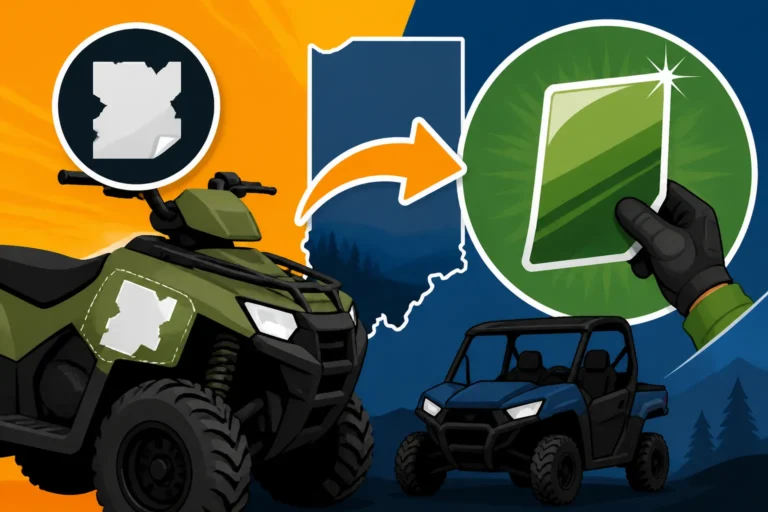
Registration, on the other hand, is about getting your ORV recorded with the state for the purpose of identifying it while it's being operated. This is why you receive a decal, which must be prominently displayed on your machine. Registration is typically renewed every three years in Indiana and helps fund trail maintenance and enforcement. It's proof that you're authorized to operate your ORV in designated areas. While titling establishes who owns the machine, registration confirms its operational status and ensures you contribute to the system that supports ORV riding in the state. You can title a machine without immediately registering it, but you cannot legally operate it in most public areas without current registration.
Navigating the Indiana Bureau of Motor Vehicles (BMV) Process Yourself
Now that you have all your paperwork from the dealer, it's time to face the Indiana BMV. It might seem daunting, but by being prepared and knowing what to expect, you can make the process much smoother. Remember, the clock is ticking on some of those deadlines, so don't procrastinate!
Gathering All Necessary Documents
Before you even think about heading to your local BMV branch, gather absolutely everything you might need. There's nothing worse than waiting in line only to realize you're missing a crucial document and have to reschedule. Here's a comprehensive list:
- Manufacturer's Certificate of Origin (MCO) or Previous Title: As discussed, this is the core ownership document. Make sure it's original, not a copy.
- Bill of Sale: The original bill of sale from the dealer. Ensure all details are accurate, especially the VIN and purchase price. For additional personal record-keeping, you might want a formalized document. LawDepot, for example, offers templates that can help you understand all the elements that should be present in a comprehensive [An Indiana Bill of Sale for an ORV].
- Proof of Identity: A valid state-issued driver's license or identification card.
- Proof of Indiana Residency: If your driver's license doesn't clearly show your current Indiana address, you might need additional documents like a utility bill, bank statement, or lease agreement.
- Proof of Insurance: While Indiana doesn't mandate ORV insurance for all riding, some counties or specific riding areas might require it. Even if not required by the state for registration, it's always a good idea to have it for your own protection, and having proof available is wise.
- Payment for Fees and Taxes: Be prepared to pay Indiana's 7% sales tax on the purchase price (if the dealer didn't collect it), the title fee, and the registration fee. Check the BMV website for current fee structures, as these can change. Most branches accept various forms of payment.
It’s also a good idea to bring copies of everything, just in case, and keep the originals secure.
The Titling Process for Your New Machine
Once you have your documents in hand, you'll head to an Indiana BMV branch. This is where you'll formally apply for your ORV's title. The process generally goes like this:
- Submit Documents: Present your MCO (for new) or the properly assigned previous title (for used), along with your bill of sale and identification. The BMV clerk will review everything to ensure it's complete and correct. They'll also verify the VIN from your documents.
- Pay Fees and Sales Tax: This is where you'll pay the title fee and the 7% Indiana sales tax on the purchase price of your ORV. If the dealer collected sales tax, they should provide you with documentation of that, and you won't pay it again.
- Receive Temporary Permit (Optional): In some cases, you might receive a temporary operating permit, especially if your registration decal won't be issued immediately.
- Wait for Title: Your official title will typically be mailed to you within a few weeks. It's not usually issued on the spot.
It is absolutely crucial to be aware of the titling deadline. Indiana has a strict [Indiana's Forty-Five Day Titling Deadline]. You must apply for your title within 45 days of the purchase date. Missing this deadline can result in an [Indiana's Administrative Penalty After 45 Days], which is an additional administrative fee. Don't let that happen! Mark your calendar and make that BMV trip a priority.
The Registration Process and Receiving Your Decal
Often, you can handle the registration process at the same time you apply for your title. This saves you an extra trip and ensures you're fully legal to ride as soon as possible.
- Complete Registration Application: The BMV clerk will guide you through the registration application form. This will ask for details about your ORV and your personal information.
- Pay Registration Fees: You'll pay the registration fee, which covers a three-year period.
- Receive Decal: After processing your registration, the BMV will issue you an ORV decal. This decal is not usually given to you on the spot. Instead, it will be mailed to you separately, often within three weeks. This is important to remember – you might have completed the paperwork, but you're not fully compliant until that decal is affixed. Understanding [How Long an Indiana Decal Takes to Arrive] can help you plan your first ride. While you're waiting, you can carry your temporary registration receipt, but it's not a substitute for the physical decal for long-term use.
Once you receive your decal, make sure to mount it correctly. Indiana law specifies that the decal should be displayed on the front half of the ORV, in a visible location. For more specific guidance, see [Where the Indiana Decal Mounts].
Common Pitfalls and How to Avoid Them
Even with all the right intentions, sometimes things can go sideways. Knowing what common issues can arise and how to prevent them can save you a lot of grief.
Missing or Incomplete Paperwork from the Dealer
This is perhaps the most common and frustrating pitfall when the dealer leaves the BMV trip to you. You arrive at the BMV, excited to get your new machine legal, only to be told that your bill of sale is missing critical information, or the MCO wasn't signed correctly. This is why the "before you leave the dealership" check is paramount.
Prevention: Before you sign anything or drive off the lot, meticulously review every document the dealer gives you.
- VIN: Does the VIN on the MCO/title match the VIN on the machine? Does it match the bill of sale? [Checking a VIN Before an Indiana Purchase] is a crucial step.
- Names and Addresses: Are your name and address spelled correctly on all documents?
- Purchase Price: Is the sales price accurate on the bill of sale? This impacts your sales tax.
- Signatures: Are all necessary signatures present from the dealer? Is the MCO properly endorsed?
Resolution: If you discover missing or incorrect information after leaving the dealer, contact them immediately. Explain the situation calmly and professionally, and request corrected documents. If they're uncooperative, you may need to escalate the issue or seek legal advice, though this is rare with reputable dealerships. Having clear communication from the start helps avoid this entirely.
Dealing with Deadlines and Late Penalties
Indiana's 45-day titling deadline is non-negotiable, and failing to meet it will result in penalties. It's a hard stop, not a suggestion. Life happens, of course, but the state doesn't typically make exceptions for personal circumstances.
Prevention: As soon as you purchase your ORV, calculate that 45-day window. If you buy on January 1st, your deadline is mid-February. If you know you'll be traveling or have other commitments, prioritize that BMV visit. Schedule an appointment if your local branch offers them to minimize wait times. Don't assume you can just "get to it next weekend."
Resolution: If you find yourself approaching or past the 45-day mark, go to the BMV as soon as humanly possible. While you will likely incur the [Indiana's Administrative Penalty After 45 Days], getting the title processed is still the top priority. The penalty is typically a flat administrative fee, but it's an unnecessary expense you can easily avoid with proactive planning.
Verifying Your ORV's Information
The VIN (Vehicle Identification Number) is the unique fingerprint of your ORV. Ensuring it matches across all your documents and the machine itself is critical for proving ownership and preventing future headaches. A mismatch can flag your machine as potentially stolen or cause significant delays at the BMV.
Prevention: Before you even consider purchasing, locate the VIN on the ORV itself. It's usually stamped on the frame, often near the steering column or on a frame rail. Write it down. Then, when you get the paperwork from the dealer, compare that written VIN to the one on the MCO/title and the bill of sale. Every single digit must match perfectly. If there's any discrepancy, do not complete the purchase until it's resolved. [Checking a VIN Before an Indiana Purchase] is a step that could save you from buying a machine with a problematic history.
Resolution: If you find a VIN mismatch on paperwork after the purchase, contact the dealer immediately. If the VIN on the machine differs from the paperwork, that's a red flag. If it's a simple typo on one document, the dealer should provide corrected paperwork. If it's more serious, like the VIN on the machine being different from all documentation, you could be dealing with a stolen machine or a fraudulent sale, which would require legal intervention.
Ensuring a Smooth Transition of Ownership
Beyond the immediate titling and registration, there are a few other considerations to keep in mind to ensure your ORV ownership starts on the right foot and continues smoothly for years to come.
Understanding Sales Tax Implications
In Indiana, you're responsible for paying a flat 7% sales tax on the purchase price of your ORV. When you buy from a dealer, they should collect this from you at the point of sale and remit it to the state. However, if the dealer leaves the BMV trip to you, it often means they haven't collected the sales tax either. In this scenario, you will be required to pay the 7% sales tax directly to the BMV when you apply for your title and registration.
What to expect: The BMV will calculate the sales tax based on the purchase price listed on your bill of sale. This is why an accurate and clear bill of sale is so important. Be prepared to pay this amount in addition to your titling and registration fees. There are no county-specific sales taxes added on top of the state's 7% rate. This direct payment is the norm when a dealer doesn't handle the full transaction. For a complete breakdown of what to expect, refer to [Indiana's 7 Percent Sales Tax on a Machine].
Planning for Future Renewals and Decal Placement
Once your ORV is titled and registered, you're good to go for three years! But don't forget that this isn't a one-and-done deal for the registration.
Renewals: Your ORV registration is valid for three years from the date of issuance. The BMV typically sends out renewal notices as your expiration date approaches, but it's always a good idea to keep track of it yourself. You can usually renew your registration online, by mail, or in person at a BMV branch. Staying on top of renewals ensures you can continue to legally operate your ORV on public lands and designated trails. Read more about the process in [Renewing an Indiana ORV Registration].
Decal Placement: When you receive your decal (usually in the mail a few weeks after registration), it needs to be affixed correctly and visibly. Indiana law specifies that the decal should be mounted on the forward half of the machine, on a prominent, easily seen location on the frame or body. Proper placement ensures that law enforcement can quickly verify your registration. If your decal ever becomes damaged or lost, you'll need to apply for a replacement, so treat it carefully! [Where the Indiana Decal Mounts] provides more detail on this often-overlooked step.
By understanding these steps and being proactive, the seemingly daunting task of handling your own BMV paperwork after a dealer sale becomes a straightforward process. You'll be ready to hit the trails with confidence, knowing your machine is fully legal and accounted for.
Disclaimer
This article is for general informational purposes only and does not constitute professional advice. Laws, prices and regulations vary by location and change over time. Consult a qualified professional for guidance on your specific situation.