What Hoosier National Forest Allows Instead of ATV Trails
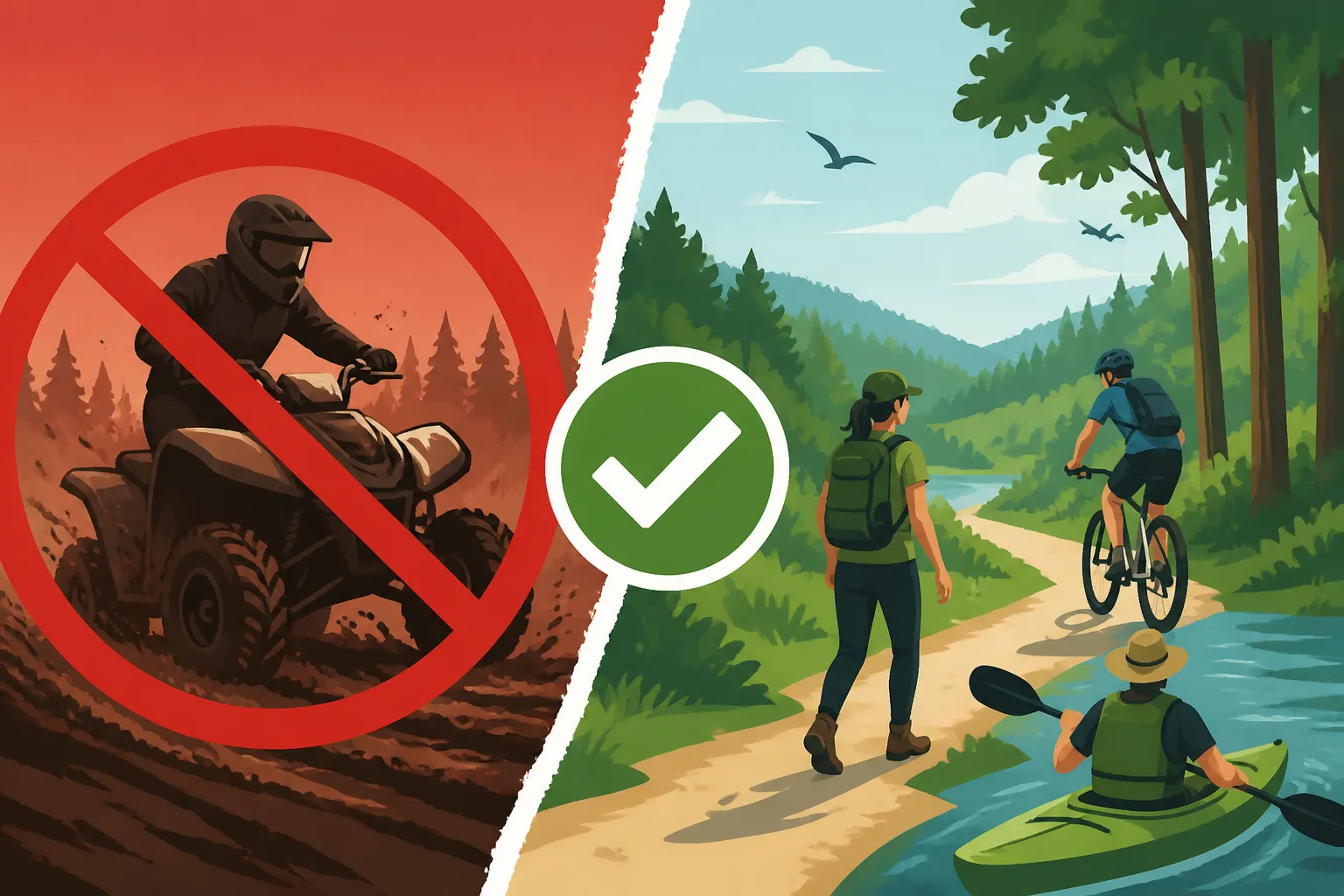
Hoosier National Forest is a lovely place to hike, camp, fish, ride a horse, and explore by road, but it is not an ATV trail system. That can be disappointing when you’ve loaded the machines and expected to ride. This guide explains what you can do there instead, how to avoid accidentally taking an ATV onto a closed route, and where to go when riding is the main goal.
Why Hoosier National Forest is not an ATV riding destination
Forest land does not mean every trail is open to motorized vehicles
A national forest can offer miles of trails without offering trails for ATVs. In Hoosier National Forest, routes are managed for specific uses, and many trails are intended for hikers, horseback riders, or mountain bikers. A trail visible on a map is not automatically open to an ATV, side-by-side, or dirt bike.
That distinction matters at the trailhead. A route that looks wide enough for a quad may still be designated for foot or horse traffic only. Riding a motorized machine on a nonmotorized trail can damage the surface, disturb other visitors, and lead to a violation. Before you plan a route, check the current official forest maps and notices for that exact road or trail.
If you are looking for the reason motorized riding is restricted, [Why Hoosier National Forest Bans ATV Riding] offers a related explanation. The practical takeaway is simple: treat Hoosier National Forest as a place for nonmotorized recreation unless current official information specifically identifies a route as open to your vehicle.
Roads and trails are different categories
You may encounter forest roads while visiting the forest, but a road is not the same thing as an ATV trail. Some roads are open to ordinary highway-legal vehicles; others may be closed, gated, seasonal, or restricted to particular users. A road’s appearance does not tell you whether your ATV or UTV is allowed on it.
This is especially important if you arrive with a trailer, unload near a forest entrance, and see an inviting gravel track. Do not assume that a track is an approved riding route just because it is drivable or appears on a general navigation map. Look for official signs and check the applicable motor-vehicle map and current restrictions before entering.
The same caution applies to navigation apps. onX Offroad can be useful for orienting yourself and comparing mapped routes, but use it as a planning aid rather than permission to ride. Confirm access with the official forest information for the specific road or trail you intend to use.
Why checking before you unload saves trouble
The most frustrating mistake is discovering a restriction after you have already driven a long way, unloaded the machines, and started gearing up. A quick map check at home can prevent that problem. Confirm whether your planned activity is motorized or nonmotorized, whether the location is open, and whether any seasonal closures or temporary notices apply.
It also helps to make sure everyone in your group understands the plan. If one person expects a quad ride and another expects a hike, you can end up debating the rules beside the trailer instead of enjoying the day. Decide in advance whether the forest visit is for hiking, camping, fishing, scenic driving, or another permitted activity.
For ATV routes elsewhere in the state, see [Where to Ride an ORV in Indiana] and [Best Places to Ride an ATV in Indiana]. Those guides can help you separate places suited to forest recreation from parks designed for motorized riding.
What you can do in Hoosier National Forest instead
Hike or backpack on designated routes
Hiking is one of the most straightforward ways to enjoy the forest. The experience is different from a machine ride: you move at walking pace, notice the terrain and tree cover, and can explore places that are not open to motorized traffic. Depending on the route, you may pass through wooded hills, ravines, creek corridors, or quiet stretches of forest.
Choose a trail that suits the group’s time, fitness, and comfort level rather than selecting one only by its name or distance. A short route with steep or uneven sections can feel more demanding than a longer, gently graded walk. Bring water, footwear with reliable traction, and a map or navigation plan, especially if your group is unfamiliar with the area.
For a first visit, keep the day flexible. A family with younger children might plan a shorter walk and a picnic rather than committing to a long loop. A more experienced group can build a longer outing around a designated trail, while leaving enough daylight to return comfortably. Always check current trail conditions and notices before setting out.
Ride a horse or bicycle where that use is designated
Hoosier National Forest has recreation opportunities beyond hiking, but each trail’s permitted use matters. Some routes are designated for horseback riding, and some areas offer opportunities for bicycling. Do not assume every trail accommodates every activity: a route intended for horses may not be open to bicycles, and a hiking trail may not permit either.
If you are bringing a horse, plan around the designated equestrian routes and the practical needs of the animal. Consider footing, water, trailer access, and whether the route is appropriate for the experience of both horse and rider. If you are cycling, check the rules for the specific trail and be considerate of walkers and other users. Sharing space safely often means slowing down, communicating clearly, and yielding when appropriate.
A map or app can help you understand where you are, but it cannot replace posted rules. onX Offroad may help you compare route lines while planning, yet you should verify trail use through official forest information before you ride a bicycle or bring a horse. That small step helps prevent a route-planning tool from being mistaken for an access approval.
Fish, camp, or spend time near the water
If your group wants an outdoor day without trail riding, fishing and camping can make a satisfying alternative. Forest recreation areas and nearby waters give visitors a reason to stay longer than a quick walk, and a slower pace can be a welcome change for people who usually plan their weekends around riding.
Before you head out, check the rules for the specific recreation site. Camping availability, facilities, access, and restrictions can vary by location. Fishing also involves requirements separate from forest access, so confirm the applicable license rules and any local water or site regulations rather than relying on old assumptions.
Think through the logistics as carefully as you would for an ATV trip. Pack food, drinking water, weather-appropriate clothing, waste bags, and any gear needed for the activity. If the group includes children, older relatives, or anyone who does not want a strenuous hike, a campsite or waterside visit can offer a more comfortable way to experience the forest together.
| Activity | Best fit for | What to check before going |
|---|---|---|
| Hiking or backpacking | Visitors who want to explore on foot | Route length, difficulty, closures, and trail rules |
| Horseback riding | Riders with suitable horses and trailer plans | Designated equestrian access, footing, and site details |
| Bicycling | Riders using routes where bicycles are allowed | Trail designation, conditions, and shared-use expectations |
| Fishing | Visitors looking for a slower outdoor day | License rules, access, and site-specific restrictions |
| Camping | Groups planning an overnight or relaxed visit | Reservations or availability, facilities, and current notices |
| Scenic driving | Visitors who want to see the area from a vehicle | Which roads are open to the vehicle being used |
How to plan a safe, rule-conscious forest visit
Start with official maps and current notices
Begin with official forest information, not a screenshot saved months ago or a route someone posted in a group chat. Look for the current map that explains roads and trail designations, then check for closure notices, seasonal limits, and other updates. A route may be closed even if it still appears on a map or in a navigation app.
When evaluating a route, identify what kind of route it is and what activities are allowed there. If the map or sign does not clearly support the activity you have in mind, do not guess. Contact the relevant forest office or choose a route whose permitted use is clear.
onX Offroad can be one layer in your planning process: use it to get oriented, save useful location details, or compare your intended path with other map information. Then check official sources for the actual access rule. A digital line on a screen is not a substitute for a road or trail designation.
Read signs at entrances and junctions
Signs at a trailhead, road entrance, or junction can clarify what is permitted and whether a route is temporarily closed. Take a moment to read them before moving on. If a gate is closed or a sign prohibits your activity, do not try to work around it by entering from another direction.
This is also where groups can prevent confusion. Before everyone starts down a route, confirm that the group is on the right trail and that the planned use matches the posted designation. If a junction is unclear, pause and check the map rather than following the person who seems most confident.
A little caution is particularly useful when the route surface changes. A broad gravel track can narrow into a footpath, or an open-looking road can lead to a signed restriction. Do not let the ease of driving the first few yards convince you that the entire route is open to your machine.
Prepare for conditions and leave room in your plan
Forest conditions can change with weather, maintenance, and seasonal restrictions. Rain can make slopes and unpaved surfaces slippery, while storm damage may affect a trail or road. Check conditions close to your visit and make a backup plan in case your first choice is unavailable.
Tell someone where you are going, especially if you plan a longer walk or will be in an area with limited cell service. Bring water, a charged phone, a paper map or downloaded navigation information, and basic first-aid supplies. Do not rely on a phone’s signal to find your way back.
Finally, build in enough time to return before dark and to deal with an unexpected detour. A realistic itinerary is better than trying to squeeze a long route into the last hours of the day. For more planning help, see [Indiana Trail Closures to Check] and [Indiana Trail Etiquette on Shared Ground].
Where to ride when you brought an ATV or UTV
Choose a designated riding area rather than improvising
If the main purpose of the trip is to ride an ATV or UTV, choose a location that is specifically set up for motorized recreation. Indiana has designated state recreation areas and private off-road parks, each with its own access rules, operating information, and costs. They are a better fit than trying to turn a nonmotorized forest trail into a riding route.
Redbird Off-Road State Recreation Area near Dugger and Interlake Off-Road State Recreation Area near Lynnville are examples of Indiana riding destinations. Their trails and permitted activities are distinct from Hoosier National Forest recreation. Check the relevant park’s current rules, operating status, vehicle requirements, and permit information before loading the trailer.
You can compare the options in [Indiana's Two State ORV Areas Compared]. If you are deciding between a public riding area and a private park, [Indiana's Private Off-Road Parks] can help you consider the differences. The right destination depends on your machine, the type of riding your group enjoys, and how much time you have.
Make a separate plan for machines and non-riding companions
A group does not have to choose between a forest visit and an ATV weekend, but it should plan them as separate activities. For example, some people might spend the morning hiking in Hoosier National Forest while others ride at a designated park on another day. That avoids putting nonmotorized forest trails in the middle of a motorized itinerary.
Before combining activities, consider travel distance, unloading time, parking, and the energy level of the group. A park day can involve trail preparation, safety checks, and cleanup afterward. A forest walk has different equipment and timing needs. Trying to fit both into a rushed schedule can leave everyone feeling as if they spent more time driving than enjoying the outdoors.
For a multi-day outing, make the destination clear in your lodging and trailer plans. Confirm where the machine will be parked and whether the place you are staying allows trailers or equipment. Keeping the riding day and forest day distinct makes the rules easier to follow and the trip easier to enjoy.
Keep permits, registration, and access rules separate
A machine’s registration or decal does not automatically grant permission to ride on every public road or trail. Likewise, a trail permit for a designated riding area does not make a closed forest route open. These are separate questions: whether the machine meets applicable requirements, whether a particular area allows motorized use, and whether the required park permit or fee applies.
Before leaving home, check the destination’s entry and riding requirements for each vehicle. If you are visiting a state recreation area, review the park’s permit rules and any age, helmet, or supervision requirements that apply to your group. If you are riding at a private park, check its rules directly because policies can differ from one property to another.
If you are bringing a machine registered outside Indiana, review [Indiana's Twenty-Day Visitor Rule] and [Indiana's Out-of-State Annual Permit] for related state riding information. Do not treat those resources as permission to ride in Hoosier National Forest; they address different requirements and destinations.
A practical checklist before you go
If you are visiting the forest without a machine
Choose an activity that is actually available on your intended route. Confirm the trail or site designation, check current notices, and plan a backup in case of a closure. Pack for the conditions and the group, including water, suitable footwear, and a way to navigate if your phone loses service.
If you are meeting friends, share the exact starting point and expected route. It is easy for separate vehicles to arrive at different entrances or for someone to mistake a nearby road for the planned trailhead. Agreeing on a meeting location ahead of time can save a surprising amount of frustration.
Respect other users and the land while you are there. Stay on designated routes, pack out what you bring in, and avoid creating shortcuts around wet or damaged sections. Those habits help preserve the places that make the forest worth visiting.
If you are hauling an ATV or UTV
Confirm that your destination is an authorized motorized riding area before loading. Check its current operating information, access rules, permits, and vehicle requirements. If Hoosier National Forest is part of your itinerary, plan a separate nonmotorized activity there and keep the ATV on routes where motorized use is specifically allowed.
Inspect your trailer, tie-downs, machine, and essential riding gear before departure. Bring the registration and other required documents for the machine, and make sure everyone knows the park’s safety expectations. A short pre-trip check is much easier than discovering a missing strap or document at the entrance.
Save official maps and directions before you leave, and use navigation tools as supplements rather than final authority. onX Offroad can help with orientation, but always match your plan to official access rules and signs on the ground. If the rules are unclear, pause and confirm before riding.
If you are uncertain about a route
Do not rely on assumptions such as “it looks like a road,” “I saw a machine there once,” or “the app shows a line.” Access can depend on the route’s designation, the vehicle type, and current restrictions. A route that was open for one kind of use or during one season may not be appropriate for another.
Take a screenshot or note of the official information you checked, but still read signs when you arrive. If a posted notice conflicts with an old map or saved route, follow the current posted restriction and seek clarification from the managing office when needed.
The easiest way to keep the outing enjoyable is to match the activity to the place. Hoosier National Forest offers plenty of ways to spend time outdoors, but ATV and UTV trail riding belongs at a destination designated for that purpose.
Disclaimer
This article is for general informational purposes only and does not constitute professional advice. Laws, prices and regulations vary by location and change over time. Consult a qualified professional for guidance on your specific situation.