Indiana ORV Registration for a Trailered Machine
It’s a scenario many of us have faced: you just bought that shiny new side-by-side or a rugged quad, and your plan is to haul it straight to your favorite Indiana off-road park like Redbird or Interlake. You think, "It's going to spend its life on a trailer or ripping up trails, so why would it need registration?" That's a common misconception that can lead to a real headache at the park gate. This guide is here to clear up why even a trailered machine needs an Indiana Off-Road Vehicle (ORV) registration and how to get yours sorted so you can enjoy the dirt without any unwelcome surprises.
The Basics: Why Even a Trailered Machine Needs an Indiana ORV Registration
You might assume that if your ATV or UTV never touches a public road, it doesn't need to be registered. Unfortunately, that's not quite how it works in the Hoosier State. Indiana's ORV registration laws are designed to cover nearly all machines operated on public lands, regardless of how they get there.
It's About Where You Could Ride, Not Just Where You Do
Think of it this way: your ORV registration isn't primarily about making your machine street-legal (because, let's be honest, most ATVs and UTVs aren't in Indiana!). Instead, it's about making sure your machine is legally allowed to operate on any designated public off-road trails, state recreation areas, or other state-managed lands. Even if you meticulously trailer your machine directly to the parking lot of Redbird Off-Road State Recreation Area in Dugger, or pull into Interlake Off-Road State Recreation Area near Lynnville, that little Indiana decal is your ticket past the gate. Without it, you could be turned away, even if you have a valid trail permit for the day.
This system ensures that those who use the public trails are contributing to their upkeep and maintenance. The fees collected from ORV registrations actually go back into funding these very trails, helping to maintain their condition, improve facilities, and ensure there are places for us to ride. It’s a collective effort, and your registration plays a vital part in keeping those trails open and awesome. If you're curious about where those hard-earned dollars end up, you can learn more about [Where Indiana ORV Fees Go].
The DNR's Role and the BMV Decal
This is where it can get a little confusing for new owners. While the Indiana Department of Natural Resources (DNR) manages our fantastic state off-road riding areas and issues trail permits, the actual registration for your ORV is handled by the Indiana Bureau of Motor Vehicles (BMV). That's right, the same place you go to renew your driver's license or register your car.
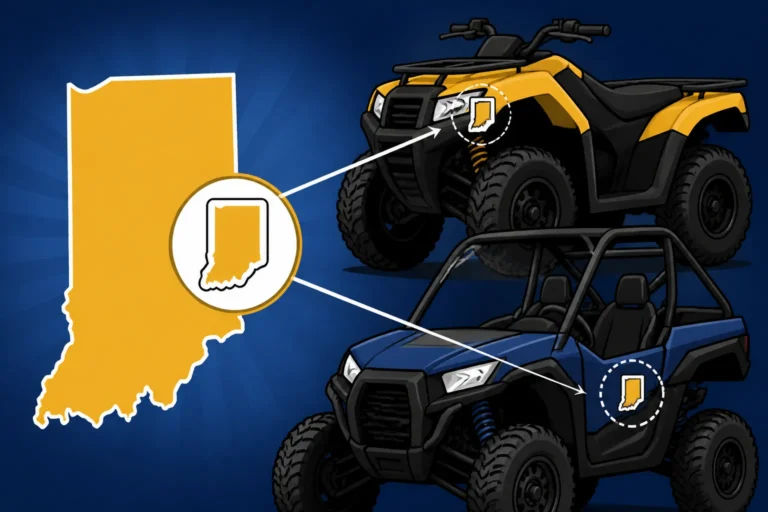
The BMV issues a specific decal that you'll need to affix to your machine. This decal serves as visible proof that your ORV is registered with the state. It's typically a brightly colored sticker with a unique registration number, and it’s valid for three years. You might wonder where exactly this decal is supposed to go. Indiana has specific guidelines for [Where the Indiana Decal Mounts] on your machine, usually on the front half, in a clearly visible location. Once you apply for your registration, there's a processing time involved before your decal arrives in the mail. Don't plan a trip for the very next weekend, because it usually takes a few weeks to get to you. You can get more details on [How Long an Indiana Decal Takes to Arrive].
The Registration Process for Your Trailered ORV
Navigating the paperwork for any vehicle can feel like a chore, but registering your ORV with the Indiana BMV is a fairly straightforward process once you know what to expect. Getting this done means less stress and more time enjoying your machine on the trails.
Gathering Your Paperwork
The first hurdle, as with anything involving official forms, is gathering the right documents. You'll need proof of ownership, a bill of sale, and a valid ID.
- Proof of Ownership: If your machine was purchased new or bought used after December 31, 2009, it likely has a title. Indiana started requiring titles for most ORVs bought after that date, so having that title is crucial. This is a common point of confusion, but understanding [Why Indiana Titles Machines Bought After 2009] can help clarify things. If you're buying a used machine, always make sure the seller provides the original title, signed over to you.
- Bill of Sale: Even with a title, a comprehensive bill of sale is essential. This document officially records the sale, including the purchase price, buyer and seller information, and the machine's VIN. If you're buying privately, especially, make sure this document is thorough. For those looking for robust templates to ensure all necessary details are covered, especially for private sales, resources like LawDepot can be invaluable for generating a solid Indiana-compliant bill of sale. A good bill of sale protects both parties and is a critical piece of [Indiana ORV Registration Paperwork]. You can find specific requirements for [Indiana ORV Bill of Sale Requirements].
- Identification: Don't forget your valid state-issued ID or driver's license.
What if you bought an older machine and it never had a title? Indiana has provisions for that, often involving an ownership affidavit if you can prove continuous ownership. If you're in a situation where you don't have a traditional title for an older machine, or perhaps you've inherited an ORV without clear paperwork, platforms like LawDepot might offer templates or guidance for creating an ownership affidavit or other necessary transfer of ownership documents to help you navigate these unique circumstances with the BMV.
Where and How to Register
Once your documents are in order, you're ready to head to your local Indiana BMV license branch. While the thought of a trip to the BMV might not spark joy, it's typically a quicker process for ORV registration than for other vehicle types, especially if you have everything prepared.
- At the BMV: This is the most common route. You'll present your documents, fill out the application form, and pay the required fees. The BMV staff will guide you through any specific questions.
- Dealer Assistance: If you're buying a new ORV from an Indiana dealer, many will handle the initial registration and titling paperwork for you as part of the purchase process. This can be a huge convenience, saving you a separate trip to the BMV. Always confirm this with your dealer upfront.
- Special Circumstances: If you've just moved to Indiana with an ORV from another state, you'll need to go through a process to [Registering an Out-of-State Machine in Indiana] to get it properly recognized here. Similarly, if you've recently come into possession of an ORV through inheritance, there are specific steps to follow for [Registering an Inherited Machine in Indiana].
Understanding Fees and the Three-Year Cycle
The cost of registering your ORV in Indiana is relatively modest, especially considering it lasts for an extended period. You'll pay an initial registration fee, and then a renewal fee every three years.
Indiana ORV registrations are valid for a full three years from the date of issuance. This three-year cycle is a nice benefit, meaning you don't have to think about it every single year. Make a note of your expiration date, though, because you'll want to renew it before it lapses. You can find more information about [Indiana's Three-Year ORV Registration]. When the time comes, the renewal process is also straightforward, usually handled online or at a BMV branch. Keeping up with [Renewing an Indiana ORV Registration] ensures you always have a valid decal when you hit the trails.
Common Questions and Scenarios for Trailered ORVs
Even with the basics covered, specific situations often lead to more questions. Let's tackle some of those common "what ifs" that ORV owners, especially those who primarily trailer their machines, often encounter.
What if I Only Ride on Private Land?
This is a really important distinction. If your ATV or UTV exclusively stays on your private property—say, your sprawling farm in rural Indiana or a large piece of private hunting land—and it never, ever touches a public trail, public road, or state-managed recreation area, then you are generally exempt from needing an Indiana BMV ORV registration decal.
However, this is a very narrow exception. As soon as that machine leaves your private property, even if it's just trailered to a neighbor's field for a group ride, and that field isn't part of your contiguous private land, you could technically be required to have that decal. The moment you pull it off the trailer at Redbird or Interlake, it absolutely needs to be registered. So, while it's technically possible to own an unregistered ORV if you confine its use strictly to private land, most owners find it's easier and safer to simply register it, knowing they have the flexibility to ride anywhere legal. Remember that the BMV registration is separate from any specific trail permit you might need for state parks. If you're curious about the difference, check out [Do You Need a Permit for Indiana ORV Trails?].
Titling Versus Registering a Trailered Machine
It's easy to conflate titling and registering, but they serve distinct purposes.
- Registration is about getting that decal on your machine, proving you've paid your dues to operate it on public lands and trails. It's a permit to ride.
- Titling is about establishing legal ownership of the vehicle. It's the official document that says, unequivocally, "This machine belongs to me."
For machines purchased after December 31, 2009, Indiana generally requires a title. This is vital for proving ownership when you eventually decide to sell your ORV or if it's ever stolen. Without a clear title, selling an ORV can be incredibly difficult, as most buyers will want that proof of ownership. If you plan on [Selling an ORV in Indiana], having a clear title makes the process much smoother and instills confidence in potential buyers. For those navigating the complexities of ownership transfers, especially when a title isn't readily available or for ensuring legal clarity in a private transaction, resources like LawDepot can be useful for drafting comprehensive bills of sale or ownership affidavits that meet Indiana's specific requirements.
Moving to Indiana with a Trailered Machine
Welcome to the Hoosier State! If you're relocating to Indiana and bringing your beloved ORV with you, you'll eventually need to get it registered here. While you might have a registration from your previous state, Indiana generally has a "twenty-day rule" for non-residents, allowing you to ride for a limited time on your out-of-state registration. Beyond that, or if you're establishing residency, you'll need to transfer it over.
The process for [Registering an Out-of-State Machine in Indiana] usually involves presenting your out-of-state title and registration, along with your proof of Indiana residency, to the BMV. They'll issue you an Indiana title (if applicable) and the necessary ORV registration decal. This ensures that even your trailered machine is fully compliant with Indiana's laws, letting you explore all the fantastic riding opportunities our state has to offer without a hitch.
Here's a quick comparison of titling and registration in Indiana:
| Feature | ORV Titling | ORV Registration |
|---|---|---|
| Purpose | Proves legal ownership of the machine. | Grants permission to operate on public lands/trails. |
| Requirement | Mandatory for machines bought after Dec 31, 2009. | Mandatory for operation on public lands/trails. |
| Document | Official title certificate. | BMV-issued decal and registration certificate. |
| Validity | Permanent (until machine is sold/transferred). | Three years (then renewed). |
| Key Use | Buying/selling, proving ownership, collateral for loans. | Riding at state parks, designated trails, public land. |
| Main Agency | Indiana BMV | Indiana BMV |
Getting your trailered ORV registered in Indiana is a small step that opens up a world of adventure. Don't let a simple piece of paper keep you off the trails!
Disclaimer
This article is for general informational purposes only and does not constitute professional advice. Laws, prices and regulations vary by location and change over time. Consult a qualified professional for guidance on your specific situation.