Choosing a First Machine for Indiana Trails
Your first ATV or UTV should fit the trails you plan to ride, the people who will ride with you, and the work you can handle after each trip. Indiana’s reclaimed-mine terrain can bring clay, hills, ruts, and changing conditions, so buying by engine size or looks alone is a gamble. This guide helps you compare machine types, choose useful features, and budget beyond the purchase.
Start With the Riding You Actually Plan to Do
Before comparing models, picture a typical day out. Are you riding alone or carrying a passenger? Will your route be mostly narrow trails, muddy climbs, or open areas where a wider vehicle can turn comfortably? Do you expect to ride a few weekends a year, or use the machine for chores between trail trips?
Those answers often matter more than the badge on the hood or the engine’s advertised output. Indiana riding areas vary, and conditions can change with rain, maintenance, and closures. A machine that feels manageable on one trail may be cumbersome on another. Check current park rules and trail information before you shop, and use Indiana Trails for Beginners as a starting point if you are still learning what kinds of routes suit your group.
A few decisions are especially useful to make early:
- Who will operate it? A machine that fits an adult may be too large or powerful for a young rider. Separate the choice for an adult’s vehicle from the choice for a child’s machine.
- Will you ride solo, with a passenger, or as a group? A passenger needs a proper seat and handholds. Do not assume that a second person can safely ride on any ATV.
- What conditions are likely? Mud, steep grades, loose surfaces, and water crossings place different demands on tires, ground clearance, traction, and recovery equipment.
- How will you transport and store it? The machine must fit your trailer, tow vehicle, garage, and available tie-down points.
- How much maintenance can you take on? A used machine may cost less to buy but need immediate service. A new machine may reduce uncertainty while still requiring routine care and consumables.
If you cannot answer all of these yet, rent or borrow an appropriate machine where permitted, or visit an authorized dealer and sit on several options. A short test ride in a suitable, legal setting can reveal fit and visibility issues that specifications do not.
Match the machine to the route, not the other way around
It is tempting to buy a large, powerful machine because it seems like it will handle everything. But maximum capability is not the same as best fit. A wider UTV may provide comfort and carrying capacity, yet feel awkward on a narrow trail or require more space to turn. A compact ATV may be easy to place on a trail but less comfortable for a passenger or long days in the saddle.
Think about the most common trip, not the most demanding scenario you can imagine. If most rides will be on maintained trails and you rarely carry cargo, buying a heavy vehicle with extensive accessories may add expense and complexity without solving a real problem. If you frequently ride with a passenger, however, a single-rider ATV may not be the right tool no matter how capable it is.
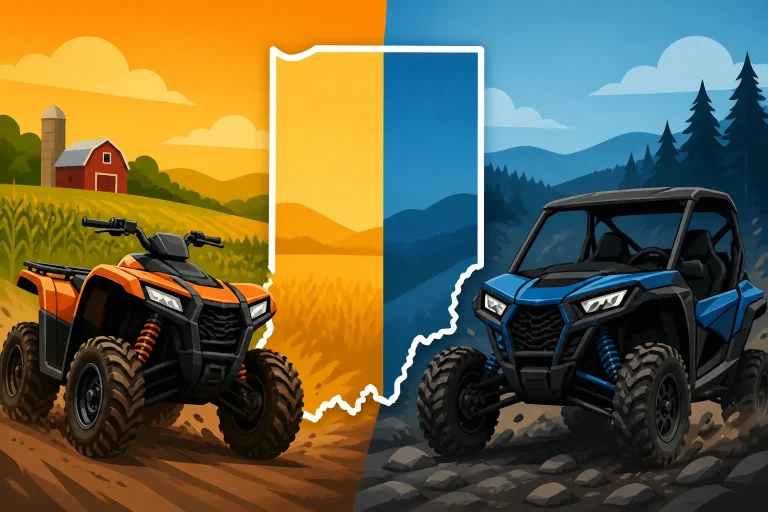
ATV or UTV: Choose the Format First
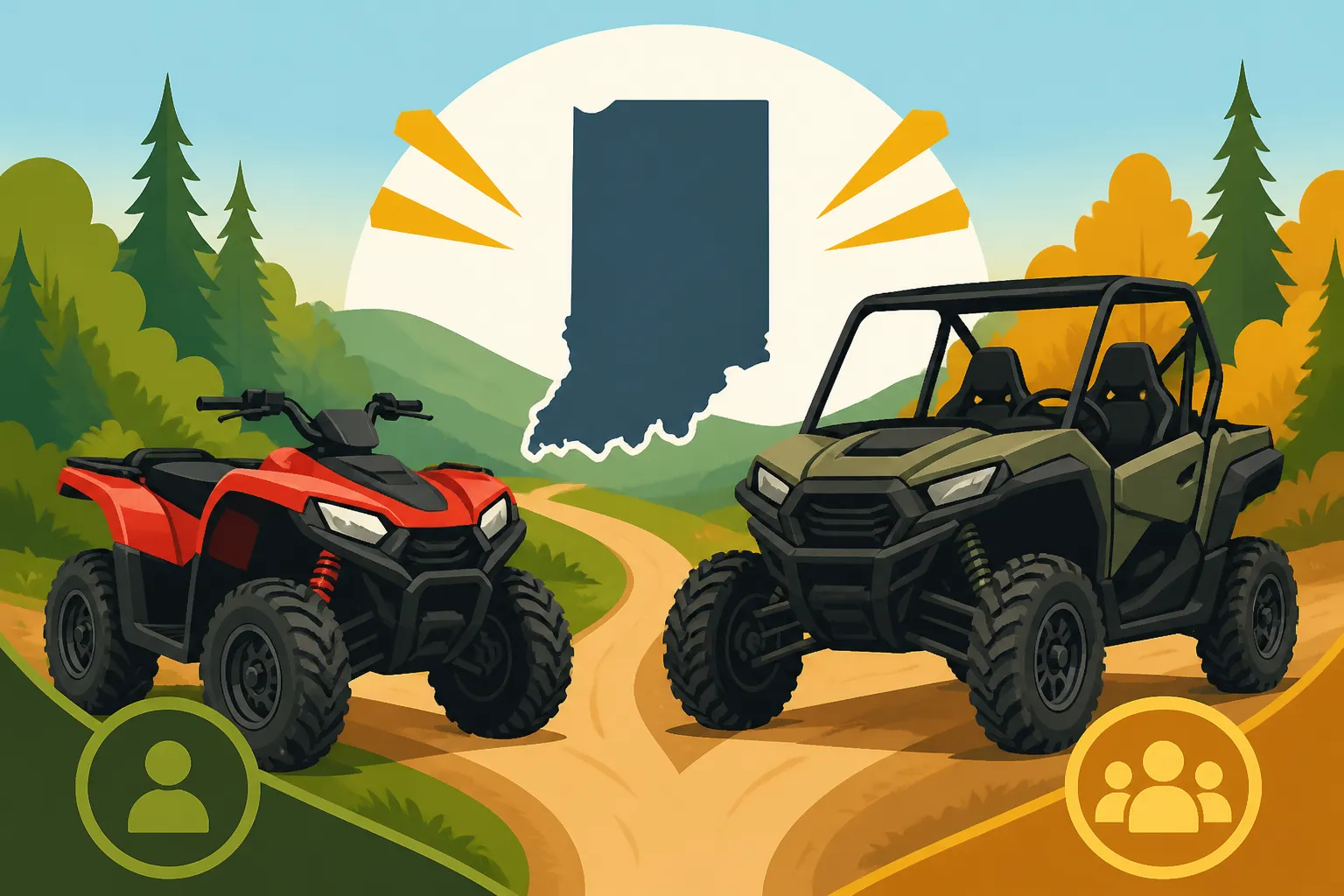
The broadest first-time choice is between an ATV, commonly called a quad, and a UTV, often called a side-by-side. Neither is automatically the better beginner machine. The right choice depends on rider comfort, passenger needs, trail fit, and how you will use the vehicle.
| Consideration | ATV | UTV |
|---|---|---|
| Seating | Usually designed for one rider; passenger capacity depends on the model | Side-by-side seats allow the designed number of occupants to sit together |
| Steering | Handlebars; rider shifts body position to help control the machine | Steering wheel and pedals, more like a small off-road vehicle |
| Trail footprint | Often narrower and easier to place on tight routes | Often wider and longer; check trail restrictions and clearances |
| Cargo | Racks and add-on storage, subject to model limits | Cargo bed or built-in storage on some models |
| Passenger protection | Open seating with no protective cab structure | Some models have a protective structure; cab equipment varies |
| Transport | May fit on a smaller trailer, depending on size and load | Often needs more trailer width, length, and carrying capacity |
| Typical trade-off | More direct, active riding; limited passenger and enclosed storage options | More comfort and room; added size, weight, and operating costs |
When an ATV makes sense
An ATV may suit a rider who wants a direct, active ride and plans to travel alone. It can be easier to position on a narrower trail than a larger UTV, and many models provide racks for modest loads. The rider’s body position matters: steering and balance involve more than turning handlebars, particularly on uneven ground.
An ATV is not automatically easy for a beginner just because it is smaller. A powerful or heavy quad can be difficult to manage, and riding with a passenger is appropriate only if the model is designed and equipped for one. Before buying, confirm the seating capacity, load limits, and required protective equipment in the owner’s manual.
When a UTV makes sense
A UTV is worth considering when you want side-by-side seating, a cargo bed, or a more familiar steering-wheel layout. The cabin and seating arrangement can make longer outings more comfortable for some riders. A UTV can also be a practical choice for transporting gear or combining trail use with property tasks.
Its footprint is a serious part of the decision. Measure the vehicle’s overall width and length, then compare them with the routes and transport equipment you intend to use. Do not rely on a general description such as “trail size.” Check the specific park’s current machine rules, including any limits on width or vehicle type. Best Machine Width for Indiana Parks can help focus that comparison.
A UTV’s protective structure does not mean every safety rule or equipment requirement disappears. Follow the owner’s manual, wear the required restraints and protective gear, and check current site rules. In Indiana, park and public-land requirements can differ from rules on private property; Indiana Helmet and Seat Belt Rules on Public Land explains the distinction.
Decide passenger needs before shopping
If another person will ride with you regularly, choose a vehicle designed for that number of occupants. Do not treat a cargo rack, fender, or improvised seat as passenger seating. On a UTV, use only the seats and restraints intended for occupants. On an ATV, verify whether the model is made for a passenger and what equipment is required.
Children need their own carefully matched machine and supervision plan. A parent’s large quad is not a suitable substitute for a properly sized youth model. Review Youth Machines and Indiana Rules before choosing a vehicle for a young rider.
Size, Power, and Handling for a First-Time Rider
Engine displacement is easy to compare on a product page, but it does not tell the whole story about how a machine feels. Weight, gearing, throttle response, seat height, wheelbase, suspension, tires, and the rider’s experience all affect control. Two machines with similar engine sizes can feel very different.
Avoid shopping by the simple rule that a beginner should always buy the smallest engine or that more power is always safer. Instead, prioritize predictable response and a fit that lets the operator use the controls properly. Ask a dealer to explain how the model delivers power, whether it has selectable drive modes, and what adjustments are available. Test the controls while stationary and, if possible, arrange a supervised test ride in an appropriate location.
Fit the operator
For an ATV, the rider should be able to reach the controls without stretching, sit in a balanced position, and shift weight without feeling trapped by the seat or bodywork. For a UTV, check that the driver can reach the steering wheel and pedals while remaining correctly positioned in the seat and restraint system. Make sure each intended passenger can sit comfortably in a designated seat.
A machine that feels too tall, too wide, or too heavy may be harder to control when stopped on a slope or when maneuvering at low speed. Do not rely on being able to touch the ground with both feet as the only test for ATV fit; use the manufacturer’s guidance and have an experienced dealer assess the match.
Use training and controlled practice
Practice is part of the purchase decision. New riders should learn basic controls, braking, turning, starting on a slope, and safe spacing before tackling difficult terrain. Begin on a legal, open area with room to stop and turn, and follow the manufacturer’s break-in and operating instructions. Avoid carrying a passenger or towing a load while learning.
A safety course can help with riding technique even when a course is not required for a particular ride. For children, match the machine to their size and ability, set clear boundaries, and supervise as required. A larger adult machine should not be treated as a shortcut to avoid buying a youth-sized vehicle.
Features That Matter on Indiana Trails
A feature is useful when it solves a problem you are likely to face. It is less useful when it adds cost, weight, or maintenance without matching your riding plans. Start with the conditions you expect, then compare equipment and available options.
Two-wheel drive and four-wheel drive
Selectable four-wheel drive can help in loose or uneven conditions, while two-wheel drive may be suitable on easier surfaces. A locking differential or similar traction feature can provide additional capability, but its operation varies by model. Ask how to engage it, when to use it, and whether it changes steering behavior. Read the manual rather than assuming that more traction makes every climb or muddy section safe.
If you expect frequent muddy rides, compare tire design, ground clearance, drivetrain, and the machine’s weight together. Heavy vehicles can sink or become difficult to recover in soft ground. A capable drivetrain cannot compensate for poor judgment, unsuitable tires, or riding beyond your skill level. See Indiana Trails With Mud for context on choosing routes and conditions.
Tires and ground clearance
Tires have a large effect on traction, comfort, steering, and wear. Aggressive mud tires may help in some soft conditions but can feel less composed on harder surfaces and may add stress or vibration. A tire that works well on one surface may be a compromise elsewhere. Check the machine’s original tire size, recommended pressure, load rating, and compatibility before changing tires.
Ground clearance can help the vehicle pass over uneven surfaces, but it does not prevent every underbody strike. Skid protection may be useful for rocky or rough routes; check whether it is standard or optional, and whether it interferes with maintenance. Rather than buying every accessory at once, ride the machine in the conditions you expect and add protection based on actual needs. Tires for Reclaimed Mine Clay offers more detail on this terrain-specific choice.
Suspension, brakes, and lights
Suspension affects comfort and stability over rough ground. For a UTV, compare seat comfort and suspension behavior with the number of people and amount of cargo you expect to carry. For an ATV, make sure the machine feels manageable when turning and moving over uneven surfaces. Brakes should be easy for the operator to use, and the machine should have lights and other equipment appropriate to the intended riding area and conditions.
Do not assume that a feature listed on a model family is included on every trim. Confirm the exact configuration, including lighting, winch, protective panels, mirrors, and storage. Ask whether an accessory is factory-installed, dealer-installed, or an aftermarket addition, and whether it affects warranty coverage or service.
Winches, racks, and storage
A winch can be a useful recovery tool, but it is not a substitute for avoiding unsafe terrain or learning how to rig and operate it properly. Confirm that the winch and mounting system are suited to the machine, and carry appropriate recovery gear. A winch should never be used with damaged equipment or in a way that puts people in the line of a loaded cable.
Racks, cargo beds, and storage boxes also have limits. Keep loads within the manufacturer’s capacity, secure them against movement, and account for how added weight affects handling. A full cargo bed changes a UTV’s balance and braking, particularly on slopes. If you plan to haul tools, camping gear, or fuel, include that load in your choice of vehicle and trailer.
New, Used, or a Different Kind of First Purchase
A first machine does not have to be new. A used ATV or UTV may be a sensible way to control the initial outlay, but condition and paperwork are central to the deal. A new vehicle can offer clearer ownership history and a known starting point, although it still needs setup, maintenance, and registration-related follow-through.
| Buying route | Potential advantage | Main trade-off | What to check |
|---|---|---|---|
| New from a dealer | Known starting condition and access to dealer support | Higher overall purchase commitment; options can increase the total | Written out-the-door breakdown, warranty terms, setup, paperwork responsibilities |
| Used from a dealer | Possible inspection or service support through the seller | Condition and support vary; ask what was actually checked | Inspection details, service records, title and registration documents |
| Used from a private seller | More direct discussion of history and use | Buyer carries more responsibility for inspection and paperwork | VIN or serial number, ownership documents, liens, maintenance, cold start |
| Rental or borrowing first | Tests whether the format suits the rider and route | Limited choice and repeated access may be inconvenient | Rental rules, included equipment, permitted areas, damage responsibilities |
Inspect a used machine methodically
Do not judge a used machine only by clean plastics, a fresh coat of paint, or the seller’s estimate of how gently it was used. Ask for maintenance records and a clear explanation of repairs, modifications, and storage. Check for frame damage, mismatched parts, fluid leaks, worn tires, loose steering components, damaged boots, corrosion, and signs of water intrusion. Look for repairs that may conceal cracks or impact damage.
If possible, inspect the machine when it is cold and see it start. Listen for unusual noises, watch for smoke, and confirm that it shifts, steers, and brakes as expected. A short test ride should be conducted only with the owner’s permission and in a safe, legal place. For a UTV, test seat belts, doors or nets, steering, and the cargo bed where fitted. A mechanic familiar with the model can be worth involving before money changes hands.
Paperwork deserves the same attention as mechanical condition. Confirm that the seller’s identification and ownership documents make sense, and compare the machine’s identifying number with the paperwork. Do not pay based on a promise that the documents will be sorted out later. Checking Paperwork Before You Pay and Indiana ORV Lien Check Before Buying cover checks that can prevent a costly ownership problem. For a broader new-versus-used comparison, see Buying New Versus Used in Indiana.
Understand the full dealer transaction
When buying from a dealer, ask for a written breakdown of what you will pay and what each charge covers. Separate the vehicle price, taxes, dealer charges, accessories, title work, and registration-related items. Ask which paperwork the dealer will submit and what you must do yourself. Do not assume a verbal statement that “everything is included” means every state requirement has been completed.
Dealer-installed accessories can make a machine look ready to ride, but they may not be essential. Ask for the cost and purpose of each add-on separately. Compare the equipped vehicle with a standard model, and consider whether you can add a useful accessory later after learning what your riding actually requires. For more detail on the purchase process, read Indiana Dealer Fees Explained.
Budget for More Than the Purchase Price
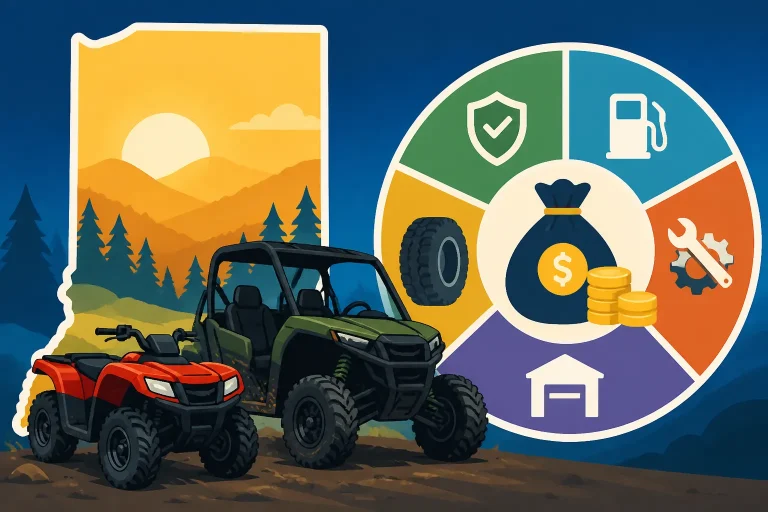
The sticker price is only one part of owning an ATV or UTV. Set aside money for transport, protective gear, maintenance, repairs, storage, fuel, insurance where appropriate, and riding costs. A wider UTV may require a larger trailer and more capable tow vehicle. An ATV can be easier to transport, but it still needs secure tie-downs and a safe loading plan.
Build a simple ownership budget before choosing a model:
- Purchase and setup: vehicle, taxes, dealer charges, required paperwork, and any essential accessories.
- Safety equipment: helmets and riding gear suited to the operator, plus restraints and other required equipment for the machine.
- Transport: trailer capacity, ramps, tie-downs, and towing requirements.
- Routine service: oil, filters, drivetrain inspection, brakes, tires, and cleaning supplies.
- Repairs and wear items: belts where applicable, batteries, bearings, damaged plastics, and other model-specific parts.
- Riding access: permits, entrance charges, and any other costs required by the place you ride.
- Storage and security: covered storage, a secure parking area, or a protective cover.
Costs vary by machine, use, and provider, so get current figures before committing. Ask the dealer which service tasks are expected and whether the owner can perform them safely. Compare the service schedule in the owner’s manual with the amount of riding you anticipate. Indiana ORV Maintenance Costs can help you plan for ongoing upkeep, while Indiana’s Daily and Annual Trail Permits explains that access costs are separate from buying the vehicle.
Include gear and routine supplies
A safe purchase includes equipment for the people who will ride, not only equipment for the machine. Choose properly fitting protective gear, and check the current rules for your intended riding area. Keep basic supplies such as a tire-pressure gauge, hand tools appropriate to the vehicle, water, and a first-aid kit. What you carry should suit the trip and fit securely.
For routine items, compare specifications before buying from any retailer. Online marketplaces such as Amazon can make it convenient to compare common supplies, but confirm that a part or accessory matches the exact make, model, and year of your machine. A low price is not useful if the item is incompatible, poorly suited to the job, or difficult to return. For critical safety equipment and vehicle-specific parts, verify fit and quality rather than relying on a listing title alone.
Consider the cost of a poor fit
A machine that is too large, too wide, or more powerful than you can manage may lead to damage, upgrades, or replacement sooner than expected. The same is true of buying a small ATV for a family that really needs a properly seated passenger vehicle. Trying to make the wrong format work through accessories can cost more than choosing correctly at the start.
A rental or supervised demonstration can help reduce that risk. You may pay for access without building equity in a machine, but you get a chance to compare seating, steering, comfort, and transport needs before purchasing. If you are uncertain between two types, testing both under appropriate conditions can be more useful than comparing specifications alone.
A Practical Checklist Before You Buy
Use this sequence to move from research to a decision without getting distracted by accessories or marketing language.
- List the likely riders. Note who will operate the machine, who may ride as a passenger, and whether a youth machine is needed.
- Describe your usual ride. Include trail type, terrain, trip length, cargo, and how often you expect to go.
- Check where you intend to ride. Review current rules, trail conditions, restrictions, and access requirements for the specific area.
- Choose ATV or UTV based on fit. Give proper seating, trail footprint, transport, and operator comfort more weight than appearance.
- Compare actual machine dimensions and capacity. Check width, length, weight, load limits, passenger capacity, and trailer needs in the manufacturer’s information.
- Sit on or test the machine. Check reach, visibility, controls, braking, seating, and the ability of every intended operator to use it.
- Review the total budget. Include purchase charges, gear, transport, servicing, riding access, and a reserve for repairs.
- Inspect paperwork and condition. For used machines, verify identifying numbers, ownership documents, lien status, service history, and mechanical condition.
- Get the transaction in writing. Ask the dealer or seller to clarify what documents and responsibilities remain after the sale.
- Plan the first rides. Learn the controls, use appropriate protective equipment, start on suitable terrain, and avoid difficult conditions until your skills develop.
A good first machine is not necessarily the most powerful, most expensive, or most accessorized one. It is the vehicle that fits its riders, works on the routes they will actually use, can be transported and maintained safely, and leaves room in the budget for the rest of ownership.
Frequently Asked Questions
Is an ATV or UTV better for a beginner in Indiana?
Neither is automatically better. An ATV may suit solo riding and narrower routes, while a UTV can suit riders who need side-by-side seating or cargo space. Compare the machine’s size with the trails you plan to ride and make sure each operator can control it.
Should a first-time rider buy a used machine?
A used machine can be a reasonable choice if its condition and ownership paperwork check out. Have it inspected, review its maintenance history, compare identifying numbers with the documents, and avoid buying on the promise that missing paperwork will be fixed later.
What should I prioritize if I plan to ride in mud?
Start with route choice, rider skill, tires, traction, ground clearance, and recovery planning. More power or a winch does not make every muddy section safe. Check current trail conditions and avoid riding when conditions or closures make a route unsuitable.
Does the purchase price cover Indiana trail access?
Not necessarily. Vehicle ownership and access to a riding area are separate considerations. Check the specific park or property’s current permit, entrance, and machine requirements before your trip.
Disclaimer
This article is for general informational purposes only and does not constitute professional advice. Laws, prices and regulations vary by location and change over time. Consult a qualified professional for guidance on your specific situation.