Buying a Used ORV in Indiana
Buying a used off-road vehicle (ORV) in Indiana can feel like navigating a dense forest trail blindfolded. There's so much to consider, from the condition of the machine itself to the crucial paperwork that proves you actually own it. It's a process that can be filled with anxiety, especially if you're not entirely sure what pitfalls to look out for. This comprehensive guide is here to light up that trail, helping you confidently make a smart purchase and avoid common headaches when bringing your new-to-you ATV, UTV, or dirt bike home to the Hoosier State.
Initial Considerations Before You Buy
Before you even start browsing listings or driving out to see a machine, it's wise to lay some groundwork. Thinking ahead can save you a world of trouble and ensure you end up with a machine that truly fits your needs and budget.
Understanding Indiana's ORV Definitions
Indiana has specific ways of defining what an ORV actually is, and knowing this can help you understand what you're buying and what rules apply. Generally, an ORV includes vehicles like all-terrain vehicles (ATVs), dirt bikes, and side-by-sides (UTVs) designed for off-road use. It's not a golf cart or a street-legal vehicle, though sometimes folks try to pass them off as such. These definitions matter because they dictate everything from how you register and title the machine to where you can legally ride it. You definitely don't want to buy something thinking it's an ORV, only to find out it falls into a different category with its own set of confusing rules.
The type of machine also impacts where you'll be able to enjoy it. Are you looking for something nimble for tight woods trails, or a wider machine for more open terrain? Indiana's state parks like Redbird and Interlake have various trails, some better suited for certain machine types. Knowing this upfront helps you avoid buyer's remorse when your super-wide side-by-side struggles on a narrow trail, or your small dirt bike feels out of its element on wide-open power line roads. Do your homework on the machine type and what kind of riding you plan to do, so you can align your purchase with your recreational goals.
Budgeting Beyond the Purchase Price
It's easy to get caught up in the thrill of finding a great deal on a used ORV, but the sticker price is often just the beginning. Many first-time buyers, and even some seasoned ones, forget to factor in the additional costs that come with ownership in Indiana. For starters, you'll need to pay sales tax on your purchase, whether you buy from a dealer or a private party. Indiana has a flat 7% sales tax rate, and this applies to ORVs just like any other vehicle. This can be a significant chunk of change, so don't let it surprise you at the last minute.
Beyond sales tax, there are mandatory fees for titling and [Registering an ORV in Indiana]. While the registration is a three-year period, there's still a cost involved, and you'll want to budget for that. Then there's insurance – while Indiana doesn't mandate liability insurance for ORVs statewide, some counties that allow ORVs on their roads, like Vanderburgh County, do require proof of insurance. It's also just plain smart to have insurance to protect your investment and yourself. Don't forget gear, like helmets (especially if you have riders under 18), maintenance costs, fuel, and potentially [Indiana's Daily and Annual Trail Permits] if you plan to ride at state-managed ORV parks. These add-ons can quickly accumulate, turning a "bargain" into a budget buster if you're not prepared.
Where to Look for a Used Machine
The landscape for finding used ORVs in Indiana is quite varied, each with its own pros and cons. Private sellers often offer the best prices because there's no dealer markup, but they also come with more risk and require you to do all the legwork on inspections and paperwork. You'll find these listings on online marketplaces, local classifieds, and sometimes through word-of-mouth in riding communities. Always be cautious when dealing with private sellers; scams are unfortunately a reality, and you'll be responsible for verifying the machine's history and condition entirely on your own.
On the other hand, purchasing from an Indiana dealer can provide a sense of security. Dealers typically inspect their used inventory, might offer some form of warranty (even if limited), and will often handle the titling and registration paperwork for you, saving you a trip to the BMV. While the price might be higher, the convenience and peace of mind can be worth it for some buyers. You might also consider auctions, though these are usually for experienced buyers who can quickly assess a machine's condition and are comfortable with an "as-is" purchase. Each avenue has its own rhythm, so choose the one that best matches your comfort level and mechanical expertise.
Crucial Paperwork for a Used ORV Purchase
This is where many used ORV transactions go sideways. It's not just about the machine; it's about the documents that prove legal ownership and allow you to properly title and register it in Indiana. Skipping steps here can lead to endless frustration down the road.
Checking for a Title and Registration Status
For many ORVs sold in Indiana, especially those purchased new after 2009, a title is a mandatory document. This is your ultimate proof of legal ownership. If the machine you're looking at was purchased new in 2010 or later, it absolutely should have an Indiana title. If it doesn't, or if the seller claims it "never had one," you need to exercise extreme caution. There are some exceptions for older machines or specific types, but generally, no title means big problems for you down the line when you try to register it. You can learn more about this by reading [Why Indiana Titles Machines Bought After 2009].
Always ask the seller for the physical title in hand before you commit to a purchase. Verify that the name on the title matches the seller's identification and that there are no liens listed on the document. A lien means someone else (usually a bank) has a financial interest in the machine, and if that lien isn't satisfied before you buy it, you could end up owning a machine that's still collateral for someone else's debt. This is a common and incredibly frustrating scenario for unsuspecting buyers. Make sure the title is clean, signed over properly, and free of any discrepancies.
The Importance of a Bill of Sale
Even if an ORV has a title, a well-drafted bill of sale is your best friend when buying from a private party. This document legally records the transaction, details of the machine, the purchase price, and confirms both parties agree to the sale. It's your protection against future disputes and is often required by the BMV for titling and registration. Without one, proving you legitimately bought the machine can be a bureaucratic nightmare. You might find yourself needing to file an ownership affidavit, which is a lot more hassle than simply having a bill of sale.
A good bill of sale should include: the full names and addresses of both buyer and seller, the date of sale, the purchase price, a detailed description of the ORV (make, model, year, color), and most importantly, the Vehicle Identification Number (VIN). Both parties should sign and date it, and it's always a good idea to have a witness if possible. You can find excellent templates for a bill of sale from resources like LawDepot, which can help ensure you don't miss any critical information. Remember that [An Indiana Bill of Sale for an ORV] has specific requirements, and getting it right the first time will save you stress later.
Verifying the VIN and Ownership History
The Vehicle Identification Number (VIN) is the unique fingerprint of your ORV. It's absolutely critical to locate this number on the machine itself and compare it directly to any provided title or bill of sale. If the numbers don't match, walk away immediately. A mismatched VIN can indicate a stolen vehicle, a reconstructed machine with hidden issues, or simply fraudulent paperwork. This isn't a detail you can afford to overlook; it's a huge red flag. You can typically find the VIN stamped on the frame, usually near the steering neck on ATVs or on the frame near the engine on UTVs.
Once you have the VIN, you can use it to perform a history check, similar to what you'd do for a car. While there isn't one universal ORV history database, you can often check with the BMV (or an equivalent agency in the state where the ORV was originally titled) for any record of the VIN. This can help you confirm that the machine isn't reported stolen and can sometimes reveal previous title brands, such as "salvage" or "flood damaged." A quick call to the BMV can also help you understand the title status in Indiana, especially for machines bought before the current titling rules came into full effect. [Checking a VIN Before an Indiana Purchase] is a non-negotiable step to protect yourself from buying someone else's problem.
Inspecting the Machine Itself
Once the paperwork looks solid, it's time to get your hands dirty and thoroughly inspect the ORV. Don't let the excitement of a potential purchase blind you to mechanical issues that could cost you big bucks down the line.
Mechanical Checkpoints
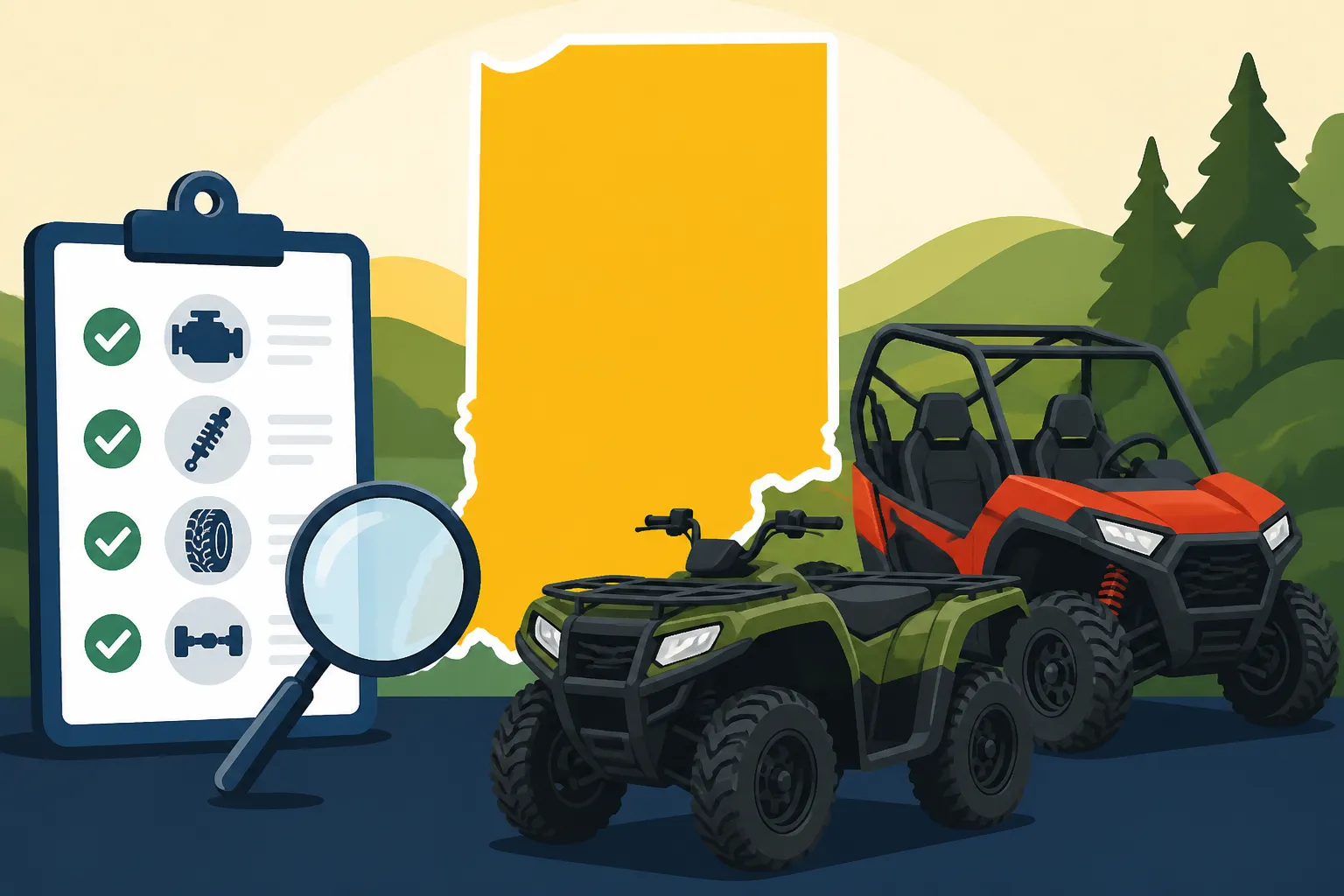
A used ORV, no matter how well-maintained, will likely have some wear and tear. Your job is to identify what's normal and what's a serious red flag. Start with the engine: check the oil for proper level and color (black and sludgy is bad, clear is good but might indicate recent change to hide issues). Look for leaks around the engine and transmission. Try to start the machine cold; if it takes a lot of effort or a can of starting fluid, there might be carburetor or fuel system issues. Listen for unusual noises like knocking, grinding, or excessive smoke from the exhaust.
Move on to the brakes. Test both front and rear brakes (if applicable) for responsiveness and firmness. Worn brake pads or soft levers can indicate a need for immediate replacement. Check the battery – corrosion on the terminals can be a sign of neglect. Don't be afraid to take a test ride if the seller permits, but always ride cautiously and within your skill level. Pay attention to how the machine shifts, accelerates, and handles. Any hesitation, grinding, or difficulty in shifting gears could point to transmission problems. Be realistic; a used machine won't be perfect, but you want to avoid major repairs right off the bat.
Frame Integrity and Hidden Damage
The frame is the backbone of your ORV. Any significant damage here can compromise the machine's safety and integrity. Look for obvious signs of impact, such as bent frame members, cracks, or welds that don't look factory original. Sometimes, a seller might try to cover up damage with a fresh coat of paint. Look closely for inconsistencies in paint or bodywork that could hide repairs. Pay special attention to the a-arms, tie rods, and shock mounts – these are common impact points.
Also, check the integrity of the plastic body panels. While superficial scratches are normal, large cracks, missing pieces, or panels that are poorly fitted can indicate that the machine has been crashed or rolled over repeatedly. Don't just glance; get down on your hands and knees and inspect underneath. Look for dents in the skid plates or exhaust, which suggest hard riding. Rust is also a concern, especially if the machine has been stored outdoors or in humid conditions. While surface rust isn't always a deal-breaker, extensive rust on critical components can indicate a machine that's seen better days and may be structurally compromised.
Tires, Suspension, and Drive Train
These components are crucial for a safe and enjoyable ride. Start with the tires: inspect the tread depth and look for uneven wear, which could signal alignment or suspension issues. Check for cracks in the sidewalls or dry rot, which means they'll need replacing soon. A full set of new ORV tires can be a significant expense, so factor that into your offer if they're severely worn.
Next, examine the suspension. Push down on each corner of the ORV to test the shocks. They should compress and rebound smoothly without excessive bouncing. Look for leaks around the shock bodies, which indicate worn seals. Check for play in the wheel bearings by trying to wiggle each wheel side-to-side and up-and-down. Any clunking or excessive movement suggests worn bearings, another costly repair. Finally, inspect the drive train. On a chain-driven machine (like many dirt bikes), check for proper chain tension and worn sprockets. For shaft-driven or belt-driven machines (common on UTVs), look for leaks or excessive play in the drive shafts and CV joints. A worn belt on a UTV can lead to poor performance and an unexpected breakdown on the trail.
Finalizing the Sale and Registration
You've found the perfect machine, the paperwork looks good, and the inspection passed with flying colors. Now it's time to seal the deal and make it officially yours.
The Transfer Process at the BMV
Once you've purchased the ORV, the next critical step is to transfer the title into your name and register the machine with the Indiana Bureau of Motor Vehicles (BMV). You'll typically do this at your local BMV license branch. You'll need the signed-over title from the seller, the bill of sale, and proof of your identity. Be prepared to pay the sales tax (if you haven't already paid it to a dealer) and the fees for titling and registration. The BMV will process your application, and eventually, you'll receive your new title in the mail, along with your registration certificate and the [Indiana ORV Decal Explained].
The deadline for titling an ORV in Indiana is fairly strict. You have [Indiana's Forty-Five Day Titling Deadline] from the date of purchase to get that title transferred. Missing this deadline can result in an administrative penalty, which is an unnecessary extra cost. Don't procrastinate! Gather all your documents, make an appointment if necessary, and head to the BMV as soon as possible after the purchase. It's much easier to take care of it promptly than to deal with late fees and potential legal issues.
Dealing with Liens and Missing Documents
Sometimes, even with the best intentions, you might encounter an issue with a lien on the title that the seller overlooked, or perhaps crucial documents are missing. If you discover a lien after the purchase, you'll need to contact the seller immediately and work with them to get the lien released. This typically involves the seller paying off the outstanding loan and getting a lien release document from their lender. Without this release, the BMV won't transfer the title to you, and you could be stuck in a frustrating limbo. This is why checking for liens before payment is so vital.
If the title is missing entirely, and the seller claims they're the rightful owner, the process becomes more complicated. In Indiana, you might need to file an ownership affidavit with the BMV, swearing that you own the machine and detailing how you acquired it. This can be a lengthy process and may require additional documentation, such as a notarized bill of sale or even a court order in some cases. It's a situation you absolutely want to avoid, which is why a clean, present title is paramount for a smooth transaction. For situations where a title might be optional, you can look into [Title-Optional Machines in Indiana].
Post-Purchase Registration and Titling Steps
Once the BMV has processed your title and registration, you'll receive a temporary registration. Your permanent registration certificate and decal will be mailed to you. The decal is especially important because it needs to be affixed to the forward half of your ORV, in a visible location. There are specific rules about [Where the Indiana Decal Mounts], so make sure you place it correctly. The decal proves your machine is registered and legal for use on designated trails and lands.
While you're waiting for your physical decal, you might still be able to ride with your temporary registration or a copy of your application, but it's best to confirm this with the BMV or a conservation officer. Remember, [Indiana Fines for an Unregistered ORV] can be substantial, so you don't want to get caught without proper documentation. Keep a copy of your registration certificate with you when you ride, perhaps in a waterproof bag on your machine, or even a clear photo on your phone. This makes roadside stops much smoother and demonstrates your compliance with Indiana's ORV laws.
Common Pitfalls and How to Avoid Them
Buying a used ORV can be a fantastic way to get into the sport without breaking the bank, but it's not without its traps. Being aware of these common pitfalls can help you navigate the process like a seasoned pro.
Avoiding Scams and Fraud
Unfortunately, the used market can attract unscrupulous individuals. One common scam involves sellers who insist on meeting in a remote location or who refuse to provide a physical address. Another red flag is a price that seems too good to be true, often accompanied by a sob story or an excuse for why they need to sell it immediately. Be wary of sellers who push for payment methods that offer no buyer protection, such as wire transfers or gift cards. Always insist on seeing the machine in person and verifying the VIN and paperwork before any money changes hands.
If a seller is reluctant to show you the title, provide a bill of sale, or allow a thorough inspection, these are major warning signs. Trust your gut feeling. If something feels off, it probably is. Don't let the excitement of a potential deal override your common sense. For securing your agreement, using reputable resources like LawDepot for document templates can add a layer of professionalism and clarity to the transaction, making it harder for a scammer to operate under the radar. Remember, a legitimate seller will have nothing to hide.
Dealing with Unregistered or Untitled Machines
This is perhaps the biggest headache for used ORV buyers in Indiana. If you buy a machine that was required to be titled after 2009 but never was, you're inheriting a problem. While it might seem like a great deal, the process of trying to get a title issued can be long, complicated, and sometimes impossible if the necessary prior ownership documents aren't available. You might have to track down previous owners, or even resort to filing an "ownership affidavit" with the BMV, which is a detailed legal declaration of how you came to possess the machine. You can read more about this in [Filing an Ownership Affidavit for a Quad With No Paperwork].
For ORVs that were acquired before the 2010 titling requirement, they might be considered "title-optional." However, even for these, having a solid chain of bills of sale from previous owners is crucial. Without a title or a clear paper trail, proving ownership becomes incredibly difficult, and the BMV might refuse to register the machine in your name. Always prioritize machines with clear titles or, if title-optional, a complete and verifiable history of ownership through bills of sale.
What to Do If the Seller is Uncooperative
Picture this: you've committed to a purchase, maybe even paid a deposit, and now the seller is dragging their feet on providing the title, signing the bill of sale, or addressing a disclosed issue. This is a frustrating, but not uncommon, scenario. Your first step should always be clear, polite communication, in writing if possible, outlining what's missing or what needs to be done. Refer back to any written agreements or promises made during the negotiation.
If the seller remains uncooperative, and you haven't fully paid, you might consider walking away, even if it means losing a small deposit. If you've already paid in full and are facing a significant issue, your options may include small claims court or consulting with an attorney. For example, if you bought a machine listed with no registration and the seller now won't provide the necessary documents for you to get it registered, you have a legitimate grievance. Having a robust bill of sale (perhaps one drafted using a reliable platform like LawDepot) signed by both parties can be your best evidence in such a situation. It's a stressful situation to be in, but knowing your rights and having proper documentation can significantly improve your standing.
Used ORV Buyer's Checklist
To help you keep track of everything, here's a handy checklist for buying a used ORV in Indiana:
| Category | Item to Check | Action |
|---|---|---|
| Pre-Purchase | Understand Indiana ORV definitions | Ensure machine type matches your needs and state regulations. |
| Budget for all costs (tax, title, registration, etc.) | Avoid financial surprises after the purchase. | |
| Research seller & machine history | Look for reviews, verify identity, ask questions. | |
| Paperwork | Original Title (if applicable) | Verify VIN, seller's name, check for liens. |
| Bill of Sale | Ensure complete details, VIN, price, buyer/seller info. Use a template (e.g., from LawDepot). | |
| Seller's ID | Confirm seller's identity matches title/documents. | |
| VIN Verification | Physically locate VIN on machine and compare to all documents. | |
| Stolen vehicle check | Conduct a VIN check through appropriate channels. | |
| Machine Inspection | Engine (cold start, leaks, noises) | Listen for unusual sounds, check fluids, look for leaks. |
| Brakes (front/rear, responsiveness) | Test lever/pedal firmness, check pads for wear. | |
| Frame (bends, cracks, welds, rust) | Inspect for signs of collision or structural damage. | |
| Plastics & Bodywork (cracks, fitment) | Check for excessive damage, poor repairs, or missing parts. | |
| Suspension (shocks, A-arms, bearings) | Test for smooth rebound, leaks, and play in bearings. | |
| Tires (tread, sidewalls, wear) | Check for adequate tread depth, cracks, and uneven wear. | |
| Drivetrain (chain, sprockets, belts, CV joints) | Inspect for wear, proper tension, and leaks. | |
| Electrical (lights, battery, gauges) | Test all lights, horn, and check battery terminals. | |
| Test Ride (if possible) | Assess handling, shifting, acceleration, and any unusual behavior. | |
| Post-Purchase | Transfer Title to your name at BMV | Do this within the [Indiana ORV Titling Deadline] to avoid penalties. |
| Register ORV with BMV | Obtain your registration certificate and decal. | |
| Affix Decal | Place the [Indiana ORV Decal Placement] correctly on the machine. | |
| Secure Insurance | Consider liability insurance, especially if riding in counties that require it. |
Buying a used ORV in Indiana can be a rewarding experience, opening up a world of adventure on our fantastic trails. By being thorough, asking the right questions, and understanding the paperwork involved, you'll be able to make a confident purchase and hit the trails without a hitch.
Disclaimer
This article is for general informational purposes only and does not constitute professional advice. Laws, prices and regulations vary by location and change over time. Consult a qualified professional for guidance on your specific situation.