Stacking Indiana Permits in a Group
A group heading to an Indiana riding area can have several machines, riders with different home states, and a mix of annual and daily permits. The key is to plan permits machine by machine. This guide explains what can be combined across a group, what cannot, and how to avoid arriving at the gate with one permit short.
What “stacking” permits means in Indiana
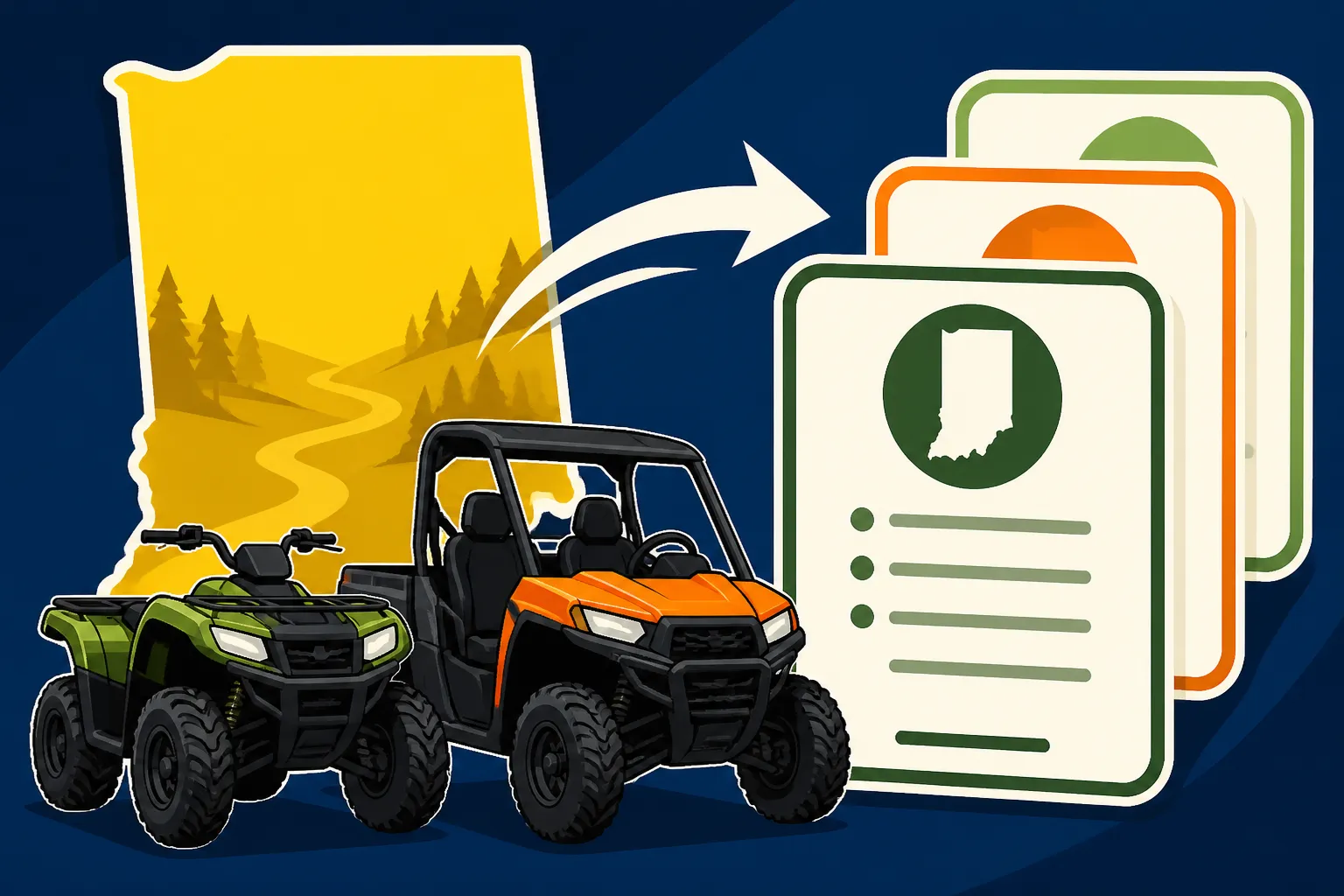
For a group, stacking means using different permit types across different machines. For example, one machine might have a valid annual trail permit while three others use daily permits for that outing. It does not mean combining several permits on one machine to make a permit last longer, or using one permit to cover multiple machines at once.
Indiana’s state off-road riding areas use trail permits for vehicles operating on their designated trails. The permit requirement is generally tied to the machine, not the number of people riding in the group. A rider with a passenger does not ordinarily need a second trail permit just because two people are on one permitted vehicle. But every machine that needs a permit needs its own coverage.
That is separate from other requirements. A BMV registration decal, a state trail permit, and a park entrance or admission charge serve different purposes:
- BMV registration relates to the machine’s registration and applicable state requirements. It does not automatically replace a trail permit.
- A DNR trail permit covers use of designated state off-road riding areas under the permit rules.
- An entrance charge may apply in addition to the trail permit. It can be assessed under separate park rules and may be calculated differently.
If you are sorting out the two permit types, start with Indiana’s Daily and Annual Trail Permits. For an explanation of why admission can be another charge, see Why an Entrance Fee Sits on Top in Indiana.
The useful group-planning rule is simple: make a list of every machine that will be unloaded and ridden, then match one valid trail permit to each machine. A permit purchased for the group leader’s ATV does not cover the other ATVs in the trailer. Nor should you expect a permit attached to a machine parked at home to cover a different machine brought on the trip.
“Stacking” is still a useful strategy because the same group does not need to buy the same type of permit for every machine. Some machines may already have valid annual permits; others may only be used for an occasional outing and may be better served by daily permits. The options and current terms can change, so confirm the applicable rules and buying process with Indiana’s official permit information before you travel.
Keep permits distinct from admission and registration
A common source of confusion is seeing a decal on a machine and assuming it satisfies every requirement. It may not. A BMV decal and a DNR trail permit are not interchangeable just because both relate to riding. If a machine’s registration status is unclear, check How Indiana ORV Registration Works separately from the permit rules.
Admission is also its own line in the plan. A group may have the right trail permits for every machine but still need to pay an entrance charge at the facility. The amount and method of collection can vary by location and current policy. Check the specific riding area before leaving, especially if your group includes multiple vehicles or people arriving separately.
Finally, a permit for an Indiana state riding area does not necessarily cover a private park. Private facilities set their own access rules, fees, waivers, and permit arrangements. If the group may visit more than one kind of riding area, do not assume that one state trail permit covers every stop.
Match each machine to a permit
Before choosing annual or daily permits, count the machines that will actually be operated. Don’t count only the tow vehicles, riders, or trailers. A group with four ATVs needs to plan for four ATVs, even if two riders share one machine and the group travels in one truck.
Use a table like this before buying:
| Machine | Existing permit | Planned use | Likely permit choice | Check before departure |
|---|---|---|---|---|
| ATV 1 | Valid annual permit | Several trips to covered state areas | Keep using the annual permit | Confirm it is valid for the trip and displayed as required |
| ATV 2 | No current permit | One outing | Daily permit may suit | Confirm the date and machine-specific requirements |
| UTV 1 | No current permit | Several outings | Compare annual and daily options | Confirm the machine type is eligible under the permit rules |
| Dirt bike | Permit status unknown | One outing | Do not assume another machine’s permit covers it | Verify the permit category and display instructions |
| Visiting rider’s ATV | Out-of-state registration | Weekend visit | Check the trail permit and registration rules separately | Review the visitor rules and permit eligibility |
The table is a planning tool, not a substitute for current official instructions. Permit categories, validity periods, display rules, and purchasing methods should be checked before a trip.
When one annual permit and several daily permits make sense
Suppose four friends are taking four machines to a state riding area. One friend already has an active annual permit for the machine they plan to bring. The other three machines do not have annual permits. If the remaining owners expect to ride only once, daily permits may be a practical choice for those machines. The annual permit stays with its covered machine; each other machine needs its own appropriate permit.
That is the basic idea behind One Annual Permit and Three Day Passes. The group is mixing permit types across its machines, not sharing one permit among all four.
It can also work the other way around. A regular rider might use an annual permit, while a friend who joins for a single day obtains a daily permit for their own machine. The annual permit does not make the occasional rider’s machine compliant. The friend still needs to check and obtain the right coverage.
When every machine uses daily permits
If the group is planning a one-time outing and no machine has a usable annual permit, daily permits may be the straightforward choice. Count each machine that will ride, confirm that the permits cover the intended use date, and make sure each permit is assigned or displayed as directed.
For example, if a family takes two youth machines and an adult ATV, it should not assume that an adult’s permit covers the youth machines. The relevant count is the number of machines operated, not the number of households or adults in the group. If you are bringing a second machine owned by the same person, see Indiana Permit for a Second Machine.
When an annual permit may be worth considering
An annual permit can be worth comparing if a machine will make repeated trips to eligible state riding areas. The break-even point depends on the current permit cost and how often that particular machine will be used. Check current figures with the official provider rather than relying on an old receipt, a friend’s estimate, or a past season’s budget.
Do the comparison machine by machine. A rider who expects several trips may find an annual option sensible for their own ATV, while a friend who rides once may prefer a daily option. There is no need to make every member of the group buy the same permit type just for the sake of uniformity.
A helpful question is: “How many planned visits will this machine make during the permit’s valid period?” That is more useful than asking how often the owner rides in general. Someone who rides often at private parks may still make only one trip to a state riding area where the DNR permit applies.
Group examples that prevent permit mix-ups
Group plans become easier when you test them against the actual machines and riders.
One annual permit and three daily permits
Four riders bring four machines. One has an active annual permit accepted for the destination. The other three machines have no current trail permits, and their owners plan only one visit.
The group should plan for:
- The annual permit to remain associated with the machine for which it was issued.
- A separate appropriate daily permit for each of the other three machines.
- Any separate admission or entrance payment required by the facility.
- Any independent registration, safety, or operating rules that apply to the machines and riders.
The group should not treat the annual permit as a group pass. If the annual-permit machine breaks down and a different machine is unloaded instead, the permit may not simply transfer to the replacement machine. Check the specific transfer and display rules before relying on that plan.
Two machines owned by one person
One owner may bring an ATV and a UTV on the same trailer. That does not turn the owner’s permit into coverage for both machines. Count each machine separately and check the permit requirements for each type. The same principle applies when a family has a parent’s machine plus one or more youth machines.
If the owner has an annual permit on one machine and is deciding whether to buy another for a second machine, compare the cost of the additional annual permit with the expected daily use. Does Every Machine in the Truck Need Its Own Permit? addresses the per-machine question in more detail.
A visiting rider joins an Indiana group
An out-of-state rider may be welcome to join the group, but the Indiana resident’s permit does not cover the visitor’s machine. The visitor should check the trail permit rules for the destination and also check whether the machine’s out-of-state registration is accepted for the planned period.
Those are separate questions. An out-of-state registration may affect whether or when the visitor needs Indiana registration, while the trail permit governs access to a covered riding area. Read Indiana’s Out-of-State Annual Permit and Indiana’s Twenty-Day Visitor Rule if the trip involves a machine registered outside Indiana. Do not assume that resolving one issue resolves the other.
A group splits up or arrives at different times
If part of the group reaches the gate later, each arriving rider should have the permit information for their own machine. A group leader’s receipt in a phone or glove box does not automatically show that every other machine is covered. Set up the plan so that each owner knows what permit their machine needs and how to show or display it.
The same applies if someone decides to bring an extra machine at the last minute. Add it to the permit count before unloading. A spare ATV on the trailer is not a problem while it stays unused, but once it is operated on the trails, its own permit requirements matter.
A rental is part of the group
Rentals can be handled differently from privately owned machines. The rental provider may supply some required paperwork or permit coverage, but don’t assume that it supplies everything. Ask the rental company what applies to the specific machine, where the permit is displayed, and whether the renter must pay a separate entrance charge or complete a waiver.
For a group with rented machines, record which obligations the rental company handles and which remain with the renter. That avoids paying for a permit twice, but it also avoids assuming that “the rental includes everything” when the contract or park rules say otherwise.
Buy and organize permits before the group unloads
A few minutes of preparation can save a long discussion at the entrance. Before departure, identify each machine by owner, type, and permit status. Then check the official instructions for the permit category, current validity, display method, and purchase options.
A useful process is:
- Make a machine list. Include every ATV, UTV, dirt bike, or other machine the group expects to operate.
- Record existing permits. Note the machine associated with each annual permit and check that it will remain valid for the trip.
- Choose a permit for each uncovered machine. Compare daily and annual options using current official information.
- Check visitor and registration questions separately. This matters for machines registered outside Indiana.
- Confirm the destination’s admission rules. The trail permit may not include the entrance charge.
- Buy through an authorized method. Check Where to Buy an Indiana ORV Permit and, if appropriate, Buying an ORV Permit Online Before You Leave Home.
- Follow the display instructions. Attach or carry the permit exactly as directed. Keep any required confirmation available.
- Do a final count at the staging area. Match permits to machines before anyone rides.
Don’t leave the display step to guesswork. A permit may need to be attached to a specific part of the machine or shown in another way under the current instructions. Keep the receipt or confirmation in case it is useful, but do not assume that a receipt alone replaces a required decal or other display.
For groups sharing paperwork, a simple system helps: give each owner the permit confirmation for their machine and keep a separate master list with the group leader. A weather-resistant document sleeve can keep printed confirmations and maps together. If you are assembling a basic ride kit, a clear sleeve or small organizer is easy to find through retailers such as Amazon; the important part is keeping documents readable and matched to the right machine.
You can also mark machine keys, trailer tie-downs, or a paper checklist with the owner’s name and permit status. A label or tag sourced through Amazon can help distinguish similar-looking keys or helmets in a larger group, but it should never be treated as proof of permit coverage. The permit itself and official display requirements still control.
For a large group, the organizer can share a short checklist before the trip:
- Machine owner and machine type
- Annual or daily permit status
- Permit confirmation or display checked
- Registration status checked where relevant
- Entrance charge reviewed
- Safety gear and required documents packed
Keep this checklist practical. It is not necessary to collect everyone’s personal paperwork or payment information. Each owner can confirm their own machine while the organizer checks that the group’s total count matches the list.
Costs, common mistakes, and a final group check
The best permit mix is usually the one that matches expected use without leaving a machine uncovered. Compare the current daily and annual options for each machine, then add admission separately. Because prices and policies can change, use the official permit provider and the destination’s current information when building the budget.
A group budget might have three separate rows:
| Budget item | What to count |
|---|---|
| Trail permits | One appropriate permit for each machine that will be operated |
| Entrance or admission | The charge that applies under the destination’s current rules |
| Other trip costs | Fuel, parking where applicable, rental charges, waivers, or camping |
Do not use the permit budget to infer the admission budget. A permit that covers a machine’s trail use may still leave a separate gate charge. Conversely, paying admission does not automatically mean the machine has the required trail permit.
Mistakes to avoid
Assuming one permit covers the whole group.
The group can mix annual and daily permits, but it should plan coverage per machine. One person’s annual permit is not a group pass.
Buying a permit for the owner rather than the machine.
The number of owners is not the same as the number of machines. One person may bring more than one vehicle, and several people may share one vehicle. Check the actual permit rules and count the machines that will be operated.
Treating registration as a trail permit.
A BMV decal or out-of-state registration does not necessarily replace a DNR trail permit at a covered state riding area. Verify both requirements independently.
Assuming an annual permit follows the trailer.
The permit should not be moved from one machine to another unless the official rules specifically allow that. If a machine changes, breaks down, or is replaced, contact the permit provider or check the current transfer instructions.
Forgetting the entrance charge.
Permit and admission charges can be separate. Confirm the destination’s rules and whether the group needs to pay together or can pay on arrival.
Using a state permit at a private park without checking.
Private parks may have their own admission, waiver, and access requirements. Ask the facility what it accepts.
Waiting until everyone is at the gate to sort it out.
That is a poor time to discover that the group brought an extra machine or that a visitor has a separate registration question. Assign one person to collect the machine count before travel, then have each owner confirm their own permit.
A quick decision check
Before you leave, answer these questions:
- How many machines will be ridden?
- Which machine has each existing annual permit?
- Which uncovered machines need daily or annual permits?
- Does any visitor need to check out-of-state registration rules?
- Does the destination charge admission separately?
- Do owners know how their permits must be displayed?
- Is there a plan for a late arrival, replacement machine, or last-minute addition?
If those answers are clear, a mixed permit plan is usually uncomplicated. One annual permit plus several daily permits can work well when the group’s use patterns differ, as long as every machine is covered under the applicable rules. For a formally organized outing, special ride, or event rather than an ordinary group trip, check Indiana Rules for an Organized Ride and the relevant event requirements.
Disclaimer
This article is for general informational purposes only and does not constitute professional advice. Laws, prices and regulations vary by location and change over time. Consult a qualified professional for guidance on your specific situation.