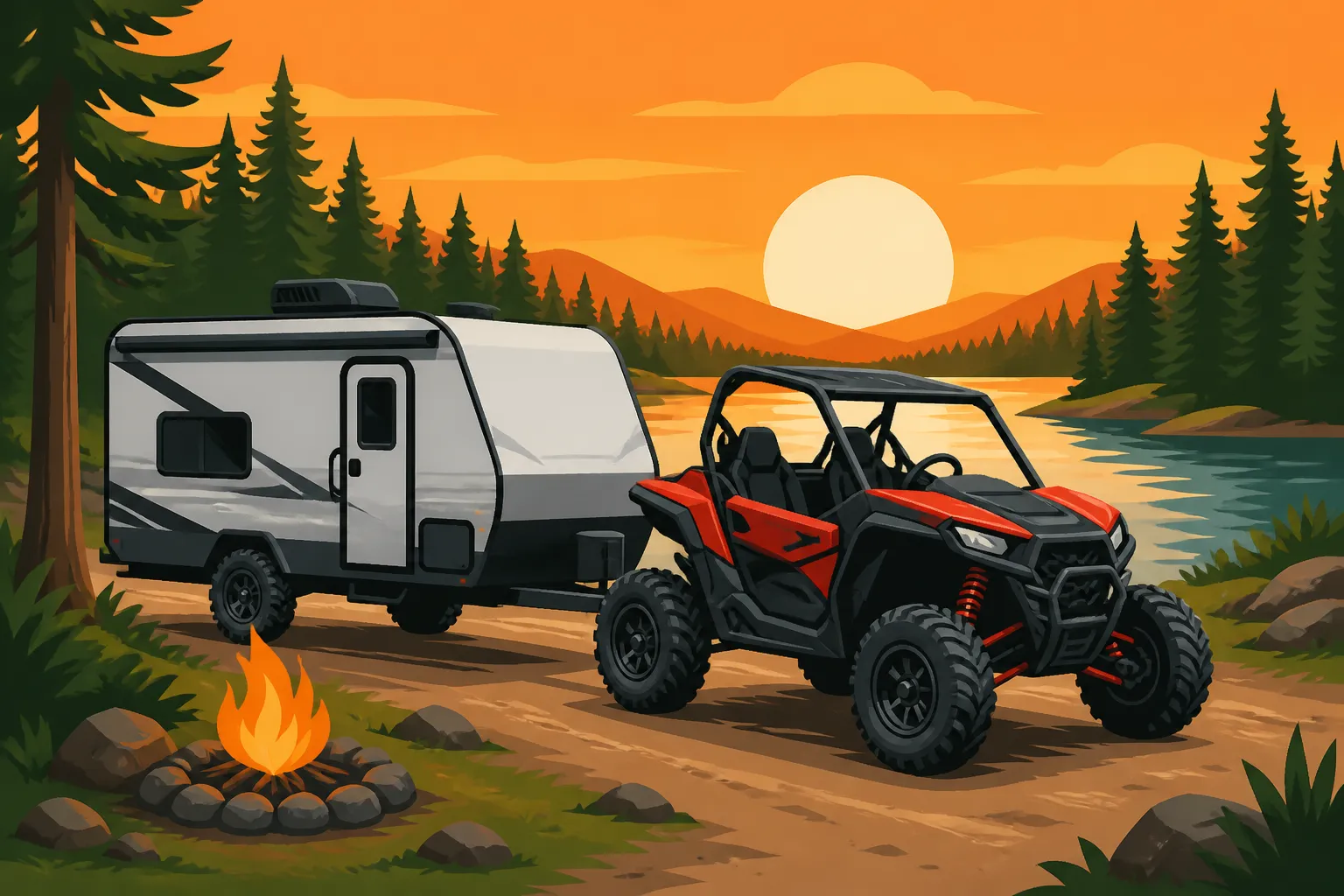
Camping at Dugger With a Trailer in Tow
Camping near Dugger can make a Redbird riding weekend easier, but arriving with a trailer means planning more than where to sleep. You need a suitable place to park, room to unload safely, and a clear plan for food, fuel, weather, and trail access. This guide walks through those details so your camp setup works as well as your ride plan.
Choose a camping setup that fits your trailer
Check what camping facilities are available
Before leaving home, confirm where overnight camping is permitted and what facilities are available. Options around Dugger may differ in site layout, vehicle access, restrooms, water, electrical hookups, and rules for parking trailers. Don’t assume that a riding area’s staging lot is an overnight campground, or that a campsite can accommodate a long truck-and-trailer combination.
Start with the official information for Redbird Off-Road State Recreation Area, then contact the property or campground directly if anything is unclear. Ask specifically whether your trailer can remain at your campsite, whether machines may be unloaded there, and whether you need to reserve a site. If you’re comparing places to stay, Camping Near Indiana ORV Trails can help you think through the tradeoffs between trail proximity and campsite amenities.
A basic site description can be misleading. “Vehicle access” might mean a car fits, not that a tow vehicle and enclosed trailer can turn around comfortably. Ask about the approach road, the size and surface of the parking area, and whether the site is level enough for your setup. A short call before departure can prevent a frustrating late-night search for somewhere safe to leave the trailer.
Measure your full setup before booking
Your campsite needs to fit the entire combination: tow vehicle, trailer, and enough space to maneuver. Measure the total length and width, including any extended mirrors or racks that affect clearance. If you’re bringing a large enclosed trailer, check overhead clearance too, especially if the route includes wooded or narrow access roads.
Think through how you’ll park before you arrive. A site may have room for the trailer but not enough space to turn around once you’re in it. If backing is required, agree on a spotter and a simple set of hand signals before the trip. At a crowded campground, take your time rather than trying to reverse around another vehicle or squeeze past trees and posts.
| Camping detail | What to confirm before you go | Why it matters with a trailer |
|---|---|---|
| Site dimensions | Usable length and width | Your tow vehicle and trailer may need to fit together |
| Access route | Road width, surface, and tight turns | A trailer can make narrow approaches difficult |
| Parking rules | Whether trailers may stay at the campsite | Some sites separate camping and vehicle parking |
| Turning space | Whether you can enter and exit without reversing far | A tight turnaround can become stressful after dark |
| Utilities | Water, power, and restroom availability | Helps you pack appropriately and plan meals |
| Arrival procedure | Check-in location and gate instructions | You may need to check in before unloading |
For a broader look at campsite choices and practical differences, see Indiana ORV Park Camping. Use the posted rules for your specific destination rather than relying on an old trip report.
Plan the route, arrival, and unloading
Choose a trailer-friendly route
The shortest route is not always the easiest route when you’re towing. A narrow rural road, sharp turn, steep driveway, or soft shoulder can turn a simple drive into a slow, stressful crawl. Review your route in advance and consider the size of your rig, the trailer’s turning radius, and the surface conditions you could encounter.
Mapping apps can help with general navigation, but they may not show every restriction or last-minute access change. If you use onX Offroad to explore an area or organize a route, treat it as one planning aid—not a substitute for current official property information, posted signs, or permission from the land manager. Check Indiana Trail Maps From the DNR before you ride, and compare what you see with the information provided by the property.
Build in extra time for the final stretch into Dugger and for finding your campsite. That buffer matters if you need to stop for fuel, wait for another vehicle to clear a narrow entrance, or ask staff where a long trailer should park. If you arrive near dusk, you’ll be glad you aren’t trying to unhitch, unload, and set up camp in a hurry.
Make unloading a deliberate routine
Choose a flat, stable place to unload, apply the tow vehicle’s parking brake, and chock the trailer wheels before lowering ramps. Keep children and pets away from the unloading area, and have one adult manage the process if you’re traveling as a group. Mud, uneven ground, and a trailer parked at an angle can make ramps less secure than they look.
Before unloading, check that the machines are properly secured and that the ramp surface is clean enough to use safely. Remove tie-downs only when the machine is positioned and the trailer is stable. If you’re unloading at a campsite, make sure the campground allows it and that the machine won’t block a road, another site, or emergency access.
Keep the gear you’ll need first near the trailer door: helmets, gloves, eye protection, water, and the documents or permits required for your ride. That way you aren’t unpacking the whole trailer to find one item. If this is your first visit to the area, Riding Redbird for a Day offers useful context for planning the riding portion of your trip.
Set up camp for a comfortable riding weekend
Separate camp gear from riding gear
A trailer can hold a lot, but a cluttered setup makes it harder to find essentials when you’re tired or muddy. Store camp supplies in clearly separated bins from riding gear. Keep food and cooking items together, and reserve a dry container for clothing, towels, and bedding. A small “first night” bag is especially useful if you arrive after dark and don’t want to open every tote.
Pack for the kind of camping you’ve confirmed—not the kind you hope might be available. If there are no hookups, you’ll need to plan for power, lighting, and water on your own. If potable water or showers are uncertain, bring a backup plan. Don’t count on being able to top off supplies at the last minute near the trailhead; check what’s available along your route before you leave.
Use a tarp or washable mat as a transition area between the trail and the sleeping space. A pair of boots coated in wet Indiana clay can spread mud through a tent, camper, or truck cab in minutes. Put a change of clothes and a towel somewhere accessible, and keep wet gear separate from clean bedding.
Prepare for mud, rain, and changing conditions
Conditions at an off-road area can change quickly after rain. Reclaimed ground and clay can become slick, and a campsite entrance that was firm earlier may soften after a wet night. Check Indiana Trail Conditions Before You Ride and any property notices before unloading. If the access road or camping area looks too soft for your tow vehicle, avoid driving farther in just to save a short walk.
Bring a way to secure loose items in windy weather, plus rain protection for both camp and riding gear. Store tie-downs, tools, and recovery equipment where you can reach them without unloading half the trailer. A basic cleanup kit—gloves, brushes, towels, and a container for muddy straps—makes it easier to keep the living area usable.
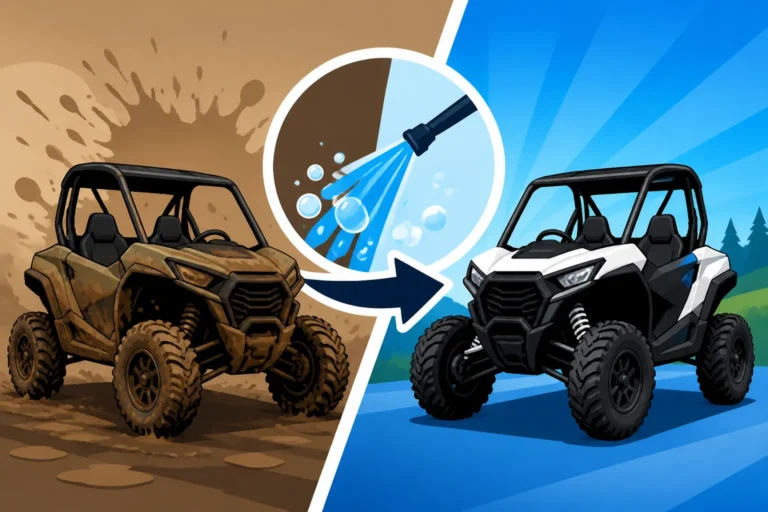
After riding, remove heavy mud before loading whenever the property provides an appropriate place to do so. Don’t wash a machine where runoff could cause erosion or carry sediment into a waterway. For a sensible cleanup routine, see Washing a Machine Before You Load. Also check Indiana Riding After Heavy Rain when weather may affect the ground and trail conditions.
Handle practical details before the ride
Plan fuel, food, and supplies ahead
Don’t assume you can refuel close to the trail entrance or campground. Identify fuel stops before you leave, and account for the truck, the machines, and any generator or auxiliary equipment you plan to use. If your route passes through a smaller community, check hours and availability in advance rather than arriving with an empty tank and no backup option.
Bring enough food and drinking water for the time you expect to spend away from services. Pack a little extra in case a ride takes longer than planned or weather slows the trip. If you’re traveling with children, include familiar snacks and a simple meal that doesn’t depend on complicated camp cooking.
Check your machine before the weekend, not at the unloading ramp. Inspect tires, brakes, lights, fluids, and the condition of straps and ramps. Pack a small set of tools and any machine-specific items you know you may need. Trail riding is more enjoyable when a preventable maintenance issue doesn’t cut the day short.
Keep maps, rules, and backup plans together
Save essential information before you lose cell service. Keep the campground address, check-in instructions, trail information, emergency contacts, and directions to your next fuel stop available offline or in printed form. onX Offroad can be useful for organizing map information, but it should not be treated as permission to ride on a road or parcel. Confirm access with official property rules and posted signs.
Make sure everyone in your group knows where to meet if you become separated and how to reach help. Set a turnaround time for the ride, especially if the group has mixed experience levels. A simple plan prevents one rider from continuing down a trail while the rest of the group waits at camp without knowing where they are.
Before loading up to go home, walk around the site and the trailer. Check that food and trash are packed out, campsite rules are followed, tie-downs are secure, and the ramp is latched. If you rode in muddy conditions, clean the machine and trailer as appropriate before traveling. A little organization at the end of the weekend makes the next trip easier to start.
Disclaimer
This article is for general informational purposes only and does not constitute professional advice. Laws, prices and regulations vary by location and change over time. Consult a qualified professional for guidance on your specific situation.