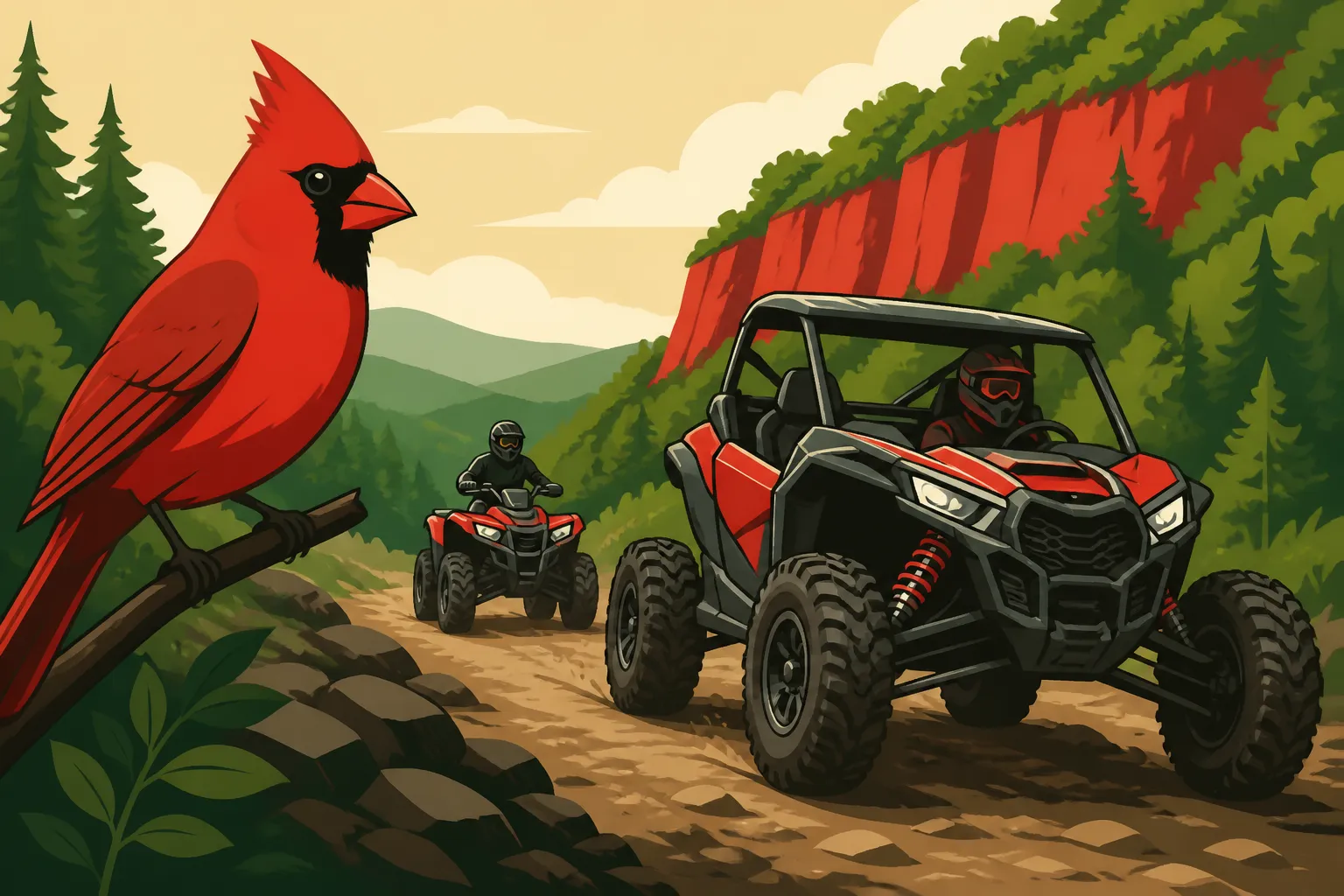
Old Haul Roads at Redbird
Old haul roads at Redbird can look like easy, open routes across the reclaimed mine landscape, but their width and smooth appearance can be misleading. Some are part of the riding experience; others may be closed, rougher than they look, or unsuitable for your machine. This guide explains how to approach these old corridors, plan a responsible ride, and avoid common surprises.
What old haul roads are like at Redbird
From working mine corridors to riding terrain
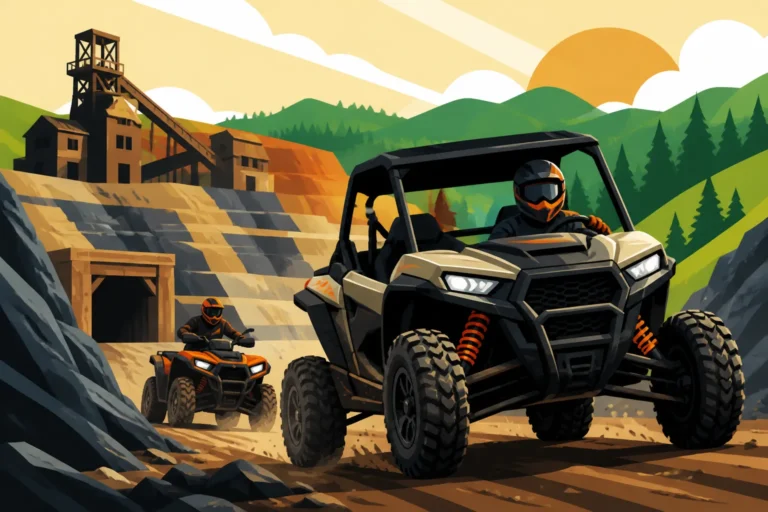
Redbird’s landscape reflects its history as a reclaimed coal-mining area. Old haul roads were built to move equipment and materials, so they can feel broader and more gradual than a narrow trail winding through trees. Riding along one, you may notice long sightlines, open slopes, and wide turns that make it easier to see what is ahead than on a tight wooded track.
That history does not mean every former work road is now open to recreation. A corridor can appear rideable while being outside the designated trail network, temporarily closed, or unsafe because of erosion or changing ground conditions. Follow posted signs and the route markings in the park rather than treating an old roadbed as permission to explore wherever it leads. For basic park context and access planning, see Redbird Off-Road State Recreation Area and Redbird at Dugger in Sullivan County.
The old roads are part of what makes the area feel different from a conventional forest trail system. Their mining-era shapes and reclaimed surroundings offer a sense of scale, but the ground can change quickly from firm gravel or packed soil to loose rock, ruts, and soft clay. A wide corridor is not automatically an easy one.
Why a wide road can still demand care
A broad route often encourages riders to pick up speed. Resist that temptation, especially where the road bends over a rise or disappears behind a spoil pile. You may not see a washout, another rider, a parked machine, or a sharp change in surface until you are close. Keep a pace that gives you room to stop within the distance you can see.
The road’s width can also make it tempting to pass or ride side by side. That can leave little room for someone coming the other way, particularly near a turn or narrow section. Stay to a predictable line, leave space for oncoming traffic, and slow down before a blind crest. On a group ride, make sure everyone knows the plan for regrouping rather than bunching up at the top of a hill.
Pay attention to the edges, too. Water can cut channels into an old roadbed, and loose material may collect along the shoulder. A tire that drifts onto a soft or uneven edge can pull a machine off line. If the route narrows or the surface looks compromised, slow down and choose a safe line instead of trying to power through it.
Reading the landscape without leaving the route
The reclaimed terrain can make it hard to tell where one corridor ends and another begins. A visible track may branch toward a work area, slope, or drainage. Before turning onto a side route, check for official markings and signs. If you cannot tell whether a route is designated, do not assume that a tire track or open gate means it is available for riding.
Maps can help you understand the general layout before arriving. The Indiana Trail Maps From the DNR are a useful starting point for official park information. A mapping app such as onX Offroad can also help with trip planning and orientation, but treat any digital map as a supplement—not a substitute for signs, current park notices, or posted closures. A phone screen may not show a recent change on the ground.
If the map, signage, and what you see do not line up, pause and verify before continuing. That small delay is preferable to riding into a closed area or needing to backtrack on a narrow slope. Mark a meeting point with your group, keep track of your position, and avoid relying on cell service as your only way to navigate.
How to plan a ride on Redbird’s old roads
Choose a route for your machine and experience
Before unloading, think about the machine you are bringing, who is riding, and what kind of terrain your group is comfortable handling. A wide side-by-side may feel relaxed on an open road, but width can become a problem where the route tightens or the surface is uneven. A quad may fit through narrower sections more easily, yet still need careful throttle control on loose climbs or rutted descents.
A new rider can be overwhelmed by a long day that combines open travel, hills, changing surfaces, and unfamiliar intersections. Build in time to stop, check the map, and regroup. If the group includes riders with different experience levels, let the least experienced person help set the pace and route difficulty. A ride that feels manageable for the most confident rider may not feel that way for everyone else.
Use park information and route markings to set a realistic plan. Redbird Loops You Can Ride in an Afternoon can help frame the kind of outing you want, but conditions and the open route network may affect what is practical on the day. Avoid planning around an unmarked shortcut or a route you have only seen in an old screenshot.
Check conditions before you load
Surface conditions matter as much as distance. Rain can soften clay, deepen ruts, and make slopes slick. A road that seemed firm during a dry visit may become greasy after a wet spell, especially where water drains across it. Before leaving home, review Indiana Trail Conditions Before You Ride and Indiana Trail Closures to Check, then look for posted information at the park when you arrive.
If the forecast calls for rain or storms, be willing to adjust the plan. A shorter ride on suitable open routes may be a better choice than trying to cover the full area. Heavy rain can also leave standing water or obscure erosion, so do not assume a puddle is shallow just because the road around it looks solid. Indiana Riding After Heavy Rain offers more guidance on how wet conditions can affect a ride.
Bring the basics for a day out: water, protective gear, a charged phone, and a way to keep important information accessible if you lose signal. If you use onX Offroad, download or prepare the information you need before entering an area with weak reception. Still, keep the park’s signs and official notices as your authority for where you can ride.
A practical route-planning comparison
Use this table as a planning aid, not as a statement that a particular road is open or suitable. Check posted directions and current conditions before riding.
| What you encounter | What it may mean for your ride | A sensible response |
|---|---|---|
| Wide, firm road with clear markings | A more comfortable stretch, though other riders may still be present | Keep a controlled pace and watch ahead |
| Loose gravel or exposed rock | Reduced traction, especially when turning or braking | Slow down and avoid abrupt inputs |
| Deep ruts or a washed-out edge | The route may be changing or difficult to navigate | Assess from a safe position and do not ride the unstable edge |
| Blind crest or tight bend | Limited visibility of other machines and hazards | Reduce speed before the crest or turn |
| Unmarked branch or side track | The route’s status may be unclear | Stay on the marked route unless signs confirm otherwise |
| Posted closure or barrier | The route is not available for riding | Turn around and follow the open-route guidance |
Riding old haul roads with care
Manage speed, spacing, and visibility
Open terrain can create a false sense of security. On a wide road, it is easy to travel faster than your visibility allows, particularly when dust, sunlight, or a rise blocks the view. Ride at a pace that leaves time to react to a stopped machine, a person on foot, or an unexpected surface change. Slow down before turns and crests, not after you reach them.
Leave enough room between machines to see and respond without being caught in the dust from the rider ahead. If dust is hanging in the air, increase the gap and avoid following so closely that you are riding by the other machine’s taillights. In a group, use clear, familiar signals and agree in advance on where to stop. A quick stop at a safe, visible location is better than having each rider make a different decision at a junction.
When you meet another machine, reduce speed and communicate your intentions. Do not assume the other rider sees you, especially around a curve or on a slope. If passing is not clearly safe, wait for a wider, visible section. The Indiana Trail Etiquette on Shared Ground guidance is a helpful reminder that considerate riding matters even when the route feels spacious.
Handle climbs, descents, and changing surfaces
An old haul road may climb gradually for a long distance, then become steeper near a ridge or spoil pile. Before beginning a climb, look at the surface and choose a line that leaves room to maneuver. Use smooth throttle rather than sudden acceleration. Spinning tires can dig into soft ground, make the machine harder to control, and worsen the trail for the next rider.
On a descent, avoid rushing because the road appears broad. Loose gravel and clay can reduce braking grip, and ruts may pull a tire toward the edge. Keep your body position appropriate for your machine and the slope, use controlled braking, and avoid sharp steering inputs. If the descent looks beyond your comfort level, stop somewhere safe to assess it rather than committing simply because others in the group have gone ahead.
Water bars, drainage channels, and cross-ruts deserve attention even when they are not dramatic obstacles. Approach them slowly enough to keep the machine stable, and do not cut around them onto vegetation or an unmarked shoulder. If conditions have made a section difficult, turning back is a sound decision—not a failure to complete the ride.
Stay on marked routes and protect the area
A roadbed may look abandoned, but that does not make it an appropriate place to ride. Going beyond designated routes can damage vegetation, worsen erosion, disturb reclamation work, or put you in an area that is closed for safety. Do not ride around a barrier, follow tracks through the grass, or use a drainage channel as a shortcut. Follow the signs even when a different route looks more convenient.
Respect closures and other park users. If you find a route blocked, turn around and use a marked alternative rather than trying to squeeze past. Be especially cautious around people who may be working, walking, or managing the area. Pack out anything you bring in, and avoid spinning tires unnecessarily on soft ground.
These habits help keep the park enjoyable and its routes in better condition. Old haul roads are part of a changing landscape, not a guarantee of unrestricted access. Riding with care helps protect both the terrain and the experience for the next person who comes through.
Common mistakes to avoid at Redbird
Treating every visible track as an open trail
One of the easiest mistakes is assuming that a road is fair game because it looks well used. Tire marks show that someone has traveled there; they do not prove the route is currently open or designated. A side track may lead away from the authorized network or into an area where riding is not allowed.
Use park signs and official route information as your guide. If a map app such as onX Offroad shows a line that conflicts with a posted closure, follow the closure. If you are unsure whether a route is open, stop and ask park staff rather than guessing. This is particularly important when a road appears to connect two marked sections but is not clearly signed.
Another common mistake is trusting an old map without checking for updates. Screenshots and saved tracks can be useful for orientation, but they can become outdated. Before the trip, compare your planning information with current park guidance; at the site, obey the signs you encounter.
Underestimating how fatigue changes a ride
A broad, rolling route can feel easy early in the day, then become tiring after hours of vibration, dust, and concentration. Fatigue makes it harder to judge speed, notice ruts, and choose a safe line. Plan breaks before everyone is exhausted, and make sure riders have water and time to recover.
Groups often get into trouble when the fastest rider sets the pace and others feel pressured to keep up. Agree that anyone can call for a stop, and do not leave less experienced riders behind at a junction. Pick meeting points that are safe and easy to identify, and count heads before moving on.
Finally, allow enough time to return to the staging area without rushing. A late-day push through unfamiliar terrain can lead to avoidable mistakes. For a smoother outing, check Indiana Trail Conditions Before You Ride again as part of your planning routine and remain flexible once you see the actual conditions.
Skipping the final checks
Before you unload, confirm that the machine is ready for the terrain and that the people riding have the right protective equipment. Check tires, brakes, fuel, and basic controls. Secure loose cargo so it cannot shift on a rough section, and make sure everyone knows how to stop and regroup if the group gets separated.
Keep park information and emergency details accessible, but do not depend on a phone connection. Tell someone who is not riding where you plan to go and when you expect to return. If the plan changes significantly, update them when you have a reliable way to do so.
Old haul roads can make Redbird feel expansive and inviting, but the best ride is not necessarily the one that covers the most ground. Choose marked routes that suit your group, ride within the conditions, and turn back when a section does not feel right. That approach leaves room to enjoy the terrain without turning a fun day into a recovery problem.
Disclaimer
This article is for general informational purposes only and does not constitute professional advice. Laws, prices and regulations vary by location and change over time. Consult a qualified professional for guidance on your specific situation.