Separate ATV and Single-Track Trails
A trail marked for ATVs is not automatically suitable for a dirt bike, and a narrow single-track route is not a place to squeeze a quad through. In Indiana, the difference affects safety, access, and how enjoyable your ride feels. This guide explains what the labels mean, how to choose the right route, and what to check before unloading.
What ATV and single-track trails mean
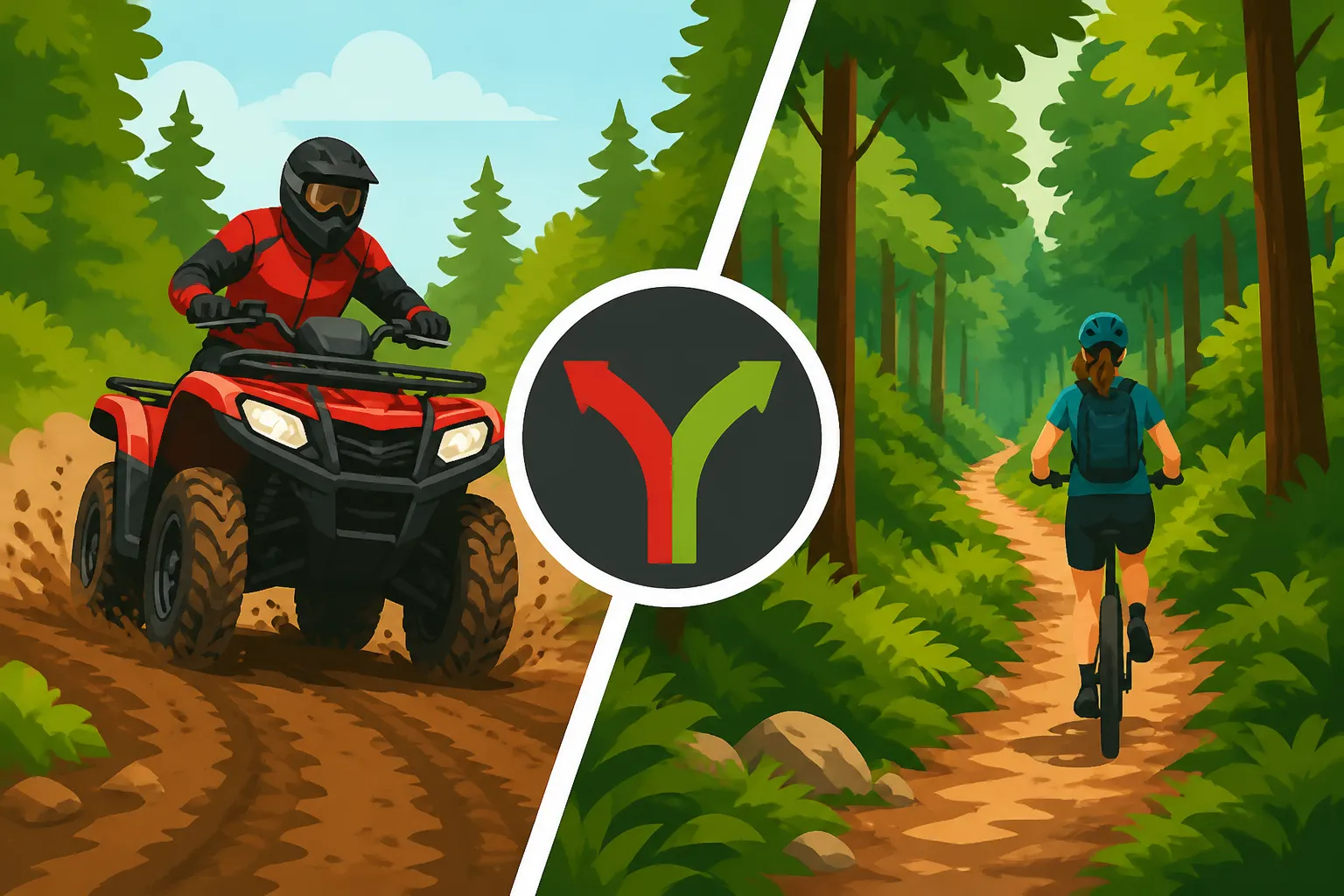
ATV trails are built around wider machines
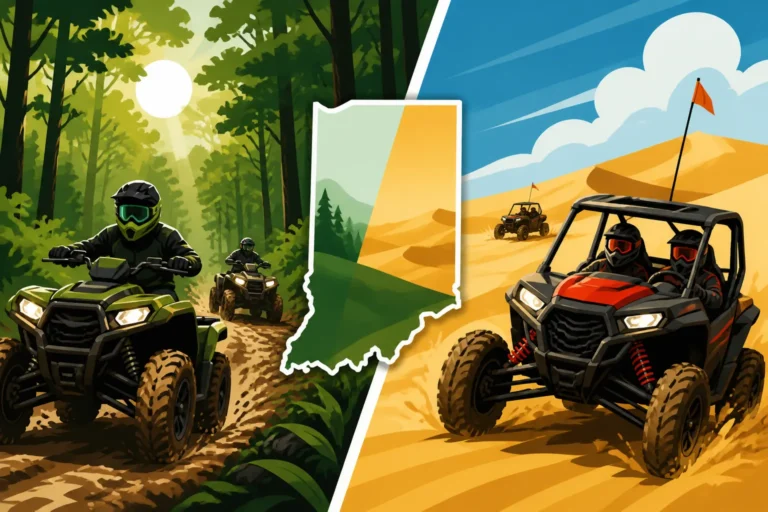
An ATV trail is generally intended for four-wheelers and other off-road vehicles that need more room than a motorcycle. The path may be wider, with turns, obstacles, and clearances designed for machines with a broader stance. Some routes may also allow side-by-sides, but never assume that an ATV designation automatically means every type of UTV is permitted. Vehicle width limits and park-specific rules can matter.
That extra width can make an ATV route feel more forgiving, especially for a newer rider who needs room to choose a line around a rut or rock. It does not mean the trail is easy. A wider route can still include steep grades, muddy sections, uneven ground, and blind corners where other riders may be coming the opposite way.
Before choosing a trail, identify what the park means by “ATV.” Check whether the route is open to your machine type, including its width, and whether there are separate restrictions for full-size vehicles. If you are comparing Indiana riding areas, [Separate ATV and Single-Track Trails] is a useful starting point for understanding why facilities may divide routes by vehicle type.
Single-track trails are narrow motorcycle routes
Single-track is a narrow trail designed primarily for dirt bikes and similar two-wheel machines. It is often only wide enough for one rider to travel along the route, rather than allowing two vehicles to pass comfortably. The line may wind between trees, follow tight turns, or include obstacles that are manageable on a motorcycle but impractical for a quad.
A single-track route is not simply an ATV trail that happens to be narrow. Its turns, sight lines, and riding surface may be shaped around a motorcycle’s smaller footprint and ability to lean, pivot, and change direction in tight spaces. A quad can struggle to make a turn without leaving the trail, while a UTV may not fit at all. Trying to force a wider vehicle through can damage the trail and create a hazard for riders approaching from either direction.
If you ride a dirt bike, do not assume every single-track section matches your skill level. Narrow trails can leave little room to stop or recover after a mistake. Look for posted difficulty ratings, ask park staff about current conditions, and be honest about your comfort with hills, roots, loose soil, and tight turns.
A trail label is an access rule, not just a suggestion
Separate trail designations help parks manage space and reduce conflicts between vehicles with different sizes and handling. A fast-moving motorcycle and a wide side-by-side do not have the same visibility, stopping distance, or passing needs. Keeping them on appropriate routes can make the experience safer and help prevent repeated trail damage.
A clearly marked map or sign should guide your choice, but signage can be easy to miss when you are focused on unloading, gearing up, or following a group. Before you start, confirm the route at the trailhead and check for closures or temporary reroutes. If a route is marked for motorcycles only, treat that as a restriction rather than a challenge to see whether your ATV can squeeze through.
How to choose the right Indiana trail for your machine
Match the route to your vehicle and experience
Start with the machine, not the trail name. A dirt bike rider should look for permitted motorcycle or single-track routes. An ATV rider should choose trails explicitly open to ATVs. Side-by-side riders need to check vehicle-width rules and confirm that the trail system allows their machine. If you are new to the area, do not rely on another rider’s memory of where a route used to go.
Then think about your experience and the people riding with you. A confident rider may be comfortable on a narrow, uneven motorcycle trail, while a beginner may be happier on a wider route with room to slow down and assess obstacles. Families should pay special attention to youth rules, supervision requirements, and designated beginner areas. Trail access and rider eligibility are separate questions: a route may allow a vehicle but still have age or supervision rules for the person operating it.
Indiana riding areas vary in how they organize their routes. For example, [Lawrence County Recreational Park] is a relevant place to investigate if you are looking for information about separate ATV and single-track options. Compare its current trail map and posted rules with your machine rather than assuming a label or description covers every vehicle.
| Riding option | Best fit | What to confirm before riding |
|---|---|---|
| ATV trail | Four-wheel ATVs and other expressly permitted vehicles | Whether your machine type and width are allowed |
| Single-track | Dirt bikes and other permitted narrow two-wheel machines | Whether the route is open to your motorcycle and skill level |
| UTV route | Side-by-sides where specifically permitted | Width, vehicle class, and any route restrictions |
| Beginner area or route | Newer riders and families when offered | Age rules, supervision, and whether the area is open to your vehicle |
Read maps carefully before you leave home
A trail map is more useful when you treat it as a planning tool rather than a guarantee. Look for route colors or symbols, vehicle restrictions, one-way designations, difficulty information, staging areas, and closed sections. If the map does not make a restriction clear, contact the park or ask staff at the entrance before you ride.
Digital mapping can help you orient yourself, especially when you are traveling to an unfamiliar trail system. A tool such as onX Offroad may help riders review routes and keep track of where they are, but it should not replace the park’s official map, signs, or instructions. Compare any app information with the posted rules before entering a trail. A line visible on a map does not, by itself, establish that a route is currently open or legal for your vehicle.
Save or download the information you need before leaving home if you expect limited cell service. In some parts of southern Indiana, wooded terrain and distance from town can make it inconvenient to rely on a live connection. Carrying a park map or saving the relevant route details offline gives your group a backup if a phone loses signal or battery.
Check the trail’s current condition and status
Even a suitable route can be a poor choice after heavy rain or maintenance work. Wet clay, deep ruts, fallen branches, and temporary closures can change how difficult a trail feels. A narrow single-track route may become especially demanding when the surface is slick, while a wider ATV route can still be difficult if standing water hides holes or loose material.
Check the park’s official notices before making the drive, and look again at the entrance or trailhead when you arrive. A closure can apply to one section rather than the entire park. Do not ride around a barrier to reach a route that appears open on an older map. If you are using onX Offroad or another digital map, use it alongside—not instead of—current park notices.
For broader planning, [Indiana Trail Conditions Before You Ride] and [Indiana Trail Closures to Check First] cover the kinds of updates worth checking before a trip. Riders headed to a specific park may also want to review [Indiana's Two State ORV Areas Compared] when weighing different public riding options.
How to ride separate trails responsibly
Stay on the route marked for your vehicle
It can be tempting to follow a friend onto a trail that looks more interesting, especially when the group is trying to stay together. Resist that temptation if the route is not approved for your machine. A wide vehicle on single-track can tear up the edges, break vegetation, and make it harder for motorcycles to pass. A motorcycle on a route intended for wider vehicles may also encounter traffic in places where riders are not expecting it.
Agree on a route before the group leaves the staging area. If riders have different vehicle types, choose an area or loop that the park confirms is open to everyone. Otherwise, split into groups and set a meeting point that is reachable by an approved route. A few minutes of planning can prevent the uncomfortable situation of one rider waiting at a junction while another group discovers that its chosen trail is not suitable.
Trail etiquette matters on shared routes, too. Slow down near blind corners and trail intersections, yield as required by posted rules, and leave room for other users. If you encounter a rider who appears to be struggling, stop somewhere visible and safe rather than blocking a narrow section.
Avoid riding around closures or creating your own connection
A gap between trails may look like a shortcut, but crossing a closed area or cutting a new path can damage the site and violate park rules. This is especially easy to do when a group sees a worn track that seems to connect two routes. It may be an old route, a maintenance access, or an unauthorized path—not permission to ride there.
Use the marked network and follow temporary detours. If a sign is unclear or missing, ask park staff instead of guessing. Some trail systems include different route types close together, and a wrong turn can put a machine on ground that was not designed for it. The same caution applies to private land near a public trail: being able to see a route on a map does not mean you have permission to ride it.
If you are planning a visit to a particular site, [Redbird Off-Road State Recreation Area] and [Interlake Off-Road State Recreation Area] are useful topics to explore for park-specific planning. For other options, [Indiana's Private Off-Road Parks] can help you compare privately operated riding areas, where access rules and trail layouts may differ.
Prepare for the ride you actually chose
The right preparation depends on the machine and route. A motorcycle rider on single-track may need to think carefully about handling tight turns and stopping on uneven ground. An ATV rider may need to plan for wider turns and avoid trails too narrow for the vehicle. Side-by-side riders should confirm width restrictions and pay attention to overhead clearance, turning room, and passing locations.
Before heading out, inspect the machine, secure loose cargo, and bring basic items such as water, a charged phone, and tools appropriate to your ride. Tell someone where you plan to ride if your group is traveling into an area with weak service. Keep an eye on changing weather, and turn back if the route becomes more difficult than your group can safely manage.
A map app such as onX Offroad can be one part of that preparation: review your planned area, identify intersections, and note a meeting point. Still, follow the official trail map and posted directions once you reach the park. Letting a digital route override signs or staff instructions is a poor trade for a shortcut.
A simple pre-ride checklist
Confirm access before unloading
Before you unload, confirm that the riding area is open and that your machine is allowed on the route you intend to use. Check posted restrictions for ATVs, dirt bikes, and side-by-sides separately. If the signs or map do not clearly answer your question, ask park staff. That is easier than discovering a mismatch after your group is already deep in the trail system.
Check any permit, registration, or entrance requirements that apply to the location. State riding areas and private parks can have different processes, so avoid assuming the rules at one facility carry over to another. For state recreation areas, [Indiana's Daily and Annual Trail Permits] and [Where to Buy an Indiana ORV Permit] are useful related topics.
Review the route as a group
Point out the route color or marking, the planned distance or loop, and the place where you will regroup if riders become separated. Make sure less-experienced riders know they can stop or turn back rather than trying to keep up on a difficult section. If you are using onX Offroad for orientation, make sure everyone understands that official signs and park rules take priority.
A little preparation keeps the focus where it belongs: enjoying the ride without putting a machine on the wrong trail. Choose routes that fit your vehicle, ability, and the park’s current rules, and leave narrow single-track to riders whose machines are designed for it.
Disclaimer
This article is for general informational purposes only and does not constitute professional advice. Laws, prices and regulations vary by location and change over time. Consult a qualified professional for guidance on your specific situation.