Riding Haspin Acres at Laurel
Haspin Acres in Laurel can be a fun, demanding day out, but its mix of wooded trails, mud, hills, and other riders means a little preparation goes a long way. This guide covers how to plan your visit, choose suitable routes, ride considerately, and avoid the common hassles that can turn a good trip into a long day.
Plan your Haspin Acres visit before you leave
Know what kind of riding to expect
Haspin Acres is a private off-road park near Laurel, Indiana, where riders bring different kinds of machines and look for different kinds of terrain. Depending on conditions and where you ride, a day may include wooded trails, muddy stretches, hills, and more open riding areas. That variety is part of the appeal, but it also means the park may feel very different from one visit to the next.
Think about your group’s experience before choosing a route. A confident rider on a capable machine may be comfortable with terrain that feels overwhelming to a beginner or a younger rider. Start with easier ground, watch how the group handles it, and only take on more challenging sections if everyone is ready. It’s easier to build confidence gradually than to recover from a tiring or stressful first hour.
If you’re comparing places to ride, [Indiana Private Off-Road Parks] can help put Haspin in context. For a closer look at the park’s own riding experience, [Riding Haspin in January] discusses how a winter visit can change the character of a day on the trails. Whatever season you choose, expect conditions to influence which areas feel manageable.
Check park information and prepare for admission
Before loading up, confirm the park’s current hours, admission process, riding rules, and any machine or safety requirements directly with Haspin Acres. Park policies and operating conditions can change. Don’t rely on an old social media post, a friend’s memory, or what another park requires.
Find out whether each rider needs to complete a waiver and what information to bring. Haspin’s waiver process is one detail to sort out before you arrive; [Haspin's Liability Waiver Card] is a useful related topic. Ask whether the park has specific requirements for helmets, passengers, youth riders, or equipment, and whether any areas are closed when you visit.
Budget for the full outing, not just the ride through the gate. Admission, food, fuel, lodging, and other travel costs can all affect the day. If you’re planning a multi-day visit, [Three Days of Gate Fees at Haspin] can help you think through how repeat entry fits into the trip. Don’t assume that an Indiana DNR permit for a state recreation area automatically serves as admission or permission to ride at a private park. Check what Haspin requires for its own property.
Choose your route with the group in mind
A useful route is one that suits the least experienced rider, not just the person who wants the biggest hill or deepest mud. Before riding, agree on a simple plan: where the group will start, what kinds of trails you’re comfortable trying, and what you’ll do if someone wants to turn back. If riders have very different experience levels, consider splitting into smaller groups only if everyone has a clear meeting point and a way to communicate.
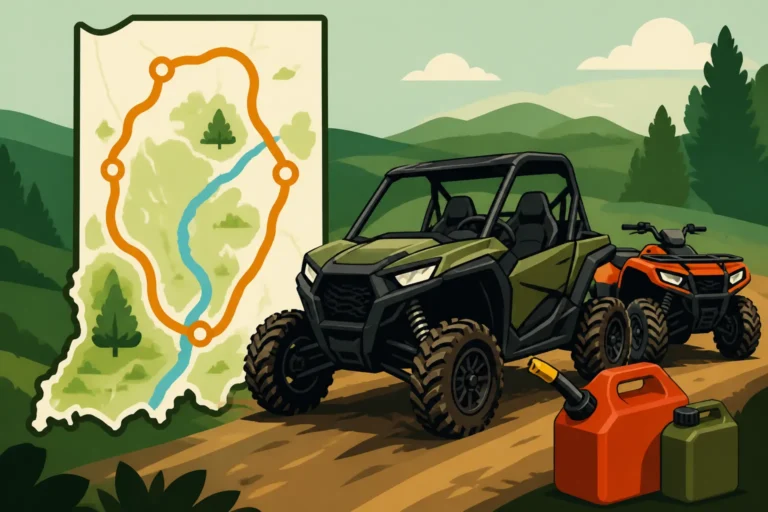
An app such as onX Offroad can help you prepare by reviewing available map information and organizing your route ideas. Use it as a planning aid rather than a substitute for park signs, staff directions, or posted closures. Check that the map information actually covers the area you intend to ride, and don’t assume that a digital line guarantees a trail is open or suitable for your machine.
If you’re using onX Offroad, save any relevant information before you leave home and make sure you know how to use it without relying on a strong signal. Cell service can be unreliable in wooded areas, and a phone battery can drain faster than expected when you’re using navigation. Carry a paper backup or agree on recognizable meeting points, such as a marked intersection or staging area, so the group has another way to regroup.
Match your machine and gear to the conditions
Make a practical machine check
A machine that ran well on the last ride still deserves a quick inspection before the next one. Check tires for damage and suitable pressure, test the brakes, look for loose parts, and confirm that lights and controls work. On a UTV, check that seat belts and doors or other occupant restraints function as intended. Bring basic tools and any machine-specific spares you know you may need.
Mud and water can turn a small maintenance issue into a bigger one. A loose clamp, damaged belt, weak battery, or clogged cooling area may become more noticeable when the machine is working hard. If you have not ridden the machine recently, take a short test ride close to home before hauling it to Laurel. Discovering a problem in the driveway is frustrating; discovering it deep in the park can leave your whole group waiting.
Pack for the machine you’re riding, not just the weather forecast. Useful items can include drinking water, gloves, eye protection, a first-aid kit, a compact tool kit, a tow strap, and a phone charger or power bank. Secure gear so it cannot fall onto the trail. A bag that comes loose on a rough section can create a hazard for the rider behind you.
Wear gear that suits a full day outdoors
A helmet and eye protection are basic parts of a sensible ride, but they’re not the whole kit. Wear sturdy gloves, boots that protect your feet and ankles, and clothing that can handle brush, dust, and mud. Bring an extra layer if the weather may change, and consider packing dry clothes for the ride home. A damp, muddy outfit feels much less charming once the engine is off.
Choose equipment that fits correctly. A helmet that shifts around, goggles that fog constantly, or gloves that make it hard to use the controls can distract you at the wrong moment. If children are riding, check fit and comfort before the trip, not at the trail entrance. Be sure every rider can operate their machine safely and understands basic hand signals or agreed group communication.
Rules may vary by property, machine, and rider. Read [Indiana Helmet Rules at an ORV Park] and [Indiana Rules for Riding a Private Park] for related guidance, then confirm Haspin’s own posted requirements. Rules for state recreation areas and private parks are not necessarily identical, so don’t treat one park’s sign or policy as universal.
Adjust expectations for mud and rain
Mud can be the reason a group chooses Haspin, but it can also make trails more difficult than expected. Wet ground may reduce traction, conceal ruts, and make it harder to judge the depth of a puddle. A section that seemed straightforward during a dry visit may become slippery or tiring after rain. If you’re hoping for a mud-focused ride, check recent conditions and be willing to change your plan if the ground is worse than your group can handle.
Look at [Indiana Trails With Mud] and [Indiana Trail Conditions Before You Ride] for broader planning ideas. After a wet stretch, [Riding After a Week of Indiana Rain] explains why a little patience can make for a safer, more enjoyable outing. At the park, follow any closures or staff instructions even if a route looks passable from the entrance. A closed trail may be damaged, unsafe, or restricted for reasons that aren’t obvious from the staging area.
| Before the ride | What to check | Why it matters |
|---|---|---|
| Park information | Hours, admission, waivers, rules, and closures | Avoid arriving unprepared or riding in a closed area |
| Machine | Tires, brakes, lights, controls, and loose parts | Catch problems before they become trail breakdowns |
| Group plan | Experience levels, meeting points, and turnaround options | Keep riders together and reduce pressure on beginners |
| Conditions | Recent rain, mud, and weather changes | Choose terrain that suits the day and the group |
| Supplies | Water, protective gear, tools, and communication backup | Be ready for a longer ride or an unexpected delay |
Ride safely and share the park
Keep the group together without rushing
Set a pace that lets the group ride comfortably and stop when needed. The rider in front should be able to see that the next person is still following, while the last rider should not feel pushed to keep up. Agree on a simple routine for intersections or confusing trail splits: stop in a safe, visible place and wait until the group is together before continuing.
A new rider may need extra time to handle corners, ruts, or hill approaches. Avoid turning a learning moment into a race. If someone is uncomfortable, stop and reassess rather than insisting they continue. A calmer route is often the better choice, especially late in the day when fatigue can make even familiar terrain feel harder.
Follow park signs and directions from staff. Don’t assume that another group’s route is appropriate for yours, and don’t ride around a barrier because the detour seems inconvenient. If you have questions about a trail, ask before heading into it. A short conversation at the staging area is easier than trying to help someone out of a difficult spot far from the group.
Share trails with other riders
A busy park can bring machines with different sizes, speeds, and handling characteristics onto nearby routes. Stay alert, control your speed, and leave room to respond when you meet another rider. On narrow or low-visibility sections, approach cautiously rather than assuming the trail is clear around the next bend. Be especially careful near intersections and places where vehicles may enter or leave a route.
Good trail etiquette is practical, not just polite. Give other riders space, avoid crowding a machine that has stopped, and don’t spray mud or throw debris toward people nearby. If you come across someone who needs help, pause in a safe location and offer assistance if you can do so without putting your own group at risk. [Indiana Trail Etiquette on Shared Ground] offers more guidance for sharing riding areas responsibly.
Keep your machine on permitted routes and respect signs, barriers, and private property boundaries. Riding off a marked trail can damage the land, create new hazards, and put access at risk for other visitors. If you’re unsure whether a route is open, ask park staff rather than treating the absence of a visible barrier as permission.
Know when to stop for the day
Fatigue changes how people ride. Hands may tire, attention may wander, and small mistakes become easier to make. Plan breaks before everyone is worn out, and check in with younger riders or anyone who is quiet, uncomfortable, or falling behind. A snack and water break can help, but they don’t make a difficult trail suitable for a rider who is no longer focused.
Set a turnaround time that gives the group enough room to get back without rushing. If conditions become rougher, the machine starts acting differently, or someone feels unsafe, adjust the plan. There is no prize for completing every route. Ending the ride with everyone comfortable and the machines in good shape is a successful day.
Before leaving the trail area, account for everyone and check that your gear is secure. If a machine has been through deep mud, inspect it for packed debris or damage before loading. Clean it where the park allows, and avoid carrying mud or debris onto public roads. A little care at the end of the day can make unloading and maintenance at home much easier.
Make the day enjoyable from start to finish
Build in time for loading and recovery
Riding time is only one part of a day at Haspin. Leave room for travel, unloading, check-in, gearing up, breaks, and loading again. If you schedule the day too tightly, every delay can feel stressful: a slow line at admission, a machine that needs attention, or a rider who needs a longer break. A flexible plan lets the group enjoy the visit instead of watching the clock.
Before leaving home, check that your trailer is suited to your machines and that tie-downs are in good condition. Secure each machine properly and make sure loose equipment cannot shift during the drive. Bring the supplies you’ll need to load safely, especially if you expect muddy tires or a tired group at the end of the day.
Keep the drive home in mind when deciding how late to ride. A full day of noise, concentration, and physical effort can leave everyone tired. Pack food and water, and give yourself time to clean up and secure the machines without rushing. If you’re staying nearby, confirm your accommodation’s rules for trailers and muddy equipment instead of assuming you can park or wash anywhere.
Use maps as backup, not permission
Navigation tools are most helpful when they support good decisions. onX Offroad may help you organize trip plans and review available mapping, but on-the-ground signs and park directions should take priority. If a route is closed, difficult for your group, or not clearly within the permitted riding area, don’t use an app display as a reason to continue.
Save important information before the trip and keep your phone protected from mud, water, and impacts. You can use onX Offroad to mark a planned meeting location or help the group understand its general route, but everyone should know what to do if phones lose power or service. A simple plan—stay together, stop at agreed points, and return to a known staging area if separated—is useful even when technology works perfectly.
The best Haspin Acres outing is not necessarily the one with the most miles or the messiest machine. It’s the one where the route fits the group, everyone follows park rules, and the day ends without a preventable breakdown or close call. Prepare thoughtfully, check local park information before you go, and stay willing to adjust when the terrain or weather asks you to.
Disclaimer
This article is for general informational purposes only and does not constitute professional advice. Laws, prices and regulations vary by location and change over time. Consult a qualified professional for guidance on your specific situation.