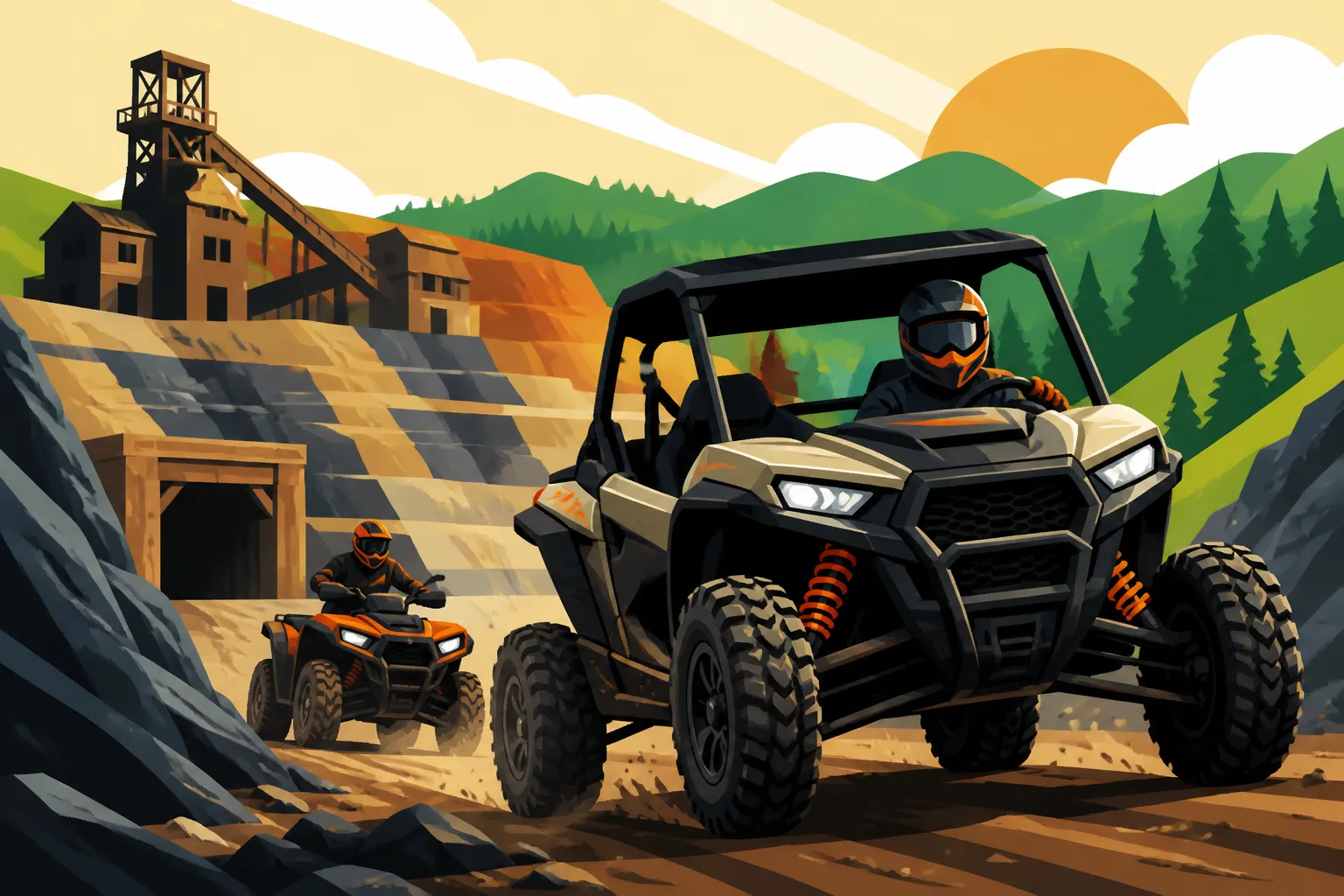
1,400 Acres of Old Mine
Redbird Off-Road State Recreation Area sits near Dugger in Sullivan County, where reclaimed coal-mining ground creates a very different ride from a smooth woodland trail. The terrain can be steep, rutted, muddy, and hard on equipment, so this guide explains what to expect, how to prepare, and what to check before unloading.
What the old mine terrain at Redbird is like
A reclaimed mine landscape, not a groomed track
Redbird’s roughly 1,400 acres are shaped by the area’s mining history. Instead of one continuous, even trail surface, riders encounter changing ground: old haul roads, spoil piles, slopes, uneven benches, and stretches where loose earth or standing water can affect traction. The land’s industrial past is part of the appeal, but it also means the riding experience can feel rougher and less predictable than a purpose-built track.
Conditions vary across the property and from one visit to another. A dry stretch may feel firm under your tires, while a shaded dip or low area can hold water and turn slick. Reclaimed clay can become especially greasy after rain, and ruts may hide rocks or soft spots. Don’t assume that a route you handled comfortably last time will feel the same after a wet week.
The scale of the area gives you room to explore, but acreage alone doesn’t tell you which routes are right for your machine or experience. Redbird includes trail choices that vary in difficulty, and not every route will suit every rider. Check posted trail information and park guidance before choosing a route. For an overview of the site and its history, see [Indiana's 1,400-Acre Redbird] and [Redbird at Dugger in Sullivan County].
Expect climbs, changing surfaces, and shared trails
The reclaimed terrain can include climbs and descents that ask more of your machine than a flat forest road would. On a hill, the important question isn’t simply whether your ATV or UTV has enough power. Consider whether your tires have grip, whether your approach is clear, whether you can stop safely, and whether your group can handle the descent if conditions change.
Surface conditions can also shift within a short distance. A hard-packed section may lead into loose material, a muddy hollow, or a rutted turn. Slow down where visibility is limited, and leave enough room between machines to avoid riding into another person’s dust, spray, or sudden stop. If a climb looks beyond your comfort level, turning around is a sound decision—not a failure to make the most of the park.
Share the trail with care. A smaller ATV and a full-size rig do not occupy the same amount of space, and bends or hill crests can hide oncoming riders. Keep to marked routes, use a controlled speed, and leave room for others to pass where the trail allows. If you’re comparing the two major state riding areas, [Indiana's Two State ORV Areas Compared] can help set expectations before you plan a visit.
Choosing trails and planning a suitable ride
Match the route to your experience and machine
A useful Redbird plan starts with an honest assessment of who is riding. A first-time rider may be better off choosing a less demanding route and building confidence gradually, rather than following an experienced friend onto steep or deeply rutted ground. Families should make sure younger riders can control their machines and understand how to stop, yield, and respond if the group gets separated.
Machine size and capability matter too. A low-clearance or two-wheel-drive machine may have different limits from a larger four-wheel-drive ATV or UTV. A route that looks manageable on a map can be harder in person if the surface is slick, the slope is uneven, or the machine is carrying a passenger or cargo. Don’t let a group’s pace pressure you into attempting terrain that doesn’t feel right.
Before setting out, check the park’s current trail information and identify a manageable first section. If you use onX Offroad to review routes or track your position, treat it as a planning aid rather than permission to ride anywhere. On-site signs and park rules take priority, and a mapped line does not mean a trail is open or appropriate for your machine. For route ideas and a broader view of the area, see [Redbird Loops You Can Ride in an Afternoon].
| Riding situation | What to consider | A sensible approach |
|---|---|---|
| First visit | Unfamiliar trail layout and surfaces | Start conservatively and follow posted guidance |
| Recent rain | Slick clay, standing water, and deeper ruts | Check conditions before leaving and avoid pushing into uncertain ground |
| Steep terrain | Traction, visibility, and recovery options | Walk or assess a questionable section before committing |
| Mixed-size group | Different machine handling and rider confidence | Set a pace for the least experienced rider and regroup safely |
| Longer outing | Fuel, daylight, and changing conditions | Plan breaks and a turnaround point before the ride |
Use maps as a backup, not a substitute for trail signs
A map can help you understand where you are and plan a route, especially when you’re unfamiliar with the property. onX Offroad may help riders review mapped routes and keep track of their position, but digital mapping is not a substitute for checking official park information. Routes can change, access may be restricted, and phone coverage or battery life can become an issue in the field.
Download or save the information you need before arrival rather than assuming you’ll have a reliable connection. Bring a charged phone, but consider carrying a backup power source and keeping your group together. Agree on a meeting point in case riders become separated, and make sure everyone knows how to return to the staging area or seek help.
A paper or offline reference is especially useful when a screen is hard to read in bright sun, rain, mud, or vibration. Keep any printed materials protected from water and dirt. The park’s posted signs remain the most important guide for where you may ride. For more advice on trail planning, [Indiana Trail Maps From the DNR] and [Indiana Trail Conditions Before You Ride] are useful companion topics.
Preparing your ATV or UTV for reclaimed ground
Check the machine before you leave home
A short inspection can prevent a small problem from turning into a long day beside the trail. Check tire condition and pressure against the machine manufacturer’s guidance, inspect the brakes and controls, and make sure the throttle returns properly. Look for loose hardware, damaged lights, leaks, and anything that could be shaken free on uneven ground. For a UTV, check seat belts and doors or nets before riders climb in.
Bring recovery equipment that suits your machine and your experience. A winch can be useful, but only if it is installed and used safely; it doesn’t make every slope or muddy section a good idea. Carry basic tools and the supplies you may need for minor issues, and avoid relying on another rider to have everything your group needs. A machine that is already showing warning signs at home is not a good candidate for a demanding trail day.
Pack water, food, weather-appropriate clothing, and a first-aid kit. Mud and water can make the ride feel colder than expected, while summer heat can make a slow, strenuous ride uncomfortable. Wear protective gear suited to the machine and conditions, and check the rules that apply to your rider and vehicle before arriving. Information about [Indiana Helmet Rules at a State ORV Area] can help families confirm what to review.
Think about rain, mud, and cleanup
Rain changes more than the amount of mud on your tires. It can reduce traction, conceal ruts, and make slopes harder to climb or descend. If conditions are poor, consider postponing the trip or choosing a less demanding route. That decision protects riders and can help avoid unnecessary trail damage.
Avoid trying to force your way through a section just because you’ve already started it. If the ground feels unstable, stop somewhere safe and reassess. Turning around may be easier than getting stuck farther in, where recovery could be difficult or create a hazard for others. Keep a safe distance from the machine ahead, especially on hills and in muddy sections where visibility may be limited.
Plan for cleanup before loading up. Mud can collect around tires, guards, suspension parts, and cooling areas, so inspect the machine rather than rinsing only the most visible surfaces. Clean equipment before hauling it home when practical, and make sure you aren’t carrying loose debris or equipment that could shift on the trailer. [Indiana Riding After Heavy Rain] and [Tire Pressure for Reclaimed Clay] offer more detail for riders preparing for variable conditions.
Making a smooth visit to Redbird
Check access details and rules before driving to Dugger
Before leaving, confirm that the riding area is open and review current operating information, trail conditions, permit requirements, and any restrictions for your machine. The rules and access details are separate from your Indiana vehicle registration paperwork, so don’t assume that a registration decal alone covers every requirement for riding at a state recreation area. Check the official park information for the permits and fees that apply to your visit.
Plan your arrival with enough time to unload, prepare, and review trail notices without rushing. If your group is meeting other riders, choose a clear staging point and make sure everyone has the same directions. Save the park’s contact details and location before setting out; cell service can vary in rural parts of southern Indiana, and relying on a live map for the entire drive or ride is risky.
If the weather has been unsettled, check again close to your departure. Conditions can shift, and a trail that was enjoyable in dry weather may be substantially more challenging after rain. For practical visit planning, [Riding Redbird for a Day] and [Indiana Trail Closures to Check First] can help you prepare for the logistics as well as the ride.
Set a group plan that leaves room to change course
Before the first trail, agree on the group’s pace, stopping points, and what to do if someone has a problem. Keep the least experienced rider in a position where the group can watch out for them, and regroup at safe locations rather than stopping unexpectedly in a narrow or steep section. A simple plan reduces confusion when dust, terrain, or noise makes conversation difficult.
Set limits before anyone feels pressured to keep going. Decide that any rider can call for a pause or turn back if the terrain feels unsafe. If a machine becomes stuck or develops a problem, move the group to a safe spot and avoid creating a bottleneck on the trail. A recovery attempt should be controlled and appropriate for the equipment and people involved.
Redbird’s old mine landscape is rewarding precisely because it is not a polished, predictable ride. Take time to read the conditions, choose routes that suit your group, and treat posted restrictions as part of the trip plan. The best day is not necessarily the one that covers the most ground; it’s the one where everyone and every machine return safely.
Disclaimer
This article is for general informational purposes only and does not constitute professional advice. Laws, prices and regulations vary by location and change over time. Consult a qualified professional for guidance on your specific situation.