Indiana Trails With Hill Climbs
A steep climb can look manageable from the bottom, then turn slick, rutted, or blind halfway up. Indiana’s reclaimed-mine parks and private riding areas offer varied terrain, but conditions and trail difficulty can change quickly. This guide explains where to look for hill climbs, how to judge a route, and what to do before you point an ATV or UTV uphill.
Where to find hill climbs in Indiana
Indiana’s riding areas include reclaimed mine land, wooded trails, and private parks with changing elevation. A place that offers climbs may also have flat stretches, muddy sections, or routes that are unsuitable for a rider’s experience or machine. Check the park’s current trail information before you unload.
Redbird and Interlake
Redbird Off-Road State Recreation Area near Dugger and Interlake Off-Road State Recreation Area near Lynnville are two well-known public riding areas in southern Indiana. Their reclaimed-mine landscapes can include slopes, uneven ground, and elevation changes. The exact challenge depends on the route, recent weather, maintenance, and the skill of the rider—not simply the name of the park.
At Redbird, terrain shaped by mining can feel very different from a groomed trail. A climb may include loose soil, ruts, rocks, or a crest that blocks your view of what lies beyond. Interlake also offers varied ground across its large riding area, so riders should use designated routes and consult park information instead of assuming every visible slope is open to vehicles.
If you are new to either area, start with an easier route and get a feel for traction, steering, and braking before attempting a steeper hill. A trail map can help you understand the layout, but a map does not tell you whether a slope has become muddy or rutted since it was made. For planning, compare [Indiana's Two State ORV Areas Compared] and check [Indiana Trail Maps From the DNR] before the trip. Riders who use onX Offroad can also review mapped routes as part of their planning, while still following signs and park rules on site.
Private parks and changing terrain
Private riding parks can be another option for riders looking for hills, mud, or more varied terrain. Haspin Acres near Laurel and Badlands Off Road Park near Attica are examples of Indiana destinations with different riding environments. Before choosing one, check its current rules, permitted vehicle types, operating information, and trail conditions directly with the park.
A place with hills is not automatically a good place for every rider. A new rider may enjoy a gentle, visible slope while finding a steep, rutted climb stressful. A long, heavy UTV may need more room to turn and recover than a smaller ATV. Look for a route that matches both the operator’s experience and the machine’s capability.
Use park maps and signs to identify designated routes; never assume a hill is open just because it is easy to see. Conditions can also differ between parks, so do not treat a successful ride at one location as proof that a similar-looking slope elsewhere is safe. For help choosing an area based on your experience, see [Indiana Trails for Beginners] and [Indiana Trails With Long Loops].
How to judge a climb before riding it
A hill can look straightforward from below and feel completely different once you are on it. Take time to assess the route before committing. If you cannot see the crest, do not know what is on the other side, or cannot identify a safe way to stop or turn around, choose another trail.
Check the slope, surface, and sightline
From a safe place, look for loose rocks, exposed roots, deep ruts, standing water, and patches where tires may lose traction. Consider whether the climb is straight or sharply angled, how much room there is at the top, and whether other riders may be approaching from the opposite direction. A blind crest deserves extra caution: another machine, a drop, or an obstacle may be waiting out of sight.
Weather changes the answer. Reclaimed clay and other fine soils can become slick after rain, while dry ground may be loose or dusty. Ruts left by earlier vehicles can catch a tire or pull a machine off its intended line. If the slope looks substantially different from what you expected, stop and reassess instead of trying it simply because you drove to the park.
A trail app such as onX Offroad can be useful for route planning, but it should not replace a park map, current signs, or an on-the-ground inspection. Mapped information may not reflect a fresh washout, a temporary closure, or a change in trail conditions. Keep your route plan flexible and follow posted directions.
Match the climb to the machine and rider
Think about the whole setup, not only engine power. Tire condition, ground clearance, machine weight, passenger load, and the rider’s experience all affect how confidently a vehicle can handle a slope. A heavy UTV carrying passengers and gear may respond differently from a lighter ATV, especially when the surface is uneven.
Before riding a hill, read the owner’s manual for your machine’s operating guidance. Use suitable protective gear, make sure everyone is properly seated, and keep passengers within the vehicle’s design limits. For a UTV, follow the manufacturer’s instructions about seat belts and other occupant restraints. For any machine, avoid carrying loose gear that could shift during a climb.
| What to assess | Why it matters | Safer choice when uncertain |
|---|---|---|
| Visibility over the crest | You may not see a drop, obstacle, or oncoming rider | Do not climb a blind hill until you can inspect the route |
| Surface and ruts | Loose or slick ground can reduce traction or redirect tires | Choose a firmer, less rutted route |
| Room at the top | A narrow or crowded landing can leave little room to stop | Wait until the area is clear or take another trail |
| Machine and passenger load | Weight and balance affect control on a slope | Reduce unnecessary cargo and follow the manual |
| Rider experience | A steep climb can demand controlled throttle and judgment | Practise on easier terrain first |
| Weather | Rain can change traction and deepen ruts | Recheck conditions and skip questionable climbs |
For more context on terrain and machine choice, read [Indiana Trails With Rock] and [A Machine That Suits Indiana Hill Climbs].
Safer technique for ATV and UTV hill climbs
There is no single technique that makes every hill safe. The machine’s design, surface, slope, and manufacturer instructions all matter. The core habit is to assess before committing, ride at a controlled pace, and avoid turning a difficult climb into a hurried recovery.
Before you start uphill
Pause at a safe spot and make sure the route is clear. If possible, inspect the top and landing area from a safe, permitted location. Agree on a simple plan with your group: who will climb first, where others will wait, and how you will communicate if someone needs help. Keep enough distance between vehicles that one rider’s sudden stop does not put another machine directly behind it.
If a climb seems too steep, too slick, or too narrow for your comfort, do not start it. Turning around before the attempt is often the safest decision. If you are unsure whether a route is open or appropriate, ask park staff or follow the posted trail guidance rather than testing the slope.
Use a steady, controlled approach consistent with your machine’s manual and your training. Avoid sudden changes in throttle or direction. Do not speed toward a hill to build momentum; extra speed can make it harder to respond to an obstacle, a rut, or an unexpected loss of traction. If the machine cannot continue safely, follow the owner’s manual and your training for stopping or recovering it. Do not improvise a maneuver that could cause a rollover.
Know when to stop and get help
A climb is not a test of courage. Stop and reconsider if the machine begins to lose traction, the route becomes harder than expected, or you cannot maintain a safe line. Do not crowd a struggling vehicle from below, and do not stand directly in its path. Keep bystanders and other riders away from the slope until the situation is stable.
A winch can help in some recovery situations, but it is not a reason to attempt a climb beyond your ability. Use recovery equipment only as directed by its manufacturer, with an appropriate anchor and a clear area around the line. A damaged tree, an unsuitable anchor, or a person standing near a loaded cable can create additional danger. If you do not know how to recover the machine safely, ask for experienced help.
After an attempt, take a moment to check the machine and passengers before continuing. Look for obvious damage, loose gear, or a change in handling. If the trail has become unsafe because of mud, damage, or congestion, leave the climb and report the issue to park staff. For broader planning advice, see [Indiana Trail Conditions Before You Ride] and [Indiana Trail Closures to Check First].
Plan a hill-climb day without rushing
The most enjoyable ride is usually the one where the group has enough time to make good decisions. Build room into the day for maps, trail checks, breaks, and changing plans. A tight schedule can make a rider feel pressured to attempt a climb that should have been skipped.
Prepare before leaving home
Check the riding area’s rules and updates, then confirm that your machine is permitted there. Review where you will park, unload, and access the trail system. Pack water, suitable protective equipment, basic tools, and a way to contact your group. Cell service can vary in rural riding areas, so do not assume you can call for help from every trail.
If you use onX Offroad to plan, save the information you need before you leave and treat it as a navigation aid, not permission to ride. Follow park signs and closures even if an app displays a route. Keep your group together, agree on a meeting point, and let someone outside the group know where you plan to ride.
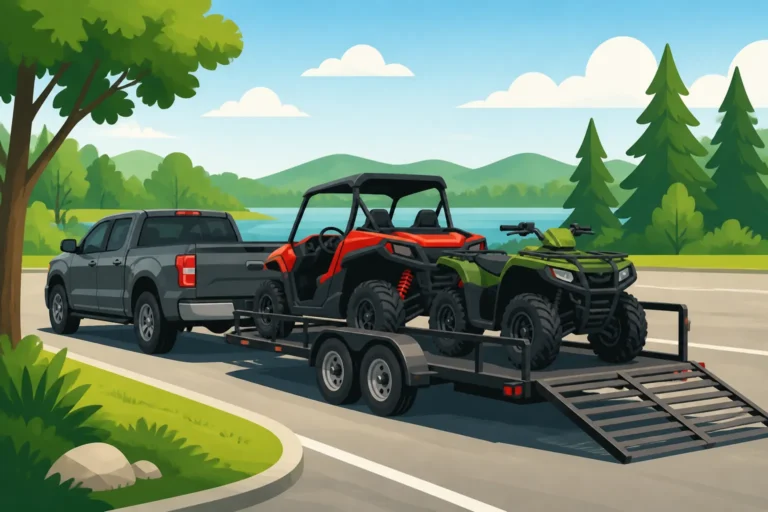
Check the machine before loading it. Tires, brakes, steering, fluids, and the battery all deserve attention, especially if the vehicle has been stored or has not been ridden recently. Secure the machine properly on the trailer and bring recovery gear only if you know how to use it safely. For a broader checklist, see [Indiana Trail Etiquette on Shared Ground] and [Indiana Riding After Heavy Rain].
Let conditions choose the route
Rain, traffic, and trail maintenance can change what is reasonable from one visit to the next. If you arrive and find the ground slick or the climbs heavily rutted, switch to an easier route or postpone the hill-climb portion of the day. There is no benefit in forcing a plan when the conditions have changed.
Ride within posted boundaries, yield appropriately, and avoid creating new lines around a muddy or blocked section. Going off trail can damage the property, create hazards, and violate park rules. If a route is closed, take the detour or choose another area. When a group includes beginners, let the least experienced rider’s comfort set the pace.
Use a navigation app such as onX Offroad to help organize a route, but confirm details with the park before riding and continue watching for signs in the field. A good plan includes alternatives: a shorter loop, an easier trail, or an early return. That flexibility is especially useful when a hill that looked manageable on a map turns out to be slick, crowded, or beyond the group’s comfort level.
Disclaimer
This article is for general informational purposes only and does not constitute professional advice. Laws, prices and regulations vary by location and change over time. Consult a qualified professional for guidance on your specific situation.