Indiana Trails With Mud
Indiana mud can change from firm clay to axle-deep ruts after a single stretch of rain, making a familiar trail feel like a different ride. If you’re looking for muddy ATV and UTV trails, the key is choosing a legal riding area, checking conditions before you load, and bringing a machine and recovery plan suited to the ground.
Where to Ride Muddy ATV and UTV Trails in Indiana
Indiana’s off-road riding areas include reclaimed mine land, wooded trails, and private parks. Their surfaces can be especially challenging when wet, but no location is guaranteed to be muddy on a particular day. Rainfall, drainage, trail maintenance, and seasonal closures all affect what you’ll find when you arrive.
Redbird Off-Road State Recreation Area
Redbird is near Dugger in Sullivan County, on land shaped by its coal-mining history. That reclaimed terrain gives the area a mix of trail experiences, including climbs and uneven ground that can become slick after rain. The same stretch may feel manageable when dry and much more demanding when clay is wet, so match your route to your group’s skill and equipment.
Before heading out, check for current trail notices and follow posted closures. Wet ground can make a route harder to control and increase the risk of damaging the trail or getting stuck. Stay on marked routes rather than cutting around a muddy section; riding off trail can damage the land and may violate park rules. For a broader introduction to the area, see [Redbird Off-Road State Recreation Area] and [Indiana's Reclaimed Mine Riding].
Interlake Off-Road State Recreation Area
Interlake, near Lynnville, spans parts of Pike and Warrick counties and includes varied reclaimed-land terrain. A wet day can bring slippery climbs, soft patches, and ruts, but conditions differ across the property. A trail that drains well may be rideable while another section is too muddy or has been closed for safety or maintenance.
Plan for changing ground instead of assuming every route will have the same level of difficulty. If you’re riding with a mixed-experience group, agree on a conservative route and regroup at clear landmarks. Don’t follow tire tracks around a puddle or barrier: those tracks may lead off the designated route or into ground that is less stable than it looks. See [Indiana's 3,550-Acre Interlake] and [Indiana Trail Conditions Before You Ride] for related planning topics.
Private parks and other riding areas
Private riding parks such as Badlands Off Road Park in Attica and Haspin Acres near Laurel offer different terrain and operating rules from Indiana’s state recreation areas. Their routes, access requirements, and conditions can change, so check directly with the park before setting out. A place known for challenging riding is not automatically open in every weather condition.
If you’re considering a private park, confirm which areas are open to your type of machine and whether wet-weather restrictions apply. Ask about trail conditions, closures, and any equipment or safety requirements. For more context, see [Indiana's Private Off-Road Parks], [Badlands Off Road Park in Indiana], and [Haspin Acres in Southern Indiana].
| Riding area | Location | What to consider after rain |
|---|---|---|
| Redbird Off-Road State Recreation Area | Near Dugger in Sullivan County | Reclaimed terrain may become slick; check posted conditions and closures |
| Interlake Off-Road State Recreation Area | Near Lynnville in Pike and Warrick counties | Expect changing conditions across different parts of the property |
| Badlands Off Road Park | Near Attica | Confirm current access, conditions, and park rules directly |
| Haspin Acres | Near Laurel | Check operating information and wet-weather restrictions before traveling |
How to Choose a Mud Trail That Fits Your Ride
A muddy route can be fun when the challenge is appropriate and the trail is open. It can also turn into an exhausting recovery problem when riders underestimate the ground, the weather, or their machines. Decide what kind of ride you want before choosing an area: a few slippery sections on a mostly manageable loop is very different from a day focused on deep mud.
Match the route to your experience
Think about the least experienced rider in your group, not just the person with the most powerful machine. A steep, slick climb that feels routine to one rider may be intimidating for someone newer to off-road riding. If there’s any doubt, start with an easier route, ride at a controlled pace, and reassess before taking on harder terrain.
Mud also changes how a machine responds. Tires can lose grip, steering may feel less predictable, and stopping distances can increase. Give riders space, avoid rushing through blind turns, and don’t crowd someone who is trying to climb or navigate a rut. A lower-key outing that ends with everyone and every machine getting home is a better day than a route chosen just to prove a point.
Look beyond the word “mud”
“Muddy trail” can mean anything from a damp, firm track to a deep, water-filled rut. Rainfall alone doesn’t tell you what you’ll encounter: soil, slope, drainage, shade, and recent traffic all play a part. A sunny forecast doesn’t guarantee that a shaded or low-lying section has dried out.
Use trail and weather information as clues, not promises. Park notices and staff can provide the most relevant guidance about closures and access. Mapping tools such as onX Offroad can help you review your planned area and organize a route, but don’t treat a digital map as confirmation that a specific trail is open or passable. For another useful planning topic, see [Indiana Trails Closed After Rain].
Stay on designated routes
It can be tempting to leave the trail to avoid a deep rut, especially when a group is waiting behind you. Don’t assume the ground beside the route is safe or that riding around an obstacle is permitted. The bypass may cross fragile ground, private land, or a closed section, and it may create new damage that gets the route restricted.
If a trail is blocked, marked closed, or beyond your group’s ability, stop and choose an allowed alternative. Don’t follow another rider off route just because their tracks are visible. Review [Indiana Rules for Riding Off a Marked Trail] before your trip if you’re unsure about the distinction between a challenging trail and an unauthorized detour.
Prepare Your Machine and Group for Wet Conditions
Wet-weather preparation is not only about traction. It’s also about avoiding preventable breakdowns, keeping riders comfortable, and knowing what to do when a machine stops moving. A little planning before leaving home can save a long, muddy wait beside the trail.
Check the machine before loading
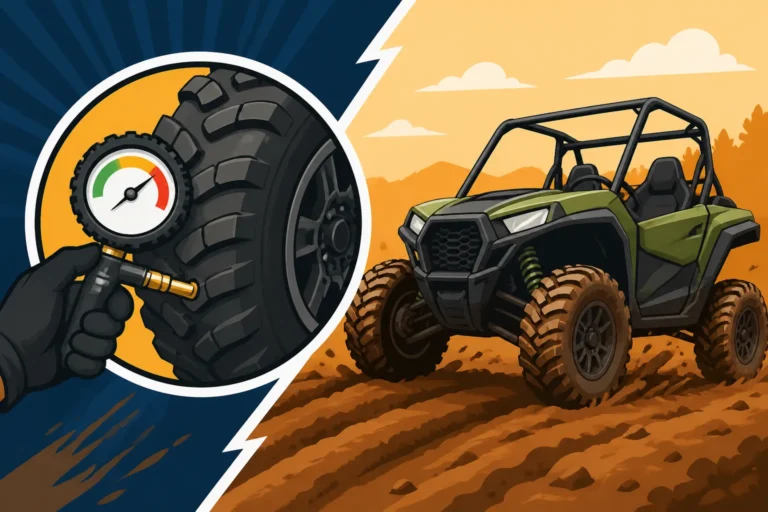
Look over tires, brakes, steering, lights, and fluids before the trip. Tires should be in good condition and appropriate for the machine and terrain; worn tread can make an already slippery surface harder to manage. Follow the manufacturer’s guidance for tire pressure and operating limits rather than making a last-minute adjustment based on guesswork.
For a UTV, check that seat belts and occupant restraints work properly. Keep required safety gear accessible, and make sure the machine’s load is secured so it cannot shift on uneven ground. Mud can hide rocks, branches, and ruts, so a winch or other recovery equipment is only useful if it is in working order and the operator knows how to use it safely. Never attach a recovery line to an unsuitable point or stand in the path of a loaded line.
Bring recovery and communication essentials
A practical group plan includes a charged phone, a basic first-aid kit, water, and appropriate clothing for wet conditions. Cell service may be unreliable in some riding areas, so tell someone where you’re going and when you expect to return. Keep your group together, establish a meeting point, and agree on what to do if riders become separated.
A recovery strap or winch can help in some situations, but recovery carries risks. Keep people clear of tensioned lines, use equipment as directed, and stop if the machine is stuck in a way that makes recovery unsafe. Don’t keep spinning the tires in the hope of powering out; that can deepen the rut, overheat components, or make the machine harder to recover.
Protect the machine after the ride
Mud left packed around a machine can conceal damage and make routine checks harder. Once you’re home, clean it carefully, paying attention to areas where mud can collect around the radiator, brakes, suspension, and moving parts. Avoid directing high-pressure water at seals, electrical connections, or other components that can be damaged by forceful spray.
After cleaning, check for loose fasteners, damaged lines, unusual noises, or signs of overheating. A muddy ride may put more strain on parts than a dry trail day, so don’t dismiss a change in handling or a warning light as “just mud.” For more upkeep guidance, see [Radiators Packed With Reclaimed Clay] and [Washing a Machine Before You Load].
Plan Around Weather, Closures, and Trail Etiquette
The best way to enjoy Indiana mud trails is to leave room for a change of plan. Conditions can shift, parks may close routes, and a machine that was comfortable on dry ground may struggle in slick terrain. Build flexibility into your schedule rather than trying to force a ride because you’ve already made the drive.
Check before you tow
Before leaving, check the riding area’s official notices or contact the park directly about access and trail conditions. Confirm that the area is open, that your machine is permitted, and that any route restrictions are clear. This is especially important after substantial rain, when a park may limit access to protect trails or riders.
Use onX Offroad to help organize your trip and review your intended riding area, then verify access and closures through the park’s own information. If you’re visiting Redbird or Interlake, don’t assume an old route plan reflects current conditions. A quick check before loading can prevent a long drive to a closed gate or a trail that your group shouldn’t attempt.
Ride with respect for other people and the land
Mud can make passing and stopping more difficult, so leave extra room between machines. Slow down near other riders, staff, and people on foot, and avoid splashing others when you can do so safely. If a machine is stopped, check that the rider is okay before moving around them; a crowded, slippery trail can turn a small delay into a risky moment.
Follow posted speed limits, route markings, and park instructions. Don’t widen a trail by driving around wet spots, and don’t create a new route through vegetation to bypass a difficult section. Respecting closures helps keep riding areas usable for everyone. For related guidance, see [Indiana Trail Etiquette on Shared Ground].
Know when to call it a day
Turn around when the trail exceeds your group’s ability, visibility is poor, a machine is overheating, or a rider is becoming tired or cold. Mud can make fatigue easy to underestimate: riders focus on steering and recovery, then realize later they’ve been tense and working hard for hours. Taking a break early is sensible, not a sign that the trip has failed.
A good mud ride doesn’t require the deepest rut or the hardest climb. Choose open routes, make conservative decisions, and leave the area as you found it. When the conditions don’t suit your group, returning another day is often the safest and most enjoyable choice.
Disclaimer
This article is for general informational purposes only and does not constitute professional advice. Laws, prices and regulations vary by location and change over time. Consult a qualified professional for guidance on your specific situation.