Indiana’s 3,550-Acre Interlake
Interlake’s size is part of its appeal—and part of what can make a first visit feel overwhelming. With a large riding area, many miles of trail and terrain that can change with the weather, it helps to arrive with a plan rather than choosing a route at the gate. This guide covers what to expect, how to prepare, and how to make a safer, more enjoyable day.
What to expect at Interlake
A large riding area near Lynnville
Interlake Off-Road State Recreation Area is near Lynnville in southwestern Indiana, across Pike and Warrick counties. The area is described as spanning about 3,550 acres, with nearly 100 miles of trails and 17 lakes. That gives riders room to plan different kinds of outings, but it also means that “we’ll just explore” can become a frustrating strategy if nobody in the group has looked at a map.
The landscape reflects its history as reclaimed mining ground. Rather than a single, uniform trail network, expect changing terrain, including slopes, old mine features, open areas and routes that may feel different from one section to another. A trail that looks straightforward on a screen can take more time when it is steep, rutted or muddy. It’s worth leaving room in your schedule for slower progress, breaks and the possibility of turning back.
Interlake is often compared with Redbird, another well-known Indiana off-road area. They differ in scale and setting, so the best choice depends on the ride you want, not simply which place has the bigger number. The table offers a quick starting point; check official maps and notices before you travel because available routes and conditions can change.
| Riding area | Approximate size | Setting | A useful planning note |
|---|---|---|---|
| Interlake | About 3,550 acres | Near Lynnville, across Pike and Warrick counties | A large area with nearly 100 miles of trails and 17 lakes |
| Redbird | About 1,400 acres | Near Dugger in Sullivan County | A smaller riding area with its own trail network and conditions |
If you are deciding between the two, [Indiana's Two State ORV Areas Compared] can help frame the choice. For more on Interlake’s location and layout, see [Interlake at Lynnville] and [Interlake Across Pike and Warrick Counties].
Trails, lakes and changing terrain
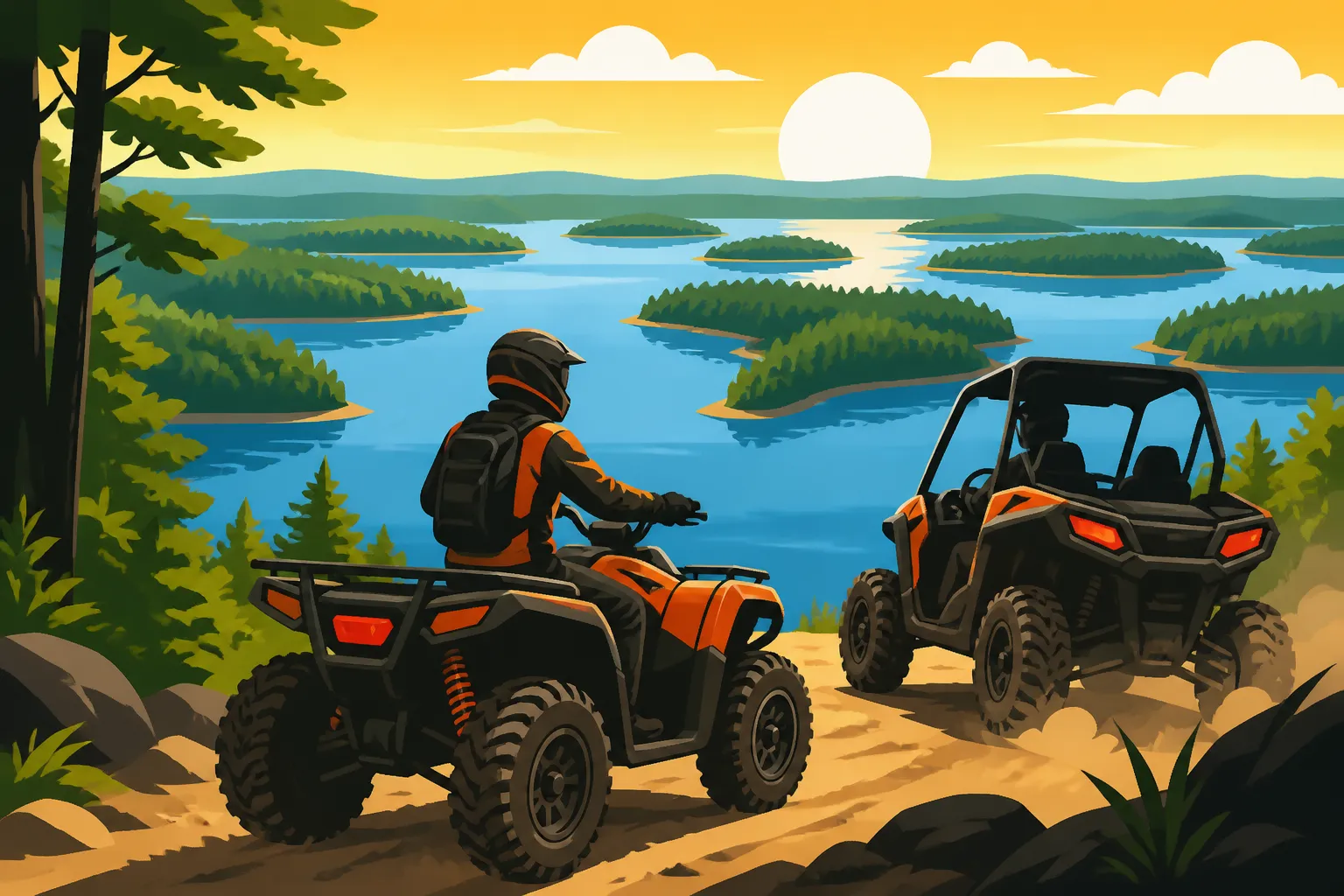
The combination of trails, hills and lakes gives Interlake a different feel from a compact park with a small set of loops. You may spend part of a ride moving through wooded or reclaimed ground, then reach a more open section or a view of water. The lakes add to the character of the area, but they should not be treated as riding features: stay on marked routes and follow posted restrictions around shorelines and sensitive ground.
The phrase “nearly 100 miles of trail” is useful for understanding the area’s scale, not a promise that every route will be open or suitable for every vehicle on every visit. Trail designations, temporary closures and surface conditions matter. A route that suits a capable full-size vehicle may be a poor fit for a new rider, a smaller machine or a group that is trying to keep a relaxed pace.
It can help to think of Interlake as a place to explore in sections, rather than an area you must cover in one day. Choose a manageable route, identify a return point, and leave time for a rest stop or a change of plan. If the group has mixed experience levels, agree in advance that the most cautious rider sets the pace. You can read more about the lakes and trail network in [Nearly 100 Miles at Interlake] and [Seventeen Lakes Inside Interlake].
Plan your Interlake ride before leaving home
Use maps to make a realistic route
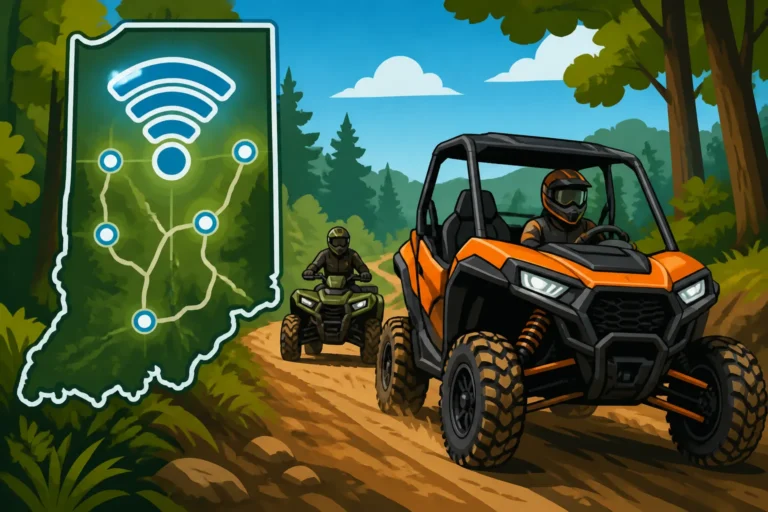
Start with the official trail information available for the area and review it before unloading. Look for marked routes, access points, restrictions and any notices about closures or changing conditions. A paper map or downloaded map is a sensible backup if cell service is weak where you are riding. [Indiana Trail Maps From the DNR] is a useful starting point for understanding where to look for public trail information.
A route-planning app such as onX Offroad can be another way to review the area and keep track of your intended route. Treat any digital map as a planning aid, not permission to ride wherever a line appears. Follow signs and official restrictions on the ground, and do not assume that an old saved track reflects current conditions. It’s also helpful to save the map for offline use before you arrive, rather than waiting until your phone has a weak connection.
Before your group starts, point out the planned route and agree on what to do if someone gets separated. Choose obvious places to regroup, such as a designated intersection or staging area shown on the official map, and make sure everyone knows the plan. A simple check-in routine can prevent a small gap between riders from turning into a long search through unfamiliar trails.
Match the route to the riders and machines
An ambitious route is not automatically a better route. Consider the least experienced rider, the machine with the least suitable tires or clearance, and anyone who may need more breaks. If a rider is new to off-road terrain, build confidence on an easier, familiar section before attempting steeper or more technical ground. The same applies to a group with different vehicle types: a route that is comfortable for one machine may be tiring or difficult for another.
Think about how the vehicle handles the terrain you expect. Ground clearance, tires, brakes and steering all affect comfort and control. A heavy side-by-side may feel stable in some situations but be harder to maneuver in narrow or uneven sections. An ATV may be nimble but still require careful speed management on slopes, loose ground and ruts. Check the manufacturer’s guidance for your machine, and don’t use a trail rating or a friend’s confidence as a substitute for your own judgment.
It is useful to have a conservative option in mind before you set out. If a trail is more difficult than expected, turn around while everyone is still calm and has room to maneuver. For practical guidance on assessing conditions before you arrive, see [Indiana Trail Conditions Before You Ride]. onX Offroad may help you review route options in advance, but follow Interlake’s current signs and official trail directions once you are on site.
Ride safely and adapt to trail conditions
Weather can change the character of a route
Rain can make reclaimed ground slick and rutted, while dry weather can leave some surfaces dusty or loose. Conditions can vary across the same area, too: a shaded section may stay wet after an open stretch has dried. That uncertainty is a good reason to avoid planning a day around one challenging trail or a tight turnaround time.
Check the forecast before you leave and reassess when you arrive. If heavy rain has affected the area, consider shortening your route, choosing a less demanding section or postponing the ride. Deep ruts and slippery slopes are not just uncomfortable; they can make it harder to steer, stop or recover a machine safely. When traction is poor, slow down, leave more space between vehicles and avoid following another rider too closely up a hill.
If you encounter a section that feels unsafe, don’t let the group’s momentum make the decision for you. Stop in a safe place, talk through the options and turn around if needed. It may feel disappointing to skip a planned route, especially after towing a machine to southern Indiana, but getting everyone back safely is a better outcome than pressing on to save a few minutes.
Share trails thoughtfully
A large riding area can bring riders with different speeds, vehicles and comfort levels onto nearby routes. Keep a controlled pace, stay on designated trails and be prepared to meet other users around bends or on uneven ground. Slow down where visibility is limited, and give other riders room to pass safely when the trail allows it. Dust can obscure what is ahead, so avoid riding close behind another vehicle.
Stay alert for changes in trail width, surface and slope. A broad open area can narrow unexpectedly, and a climb that looks easy from below may not offer a safe place to stop midway. If you approach an obstacle or steep section, pause somewhere stable and consider whether the whole group can manage it. Don’t pressure someone into attempting a feature they are uncomfortable with, and don’t block a route while the group debates what to do.
Respect marked boundaries and posted closures, even when a route appears rideable. Restrictions may protect riders, property, wildlife or areas that are being maintained. Carry the required riding documents and follow the rules for the location. For guidance on personal protective equipment, review [Indiana Helmet Rules at a State ORV Area]. A helmet, suitable clothing and eye protection are practical parts of the plan, not last-minute accessories.
Prepare the people, vehicles and gear
Do a pre-ride check
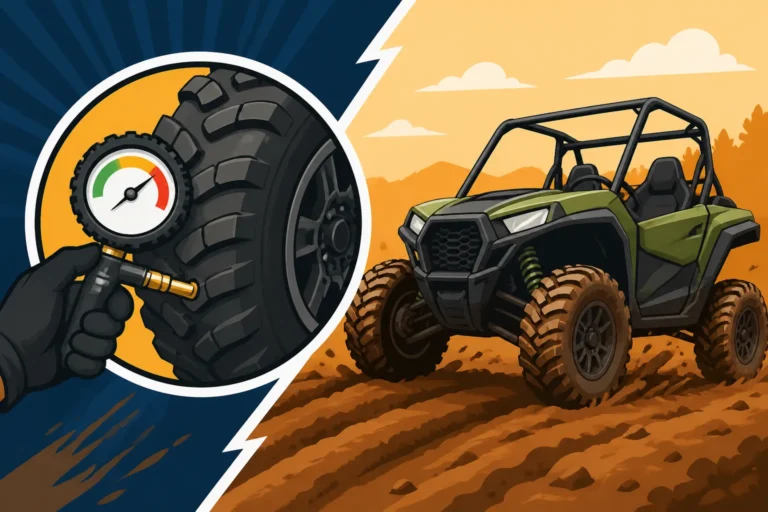
A quick mechanical check can prevent a minor problem from ending the day early. Inspect tires for damage and suitable pressure, test the brakes, check steering and lights, and look for obvious fluid leaks. Make sure the fuel level is appropriate for the route you intend to ride, and know how to use the machine’s controls before leaving the staging area. If the vehicle has been sitting through winter or has not been used recently, give it extra attention rather than assuming it is ready because it starts.
Bring the basic tools and supplies that fit your machine and experience. A compact repair kit, tire repair supplies where appropriate, a first-aid kit, water and a charged phone can make an unexpected delay easier to handle. Secure loose items so they cannot fall onto the trail or interfere with the controls. If you carry a recovery strap or other recovery equipment, know how to use it safely; improvised towing can create risks for both people and machines.
Riders often focus on the vehicle and forget about comfort. Gloves, eye protection, weather-appropriate layers and a change of clothes can make a long day much more pleasant. Pack water and food even if you expect a short ride, and let someone outside the group know where you are going and when you expect to return. These small preparations matter most when the day takes longer than planned.
Make a plan for families and mixed-age groups
If children or newer riders are coming along, plan around their attention, stamina and confidence rather than the most experienced adult’s preferred pace. Agree on simple trail rules before starting: keep a safe distance, stop only in a suitable place, and wait at the agreed regroup points. A short, calm conversation in the parking area is easier than trying to explain a rule while everyone is moving.
Adults should stay close enough to provide meaningful supervision and should be ready to stop the group when conditions change. Be honest about what younger riders can manage, and avoid treating a child’s enthusiasm as proof that a route is appropriate. Take breaks before someone is exhausted. Fatigue can lead to rushed decisions and slower reactions, especially late in the day when riders want to finish one more section.
Before you go, review the rules that apply to riders at the area and to the vehicle they will use. Requirements can depend on age, machine type and where the ride takes place. [Indiana Safety Training for Riders] and [Indiana Rules for a Rider Under 14] are useful related topics to review while planning. If your group includes rentals, confirm in advance what equipment, paperwork and permissions are included rather than assuming every rental arrangement works the same way.
Make the visit smoother from arrival to departure
Allow time for access and site rules
A good Interlake day starts before the first trail. Confirm where you need to enter, what documents or permits apply to your ride, and whether any area-specific notices affect your plans. Rules can depend on the location, machine and type of visit, so check the official information rather than relying on a friend’s account from an earlier trip. [Indiana's Daily and Annual Trail Permits] and [Why an Entrance Fee Sits on Top in Indiana] cover related planning questions.
Leave enough time to unload, secure your trailer and organize the group without rushing. Once you arrive, read posted information and make sure everyone understands the trail markers. If the route you planned is closed or conditions have changed, adjust before starting rather than attempting to work around a restriction. Keep essential items accessible so that paperwork, maps and safety gear are not buried under riding equipment.
Do not assume that cell service, fuel or supplies will be easy to find wherever you are on the property. Plan your fuel and water needs before arriving, and avoid depending on a phone connection for the only copy of your route. If you are staying nearby, confirm lodging and camping arrangements separately; the availability of riding trails does not guarantee a particular campground setup or service.
Choose a pace that leaves room for the unexpected
It is tempting to make a long checklist of trails and try to complete all of it. At a place as large as Interlake, a better plan is usually to choose a realistic starting route and leave a flexible block of time. You may want to explore a new area, take more breaks than expected or turn around because of weather. A schedule with no margin can turn ordinary delays into pressure to ride too fast.
Build a clear end-of-day routine into the plan. Agree on when the group will head back, check that nobody has been left behind, and allow time to load safely. After riding, inspect the machine for damage or packed mud, especially around the wheels, brakes and cooling areas. Cleaning the vehicle before hauling it home can also help keep mud and debris from spreading to your trailer or driveway.
Interlake rewards preparation more than speed. Bring a current map, choose routes that suit the whole group, follow posted directions and be willing to change plans when the ground or weather calls for it. If you want to explore more Indiana riding destinations after your visit, [Indiana's Private Off-Road Parks] and [Camping Near Indiana ORV Trails] are natural next topics to research.
Disclaimer
This article is for general informational purposes only and does not constitute professional advice. Laws, prices and regulations vary by location and change over time. Consult a qualified professional for guidance on your specific situation.