Riding Past a Town Line
One of the most common headaches for ATV and UTV enthusiasts in Indiana is understanding where you can actually ride your machine, especially when you're out exploring and suddenly find yourself approaching or crossing into an unfamiliar town. It's frustrating to feel like you need a legal degree just to enjoy a ride, and the rules really do change the moment you cross an invisible line. This guide will help clarify the complexities of riding your off-road vehicle around Indiana's town and city limits, so you can ride confidently and legally.
Understanding Indiana's Default Road Closures for ORVs
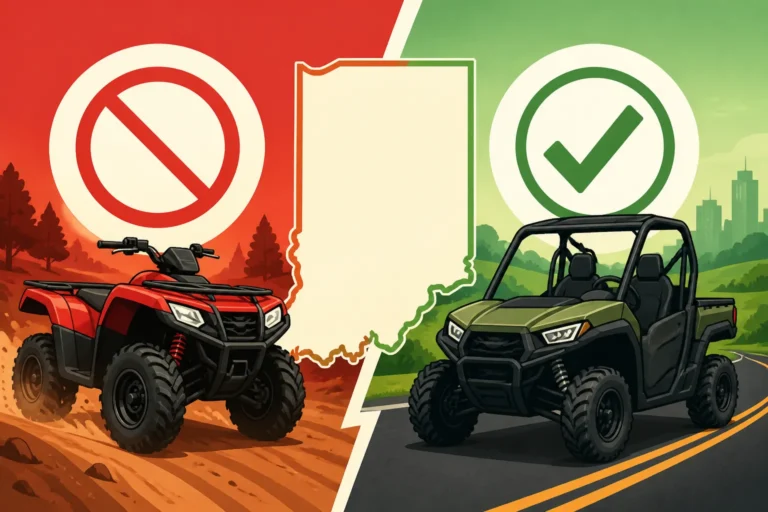
Let's start with the fundamental truth in Indiana: off-road vehicles (ORVs) like ATVs and UTVs are generally not permitted on public roads. This isn't just a suggestion; it's the state's baseline rule. Many riders, especially those new to the hobby or visiting from out of state, assume that if a road looks quiet or rural, it must be okay. But that assumption can quickly lead to a citation and a whole lot of hassle.
The "Closed by Default" Principle
Indiana operates on a "closed by default" principle when it comes to ORVs on public roads. What this means is that unless there's a specific law or local ordinance that expressly permits ORV use on a particular road, it's off-limits. You can't just assume permission. This blanket restriction is in place to ensure public safety, manage traffic flow, and protect road infrastructure. It saves landowners from liability worries, too. This is why you often hear of folks getting ticketed even on what seems like a harmless country lane. You might be having a blast on your dirt bike or side-by-side, maybe even with some aftermarket accessories from SuperATV that make your ride smoother, but that doesn't change the underlying rule.
The state legislation sets this standard, leaving it up to counties and municipalities to create specific exceptions. Without those exceptions, the default rule stands firm. Many riders feel this is overly restrictive, especially when they just want to get from one private property to another or access a trail system. However, the law is clear, and ignorance isn't a valid defense if you're stopped by law enforcement. It’s crucial to understand this foundational concept before you even consider crossing any road, let alone riding past a town line. For more on the general rules, check out [Why Indiana Roads Are Closed by Default].
How Incorporated Areas Differ
Now, let's talk about those town and city lines. While the state's "closed by default" rule applies generally to all public roads, incorporated areas—cities and towns—often have even stricter or more complex layers of local ordinances. These municipalities typically have their own sets of traffic laws and regulations that explicitly prohibit ORVs on their streets. Even if a county has an ordinance allowing ORVs on certain roads outside city limits, those permissions almost always vanish the moment you enter an incorporated town.
Think of it this way: a county's jurisdiction generally covers the unincorporated areas. When you cross into a city or town, you're entering a different legal zone with its own governance. These local governments are often more concerned with vehicle traffic, pedestrian safety, and noise within their denser populations. Therefore, while you might find a bit more leniency on a designated county road, don't expect it inside a city's corporate boundaries. These are distinct legal entities, and their rules for what's allowed on their paved streets can be quite different from the county's for a gravel lane.
When Riding Past a Town Line Becomes a Possibility
Despite the general restrictions, there are specific circumstances where ORV use on certain roads might be allowed. The key word here is "might," and it almost always depends on local county ordinances.
County Ordinances as the Key
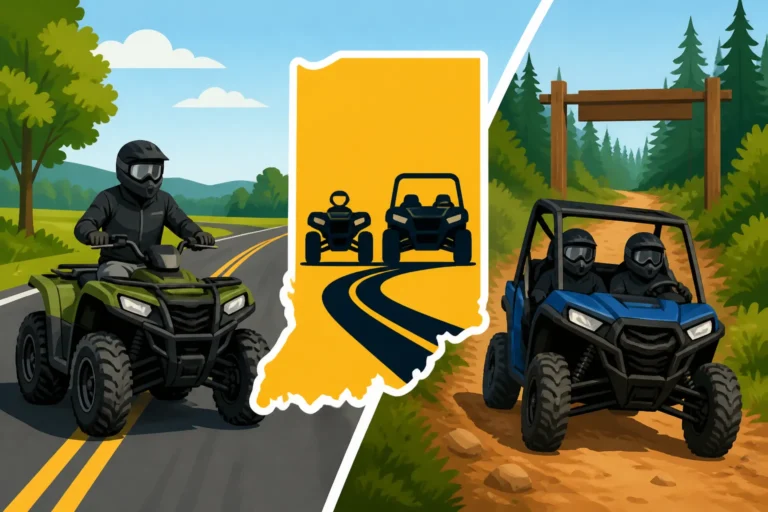
The primary way an ORV can legally access public roads in Indiana is through a county ordinance that specifically opens certain roads for ORV use. These ordinances are not universal; each county decides for itself. Some counties have embraced ORV use, carefully designating specific roads or road networks where riding is permitted, often with specific rules regarding speed, time of day, and safety equipment. Other counties have chosen to keep their roads entirely closed to ORVs. You can't just assume your neighboring county has the same rules as yours.
These county ordinances are crucial because they create the specific exceptions to the state's general prohibition. Without them, you're always operating under the "closed by default" rule. When a county does open roads, they typically designate specific types of roads, like certain gravel roads or less-trafficked rural routes. They usually don't open up state highways or major thoroughfares. Before you even think about riding a public road, you absolutely must verify if the county you're in, or planning to ride through, has such an ordinance, and if so, exactly which roads are included. This research prevents a lot of headaches later on. Learn more about this in [How an Indiana County Opens Its Roads].
The Hard Stop at the Corporate Limit
Here's where the town line issue becomes critical. Even if you're riding legally on a county-designated ORV road, that permission almost invariably ends at the corporate limits of any incorporated city or town. This means the moment your tires cross that "Welcome to [Town Name]" sign, you are likely no longer riding legally on public property. The county's ordinance simply does not extend into the jurisdiction of the city or town.
Imagine you're cruising down a scenic county road on your UTV, perhaps outfitted with a lift kit and heavy-duty tires from SuperATV to handle rough terrain. You've checked the county's ordinance, and you're good to go. But then you see that town line approaching. That's your signal to stop. You cannot simply continue your ride on the town's streets. Those streets fall under the town's jurisdiction, and their local ordinances will almost certainly prohibit ORV use, regardless of what the county allows just a few feet away. This can be incredibly frustrating for riders who just want to get through a small town to reach another section of county road, but it's a legal boundary that must be respected. For detailed information on local regulations, see [Indiana Local Ordinances on ORV Riding].
What to Look For
So, how do you know where these boundaries are? Sometimes, it's obvious with "Welcome to" signs. Other times, it's not so clear, especially on less-traveled rural routes where one moment you're on a county road, and the next you're subtly within the corporate limits of a very small town or village. This ambiguity is precisely why pre-planning is so vital. You need to be aware of the exact boundaries of incorporated areas.
County maps often clearly delineate these corporate limits. Many counties publish maps online, sometimes specifically detailing their ORV-friendly roads, and these maps will typically show where the county's jurisdiction ends and a town's begins. Satellite mapping services can also be incredibly helpful in identifying these boundaries. It's not enough to just know the county has an ordinance; you need to know the exact geography of where it applies. If you're unsure, it's always safer to assume the road is closed to ORVs once you approach any indication of a town or city, however small.
Navigating the Transition: Practical Advice for Riders
Given the complexities, practical strategies are essential for avoiding legal trouble when encountering town lines. It's all about planning and knowing your options.
Planning Your Route Carefully
The best defense against inadvertently riding illegally into a town is meticulous route planning. Before you even load your ORV onto the trailer, take the time to study maps of the areas you intend to ride. Look for county boundaries, and, most importantly, identify the corporate limits of any cities or towns. Digital mapping tools, often available on county websites or through popular navigation apps, can highlight these distinctions. If you're riding in an area with designated ORV routes, ensure your planned path stays strictly on those routes and avoids any excursions into incorporated areas.
Consider printing out physical maps or saving digital copies on your phone that clearly show these boundaries. Cell service can be spotty in some of Indiana's more remote riding areas, so don't rely solely on live map data. If your machine, like many UTVs, has an onboard GPS or you use a dedicated off-road navigation system, make sure it has up-to-date map data that includes jurisdictional lines. Knowing exactly where [Riding Outside a Town's Corporate Limits] is permitted is your first line of defense. This planning is just as important as ensuring your machine is properly maintained, with all its parts, whether stock or from a supplier like SuperATV, in good working order for the trails.
What to Do When You Hit the Line
So, you've planned your route, but inevitably, you might find yourself approaching a town line, perhaps even unexpectedly. What are your options? The safest and most legal action is to dismount and trailer your ORV, or turn around if possible. If you are on a designated ORV trail or road that skirts a town, you might need to identify a point where you can safely turn back or use a legal, alternative route that bypasses the town altogether.
Never attempt to "just quickly cross" a town's streets to get to another permitted riding area. Even a short distance can result in a citation. If you absolutely must transit through an incorporated area, your ORV needs to be trailered. This means having a truck and trailer available, or a designated pick-up spot. This might feel inconvenient, but it pales in comparison to the fines, legal fees, or even the impoundment of your machine that could result from illegal operation. Sometimes, you simply have to accept that a continuous ride isn't possible and plan for a break in the action.
Why Local Ordinances Trump County Rules
It's critical to understand the hierarchy of laws here. While state law provides the overarching framework, local ordinances (county, city, or town) can add layers of restriction or specific permissions. When it comes to riding past a town line, the city or town's specific ordinance will override any permissive county ordinance within its corporate limits. You can think of it as federal, state, and local law—the more localized the jurisdiction, the more specific and often restrictive its rules can be for its own territory.
Counties are typically prohibited from dictating what an incorporated city or town can do within its own boundaries regarding vehicle operation. [What a Local ORV Ordinance Is Not Allowed to Require] from a county perspective often relates to things like vehicle weight or licensing, but it certainly doesn't extend to forcing a city to open its streets to ORVs. This means if a county has a permissive ORV ordinance, and a city within that county has an ordinance prohibiting ORVs on its streets, the city's prohibition stands for its own streets. Always prioritize the rules of the smallest, most local jurisdiction you are entering.
Consequences of Ignoring Town Line Rules
Ignoring the invisible boundary of a town line can turn a fun ride into a costly and regrettable experience. The penalties for illegal ORV operation on public roads, especially within incorporated areas, can be significant.
Fines and Citations
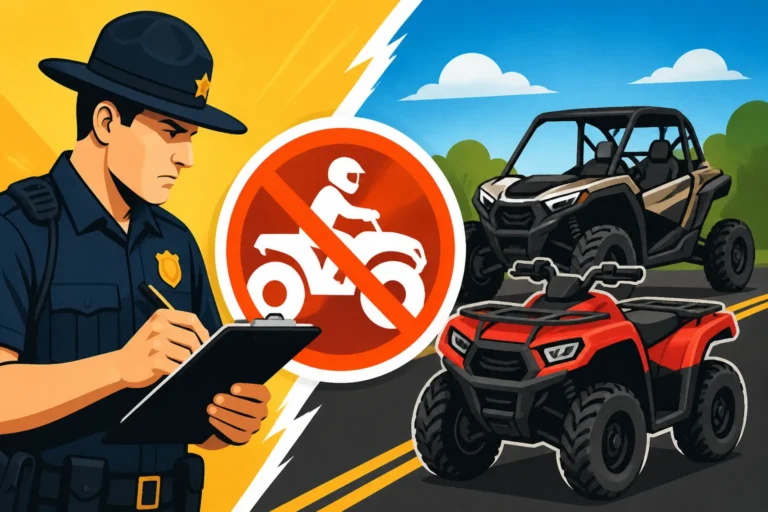
The most immediate consequence of riding illegally past a town line is receiving a citation, which comes with fines. In Indiana, illegally operating an ORV on a public highway or road that is not specifically designated for ORV use can be classified as a Class C infraction. While the specific dollar amount can vary, such infractions can carry substantial penalties. A single citation could set you back hundreds of dollars, and that's just the initial fine. Repeat offenses can lead to escalating penalties, potentially even misdemeanor charges depending on the specific circumstances and local ordinances.
It's not just the fine itself. You might also incur court costs, and the process of dealing with a citation means time off work or away from other responsibilities. A quick, illicit hop across a town's street can suddenly become a major disruption to your life and your wallet. Law enforcement officers, whether county sheriffs or town police, are generally well aware of their local ORV ordinances and are authorized to enforce them. They aren't going to turn a blind eye just because you "didn't know." For a general idea of what fines might look like, refer to [Indiana Fines for Illegal ORV Road Use].
Owner Liability and Machine Impoundment
Beyond the direct fines, there are other, potentially more severe, consequences. If you are involved in an accident while riding illegally on a town's street, your liability can skyrocket. Most ORV insurance policies have clauses that might invalidate your coverage if you're operating the machine illegally at the time of an incident. This means you could be personally responsible for property damage, medical bills, and other costs incurred, which could easily run into tens or even hundreds of thousands of dollars.
Furthermore, law enforcement has the authority to impound your ORV if it's being operated illegally. This means your machine could be towed away, and you'd be responsible for towing fees, storage fees, and any administrative costs associated with retrieving it. These costs can quickly add up, turning a few hundred dollars in fines into several thousand. Imagine having your prized UTV, perhaps tricked out with a custom roll cage or other protective gear, like those found at SuperATV, sitting in an impound lot, inaccessible until you pay all the associated fees and fines. It's a nightmare scenario that's best avoided by respecting those town lines.
Navigating Indiana's ORV Road Rules: A Quick Overview
To simplify the intricate rules around ORV use on public roads and navigating town lines, here’s a quick overview of what you generally can and cannot do. Always remember, specific county and town ordinances can add further details.
| Feature | County Road Outside City Limits (Designated) | County Road Outside City Limits (Undesignated) | Within City/Town Limits |
|---|---|---|---|
| ORV Use Allowed? | Potentially, with specific ordinance | No, "closed by default" | Highly unlikely, generally prohibited |
| Common Restrictions | Specific roads, hours, speed, safety gear | Always illegal, regardless of machine | Always illegal, regardless of machine |
| Crossing Roads? | Yes, at right angles, yielding to traffic | Only at right angles, yielding, from private to private | Generally prohibited, except specific exemptions |
| Fines/Penalties? | If violating ordinance rules | Yes, for illegal operation | Yes, for illegal operation |
| Insurance Coverage? | Depends on policy & legal operation | Likely voided due to illegal operation | Likely voided due to illegal operation |
This table provides a general guide, but your responsibility is to check the specific ordinances for the exact county and any towns within or near your riding area. For broader rules about road use, review [Indiana Rules for Riding a County Road], [Indiana Rules for Riding a Highway Shoulder], and [Indiana Rules for Crossing a Highway]. When in doubt, always err on the side of caution and assume the road is closed to ORVs.
Disclaimer
This article is for general informational purposes only and does not constitute professional advice. Laws, prices and regulations vary by location and change over time. Consult a qualified professional for guidance on your specific situation.