Indiana Rules for Riding to a Trailhead
It's a common dream for many off-road enthusiasts: being able to hop on your ATV or UTV right from your driveway and cruise a short distance to your favorite trailhead. The thought of avoiding the hassle of loading, trailering, and unloading for just a few miles is incredibly appealing. However, Indiana's laws around riding off-road vehicles on public roads are nuanced, and misunderstanding them can quickly lead to fines or worse. This guide will meticulously break down the rules for riding your ORV to a trailhead in Indiana, clarifying what's allowed, what's strictly prohibited, and how to stay on the right side of the law.
The Default: No Street Legal ATVs or UTVs in Indiana
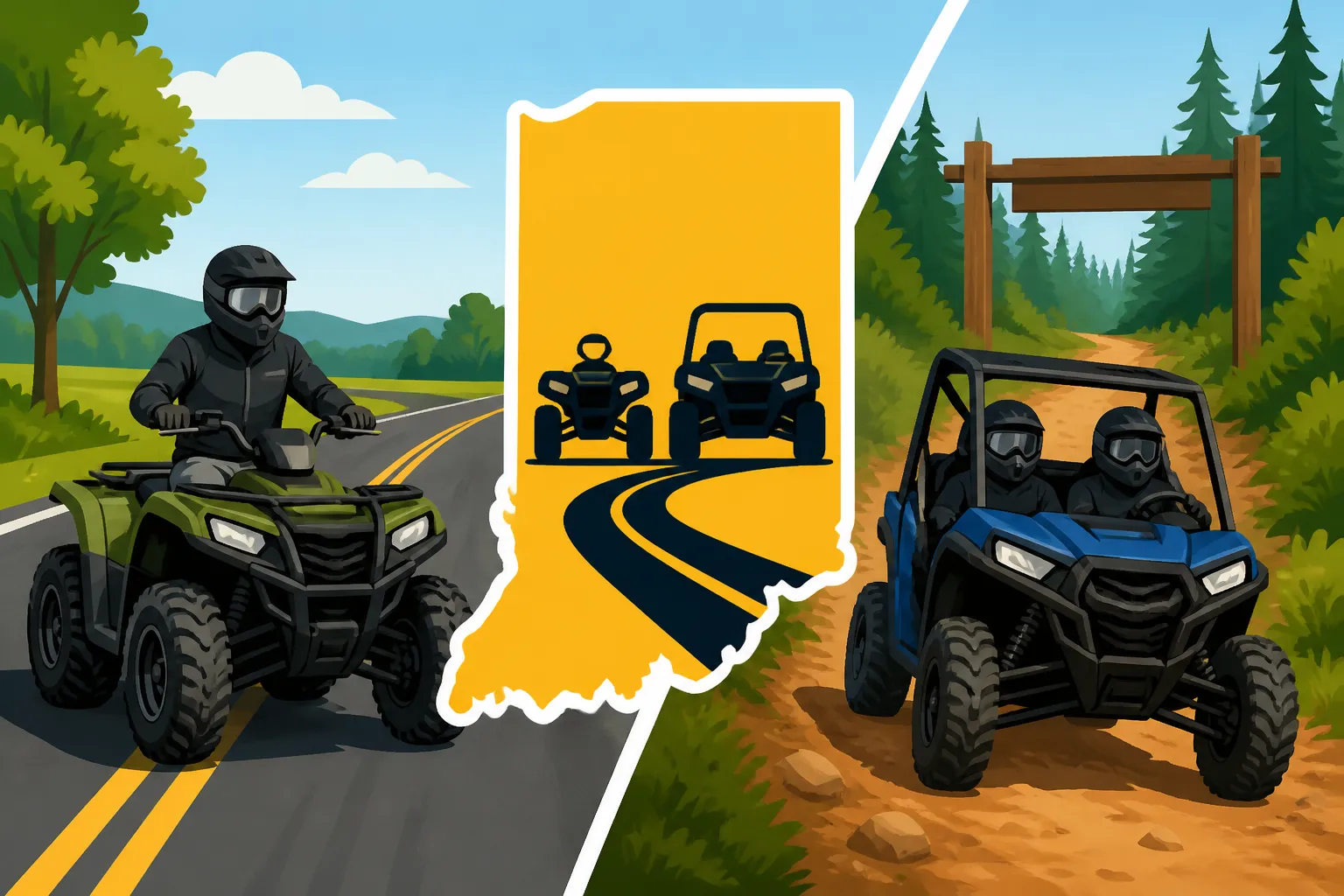
Let's start with the hard truth that can be a real bummer for many riders. In Indiana, the general rule is that ATVs (All-Terrain Vehicles) and UTVs (Utility Terrain Vehicles), also sometimes called side-by-sides, are not considered "street legal." This means they are largely prohibited from operating on public roads, streets, and highways. It's a fundamental aspect of Indiana's off-road vehicle legislation, and it's where most riders encounter their first roadblock when dreaming of a quick jaunt to the trail.
This general prohibition often stems from the very design of these machines. ATVs and UTVs are built for rugged, off-pavement conditions, not for sharing lanes with cars, trucks, and motorcycles. Their suspension, braking, and tire characteristics are optimized for trails, mud, and dirt, not high-speed asphalt. This difference in design means they don't meet the safety standards for street-legal vehicles, leading to the blanket ban in most areas. It’s frustrating when your closest trail entrance is just a mile down a quiet country road, but the law typically doesn't distinguish between a busy highway and a deserted lane for ORV use.
Why Most Roads Are Closed to ORVs
The primary reason Indiana, like many other states, generally prohibits ATVs and UTVs from public roads comes down to safety for everyone involved. These machines typically lack the standard safety features required for on-road vehicles, such as turn signals, rearview mirrors, windshield wipers, and Department of Transportation (DOT) approved tires. Their open design, while great for off-road visibility and connection to the terrain, offers minimal protection in a collision with a street vehicle. Imagine the speed differential and sheer size difference between a family sedan and your quad on a paved road – the risks are substantial.
Furthermore, ORVs often have a narrower wheelbase and higher center of gravity compared to cars, making them less stable at higher speeds or during sudden maneuvers on paved surfaces. The knobby tires designed for grip on loose terrain can also perform poorly on asphalt, reducing traction and increasing braking distances, especially in wet conditions. These factors contribute to a significant safety concern for both the ORV operator and other motorists. The law seeks to prevent these dangerous interactions, even if it feels overly restrictive for riders who feel capable and cautious on their machines.
Understanding the Shoulder and Ditch Exceptions
While the general rule is clear, some riders mistakenly believe that riding on the shoulder or in the ditch alongside a public road is a permissible workaround. Indiana law does address these areas, but it's crucial to understand the very narrow scope of these exceptions. The ability to ride on a highway shoulder or in a ditch is typically not for the purpose of traveling to a trailhead, but rather for very limited, specific scenarios, often related to agricultural work or utility maintenance, and always with significant restrictions.
For instance, the law might permit crossing a road or briefly using a shoulder to access private property, or to avoid an immediate hazard, but it's not a license for recreational travel along the road's edge. Prolonged riding on the shoulder or in a ditch can still be considered illegal operation on a public right-of-way, subject to the same penalties as riding directly on the paved surface. It's easy to assume "off the pavement means it's okay," but the legal definition of the "highway" or "roadway" often includes the shoulder and sometimes the ditch. Always remember that these are not designated ORV routes; they are components of the road infrastructure. For more detailed information, you can look into [Indiana Rules for Riding a Highway Shoulder] or [Indiana Rules for Riding a Ditch].
Where You Might Ride to a Trailhead: County Ordinances
Now for the good news: while statewide laws are generally restrictive, individual counties and local municipalities in Indiana have the authority to create ordinances that do allow ORVs on certain public roads. This is the crucial distinction that gives some riders the ability to legally ride their machines to a nearby trailhead. However, this isn't a free pass for every county; it's a patchwork of regulations across the state, meaning what's legal in one county might be strictly forbidden in another.
These local ordinances are specifically designed to address the unique needs and desires of a community, recognizing that in rural areas, ORVs are often vital for farming, hunting, or simply as a mode of transportation where designated trails might be scarce. When a county opens its roads to ORVs, it typically comes with a host of specific conditions and requirements designed to maintain safety and minimize disruption to other traffic. This is where your dream of riding directly to the trail could become a reality, but it requires diligent research on your part.
The Power of Local Laws
The ability for counties to open their roads to ATVs and UTVs stems from specific provisions in Indiana law that grant local control over such matters. This means that a county commissioners' board or city council can pass an ordinance designating specific roads or portions of roads where ORVs are permitted. They usually do this after careful consideration of public safety, road conditions, and community input. These ordinances are not blanket permissions for every road in the county; rather, they often specify which roads are open, what hours ORVs can operate, and any additional safety requirements beyond state minimums.
When a county decides to open roads, they might designate certain "trail connector" roads leading from residential areas to known trailheads or off-road parks. For example, some counties might open gravel roads or less-traveled paved routes, while keeping state highways or busy urban streets strictly closed. This local control offers a flexible approach, allowing communities to cater to their residents' needs without compromising the safety of high-traffic areas. Riders in such counties suddenly find that trailering isn't their only option for short distances, which can be a huge convenience. [Indiana Counties That Allow ORVs on Roads] can provide more insight into which areas have adopted such measures.
How to Find Designated ORV Roads
Finding out if your county or a county you plan to visit has opened roads to ORVs is absolutely critical before you even think about putting tires on pavement. The first step is to consult the county clerk's office, the county highway department, or the local sheriff's department. Many counties that have adopted ORV ordinances will have the information readily available on their official county website. This could include a downloadable map, a list of designated roads, or a copy of the full ordinance itself. Remember, simply seeing other people riding an ORV on a county road is not confirmation that it's legal; they might be breaking the law.
When you're researching, look for specific language about "ORV ordinances" or "off-road vehicle regulations." Pay close attention to details such as:
- Designated Roads: Is it all county roads, or only specific ones? Are there maps available?
- Operating Hours: Are there time restrictions, such as no riding after dark?
- Age and Supervision: Are there different rules for minors?
- Required Equipment: Do they mandate additional lighting, mirrors, or insurance?
- Speed Limits: Are there specific speed limits for ORVs on these roads?
Without clear, verifiable information directly from the county, assume the roads are closed to ORVs. Never rely on hearsay or outdated information. This due diligence is your best defense against potential fines and ensures you can enjoy your ride legally and safely. For further guidance on this process, consider reading [How to Find an Indiana County ORV Ordinance].
Crossing Intersections and Designated Access Points
Even in counties that have opened some roads to ORVs, there are often strict rules for interacting with intersections and crossing roads that remain closed to general ORV travel. For instance, you might be riding on a designated county ORV road, but then you encounter a state highway you need to cross to reach the next section of trail or another open county road. Indiana law generally allows for direct, perpendicular crossings of public roads, even those not open to general ORV traffic, under specific conditions.
When crossing a road:
- Stop Completely: You must come to a complete and full stop before entering the roadway. Treat it like a stop sign for every crossing.
- Yield to Traffic: Yield the right-of-way to all oncoming and cross traffic. Do not proceed until it is absolutely safe to do so.
- Cross at a Right Angle: The ORV must cross the road at approximately a 90-degree angle to the flow of traffic, in the most direct and expeditious manner possible. You are not permitted to drive along the road, even for a short distance, as part of the crossing.
- Signal Intent (if applicable): While ORVs often lack turn signals, exercise caution and make your intentions clear if you can.
These rules are in place to minimize the time an ORV spends in active traffic lanes, significantly reducing the risk of collisions. This isn't about riding on the highway, but rather getting safely across it. Always remember to prioritize safety and never assume other drivers see you. Refer to [Crossing a Road on an ORV in Indiana] and [A Complete Stop Before an Indiana Crossing] for the specifics on this maneuver.
Essential Requirements and Smart Riding
Once you've navigated the complexities of local ordinances and identified permissible routes, it's time to ensure your machine and your riding habits comply with all necessary regulations. Simply finding an open road isn't the end of your legal responsibilities; there are ongoing requirements for the machine itself, for the rider, and for how you approach your journey to the trailhead. Being prepared and informed is not just about avoiding a ticket; it's about ensuring a safe and enjoyable experience for yourself and others.
Staying informed about these details can seem like a lot of work, but it's part of being a responsible ORV owner. Just as you wouldn't head out on the trails without checking your fuel and tire pressure, you shouldn't venture onto public roads without confirming your legal standing and ensuring your machine is properly equipped. Neglecting these details could turn a fun day of riding into a costly lesson, especially if you encounter a conservation officer or local law enforcement who is well-versed in ORV regulations.
Your Machine's Legal Checklist
Before your ORV ever touches a designated county road or even a crossing point, it needs to meet specific legal requirements. The most fundamental requirement in Indiana is that your off-road vehicle must be properly registered with the Indiana Bureau of Motor Vehicles (BMV) and display the required ORV decal. This decal, which typically lasts for three years, signifies that your machine is legally recognized for off-road use within the state. You can find detailed information on this process by checking [Registering an ORV in Indiana] and [The Indiana ORV Decal Explained].
Beyond registration, if you're riding on roads, even designated ones, your machine needs to be adequately equipped for visibility and safety. While specific county ordinances might add requirements, generally, this includes:
- Lighting: If riding after sunset or before sunrise, your ORV must have working headlights and taillights. Some ordinances might even specify dual headlights and taillights for enhanced visibility on roads.
- Spark Arrestor: A properly functioning spark arrester is required to prevent wildfires, especially when riding off-pavement or near dry vegetation.
- Brakes: Your braking system must be in good working order.
Some riders opt for aftermarket accessories to enhance their machine's visibility and road readiness. Brands like SuperATV offer a range of products, from brighter LED lights and turn signal kits to durable mirrors and full-enclosure cabs, which can add a layer of safety and compliance when navigating permitted road sections. While not all are legally mandated for ORVs, they can certainly improve your experience and peace of mind. For more on lighting, take a look at [Indiana Lighting Requirements for ORVs].
Rider Responsibilities and Safety Gear
Riding on any road, even a designated ORV road, comes with increased responsibilities for the operator and passengers. Indiana has specific regulations concerning rider age, supervision, and safety gear, which apply both on and off public roads. Understanding these rules is essential for protecting yourself and others.
Key rider responsibilities and safety gear requirements include:
- Helmets: In Indiana, anyone under the age of 18 operating or riding as a passenger on an ORV must wear a DOT-approved helmet. This rule applies everywhere, whether you are on private land, a designated trail, or a county road. Even if you're an adult and it's not legally mandated for you in certain situations, wearing a helmet is always a smart choice. You can learn more by reading [Indiana Helmet Law for ORV Riders].
- Age Restrictions and Supervision: Operators under 14 years of age must be under direct supervision of an adult at least 18 years old. Different rules may apply for riders between 14 and 18, especially concerning supervision on public roads versus private land.
- Driver's License (for some scenarios): While an Indiana driver's license isn't required to operate an ORV off-road, some counties that have opened their roads to ORVs may require operators to possess a valid driver's license when riding on those designated public roads. Always check the specific county ordinance.
- Insurance: Indiana does not have a statewide mandate for ORV insurance, but again, certain counties that have opened their roads might require proof of liability insurance to operate on their designated ORV routes. This is another crucial detail to verify with local authorities. Carrying insurance is generally a good idea, regardless of legal mandates, to protect yourself financially in case of an accident.
Planning Your Ride
Effective planning is the secret to a stress-free and legal ORV adventure, especially when you intend to utilize public roads to reach a trailhead. Don't just assume a route is open or that your machine is compliant; do your homework beforehand. This means more than just checking a county's ordinance; it involves mapping your route, understanding trail conditions, and having all necessary permits and documentation ready.
Here's a quick checklist for planning your ride to a trailhead:
- Route Mapping: Plot your exact route from your starting point to the trailhead. Identify which segments are designated ORV roads and which require a legal crossing. Use resources like county maps, Google Maps, and any maps provided by the local highway department.
- Permit Check: If you're heading to a state-managed ORV area like [Redbird Off-Road State Recreation Area] or [Interlake Off-Road State Recreation Area], remember you'll likely need a DNR trail permit in addition to your BMV registration. These are separate fees and permits.
- Weather and Trail Conditions: Always check the weather forecast and any reported trail closures or conditions before you leave. Heavy rains can quickly turn designated routes into impassable mud bogs or lead to temporary closures.
- Documentation: Always carry your ORV registration certificate, proof of insurance (if required by the county), and any trail permits. Keep them in a waterproof bag or container. A printout of the relevant county ordinance (or a screenshot on your phone) detailing the permitted roads can also be helpful if you encounter questions from law enforcement.
- Safety First: Even on designated roads, remain vigilant. Drive defensively, obey all traffic laws, and be courteous to other motorists and residents.
By meticulously planning every aspect of your trip, you significantly enhance your safety and ensure that your experience is enjoyable and entirely within the bounds of Indiana law.
| Scenario for Riding to a Trailhead | Legality | Key Action | Notes |
|---|---|---|---|
| Riding on a State Highway or US Route | Generally No | Trailer Required | These roads are almost universally closed to ORVs. |
| Riding on a Local City Street | Generally No | Trailer Required | City ordinances rarely permit ORV use on streets. |
| Riding on a County Road (No Ordinance) | Generally No | Trailer Required | The default is closed unless a specific ordinance says otherwise. |
| Riding on a County Road (With Ordinance) | Depends on County | Check Ordinance Details | Verify designated roads, hours, and specific requirements. [Indiana Rules for Riding a County Road] |
| Crossing a Public Road | Limited Permission | Full Stop & Yield | Must be at a right angle, yielding to all traffic. |
| Riding Within a State ORV Park to a Trail | Yes, within Park | Park Permit Required | Once inside areas like Redbird or Interlake, internal access roads are common. |
Disclaimer
This article is for general informational purposes only and does not constitute professional advice. Laws, prices and regulations vary by location and change over time. Consult a qualified professional for guidance on your specific situation.