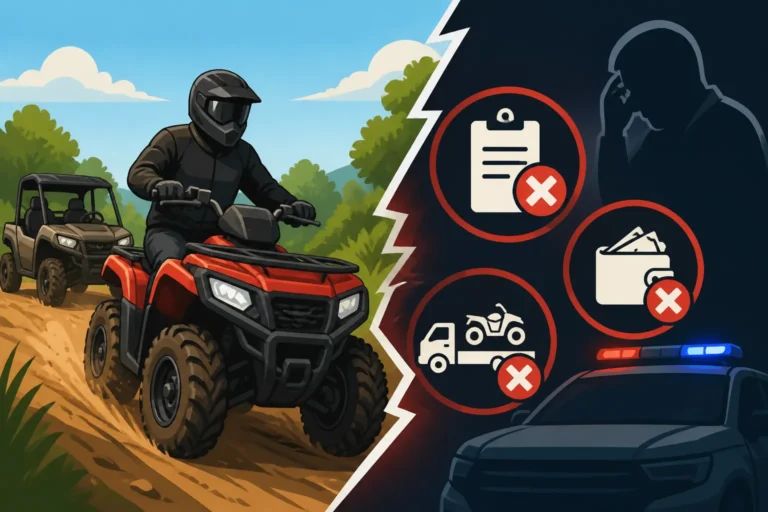
Renewing a BMV Registration That Lapsed Over Winter
It’s a tale as old as time for Indiana off-road enthusiasts: winter finally loosens its icy grip, the sun starts to shine a little brighter, and the call of the trails becomes undeniable. You head out to the garage, dust off your trusty ATV or side-by-side, eager for that first spring ride, only to find that little registration decal on your machine looking a bit… faded and expired. That sinking feeling in your stomach is real, and it’s completely understandable. You don't want to get caught riding illegally, but you also don't want to miss out on precious riding time. This guide is here to walk you through exactly what to do when your Indiana ORV registration has lapsed over the winter months, ensuring you get back on the trails quickly and legally.
Understanding Why Your Indiana ORV Registration Lapses
Life happens, and sometimes, keeping track of every expiration date, especially for something you only use seasonally, can slip through the cracks. It's not uncommon for riders to discover their registration is expired just as riding season ramps up. Let's break down why this happens and what it means for you.
The Three-Year Cycle and Why It Matters
In Indiana, your ORV registration isn't an annual affair, which, ironically, can sometimes make it easier to forget. Instead, you're looking at a three-year registration cycle. That means once you register your ATV or UTV, you're good to go for a full 36 months before it needs to be renewed. While this saves you a yearly trip to the BMV, it also means that the expiration date can easily sneak up on you, especially if it doesn't align with a regular calendar year end or your usual riding season.
Imagine this: you bought your quad in October three years ago. You registered it then, got your decal, and rode it hard through the fall. Winter came, you stored it, and come spring, you were out on the trails without a second thought. The next two years flew by in a similar pattern. Then, come this past October, while your machine was tucked away for the cold months, your registration quietly expired. Now it's spring, and you're just discovering it. The good news is that "lapsed" isn't the same as incurring a "penalty" for the registration itself, but it does mean you can't legally ride on public trails or designated ORV areas until it's current. The focus is on getting it renewed, not on punishing you for forgetting. To learn more about how often you need to renew, check out [Renewing Every Three Years in Indiana].
When "Over Winter" Actually Happens
While many of us think of a lapsed registration as a "spring problem," the reality is that your registration expires on the last day of the month it was originally issued, three years after the initial registration. So, if you registered your machine in April, your renewal date will always be at the end of April, three years later. If you registered in September, it will be the end of September. This means "over winter" could actually happen anytime between late fall and early spring, depending on your original registration date.
The critical point here is that an expired registration means your machine is considered unregistered. If you're out riding on public land, designated trails, or any area where registration is required with an expired decal, you could face consequences. Nobody wants to be pulled over by a conservation officer just for enjoying a ride, only to find out their paperwork is out of date. The fines for an unregistered ORV in Indiana can be a real buzzkill for your riding budget. Make sure to understand the potential financial repercussions by reading [Indiana Fines for an Unregistered ORV]. It’s always best to be proactive and ensure everything is current before you even load your machine onto the trailer for that first ride of the season.
The Steps to Renewing a Lapsed Indiana ORV Registration
So, you've realized your registration has expired. Don't panic! The process for renewing a lapsed registration is straightforward, much like renewing an active one. It just requires a few key pieces of information and a trip to the right place.
Gathering Your Essential Paperwork
Before you even think about heading to a license branch, gather all the necessary documents. This is the foundation of a smooth renewal process. Ideally, you should have your most recent (even if expired) ORV registration certificate. This document contains all the information about your machine and your previous registration, making the renewal much easier for the BMV clerk. Along with that, you’ll need proof of ownership, which is typically your title. If you don't have the title easily accessible, a bill of sale can sometimes work, especially if you're the original owner and it clearly links you to the machine. You'll also need a valid form of identification, like your driver's license, to prove you are the registered owner.
What if you can't find your old registration certificate? It happens more often than you think. Perhaps it got wet, faded, or simply misplaced in the garage shuffle. Don't worry too much. As long as you have your valid title or a strong, clear bill of sale that proves ownership, the BMV can usually look up your machine's history in their system using the VIN. However, having the old certificate definitely speeds things up. If your ownership documents are a bit murky—maybe you bought the machine privately years ago, and the bill of sale isn't pristine—you might consider using a service like LawDepot to generate a fresh, legally sound bill of sale. It can help solidify your proof of ownership, especially if the original paperwork is less than ideal. For a deeper dive into what documents you might need, check out [Indiana ORV Registration Paperwork].
Where to Go and How to Initiate the Renewal
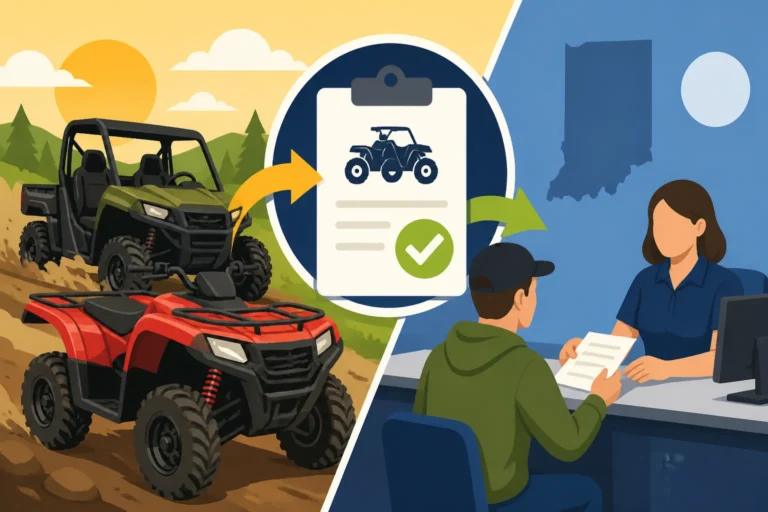
Once your paperwork is in order, you have a few options for renewing your lapsed registration. For most lapsed registrations, especially if you have any questions or your paperwork isn't perfectly clean, visiting an Indiana BMV branch in person is often the best route. The clerks there can guide you through the process, answer any specific questions about your situation, and ensure all forms are correctly filled out. This face-to-face interaction can save you a lot of headache compared to trying to resolve a nuanced issue over the phone or through mail.
Depending on how long your registration has been lapsed, you might be eligible for online renewal, but it’s always wise to assume an in-person visit might be necessary for a truly lapsed one. The online system is generally smoother for timely renewals. If you choose to mail in your renewal, be prepared for a longer processing time. This option is typically not recommended if you're eager to ride soon, as it can take several weeks for the process to complete and your new decal to arrive. Regardless of the method, remember that all ORV registrations are handled by the Indiana Bureau of Motor Vehicles (BMV), not the Department of Natural Resources (DNR). It's a common point of confusion, but the BMV is your go-to for registration and titling matters. You can learn more about this distinction by reading [Why the BMV and Not the DNR in Indiana].
Understanding the Costs and Fees
One of the big worries when you discover a lapsed registration is the potential for late fees. Good news: for Indiana ORV registration, there isn't a specific late fee or penalty just for letting it expire. You simply pay the standard renewal fee as if you were renewing it on time. This is a common point of relief for many riders who feared a hefty fine on top of the regular cost.
The primary cost you'll incur is the flat registration renewal fee. While I can't provide exact current figures, this fee is typically a set amount, making it easy to budget for. You won't face additional charges for every month it's been expired, which is a significant difference from some other vehicle registration types or even ORV titling fees, as we'll discuss later. Make sure to check the Indiana BMV website or call your local branch for the most current fee schedule before you go. It's always a good idea to bring a little extra, just in case, but you shouldn't be blindsided by unexpected late penalties for the registration itself. Understanding this cost upfront helps you plan your spring riding budget accordingly. For current cost details, refer to [Indiana ORV Registration Renewal Cost].
What to Expect After You Renew
You've done the hard part – gathered your paperwork, visited the BMV, and paid your fees. Now comes the anticipation: waiting for that shiny new decal to arrive so you can legally hit the trails.
The Decal's Journey to Your Mailbox
After successfully renewing your ORV registration, the BMV will typically process your request and mail your new decal to the address on file. This usually takes a few weeks to arrive in your mailbox. It's not an instant gratification item you get on the spot, so patience is key. The exact timeframe can vary depending on the time of year and BMV processing volumes, but generally, expect it within 10-21 business days.
During this waiting period, you won't have the physical decal on your machine, but you will have proof of your renewal. When you renew in person, the BMV clerk will provide you with a temporary receipt or a printout confirming your registration has been updated. This document is crucial! Keep it with you when you ride, as it serves as your interim proof of registration until your official decal arrives. It shows that you’ve done your due diligence and are simply awaiting the physical sticker. This temporary proof is usually accepted by law enforcement if you happen to be checked while waiting for your decal. For more specific information on decal delivery times, see [How Long an Indiana Decal Takes to Arrive].
Proper Decal Placement and What to Do If It Goes Missing
Once your new ORV decal finally arrives, the next step is crucial: proper placement. Indiana law is quite specific about where that decal needs to go. It must be prominently displayed on the forward half of your off-road vehicle. This generally means on the front fender, the frame near the handlebars, or a visible area on the front half of a side-by-side, where it's easily seen by a conservation officer or park ranger. The key is visibility and security. Make sure the surface is clean and dry before applying the decal to ensure good adhesion, otherwise, you might find it peeling off after a few muddy adventures.
But what if your decal goes missing? It happens. Mud, water, brush, and even simple wear and tear can cause a decal to peel or fade to the point of being unreadable. If you find yourself in this situation, don't just keep riding. An unreadable or missing decal is essentially the same as not having one. You’ll need to order a replacement. This process usually involves contacting the BMV, filling out a form, and paying a small replacement fee. It's much simpler than a full renewal, but it’s an important step to remain compliant. For detailed guidance on where to mount your decal, read [Where the Indiana Decal Mounts], and if you ever need a replacement, [Replacing a Lost Indiana ORV Decal] has you covered. And yes, [When Mud Peels Your Registration Decal Off] is a very real problem many riders face!
Riding Rules with Your Newly Renewed Registration
With your registration renewed and your decal (or temporary proof) in hand, you’re ready to hit the trails! However, there are a couple of enduring rules to always keep in mind for every ride. First and foremost, always carry proof of your current registration. While the decal is the primary visual indicator, having the physical registration certificate with you is vital. This can be the temporary printout while you wait for the decal, or the official certificate once the decal has arrived. Keep it in a waterproof bag or container, perhaps in your glove box or a sealed compartment on your machine.
When an Indiana officer performs a roadside stop or a check at a trailhead, they will typically look for a valid decal first. If they can’t find one, or if it looks expired, they will then ask for your physical registration certificate. Being able to quickly and clearly present proof of your renewed registration will prevent any misunderstandings and keep your ride enjoyable. They are checking to make sure your machine is legally registered and that you are the rightful operator. Knowing [What an Indiana Officer Checks Roadside] can help you be prepared. Once your machine is registered and you have your proof, you are good to go, no matter how long it was lapsed before you fixed it.
Common Pitfalls and How to Avoid Future Lapses
Nobody likes discovering an expired registration, especially when you're itching to ride. Understanding some common pitfalls and setting up good habits can prevent this frustration in the future.
The Difference Between Registration and Titling Penalties
It's really important to distinguish between your ORV registration and its title. Many riders assume that if their registration has lapsed, they'll face a late penalty similar to if they let their vehicle title go past the deadline. However, this is one of those crucial areas where Indiana law treats them differently. As we discussed, for ORV registration, there's no specific financial penalty just for renewing it late. You simply pay the standard renewal fee, regardless of whether it expired last month or last year. The "penalty" is simply the inability to legally ride until it's current.
However, this is starkly different from ORV titling. If you purchase a machine that requires a title and you don't title it within the state's specified timeframe (typically 45 days for most transactions), you will incur a late title penalty. This penalty can add up the longer you wait. So, while you can breathe a sigh of relief about a lapsed registration, be extremely diligent about titling new-to-you machines in a timely manner to avoid those escalating fees. Understanding this distinction is key to being a well-informed ORV owner. For more information on late titling, you can review [Indiana ORV Late Title Penalty].
Setting Up Reminders for Your Next Renewal
The best way to avoid the "over winter" lapse entirely is to be proactive! Since the registration is every three years, it's easy to forget. As soon as you get your new decal, make a note of the expiration date. Add it to your digital calendar with a reminder that pops up a month or two before the expiration. Set a recurring reminder for three years out. You can also physically write it on your calendar or even create a note that you keep with your ORV paperwork.
Another strategy is to check if the Indiana BMV offers any notification services. Many states will send out postcard reminders for vehicle renewals, and your ORV registration might fall under that umbrella. However, mail can get lost, so don't rely solely on that. Combining official notifications with your own digital and physical reminders creates a robust system that ensures you're prompted well in advance, giving you ample time to renew without a last-minute scramble. Getting into this habit now will save you stress and ensure your machine is always trail-ready when you are.
Keeping Paperwork Safe and Accessible
Your registration certificate, title, and any bills of sale are incredibly important documents. They prove ownership and legality, and trying to renew or replace them without the original paperwork can be a real headache. After you renew, make sure to store your new registration certificate in a safe, dry place where it won't be damaged. A file cabinet in your home office, a dedicated folder for all your vehicle documents, or even a fireproof safe are excellent options. Keeping your documents in a place like the glove box of your ORV might seem convenient, but it exposes them to moisture, fading, and potential theft. Always have a physical copy of your current registration certificate on your person or in a waterproof container on your ORV when riding.
In addition to physical storage, consider having digital copies. Take clear photos of your title, registration certificate, and bill of sale and store them securely on your phone or in cloud storage. While a digital copy might not always be accepted as primary proof by law enforcement, it's invaluable for reference if your physical copies are ever lost or damaged, and can help immensely in the renewal or replacement process. For important legal documents like these, especially if you're frequently buying or selling ORVs, services like LawDepot can not only help you generate legally sound bills of sale but also provide a structured way to manage and store your important documents, ensuring they are always available when you need them. Remembering to keep your paperwork safe will save you countless headaches down the line. To further safeguard your documents, review the advice in [Keeping Paperwork in a Dry Box].
| Aspect | Lapsed ORV Registration | Lapsed ORV Titling |
|---|---|---|
| Primary Document | Registration Certificate & Decal | Vehicle Title |
| Expiration Period | 3 years | Varies (e.g., 45 days after purchase) |
| Late Penalty (Financial) | No specific monetary late fee for renewal; just standard fee | Yes, often an escalating fee the longer it's overdue |
| Legal to Ride/Operate | No, illegal to ride on regulated trails/areas | Yes, can ride (if registered), but not legally owned/transferred |
| Proof of Ownership | Title or Bill of Sale needed for renewal | Title is the proof of ownership itself |
| Where to Renew/Process | Indiana BMV branch (in-person, online, mail) | Indiana BMV branch (in-person only for most title issues) |
| Key Action | Pay standard renewal fee, get new decal | Pay title fee + late penalty, get title in your name |
Disclaimer
This article is for general informational purposes only and does not constitute professional advice. Laws, prices and regulations vary by location and change over time. Consult a qualified professional for guidance on your specific situation.