Registering a Machine Mid-Season at the BMV
You've been eyeing those beautiful Indiana trails, maybe even bought a shiny new (to you) ATV or UTV, and suddenly it hits you: the riding season is in full swing, and you haven't actually registered your machine with the BMV. It's a common predicament, a little bit of "oops, I almost forgot!" combined with the desire to get out there and explore without hassle. This guide is here to walk you through the entire process of registering your off-road vehicle (ORV) in Indiana, even if you're halfway through the season, so you can hit the trails with peace of mind.
The "Why Now?" of Mid-Season Registration
Life happens, and sometimes registering your ORV isn't the first thing on your mind when the sun starts shining and the trails beckon. You might have just acquired a new machine, finally got around to digging your old one out of storage, or simply realized that the casual rides around your property are no longer cutting it. Whatever your reason for registering a machine mid-season, it’s a perfectly normal situation, and the process is designed to accommodate you.
Unexpected Trail Opportunities
One of the biggest motivators for mid-season registration is the sudden discovery of a fantastic trail system or a planned trip with friends. You hear about the incredible terrain at places like [Redbird Off-Road State Recreation Area] or the expansive network at [Interlake Off-Road State Recreation Area], and the excitement builds. Then, you remember: to legally ride on these state-managed trails, your ORV needs an Indiana BMV registration decal. It's a non-negotiable requirement, and trying to ride without it can lead to fines and a swift end to your adventure.
Many private off-road parks in Indiana also require proof of state registration, even if they have their own separate entrance fees or permits. They want to ensure that riders on their property are operating legally and responsibly, and the BMV decal is often a quick visual check for them. So, whether it's a spontaneous decision to hit the dirt or a planned weekend getaway, the need for that little sticker can suddenly become very urgent. It transforms your ORV from a backyard toy into a legitimate trail-ready machine.
Buying a New-to-You Machine Mid-Year
There’s nothing quite like the thrill of finding that perfect used ATV or UTV. Maybe you stumbled upon a great deal from a private seller on a Facebook Marketplace group, or perhaps your local powersports dealer had a fantastic trade-in that caught your eye. The ink on the bill of sale is still fresh, and all you want to do is load it up and go. But then, the reality sets in: ownership is one thing, but legal operation on public lands (or even private parks) requires proper registration.
The moment you become the owner, whether it's April or August, the clock starts ticking on certain responsibilities. For machines bought after 2009, this often means titling as well as registering. It's easy to get caught up in the excitement of the purchase and forget the bureaucratic steps, but addressing it mid-season is exactly what many new owners do. Don't let the delay diminish your enjoyment; tackling the paperwork now means uninterrupted fun later.
Moving to Indiana or Rediscovering the Trails
Sometimes, life changes bring new reasons to ride. You might have just moved to the Hoosier State from another part of the country, bringing your beloved ORV with you. What was perfectly legal in Ohio or Kentucky might have different requirements here in Indiana. Understanding [Registering an ORV After Moving to Indiana] becomes paramount. Or, perhaps your ORV has been sitting in the garage or barn for a few years, gathering dust, and a renewed interest in outdoor recreation has sparked a desire to get it running again and out on the trails.
In these scenarios, the urgency for mid-season registration stems from a desire to integrate into the Indiana riding community and comply with state laws. You want to avoid any issues with law enforcement or park rangers, ensuring your return to the trails is smooth and entirely legal. It’s about more than just a sticker; it’s about recognizing your machine’s place within the state’s recreational framework.
Navigating the Indiana BMV Process Mid-Season
Registering your ORV with the Indiana Bureau of Motor Vehicles (BMV) might seem like a daunting task, especially if you're new to it or feel like you're playing catch-up mid-season. However, the process is straightforward once you know what to expect and have your ducks in a row. It’s essentially the same process whether you register in January or July.
Gathering Your Paperwork
The absolute first step, and arguably the most crucial, is to gather all the necessary documentation. Showing up to the BMV without the right papers is a one-way ticket to frustration and a wasted trip. For a first-time registration, you'll generally need:
- Proof of Ownership: This is typically a manufacturer's certificate of origin (MCO) for a new machine, or a bill of sale and a previous title (if applicable) for a used machine. Remember, [Why Indiana Titles Machines Bought After 2009] is an important piece of context here; if your machine was purchased after December 31, 2009, it likely needs a title. If you bought it privately and the seller didn't have a formal bill of sale, you can find templates on sites like LawDepot to ensure you have a legally sound document.
- Proof of Identity: Your valid Indiana driver's license or state ID.
- Vehicle Identification Number (VIN): This needs to be clearly visible on your machine and documented. If for some reason the VIN is obscured or missing, you'll need to address that before you can register.
- Payment for Fees: Be prepared to pay the registration fee. It's a flat fee, regardless of when in the three-year cycle you register.
Ensuring every document is complete and accurate before you head to the license branch will save you immense time and stress. Imagine standing in line, waiting your turn, only to find out you're missing a signature or a crucial piece of information. Double-checking prevents these common headaches. For a complete rundown, check out [Indiana ORV Registration Paperwork].
The In-Person Visit vs. Online Options
For initial ORV registrations in Indiana, an in-person visit to a local BMV license branch is almost always required. While the BMV offers many services online, new ORV registrations typically involve verifying documents and sometimes even the VIN itself, which necessitates a face-to-face interaction. This isn't like renewing your car's plates; it's a more involved first-time process.
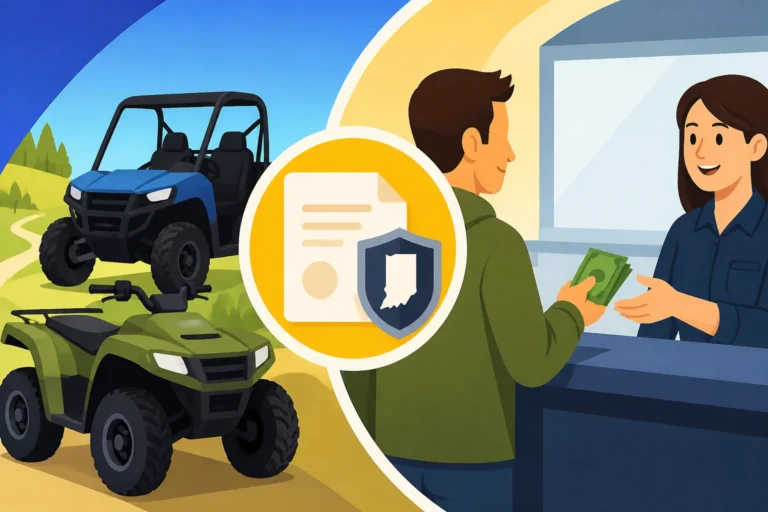
When you go to the license branch, be prepared for a bit of a wait, especially during peak hours. Once at the counter, a BMV representative will review your paperwork, process your payment, and issue you a temporary registration certificate. This temporary document is crucial because it acts as your proof of registration until your official decal arrives in the mail. Keep it with you when you ride! The staff can usually answer any questions about specifics, like [Where to Register an ORV in Indiana]. While you can't typically complete a first-time registration online, the good news is that renewals are often much simpler and can frequently be handled through the BMV's online portal or by mail after your initial registration.
| Document Type | New Machine Purchase | Used Machine Private Sale |
|---|---|---|
| Proof of Ownership | Manufacturer's Certificate of Origin (MCO) | Bill of Sale (from seller) AND previous Title (if applicable) |
| Proof of Identity | Valid Indiana Driver's License or State ID | Valid Indiana Driver's License or State ID |
| Vehicle ID Number (VIN) | On MCO, also on machine | On Bill of Sale/Title, also on machine |
| Fees | Registration fee (check BMV for current amount) | Registration fee (check BMV for current amount) |
| Additional (if needed) | Notarized Affidavits (rarely for new) | Ownership Affidavit (if title is missing and machine qualifies) |
What to Expect Post-Application
After you’ve successfully completed the paperwork and paid your fees at the license branch, you’ll walk out with that temporary registration certificate. This piece of paper is your golden ticket for the next few weeks. It allows you to legally operate your ORV while you wait for the official, durable decal to arrive in the mail. Many riders mistakenly believe they can hit the trails immediately after purchase, but [Riding on a Fresh Bill of Sale] without any form of registration is generally not permitted. The temporary certificate ensures you're compliant.
The actual physical decal and a more permanent registration card will be mailed to you. This typically takes a few weeks to arrive. While waiting, ensure you keep your temporary certificate in a safe, accessible place, preferably with you when you ride. The postal service isn’t always the fastest, but generally, you can expect your decal within three to four weeks. For a more detailed timeline, check out [How Long an Indiana Decal Takes to Arrive]. Once it arrives, you’ll need to apply the decal to the "forward half" of your machine, usually on the left side, in a clearly visible location.
Common Mid-Season Hiccups and Solutions
Even with the best intentions, the registration process can sometimes throw a curveball. From missing paperwork to the frustrating wait for that official decal, knowing how to navigate these common mid-season challenges can save you a lot of grief.
Missing or Incomplete Paperwork
This is perhaps the most common hurdle, especially when dealing with a privately purchased used machine. The seller might have lost the title, or perhaps the machine was old enough that it was never titled in the first place (a factor that plays into [Why Some Indiana Machines Never Needed a Title]). Or, maybe the bill of sale was a hastily scribbled note on a napkin, not a formal document. This is where resources and alternative options come into play.
If a title is genuinely missing for a machine that should have one, or if you simply have no formal proof of purchase, you might need to file an ownership affidavit. This is a sworn statement confirming you own the machine and explaining the circumstances of the missing documents. It’s a process designed to help legitimate owners get their machines registered, but it requires diligent effort and often involves providing additional supporting evidence. Tools like LawDepot can be incredibly helpful for finding proper legal templates for bills of sale or understanding the structure of an ownership affidavit before you head to the BMV. For more on this, check out [Filing an Ownership Affidavit for a Quad With No Paperwork].
The Decal Delivery Wait
You've done everything right, endured the BMV line, and now you have your temporary registration. The trails are calling, but that official decal is still weeks away. The anticipation can be excruciating, and it's easy to wonder if you can just "chance it" until the decal arrives. Unfortunately, riding without either the physical decal or a valid temporary registration certificate is illegal and can result in fines.
Indiana generally has a standard turnaround time for mailing decals, often around [Indiana's Twenty-One Day Wait for a Decal]. While this isn't an "instant gratification" process, the temporary certificate is there to bridge the gap. Always carry it with you when you ride. It's your official proof that you're legal to be on the trails. If the waiting period seems excessive (beyond four weeks), it’s always a good idea to contact the BMV to check on the status of your mailed decal, especially if you have a specific trail trip planned.
Understanding the Three-Year Cycle
One common concern for those registering a machine mid-season is whether they'll get a shorter registration period. Many people worry that if they register in, say, August, their registration will still expire at the end of the year or somehow be prorated. Fortunately, that's not how it works in Indiana.
Indiana ORV registrations are valid for three full years from the date of issuance. This means if you register your ATV or UTV in August of 2024, your registration will be valid until August of 2027. You don't lose any time by registering mid-season; you simply begin your three-year cycle when you complete the process. This clarity should provide peace of mind that your effort now will give you a full three years of legal riding. For more details on the validity period, see [How Long an Indiana ORV Registration Lasts].
Registering your ORV mid-season in Indiana is entirely feasible and often necessary to fully enjoy the state's incredible trail opportunities. While it involves a bit of paperwork and a short wait for your decal, the peace of mind knowing you're riding legally is absolutely worth it. So, gather your documents, head to the BMV, and get ready to hit those trails!
Disclaimer
This article is for general informational purposes only and does not constitute professional advice. Laws, prices and regulations vary by location and change over time. Consult a qualified professional for guidance on your specific situation.