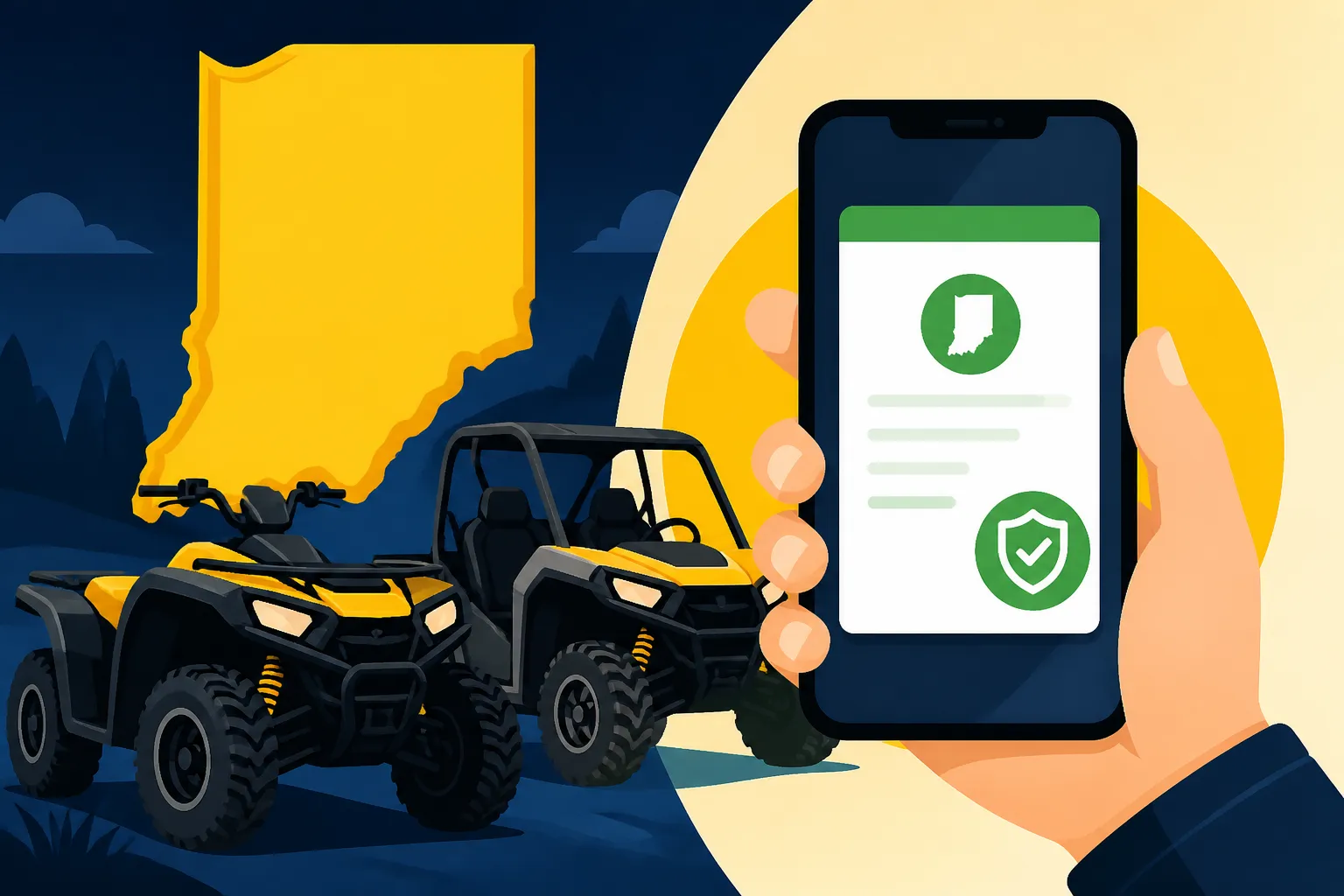
Photos of a Registration on a Phone
We've all been there: staring at a pile of paperwork, wishing everything could just live on our phone. Our Indiana off-road vehicles require a handful of essential documents, and in this digital age, it's natural to wonder if a quick photo on your smartphone will cut it when you're out on the trails. This guide will dive deep into Indiana's rules regarding ORV registration, clarifying whether a picture on your phone is truly sufficient or if you absolutely need that physical card in hand.
The Convenience Versus Compliance Conundrum: Can a Photo Suffice?
The idea of simply snapping a picture of your Indiana ORV registration and keeping it tucked away in your phone's gallery is incredibly appealing. It’s light, it’s always with you (most of the time!), and it saves you from fumbling with paper on the trail. But as tempting as this digital convenience is, the reality of official compliance often paints a different picture, especially when dealing with law enforcement or park rangers.
Indiana's Stance on Physical Documents for ORV Registration
When it comes to official documents like your ORV registration, Indiana law, much like many other states, generally operates under the expectation that you will produce the physical document upon request. While the specific wording might not explicitly forbid a digital copy in all scenarios, the established practice and the preference of the officials you encounter will almost always lean towards a hard copy.
Imagine you're out enjoying the dust and mud at Redbird Off-Road State Recreation Area, and a conservation officer approaches for a routine check. You might pull out your phone, proudly displaying a crisp photo of your registration. While some officers might be understanding, they are well within their rights to insist on seeing the actual, physical registration certificate. Their job is to verify ownership, registration status, and ensure everything is above board. A photo, no matter how clear, can be harder for them to authenticate on the spot. It doesn't have the official seal, the specific paper, or other security features that a physical document might possess. This is why many riders will keep their [Riding Without Your Registration Certificate in Your Pocket] physical copy securely on their person or machine.
Why a Photo Might Not Always Be Enough
Beyond the preference of law enforcement, there are several practical reasons why relying solely on a phone photo for your ORV registration in Indiana might leave you in a bind. Picture this: you've been riding all day, the sun is setting, and your phone battery is critically low. Or, worse yet, you hit a puddle, and your phone takes an unexpected swim. Suddenly, that digital proof is inaccessible.
Consider the potential for a faded or cracked screen, making the details on your photo difficult to read. An officer needs to clearly see the registration number, expiration date, and your machine's information. A dim screen in bright sunlight, or smudges from mud and sweat, can quickly turn a clear photo into an illegible mess. Furthermore, while most of us trust our own digital images, a law enforcement officer has no immediate way to verify that the photo is current or even authentic without significant additional steps, which they are unlikely to take roadside. They are looking for clear, unambiguous proof. It’s just like how you wouldn’t typically rely on a photo of your driver's license if you were pulled over for a traffic stop; they want the actual card. Always err on the side of caution and understand that while a digital image offers a layer of convenience, it rarely provides the absolute proof that a physical document does in official settings.
Practical Advice for Carrying Your Indiana ORV Registration
Given the legal and practical considerations, it's clear that relying solely on a photo of your ORV registration on your phone isn't the safest bet in Indiana. The key is to balance convenience with compliance, ensuring you always have acceptable proof when you need it. Let's talk about the best ways to carry your important documents.
Best Practices for Carrying Physical Documentation
The most reliable method for proving your Indiana ORV registration is to carry the physical certificate itself. But simply tossing it into a glove box or backpack might not be the most durable solution. Off-roading is a dirty, wet, and often bumpy activity, and your paperwork needs to withstand the elements.
A fantastic strategy is to laminate your registration card or, at the very least, seal it in a heavy-duty, waterproof pouch. These clear, resealable pouches are readily available and can protect your documents from mud, rain, and sweat. Many riders attach these pouches inside a UTV's glove compartment, or securely under the seat of an ATV, ensuring it's accessible but protected. For dirt bike riders who have less storage, a small, waterproof document holder that can be carried in a hydration pack or a secure pocket on your riding gear is ideal. The goal is to keep it dry, legible, and intact. Remember, the [Indiana ORV Decal Placement] on your machine is crucial, but the certificate itself is what verifies you as the owner and that the machine is registered. Make sure you're carrying the actual certificate, not just a picture of the decal.
When a Digital Copy Can Be a Helpful Backup (But Not a Replacement)
Now, this isn't to say your phone photo is entirely useless! While it shouldn't be your primary method of proof, a digital copy can serve as an excellent backup, offering peace of mind and practical assistance in specific situations. Think of it as your "just in case" plan.
For example, if you've already presented your physical registration to a park ranger, but then later lose the physical copy on the trail, having a photo on your phone could help identify your machine if it's found or aid in getting a replacement. It's also incredibly useful for quick reference – perhaps you're sharing details with a friend about trail permits, or you need to remember an expiration date when planning your next trip. You could also store a photo of your [An Indiana Bill of Sale for an ORV] if you just bought the machine. The key takeaway here is that a phone photo acts as a supplementary layer of security, a convenient way to access information, but it should never be presented as the sole, official proof of registration during an enforcement stop. Always prioritize having your physical document, and use the digital version as a smart, accessible backup.
Understanding the Implications of Insufficient Proof
Riding your off-road vehicle in Indiana is a fantastic way to enjoy the outdoors, but it comes with responsibilities, one of the biggest being proper registration. Failing to provide adequate proof of registration can quickly turn a fun day into a frustrating and costly experience.
Potential Fines and Frustrations
If you're stopped by a conservation officer or local law enforcement while riding your ORV in Indiana and you cannot produce a valid, physical registration certificate, you could face penalties. While an officer might initially give you a warning, they are well within their rights to issue a citation for operating an unregistered vehicle or for failing to carry proper documentation. These fines can add up, and the hassle of dealing with a ticket can easily overshadow any convenience gained by leaving your paperwork at home.
Beyond the immediate financial hit, there's the frustration of having to potentially prove your registration status in court, which takes time, effort, and possibly legal fees. Even if you rush home to grab the physical copy, the initial interaction might still lead to a ticket. This is why being prepared upfront is so important. A photo on your phone, as we've discussed, might not prevent a ticket, as the officer needs verifiable, official proof right there and then. Ignorance of the rule, or hoping an officer will accept a digital image, is rarely a successful defense. You want to avoid [Indiana Fines for an Unregistered ORV] by being fully prepared.
Ensuring You Have All Necessary Paperwork
Your registration certificate isn't the only piece of paper you might need to carry. Depending on where and how you're riding, other documents might be required or highly recommended. For instance, if you're riding in a county that has opened its roads to ORVs, they might require proof of insurance. While Indiana doesn't have a statewide ORV insurance mandate for all public land riding, some local ordinances do. Always check specific county rules, like those in Hancock or Vanderburgh County, if you plan to ride on designated county roads.
Furthermore, if you recently purchased your ORV, especially in a private sale, having a copy of the [An Indiana Bill of Sale for an ORV] can be incredibly helpful for establishing ownership, especially if you're still within the window for titling or registering. It helps connect you directly to the machine. You'll also want to ensure your [Indiana ORV Decal Placement] is correct and clearly visible on your machine, as this is the primary visual indicator of registration. Having all these documents readily available and protected means you're not just complying with the law, but also protecting yourself from unnecessary headaches and delays.
Tools and Resources for Document Management
Managing your ORV documents might seem like a chore, but with the right approach and a few helpful tools, it can be straightforward. Ensuring you have clear, legitimate paperwork is key to smooth sailing on and off the trails.
Creating and Managing Important ORV Documents
When you're buying or selling an ORV, or dealing with unique ownership situations, having properly drafted documents is vital. This is where resources like LawDepot can be incredibly useful. While you might think of a bill of sale as just a handshake deal and a scribbled note, LawDepot provides templates and guidance to create legally sound documents like a [An Indiana Bill of Sale for an ORV] or an ownership affidavit. These formal documents ensure all necessary information is included, protecting both buyer and seller. If you’re ever in a situation where your ORV doesn’t have a clear title or registration history, having a robust bill of sale or even an [Filing an Ownership Affidavit for a Quad With No Paperwork] can be a lifesaver.
Having clear, legible paperwork from the start means that when you do make a copy or take a photo (for backup purposes), all the details are perfectly readable. This attention to detail can prevent future headaches, such as issues with the BMV when you go to register or title your machine, or complications during a roadside check. Think of it as setting yourself up for success by ensuring the foundational documents are solid and easily understood by any official who might need to review them.
Digital Storage Best Practices (for Backups)
While we've stressed that a phone photo shouldn't be your primary proof of registration, digital copies still hold value as backups. The key is to store them smartly and securely. Instead of just leaving a single photo in your camera roll, consider these best practices:
- Cloud Storage: Upload photos of your registration, bill of sale, and insurance card to a secure cloud service like Google Drive, Dropbox, or Apple iCloud. This means even if your phone is lost, damaged, or runs out of battery, you can access your documents from another device.
- Password Protection: If storing documents directly on your phone, ensure your phone itself is password protected. For extra security, some apps allow you to password-protect specific folders where sensitive documents are stored.
- Encrypted Notes: Use a secure notes app that offers encryption to store text-based details of your registration (like your registration number, expiration date, and VIN) in case you need to reference them quickly.
- Share with Trusted Contacts: If you ride with a group or have a family member who also uses the machine, consider securely sharing digital copies with them. In an emergency, or if you get separated, they might be able to access the information.
- Print a Physical Backup: For absolute peace of mind, after creating digital copies, print a second physical copy of your registration certificate and store it in a completely separate, secure location—perhaps in your tow vehicle or at home. This way, if something happens to both your primary physical copy and your phone, you still have access to the information.
Remember, digital copies are a layer of defense against complete loss, but they complement, rather than replace, the physical documents required for immediate compliance in Indiana.
Comparing Documentation Options
To help visualize the best approach for carrying your ORV registration in Indiana, here's a comparison table summarizing the pros and cons of physical documents versus relying solely on a phone photo for various scenarios.
| Feature / Scenario | Physical Document (Recommended) | Phone Photo (Backup Only) |
|---|---|---|
| Official Verification | ✓ Best: Accepted by law enforcement/rangers | ✗ Poor: May not be accepted; authenticity issues |
| Legibility in Conditions | ✓ Good: Resists glare, doesn't depend on battery | ✗ Variable: Faded screen, glare, low battery, damage |
| Proof of Authenticity | ✓ Excellent: Contains security features | ✗ Weak: Easy to manipulate digitally; hard to verify |
| Accessibility on Trail | ✓ Good: In waterproof pouch on person/machine | ✓ Good: If phone works; less tactile in some gear |
| Risk of Loss/Damage (Primary) | Moderate: Can get lost/damaged if not protected | Moderate: Phone can be lost/damaged, battery dies |
| Backup Potential | N/A: Is the primary | ✓ Excellent: Great for reference or if primary is lost |
| Roadside Stop | ✓ Best: Meet legal requirements | ✗ Risky: May lead to citation or delays |
| Park Entry / Checkpoint | ✓ Best: Smooth process | ✗ Risky: Park personnel may require physical copy |
| Sharing Info with Others | ✓ Good: Can physically hand over | ✓ Excellent: Easy to text/email a copy |
| Cost to Replace | Low (if lost) | N/A (assuming phone is working) |
Disclaimer
This article is for general informational purposes only and does not constitute professional advice. Laws, prices and regulations vary by location and change over time. Consult a qualified professional for guidance on your specific situation.