Riding Without Your Registration Certificate in Your Pocket
It happens to the best of us: you're geared up, trailer hitched, ready for an epic day on the Indiana trails, only to realize you left your ORV's registration certificate sitting on the kitchen counter. Or maybe it's buried deep in a backpack, or worse, completely lost. This common oversight can quickly turn a fun outing into a stressful encounter with law enforcement, especially if you're stopped roadside or challenged by a park ranger. This guide will walk you through the nitty-gritty of what to do if you find yourself without your physical registration certificate, how to prevent it from happening, and what an Indiana officer expects to see.
The Legal Expectation: Why Your Paperwork Matters
Indiana law is pretty clear when it comes to operating off-road vehicles (ORVs) like ATVs and UTVs. Just like with your car, you need to be able to prove that your machine is properly registered and that you are its rightful owner or have permission to operate it. The physical registration certificate, issued by the Indiana Bureau of Motor Vehicles (BMV), is that tangible proof. It's not just a suggestion; it's a requirement designed to ensure accountability and track ownership for safety and legal reasons.
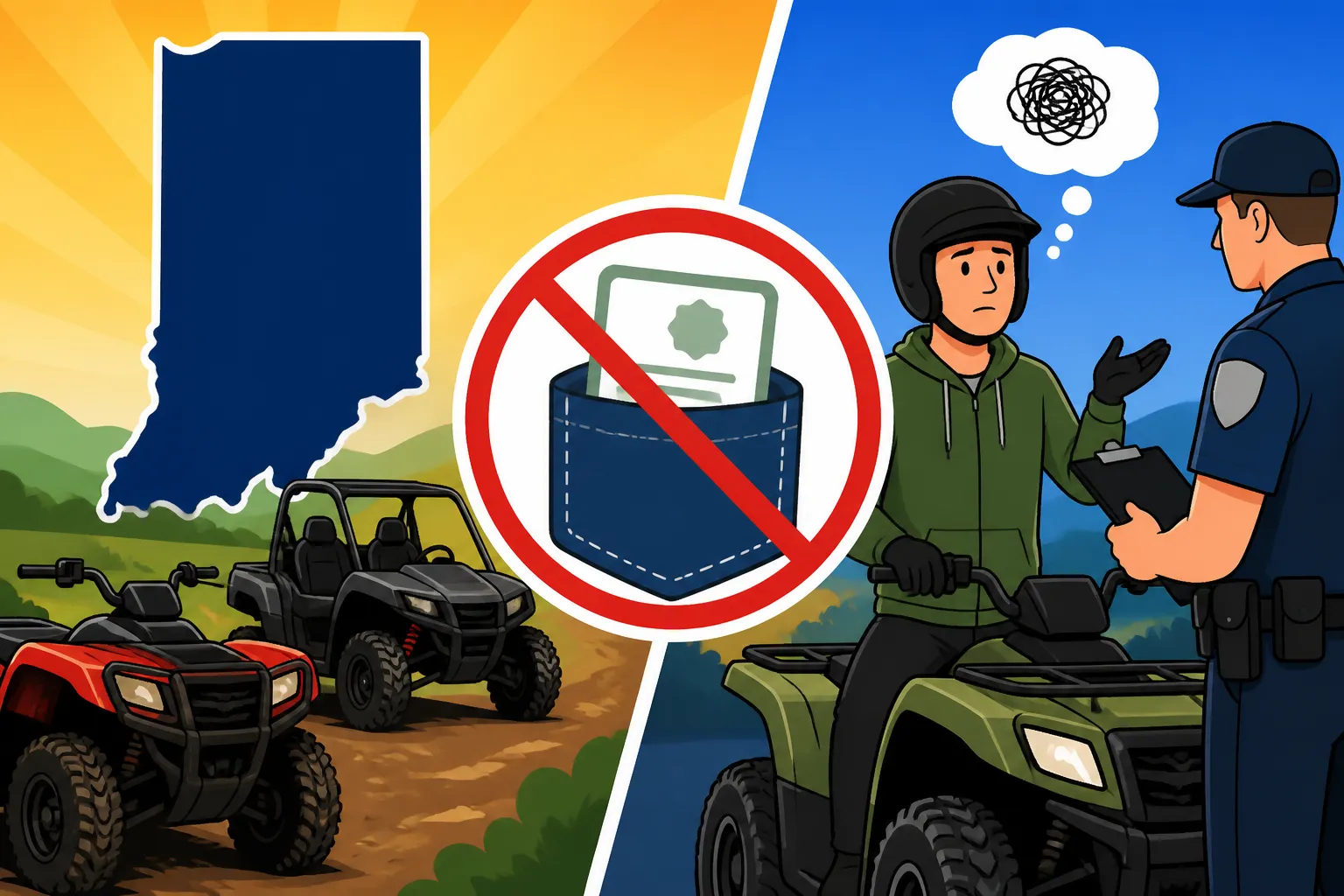
Imagine you're cruising through Redbird Off-Road State Recreation Area, enjoying the dirt and the climbs, when a conservation officer pulls you over for a routine check. If you can't produce that certificate, even if your decal is perfectly displayed on the machine, you could face delays, questioning, and potentially a citation. It’s a frustrating situation because you know you’re legal, but proving it on the spot becomes a real headache.
What Indiana Law Requires You to Carry
Indiana Code specifically outlines the requirement for ORV operators to possess their valid registration certificate or an acceptable form of temporary proof while operating the machine. This isn't just for public trails or state parks; it extends to any area where your ORV is being operated, including crossing county roads where permitted. The intent is to make it easy for law enforcement to verify the machine's legal status without having to run extensive database checks in the field, which can take time and resources.
Beyond the registration certificate itself, an officer might also inquire about other documentation. This could include proof of insurance, particularly if you're riding in a county that requires it for road access, or even a bill of sale if you've recently purchased the machine and are within the grace period for titling. Knowing what [What an Indiana Officer Checks Roadside] can save you a lot of grief. It’s always better to be overprepared than caught off guard, even if you’re just zipping around your own property or a friend’s land.
The Consequences of Not Having It On Hand
So, what actually happens if you're stopped and you don't have that certificate? At best, a very understanding officer might give you a verbal warning and ask you to produce it at a later date at the station. At worst, you could be issued a citation, which is essentially a ticket carrying a fine. The officer might even deem your machine "unregistered" in the field, even if it technically is, because you can't provide immediate proof. This is where you might start looking up [Indiana Fines for an Unregistered ORV].
The fines for operating an ORV without proper registration can vary, but they're certainly not pocket change. Beyond the monetary penalty, there's the inconvenience and stress of dealing with court dates, appealing the citation, and the lingering feeling of having your fun interrupted by a bureaucratic hiccup. It's a classic example of a small oversight leading to disproportionately large headaches, something every ORV owner wants to avoid.
Facing a Roadside Stop Without Your Certificate
Okay, deep breaths. You've been stopped, and your stomach drops because you realize the registration certificate is not where it should be. Panic won't help, but a calm, respectful demeanor and knowledge of your options can make a big difference. The key is to be cooperative and transparent with the officer, while also being aware of what steps you can take to rectify the situation. Remember, the officer's job is to ensure public safety and legal compliance, and a missing document raises red flags.
It's a frustrating scenario because you know you've done everything right; you've gone through the process of [Registering an ORV in Indiana], paid your fees, and have the decal on your machine. But without that piece of paper, it's just your word against a legal requirement. This is especially true if you're riding in an unfamiliar area or if the officer isn't familiar with you or your machine.
What to Say and Do if You're Stopped
First and foremost, remain calm and polite. When an officer approaches, turn off your engine, remove your helmet, and keep your hands visible. Explain the situation clearly and honestly: "Officer, I sincerely apologize, but it seems I've misplaced my physical registration certificate today. I know it's registered, and the decal is right here, but the paper copy must have been left at home." Do not argue or become defensive; that will only escalate the situation.
If you have other forms of identification, like your driver's license, offer them. If you have proof of insurance on hand, provide that as well, as it often helps establish your identity and responsibility. Sometimes, an officer might be willing to verify your registration by radioing it in, but this takes time and isn't always feasible, especially in remote areas with limited signal. They might also ask about [Indiana ORV Registration Paperwork] in general.
Using Digital Copies or Other Proof
In our increasingly digital world, many of us rely on our smartphones for everything. Could a photo of your registration certificate on your phone suffice? The answer, unfortunately, is "it depends." While some officers might accept a clear photo as provisional proof, the Indiana code typically refers to the physical certificate. It's not explicitly prohibited, but it's also not explicitly endorsed as primary proof. It's always best to offer it, as it shows good faith and an attempt to comply. This is where a clear [Photos of a Registration on a Phone] can be a lifesaver, even if it's not a guaranteed "get out of jail free" card.
Another option might be an old bill of sale or any other document with the VIN and your name on it, especially if you're within the 45-day titling window for a new purchase and are still awaiting your official registration. You could also show an email confirmation of a recent online renewal. While these aren't official "registration certificates," they can help paint a picture for the officer that you are indeed the owner and are attempting to comply with the law. Sometimes, having a well-organized folder of these backups, even if digital, can make a difference.
Proactive Measures: Keeping Your Documents Accessible and Safe
The best defense is a good offense, right? The easiest way to avoid the stress of a roadside stop without your registration certificate is to implement a few simple habits to ensure it's always with you or easily accessible. It's about building a routine that makes forgetting less likely and protecting your important documents from the elements. After all, nobody wants their fun day cut short because of misplaced paper.
Think about how you manage your car's registration and insurance cards – usually in the glove box, right? Your ORV deserves the same respect and organizational thought, perhaps even more so given the harsher environments these machines operate in. A little preparation goes a long way in preventing future headaches and ensuring smooth sailing on your next ride.
Secure Storage Solutions for Paperwork
Finding a waterproof and secure spot on your ORV for your documents is crucial. The paper certificate can easily get wet, torn, or lost if simply stuffed into a pocket or a flimsy bag. Consider a small, hard-shell waterproof case that can be mounted to your machine, or a durable, waterproof pouch that fits snugly into a storage compartment. These solutions protect against rain, mud, dust, and vibrations.
Many riders opt for a dedicated dry box that attaches to the cargo rack or stows under the seat. Inside, you can keep your registration certificate, proof of insurance, and even a copy of your [An Indiana Bill of Sale for an ORV] if you recently bought the machine. For added peace of mind, you might want to laminate your certificate (though check if this invalidates it in any way – generally, it doesn't, but it's good to be sure!). This ensures it withstands the rigors of the trail.
Digital Backups and Redundancy
While a physical copy is preferred, having multiple layers of backup can only help. Always take clear, legible photos of your registration certificate, insurance card, and any permits. Store these images in a dedicated folder on your smartphone or even in a cloud storage service like Google Drive or Dropbox. This way, if your physical document is lost or damaged, you have a digital version to show.
Consider emailing a copy of your documents to yourself or a trusted riding partner. That way, if your phone is dead or lost, you might still have access through another device. Some riders even print a second copy and leave it in their tow vehicle, which is often parked nearby at the trailhead. This redundancy ensures that even if one copy is inaccessible, you have another option. It's about being prepared for various scenarios that can unfold when you're out enjoying the trails.
Beyond the Certificate: Other Important Documents
While the registration certificate is paramount, it's just one piece of the puzzle when it comes to riding legally and safely in Indiana. There are several other documents and proofs you should always have with you or easily accessible when operating your ORV. Being knowledgeable about these can further solidify your compliance and make any interaction with law enforcement or park officials much smoother.
It’s not just about avoiding fines; it’s about responsible ownership and contributing to a safe riding environment for everyone. Just like a good mechanic always has the right tools, a responsible ORV owner always has the right paperwork.
Proof of Insurance and Permits
Indiana does not universally mandate ORV insurance statewide, but certain counties or specific riding areas might require it, especially if you plan on using designated county roads. For example, some counties that have opened their roads to ORVs often require proof of liability insurance. Check local ordinances for the areas you plan to ride. If you're riding at a state recreation area like Redbird or Interlake, you'll also need a valid Indiana ORV Trail Permit, which is separate from your registration. It's wise to carry proof of this permit, too.
Having your insurance card, much like your vehicle's, is critical for showing [Indiana Registration and Insurance Proof]. Some riders laminate their permit or attach it securely to their key ring or a dedicated lanyard worn around their neck while riding. For anything that requires a formal document, especially for things like ownership affidavits or permissions if you're riding on private land, services like LawDepot can be incredibly helpful for creating legally sound and correctly formatted paperwork.
Dealer Paperwork and Ownership Affidavits
If you've recently purchased your ORV, you might not have received your official registration certificate yet. Indiana allows a grace period for titling and registration. During this time, your dealer's paperwork, including a temporary registration or a dated bill of sale, serves as crucial proof of ownership and legal operation. Always keep these documents handy until your official certificate arrives.
For machines bought privately, ensure you have a properly filled out and signed [An Indiana Bill of Sale for an ORV]. If for some reason you don't have a clear chain of title or an original bill of sale for an older machine, you might need to go through the process of filing an ownership affidavit with the BMV. This is another area where a reputable service like LawDepot can assist you in drafting the necessary legal forms to prove your rightful ownership, helping you avoid issues down the road when it's time to register or sell. Don't forget that if you lose your decal, you'll be looking up [Replacing a Lost Indiana ORV Decal] or dealing with [Riding Redbird on an Expired Decal] which also has consequences.
Here's a quick look at essential documents and common issues:
| Document Type | Purpose | Best Practice for Carrying | Potential Issue if Missing |
|---|---|---|---|
| ORV Registration Certificate | Proof of legal registration with the state | Waterproof case on ORV, laminated physical copy | Fines, potential impoundment |
| Proof of Insurance Card | Required by some counties/parks for liability coverage | Waterproof case on ORV, digital photo on phone | Fines, denial of access to certain areas |
| Indiana ORV Trail Permit | Required for state-managed ORV riding areas | Laminated, attached to key ring, digital photo | Fines, denied entry to parks |
| Bill of Sale / Temp Reg | Provisional proof of ownership for recent purchases | Keep with other vital documents, digital photo | Difficulty proving ownership/legal operation |
| Driver's License / ID | Personal identification for operator | On your person, easily accessible | Difficulty verifying identity |
Ultimately, carrying all your necessary documents, whether physical or digital, is a small effort that can save you a lot of hassle and ensure your ORV adventures in Indiana remain enjoyable and worry-free. Make it a part of your pre-ride checklist, just like checking your tire pressure or filling up the tank.
Disclaimer
This article is for general informational purposes only and does not constitute professional advice. Laws, prices and regulations vary by location and change over time. Consult a qualified professional for guidance on your specific situation.