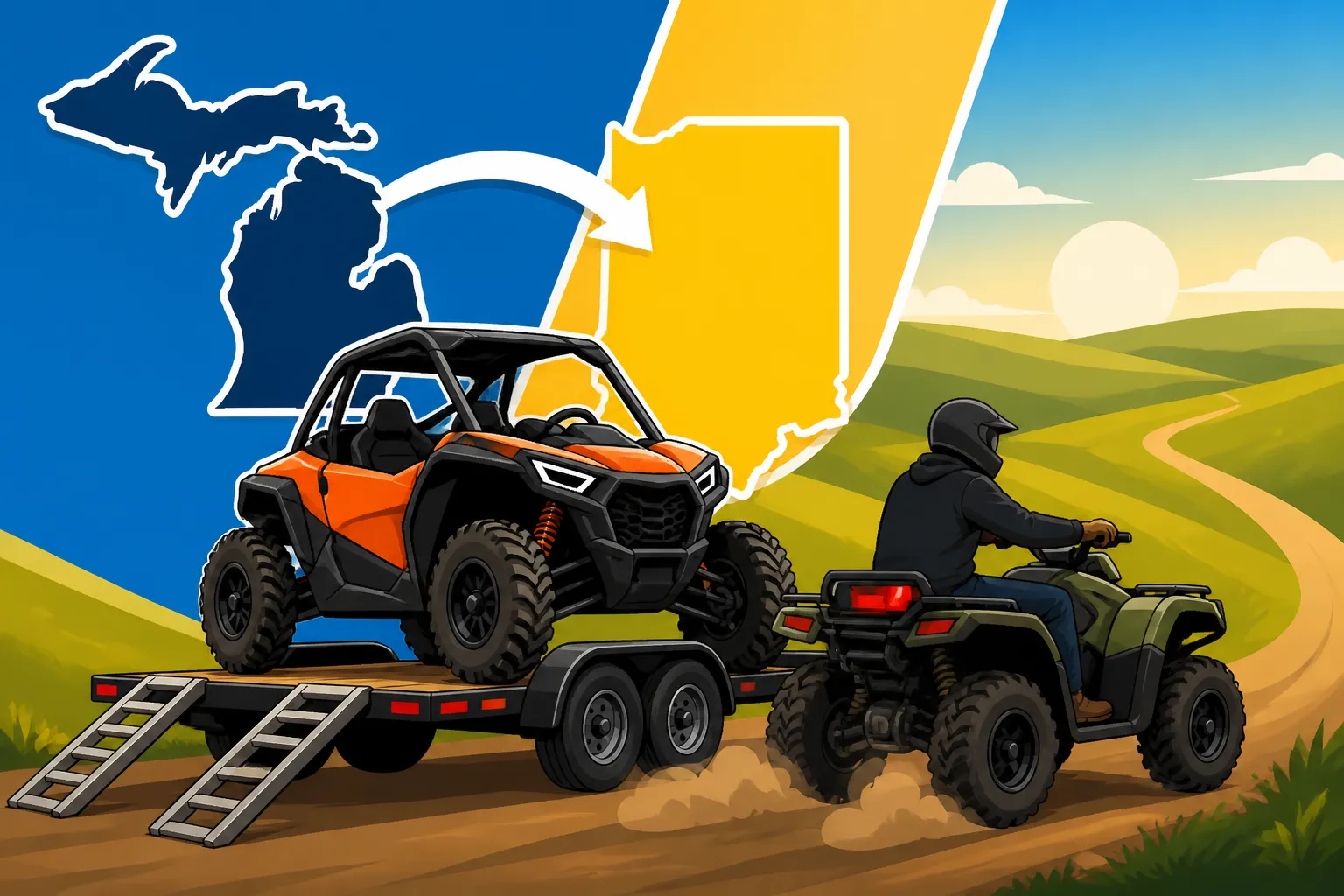
Hauling a Machine Down From Michigan
It's an exciting feeling, isn't it? That moment you've found the perfect off-road machine, maybe a great deal over the state line in Michigan, and now you're faced with the logistics of bringing it home to Indiana. But before you hitch up the trailer and hit the road, there are some really important steps you need to take to make sure your new-to-Indiana ATV or UTV is legally ready for our trails. This guide will walk you through everything, from paperwork headaches to avoiding those dreaded late fees.
Understanding Indiana's Unique ORV Rules
First things first, let's clear up some common misconceptions. Indiana has its own set of rules for off-road vehicles (ORVs), and they might be quite different from what you experienced in Michigan or other states. Many people assume if it's registered in one state, it's good to go everywhere, but that's just not the case, especially when you're making Indiana its permanent home. Our system involves both registration and, in many cases, titling through the Bureau of Motor Vehicles (BMV), not the Department of Natural Resources (DNR).
Why Indiana's System Differs
In Indiana, we manage ORV registration and titling through the BMV, which is the same agency that handles your car or truck. This often surprises people, as many states run their ORV programs through their DNR or equivalent natural resources department. The BMV handles the paperwork, collects the fees, and issues the decals that prove your machine is legally registered in the state. The DNR, on the other hand, manages our fantastic state riding areas like Redbird and Interlake, but they don't issue the initial registration. It's a key distinction that can trip up even seasoned riders moving here. [Why the BMV and Not the DNR in Indiana]
Key Documents You'll Need
When you're bringing a machine from Michigan, you're essentially importing it into Indiana's system. This means you'll need to gather specific documents to prove ownership and facilitate the registration and titling process. This isn't just a suggestion; it's a legal requirement, and missing even one piece of paper can lead to frustrating delays and extra trips to the license branch.
The most critical document is proof of ownership. If you bought it from a Michigan dealer, you'll typically have a manufacturer's certificate of origin (MCO) or a title. For a private sale, a properly executed bill of sale is absolutely essential. We're talking about a document that clearly states the buyer and seller, the purchase price, the date of sale, and most importantly, the vehicle identification number (VIN) of the machine. Without a clear chain of ownership, you'll be hitting a brick wall at the BMV. If you're a bit unsure about what a solid bill of sale looks like, resources like LawDepot can provide excellent templates to ensure you cover all your bases and avoid future headaches.
Registering Your Michigan Machine in Indiana
Once you've got your machine here in the Hoosier State, the clock starts ticking for getting it properly registered and, if required, titled. Indiana takes its deadlines pretty seriously, and missing them can result in additional fees.
The Titling Requirement: The 2009 Rule
One of the most significant rules in Indiana for ORVs is the titling requirement for machines purchased after December 31, 2009. If your machine was bought new or used on or after January 1, 2010, regardless of where it came from (even Michigan), it needs an Indiana title. This can be a point of confusion for machines that might not have been titled in Michigan if their rules were different. So, even if your machine arrived from Michigan with just a bill of sale, if it falls under the "after 2009" rule, you'll be applying for an Indiana title. [Why Indiana Titles Machines Bought After 2009]
The title proves legal ownership, and without it, you won't be able to properly register your ORV. If your Michigan machine did have a title, make sure it's properly signed over to you. If it didn't, and it's a 2010 or newer model, you'll apply for an Indiana title, often using your bill of sale and any other ownership documents you have from Michigan. The BMV will scrutinize these documents to establish a clear chain of ownership.
The 45-Day Deadline for Titling
Indiana sets a firm deadline for titling your ORV. You have 45 days from the date of purchase or the date you establish Indiana residency (if you're moving here with an already-owned machine) to get that title paperwork in. If you miss this deadline, an administrative penalty will be applied. It's not a massive fine, but it's an avoidable cost that can certainly sting when you're just trying to get out on the trails. [Indiana's Forty-Five Day Titling Deadline]
So, as soon as that Michigan machine is in your possession, make a beeline for your local BMV branch or get the paperwork prepped. Don't let those 45 days slip away while you're busy planning your first ride at [Redbird Off-Road State Recreation Area] or [Interlake Off-Road State Recreation Area]. Pro tip: If you're buying privately, consider getting a solid bill of sale from LawDepot to ensure all the necessary details are captured and prevent any issues with the date of purchase.
Registering Your ORV
Once the titling situation is sorted (or if your machine is exempt from titling, like those purchased before 2010), you'll proceed with registration. This is where you get your Indiana ORV decal. This decal is valid for three years, which is a nice long stretch before you have to worry about renewal again. [Indiana's Three-Year ORV Registration]
The registration process requires your proof of ownership (title or bill of sale for older machines), proof of Indiana residency, and payment of the registration fee. The BMV will process your application, and you'll typically receive your decal by mail within a few weeks. [How Long an Indiana Decal Takes to Arrive] While you're waiting for your physical decal, you usually get a temporary receipt that allows you to ride, but it's crucial to keep it with you.
Here's a quick look at some general requirements:
| Requirement | Details |
|---|---|
| Proof of Ownership | Indiana Title (if 2010 or newer), Manufacturer's Certificate of Origin (MCO), or Bill of Sale (for pre-2010 machines or if applying for new title) |
| Proof of Residency | Indiana Driver's License/ID Card, utility bill, or other acceptable documents. |
| Vehicle ID Number | The VIN must be clearly identifiable on the machine and match all documentation. |
| Application Form | Complete the required BMV forms (typically the Application for Certificate of Title). |
| Fees | Titling fee, registration fee, and potentially a sales tax (if not paid at a dealer). |
| Insurance | While not universally mandated by the state for private land, some counties or riding parks may require proof of insurance for road access or entry. It's always a good idea to carry it. [Indiana ORV Insurance Requirement] |
Navigating Specific Scenarios and Avoiding Pitfalls
Bringing an ORV across state lines can throw up a few curveballs. Being prepared for these specific situations will save you a lot of grief and ensure a smoother process.
The Out-of-State Purchase vs. Moving Resident
There's a subtle but important distinction between buying a machine in Michigan and bringing it to Indiana, versus moving your already-owned, Michigan-registered ORV to Indiana as part of a residency change.
If you purchase the machine in Michigan, Indiana will typically require you to pay Indiana sales tax when you title and register it, unless you can prove you paid sales tax in Michigan that is at least equal to Indiana's rate. This is where keeping your purchase receipts is vital. If you simply move to Indiana with an ORV you already owned and registered in Michigan, you generally won't owe new sales tax, but you still need to transfer its registration and title into the Indiana system. [Registering an Out-of-State Machine in Indiana]
What if the Michigan Seller Never Titled It?
This is a common frustration point, especially with older used machines. You might encounter a Michigan seller who has only a bill of sale, even for a machine that would typically be titled in Indiana (i.e., 2010 or newer). While this isn't necessarily a deal-breaker, it makes your job harder. The Indiana BMV will require you to establish a complete chain of ownership. You'll likely need to present the bill of sale from the Michigan seller, and potentially previous bills of sale if the chain isn't clear. In some cases, if the paperwork is really sparse, you might need to file an ownership affidavit or even apply for a special identification number if the VIN is missing or illegible. [Filing an Ownership Affidavit for a Quad With No Paperwork]
Before you hand over any money, always, always [Checking a VIN Before an Indiana Purchase]. Make sure the VIN on the machine matches the paperwork, and that there are no red flags. It's your best defense against inadvertently buying a stolen machine or one with a convoluted ownership history.
Riding Before Your Decal Arrives
We all get excited to hit the trails, and waiting for that official decal to arrive in the mail can feel like an eternity. Indiana understands this, which is why the BMV will provide you with a temporary registration certificate after you've successfully completed the process. This temporary document, usually valid for a short period (often 20 days or so), serves as your proof of registration until your official decal arrives. [Riding on a Fresh Bill of Sale]
It is absolutely crucial to carry this temporary certificate with you when you ride. If a conservation officer or law enforcement official stops you, this document is your proof that you've done your due diligence. Riding without any proof of registration can lead to fines, even if you've technically applied and are just waiting for the mail. [Indiana Fines for an Unregistered ORV] Keep it in a waterproof baggie or a secure compartment on your machine.
Getting Ready for Indiana Trails
With your Michigan machine now legally registered and titled in Indiana, you're almost ready for those fantastic trail experiences. But there's a little more to consider for practical trail readiness.
Decal Placement and Visibility
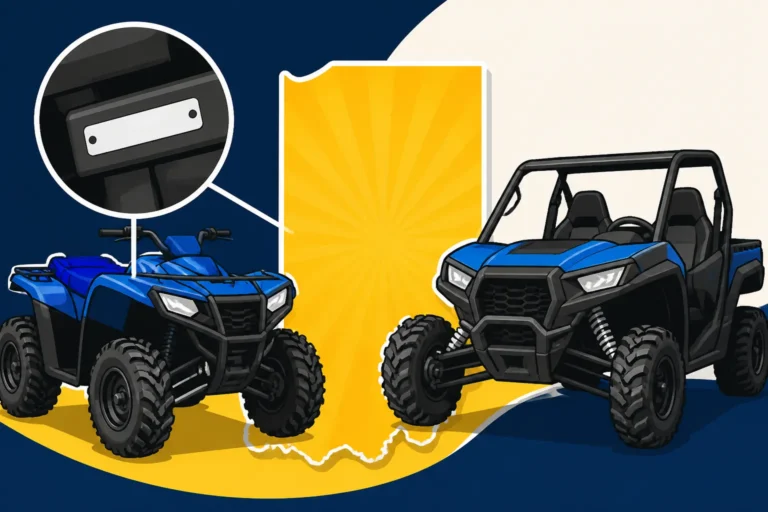
Once your shiny new Indiana ORV decal arrives, you'll need to affix it correctly to your machine. Indiana law specifies that the decal must be attached to the forward half of the ORV, clearly visible. This typically means on the left side of the machine, like on the fender or frame, where it can be easily seen by officials. Don't stick it somewhere obscure or where it's likely to get covered in mud and become unreadable. An improperly placed or unreadable decal can be just as problematic as not having one at all. [Where the Indiana Decal Mounts]
Take a moment to clean the area thoroughly before application to ensure good adhesion, especially if you plan on doing some serious mudding! You don't want your new decal peeling off after a few rough rides. If, for some reason, your decal gets lost, damaged, or becomes unreadable, you'll need to apply for a replacement through the BMV. [Replacing a Lost Indiana ORV Decal]
Planning Your First Indiana Ride
Now that all the paperwork is squared away, it's time for the fun part! Indiana boasts incredible riding opportunities, from the expansive landscapes of [Interlake Off-Road State Recreation Area] to the challenging terrain at Redbird. Before you head out, always check the specific rules and requirements of the park or trail system you plan to visit.
For example, our state ORV parks require a separate DNR trail permit in addition to your BMV registration. This can be a daily permit or an annual permit, and sometimes an entrance fee for the state property itself. [Indiana ORV Trail Permit Cost] You'll find that these funds directly contribute to maintaining and improving the very trails you'll be enjoying, making those fees feel a lot more palatable. Remember, knowing the rules helps ensure a safe and enjoyable experience for everyone on the trails.
Disclaimer
This article is for general informational purposes only and does not constitute professional advice. Laws, prices and regulations vary by location and change over time. Consult a qualified professional for guidance on your specific situation.