Indiana ORV Decal Placement
One of the most common headaches for Indiana off-road vehicle owners isn't tearing up a trail, but tearing their hair out trying to figure out the maze of registration and decal rules. It’s not always intuitive where that crucial sticker needs to go, and getting it wrong can lead to frustrating run-ins with conservation officers. This guide is here to cut through the confusion and give you the definitive lowdown on exactly where your Indiana ORV decal belongs and why its placement matters so much.
Understanding Indiana's ORV Decal: More Than Just a Sticker
When you register your ATV or UTV in Indiana, you’re not just getting a piece of paper; you’re receiving a physical decal that acts as your machine’s visible proof of registration. This little sticker carries a lot more weight than you might think, and understanding its purpose is the first step toward proper placement.
What Your Indiana Decal Actually Signifies
Think of your Indiana ORV decal as the license plate for your off-road machine. It’s prominently displayed for a reason: to quickly identify that your vehicle has been properly registered with the Indiana Bureau of Motor Vehicles (BMV). Each decal has a unique registration number and indicates the year for which the registration is valid. It's more than just a regulatory formality; this system is designed to create accountability and ensure that owners are contributing to the broader off-road community.
The fees collected from these registrations actually go back into maintaining and improving the very trails and riding areas we all love. Without these decals, it would be a free-for-all, and the infrastructure that supports our passion for off-roading would crumble. When you slap that decal on your machine, you’re not just complying with the law; you’re investing in the future of Indiana’s trails. For a deeper dive, check out [The Indiana ORV Decal Explained].
The Importance of Correct Placement
You might think, "What's the big deal? It's just a sticker!" But proper decal placement is absolutely critical for several reasons. First and foremost, it’s about visibility for law enforcement. Indiana conservation officers and other authorities need to be able to quickly and easily verify your machine's registration without having to stop you every five minutes. If your decal is hidden, obscured, or placed incorrectly, it raises red flags immediately.
Secondly, incorrect placement can lead to fines and penalties. Imagine planning a weekend trip to Redbird or Interlake, only to get a ticket before you even hit the first mud puddle because your decal isn't where it should be. It’s a frustrating scenario that can put a serious damper on your fun. Indiana has specific rules, and officers are trained to look for compliance. An improperly placed decal can be treated similarly to not having a decal at all, potentially leading to [Indiana Fines for an Unregistered ORV]. It’s much easier (and cheaper!) to just get it right the first time. The consequences are real, and understanding that helps solidify why we need to pay attention to these seemingly small details. It’s one of the things [What a Conservation Officer Can Ticket You For] and it's easily avoidable.
Pinpointing the Exact Spot: Where the Indiana Decal Belongs
Now for the million-dollar question: where exactly does this decal need to go? Indiana law is quite specific, aiming for clear visibility and consistency across all ORVs. It’s not just "anywhere on the machine"; there's a designated zone that you need to stick to.
The "Forward Half" Rule: Deconstructing the Requirement
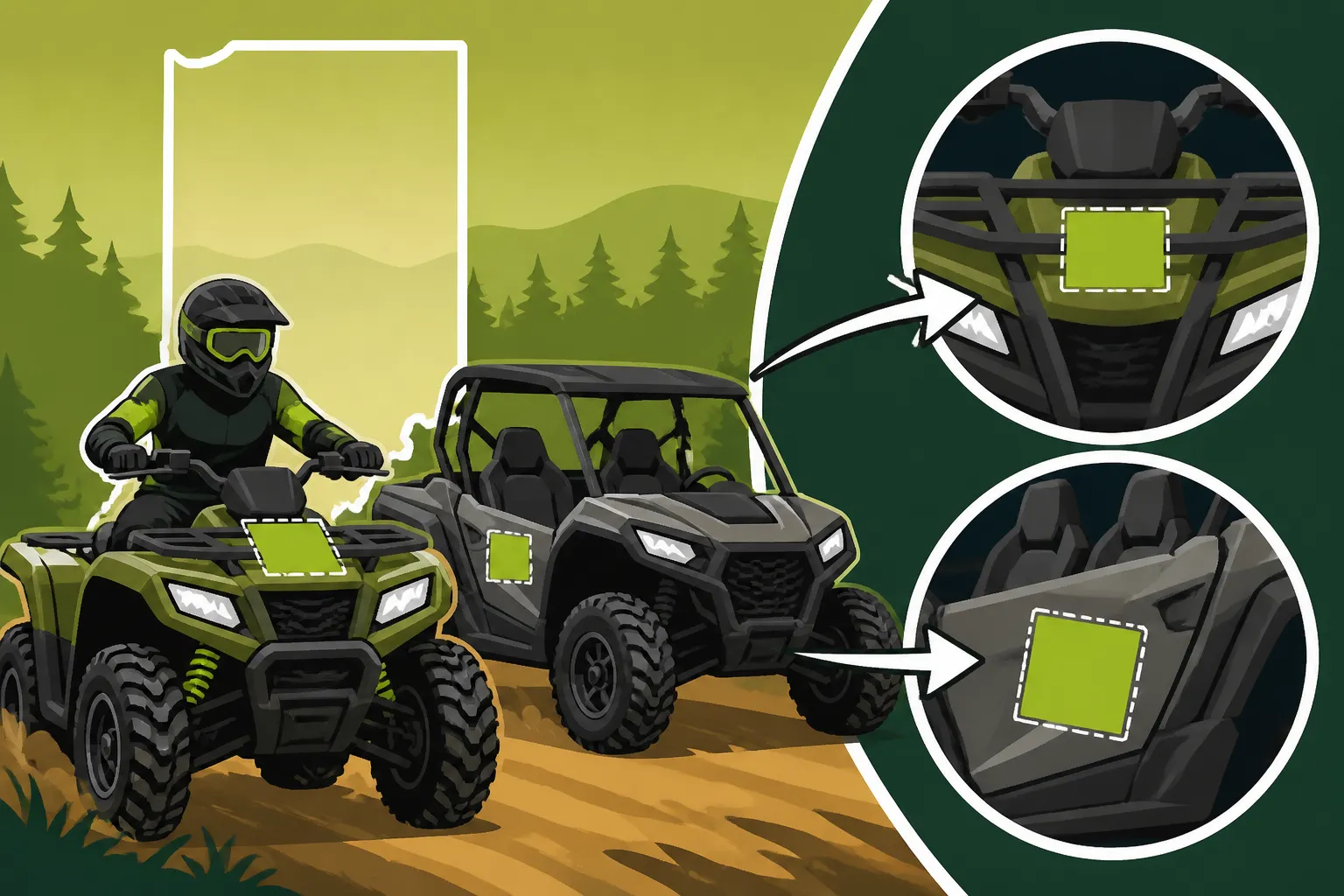
The core of Indiana's decal placement rule revolves around the phrase "forward half of the machine on the left side." Let's break that down. "Forward half" means the front section of your ATV, UTV, or dirt bike. This isn't the back fender or anywhere near the rear wheels. It’s the part of the vehicle that an officer would see first if approaching from the front or front-side.
Then there's the "left side" stipulation. This means the rider's left side when seated on the machine. So, if you're looking at your ATV from the front, it would be on the right side. If you’re riding a side-by-side, it’s the driver’s left. This consistency ensures that officers always know exactly where to look. For ATVs and dirt bikes, a common and compliant spot is usually on the front fender, a sturdy part of the frame, or even a fork tube, as long as it's clearly visible and falls within that forward-half, left-side parameter. For UTVs, it might be on a designated spot on the front bumper or a frame member near the driver's side front. The key is visibility and adherence to the specified location. For more context on this specific phrasing, consider reviewing [The Forward Half of an Indiana Machine].
To give you a clearer picture, here are some typical locations based on ORV type:
| ORV Type | Recommended Decal Placement (Forward Half, Left Side) | Notes |
|---|---|---|
| ATV | Front fender (upper left portion), front frame rail | Avoid areas prone to heavy mud spray or frequent impact. |
| UTV | Front bumper (left side), roll cage member (forward left) | Ensure it's not obscured by winches, lights, or accessories. |
| Dirt Bike | Front fork tube, front number plate (left side) | Must be clearly visible and on a non-removable part of the primary structure. |
The crucial thing is that the decal is mounted securely and prominently. If you’re ever in doubt, choose a spot that’s flat, clean, and easily seen. Indiana law wants to make sure that the unique identifying number on your decal can be read without obstruction. This is why you often see them mounted on the flat, visible surfaces of the machine's frame or plastic bodywork. For general guidance on physical mounting, [Where the Indiana Decal Mounts] can provide more detail.
Practical Tips for Optimal Visibility and Durability
Once you know where to put it, the next step is ensuring it stays put and remains readable for the entire three-year registration period. These decals are designed to be durable, but a little care during placement can go a long way.
First, always clean the surface thoroughly before application. Dirt, grease, or old sticker residue will prevent the decal from adhering properly, making it prone to peeling, especially when exposed to the elements or the rigors of off-road riding. Use rubbing alcohol or a good degreaser to ensure a perfectly clean and dry surface. Apply the decal slowly, pressing out any air bubbles as you go, to ensure maximum adhesion.
Second, consider the environment your ORV operates in. If you frequently ride in deep mud, avoid placing the decal in a spot that will be consistently caked in grime, as this will obscure it and make it harder to clean. Similarly, if your machine has parts that frequently rub against trees, rocks, or other obstacles, choose a more protected area. Sometimes, riders will apply a clear protective film or a layer of clear coat over the decal once it’s properly adhered to add an extra layer of durability. This can be a lifesaver if you find [When Mud Peels Your Registration Decal Off]. Thinking ahead about where your machine gets the most abuse can help you select a spot that will keep your decal looking good and legible.
Troubleshooting and Maintaining Your Indiana ORV Decal
Even with the best placement, things happen. Decals can get damaged, lost, or simply fade over time. Knowing how to address these issues is just as important as knowing where to put the decal in the first place. This section will guide you through common problems and their solutions.
What to Do if Your Decal is Lost, Damaged, or Unreadable
It's a common scenario: you're out on the trail, having a blast, and suddenly realize your decal is gone, or it's so scratched and faded that you can barely make out the numbers. Don't panic, but don't ignore it either. Riding with a missing or unreadable decal is essentially the same as riding unregistered, and it can lead to those unwelcome fines we discussed earlier.
The good news is that replacing a decal is a straightforward process. You'll typically need to contact the Indiana BMV or visit a license branch. You’ll usually be asked to fill out an application and pay a small replacement fee. It's much less hassle than registering a whole new machine, but it's crucial to do it promptly. Waiting can put you in a tough spot if you encounter law enforcement. If you've been riding [Riding Redbird on an Expired Decal] or without a visible one, you're taking a risk. Make sure to get it sorted to avoid [What Riding Without a BMV Decal Costs You]. For detailed steps and any associated costs, refer to [Replacing a Lost Indiana ORV Decal] and [Indiana ORV Decal Replacement Cost].
When it comes to proving ownership for replacement, sometimes the BMV might ask for supporting documents. If you bought your machine privately, having a robust bill of sale is key. Services like LawDepot can help you generate a professional and legally sound bill of sale, ensuring you have the necessary documentation if you ever need to prove ownership or facilitate a decal replacement. Keeping good records saves headaches down the line.
Common Mistakes and How to Avoid Them
Beyond simply misplacing the decal, there are other common pitfalls owners encounter that can lead to problems. One frequent mistake is putting the decal on a part of the machine that is easily removed, like a toolbox, a windshield, or a removable fairing. The decal must be affixed to a permanent, integral part of the ORV's structure. If the part can be detached, so can your proof of registration.
Another error is placing it on the right side of the machine instead of the left. This might seem like a minor detail, but it breaks the consistency that law enforcement relies on for quick checks. Always remember: driver's left side, forward half. Don't forget to inspect your decal regularly. Mud, sun, and abrasive trail conditions can cause the numbers to fade over time. If you notice your decal becoming illegible, it's time to consider a replacement before it becomes an issue during a routine stop. Knowing how to interpret its details, even when worn, is important, so familiarize yourself with [Reading an Indiana Decal Number]. A little proactive maintenance and adherence to the guidelines will ensure your Indiana ORV adventures remain smooth and penalty-free.
Disclaimer
This article is for general informational purposes only and does not constitute professional advice. Laws, prices and regulations vary by location and change over time. Consult a qualified professional for guidance on your specific situation.