Why Indiana Snowmobiles Are Never Titled
It's certainly a head-scratcher when you hear about all the hoops you have to jump through for your ATV or UTV in Indiana, only to discover that your trusty snowmobile seems to live in a different legal universe. Many snowmobile owners, especially those new to the state or coming from states with different rules, often wonder why their sled doesn't come with a title like other off-road vehicles. This guide is here to clear up that confusion, diving deep into Indiana's unique laws surrounding snowmobiles and what it means for you as an owner.
The Unique Legal Status of Snowmobiles in Indiana
When it comes to the world of off-road vehicles in Indiana, snowmobiles occupy a special, distinct category. This isn't just a quirk; it's rooted deeply in how the state's laws are written and the specific ways these machines are used. Understanding this distinction is key to making sense of why they don't get a title.
Distinguishing Snowmobiles from Other Off-Road Vehicles
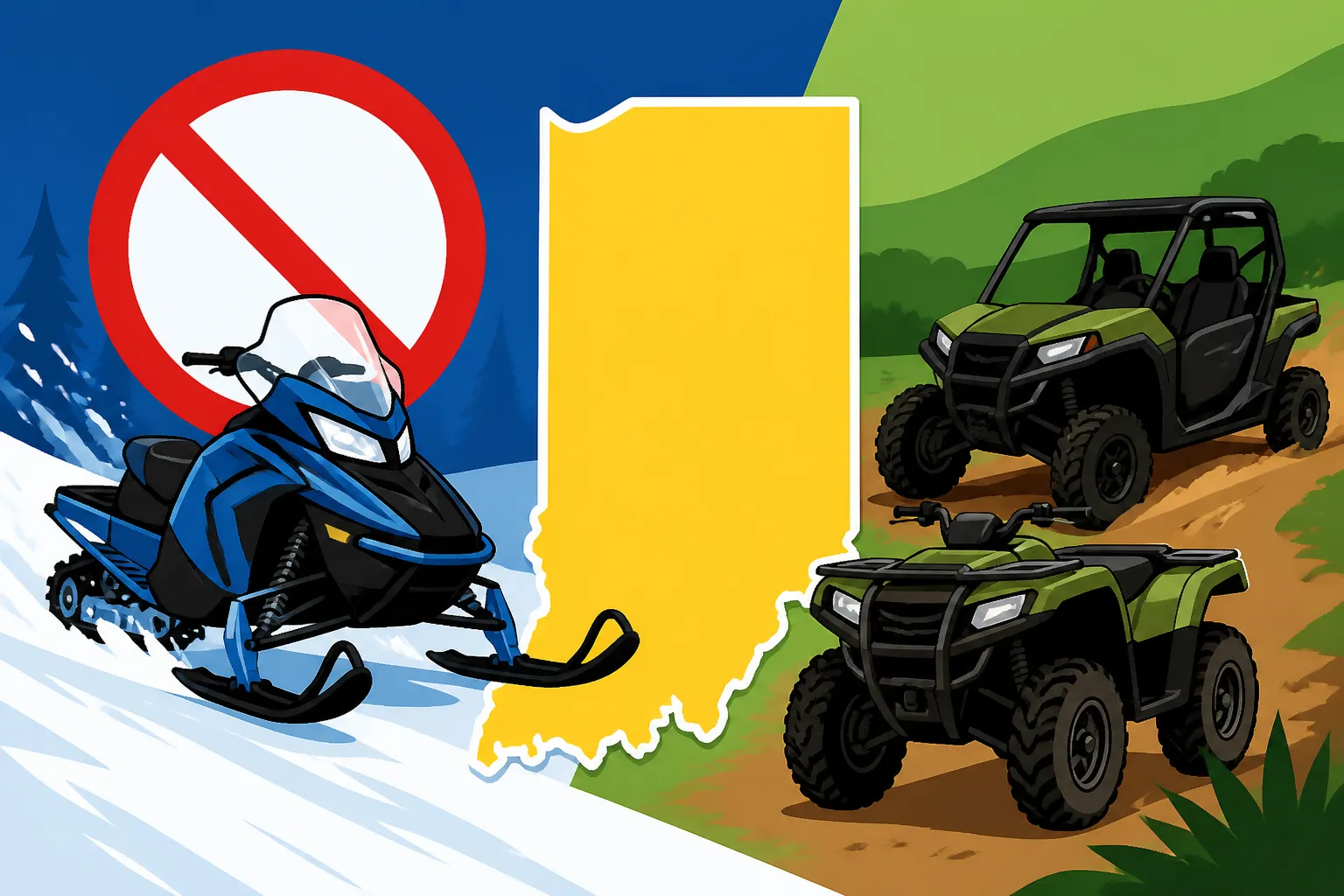
Indiana's legal framework clearly separates "off-road vehicles" (ORVs) from "snowmobiles." While both are designed for adventure off the beaten path, the law sees them through different lenses. An ORV, as defined by Indiana Code, is primarily a motorized vehicle designed to travel over unimproved terrain, usually with four or more tires in contact with the ground, like your typical ATV or side-by-side. It's built for dirt, mud, rocks, and various landscapes you'd find outside of winter. You can learn more about this definition in [How Indiana Defines an Off-Road Vehicle].
Snowmobiles, on the other hand, are specifically built for travel on snow or ice. Their defining characteristic is a continuous belt (or track) at the rear and skis or a ski up front for steering, rather than wheels. This fundamental difference in design and intended use means they fall under a separate set of regulations, particularly concerning titling. Because their domain is so specific—snow and ice, often in rural or designated recreational areas—they were historically treated differently than their wheeled counterparts, which might traverse more varied terrain, sometimes even brushing up against public roads.
Historical Context of Indiana's Titling Laws
The reason snowmobiles don't have titles in Indiana harks back to the evolution of vehicle laws in the state. For many years, most off-road machines, including ATVs, didn't require titles. It wasn't until a significant legislative change took effect in 2009 that titling became mandatory for most ORVs. This change was largely driven by a growing need for clearer ownership records, combating theft, and providing a standardized system for buying and selling these machines, especially as their popularity and use expanded. If you're curious about this shift, take a look at [Why Indiana Titles Machines Bought After 2009].
However, when this titling requirement came into play, snowmobiles were specifically excluded. Why? Part of it is likely due to their distinct usage patterns. Snowmobiles are highly seasonal, often stored for much of the year, and primarily used in specific, often remote, winter conditions. They aren't typically associated with the same kind of public road interface or year-round usage that might necessitate a title for tracking purposes. The existing registration system for snowmobiles was deemed sufficient for identification and enforcement, without the added administrative layer of a title. This exclusion means that if you've bought a snowmobile in Indiana, regardless of its year, you simply won't receive a title, and that's perfectly normal according to state law.
The Implications of No Title for Indiana Snowmobile Owners
Living without a vehicle title can feel a bit unsettling, especially when you're used to having one for nearly everything else you own. For Indiana snowmobile owners, understanding what this absence of a title truly means for everyday ownership and transactions is crucial. It changes how you prove you own your sled and how you handle buying or selling it.
Proving Ownership Without a Title
Without a formal certificate of title, you might wonder, "How on earth do I prove this snowmobile is mine?" It's a valid concern, and thankfully, Indiana law provides clear alternatives. The most important document you'll possess is a comprehensive Bill of Sale. This isn't just a casual receipt; it's a legally binding document that details the transaction, including the buyer's and seller's information, the snowmobile's make, model, year, and crucially, its Vehicle Identification Number (VIN) or serial number, and the purchase price. A well-drafted Bill of Sale acts as your primary evidence of ownership and the chain of custody. You can find more details on what should be included in [An Indiana Bill of Sale for an ORV].
Beyond the Bill of Sale, your current registration certificate is another piece of the ownership puzzle. While it doesn't prove ownership in the same way a title does, it confirms that you're the registered operator of the machine, which implies ownership in most contexts. It's always a good idea to keep both your original Bill of Sale and your current registration handy. In situations where original paperwork might be lost or murky, an ownership affidavit can also serve as a sworn statement of ownership. Services like LawDepot offer templates for these kinds of legal documents, which can be invaluable for ensuring you have robust, professionally prepared paperwork to back up your claim of ownership. Always prioritize keeping meticulous records; they are your best defense against any future disputes.
Selling or Buying an Indiana Snowmobile
The lack of a title can sometimes cause a little hesitation when you're selling or buying a used snowmobile in Indiana. Buyers, especially those unfamiliar with Indiana's unique laws, might be wary without a title in hand. As a seller, your responsibility is to reassure potential buyers and provide them with all the necessary documentation to prove legitimate ownership. This means having your Bill of Sale from when you purchased the machine, along with its current registration certificate.
When selling, clearly communicate that Indiana snowmobiles are exempt from titling requirements. Provide the buyer with a new, detailed Bill of Sale at the time of purchase. This document should again include all the snowmobile's identifying information, the sale date, price, and signatures from both parties. For a smooth transaction, it's wise to prepare these documents in advance. As a buyer, be diligent. Always request to see the seller's Bill of Sale from their purchase and their current registration. Verify the VIN or serial number on the snowmobile matches the paperwork. A thorough buyer's guide can be found in [Buying a Used ORV in Indiana], and sellers can benefit from reading [Selling an ORV in Indiana] for comprehensive advice. This due diligence ensures that even without a title, you have a clear, documented transfer of ownership, protecting both parties involved.
Registration Requirements for Indiana Snowmobiles
While Indiana snowmobiles don't require a title, they absolutely do require registration. This distinction is vital for every snowmobile owner to grasp. Registration is all about getting your machine legally authorized for operation on designated snowmobile trails and public lands, ensuring it's identified and accounted for.
Where to Register and What You'll Need
Getting your snowmobile registered in Indiana is a fairly straightforward process, much like registering other off-road vehicles. You'll typically handle this through any Bureau of Motor Vehicles (BMV) license branch across the state. It's important to remember that this isn't the Department of Natural Resources (DNR) you're dealing with for the core registration; it's the BMV, just like your car. You can find detailed information on the general process in [Registering an ORV in Indiana].
When you head to the BMV, you'll need a few key pieces of paperwork. First and foremost, bring proof of ownership, which, for a snowmobile, will be your Bill of Sale. If you're registering a brand-new machine, this would be the manufacturer's statement of origin (MSO) or certificate of origin (MCO). You'll also need a valid Indiana driver's license or state ID. The BMV will have specific forms for ORV and snowmobile registration, which you'll need to complete accurately. These forms will ask for information about you and your snowmobile, including its make, model, year, and serial number. Keep in mind there's a fee for registration, and you'll typically be paying for a three-year registration period. For a comprehensive list of what to prepare, check out [Indiana ORV Registration Paperwork]. It's always a good idea to call ahead to your local BMV branch or check their website to confirm current requirements and any specific forms you might need.
Understanding the Snowmobile Decal and Its Purpose
Once your snowmobile is successfully registered, you'll be issued a unique registration decal. This decal is more than just a sticker; it's your visual proof that your snowmobile is legally registered to operate in Indiana. It's critical to affix this decal in a visible location on the forward half of your snowmobile, typically on the tunnel or cowling, according to BMV guidelines. This allows law enforcement and park rangers to easily verify your registration status when you're out on the trails. The specific placement is crucial for compliance.
The decal itself contains important information, including your registration number and the expiration date. It's valid for three years, after which you'll need to renew it through the BMV. Think of this decal as fulfilling the same purpose as a license plate or registration sticker on a car – it's an immediate indicator of legality. Without it, or with an expired decal, you could face fines or other penalties for operating an unregistered machine. For more details on the significance and proper display of these identifiers, refer to [The Indiana ORV Decal Explained]. Staying on top of your renewal, as detailed in [Renewing an Indiana ORV Registration], ensures uninterrupted access to Indiana's beautiful winter trails and avoids any unwelcome surprises from conservation officers.
Common Misconceptions and Legal Realities
The unique treatment of snowmobiles in Indiana's legal landscape often leads to confusion, especially for those accustomed to other vehicle types. It's easy to conflate titling with registration or to assume that rules from other states apply universally. Let's clarify some of these common misunderstandings.
The Difference Between Titling and Registration
One of the most frequent points of confusion for snowmobile owners, and indeed many ORV owners, is the distinction between a "title" and "registration." While both are critical legal concepts for vehicles, they serve entirely different purposes, and for Indiana snowmobiles, one is absent while the other is mandatory.
- Titling refers to the official document issued by the state that establishes legal ownership of a vehicle. A title acts as a certificate of ownership, a sort of deed for your vehicle. It is typically required for vehicles that are sold, traded, or transferred, as it provides a clear, verifiable chain of ownership from one party to another. For many ORVs purchased after 2009, a title is essential for these transactions.
- Registration, on the other hand, is the process of officially recording a vehicle with the state to allow its legal operation on public lands, roads (where permitted), or designated trails. It's essentially a permit to operate. When you register a vehicle, the state collects information about the vehicle and its operator and issues a registration certificate and often a decal or plate. This system is primarily for identification, revenue collection (through fees that often fund trail maintenance), and enforcement of operational rules.
For Indiana snowmobiles, the legal reality is that there is no state-issued title to prove ownership in a singular, formal document. Instead, ownership is established and transferred primarily through a Bill of Sale and other robust private documentation. However, registration is absolutely required to legally operate your snowmobile on public property. This means you must have an active registration and display the corresponding decal. The absence of a title does not exempt you from the need for registration; in fact, it makes your registration certificate and Bill of Sale even more critical for proving your legitimate connection to the machine.
Out-of-State Snowmobiles and Indiana Rules
If you're an avid snowmobiler living near Indiana's borders, or simply planning a winter trip to experience the state's trails, you might wonder how Indiana's no-title rule impacts an out-of-state machine that does have a title. The good news is, Indiana has clear provisions for visitors and new residents.
For non-residents bringing a snowmobile into Indiana, the state generally honors valid registrations and titles from other states. You are typically allowed to operate your out-of-state registered snowmobile in Indiana for a limited period, usually around twenty days within a calendar year, without needing to obtain an Indiana registration. This grace period is intended to accommodate visitors. You can delve into the specifics of this rule in [Twenty Days a Visitor May Ride]. After this period, or if you become an Indiana resident, you would need to register your snowmobile in Indiana.
When registering an out-of-state snowmobile as a new Indiana resident, the process will largely mirror that for an Indiana-purchased machine: you'll present your out-of-state title (if one exists) and registration as proof of ownership, along with a Bill of Sale, to the BMV. Indiana will then issue you an Indiana registration decal. Crucially, even if your snowmobile came from a state that titles them, Indiana will not issue a new title for it. The out-of-state title serves as your proof of ownership for the Indiana registration process, but once it's an Indiana-registered machine, it falls under Indiana's no-title-for-snowmobiles rule. This can sometimes feel counterintuitive, but it's consistent with the state's legislative framework. Always consult the BMV or a local license branch for the most current requirements when [Registering an Out-of-State Machine in Indiana] to ensure a smooth transition.
Practical Advice for Indiana Snowmobile Owners
Navigating the unique legal landscape of Indiana snowmobile ownership doesn't have to be a bumpy ride. With no title to rely on, having a solid understanding of best practices for documentation and transfers is paramount.
Essential Documentation to Keep on Hand
Since your Indiana snowmobile won't come with a title, your other documents become incredibly important. Think of them as your ownership toolkit. Here’s what you absolutely should keep on hand and in good order:
- Bill of Sale: This is your bedrock. Whether you bought your snowmobile new from a dealer or used from a private seller, you need a detailed Bill of Sale. It should include the date of sale, the purchase price, the full names and addresses of both buyer and seller, and a thorough description of the snowmobile (make, model, year, VIN/serial number, and odometer/hour meter reading if applicable). This document is your primary legal proof of how and when you acquired ownership. If you're creating one, consider using a reliable template to ensure all legal bases are covered; services like LawDepot can provide comprehensive, customizable Bill of Sale forms.
- Registration Certificate: This is the official document issued by the Indiana BMV confirming your snowmobile is registered. It will match the information on your decal. Keep the physical certificate in a waterproof bag on your snowmobile when riding, or at least have a clear photo of it on your phone.
- Insurance Proof: While not universally mandated for all ORV use in Indiana, some counties or specific riding areas might require liability insurance. If you have insurance for your snowmobile (which is always a wise idea for protection against theft, damage, or liability), keep your insurance card or policy declaration easily accessible.
- Manufacturer's Statement of Origin (MSO) / Certificate of Origin (MCO): If you bought your snowmobile brand new, this document from the manufacturer is the very first proof of ownership. Keep it with your Bill of Sale. It’s the starting point of your ownership chain.
These documents, kept safe and accessible, will cover you in almost any situation, from proving ownership during a sale to satisfying a law enforcement officer on the trail.
Here's a quick comparison of essential documents:
| Document Type | Purpose | Required for Indiana Snowmobile? | Required for Indiana Titled ORV? (Post-2009) |
|---|---|---|---|
| Title | Legal Proof of Ownership & Transfer | No | Yes |
| Registration | Permit to Operate Legally on Public Land | Yes | Yes |
| Bill of Sale | Proof of Purchase & Ownership Transfer | Highly Recommended | Highly Recommended |
| Ownership Affidavit | Sworn Statement of Ownership (if primary docs lost) | Recommended (if applicable) | Recommended (if applicable) |
| Insurance Proof | Liability/Damage Coverage | Varies by use/county | Varies by use/county |
| MSO/MCO | First Legal Ownership Document (New Purchase) | Keep if applicable | Keep if applicable |
Navigating Transfers and Inheritance
Transferring ownership of a snowmobile without a title might seem daunting, but it's manageable with proper documentation. Whether you're selling, gifting, or inheriting a snowmobile, the Bill of Sale remains the central player.
- Selling or Gifting: When you sell or gift your snowmobile, you'll need to create a new Bill of Sale for the new owner. This new document effectively continues the chain of ownership. Be sure to include all the details mentioned above, including the serial number, and have both parties sign and date it. It's a good practice for both the old and new owner to retain a copy. Advise the new owner that they will need this Bill of Sale to register the snowmobile in their name with the Indiana BMV. They cannot register it without this proof of ownership.
- Inheriting: If you inherit a snowmobile, the process can involve a few more steps, depending on the specifics of the estate. Typically, you'll need documentation from the estate (such as letters of administration or probate court documents) that legally transfers ownership of the deceased's assets to you. Alongside these legal documents, any existing Bill of Sale or registration certificate for the snowmobile will be crucial. You would then take these documents to the BMV to register the snowmobile in your name. In situations where original paperwork might be scarce, an ownership affidavit, possibly prepared with a service like LawDepot, sworn before a notary, can be instrumental in establishing your claim. For a detailed guide on handling inherited machines, check out [Registering an Inherited Machine in Indiana].
In all transfer scenarios, clarity and thorough documentation are your best friends. Don't shy away from creating detailed paperwork; it protects everyone involved and ensures a smooth, legal transition of ownership for your Indiana snowmobile.
Disclaimer
This article is for general informational purposes only and does not constitute professional advice. Laws, prices and regulations vary by location and change over time. Consult a qualified professional for guidance on your specific situation.