Title-Optional Machines in Indiana
It can feel like you need a law degree just to understand the rules around owning an off-road vehicle in Indiana, especially when you encounter phrases like "title-optional machines." Many riders find themselves scratching their heads, wondering if they need a title, if they can get one, or what difference it even makes. This guide will demystify the concept of title-optional machines in Indiana, helping you understand your responsibilities and options as an ORV owner.
Understanding "Title-Optional" in Indiana ORV Law
When you first hear "title-optional," it's easy to assume it means titles for these machines don't exist, or that they're somehow less important. But in Indiana, "title-optional" has a very specific meaning that can save you a lot of headache, or, if misunderstood, create quite a bit of confusion. It's a key distinction that primarily affects older off-road vehicles and how you prove ownership.
What Does "Title-Optional" Really Mean?
Let's break it down: "Title-optional" means that for certain categories of off-road vehicles (ORVs), the Indiana Bureau of Motor Vehicles (BMV) does not legally mandate that an owner obtain a certificate of title. Unlike cars, trucks, or motorcycles that are designed for road use, where a title is a non-negotiable document demonstrating legal ownership, title-optional ORVs are exempt from this strict requirement. This doesn't mean you can't get a title for them, nor does it mean titles are irrelevant. It simply means the state won't penalize you for not having one, provided your machine falls into the specified categories.
The distinction often comes into play with machines that were purchased or brought into Indiana before a certain legislative cutoff. For these vehicles, a traditional paper title might never have been issued, or perhaps it was lost long ago, and the state recognizes the practical difficulties in retroactively imposing a titling requirement. It's a nod to historical ownership practices, acknowledging that many long-time ORV enthusiasts might only possess a bill of sale or previous registration documents to prove their ownership.
The Intent Behind Title-Optional Status
So, why did Indiana create this "title-optional" category in the first place? The core reason often revolves around balancing the need for clear ownership records with the reality of how these machines were historically bought and sold. Before comprehensive titling laws for ORVs were implemented, transactions were often simpler, relying heavily on bills of sale and word of mouth. Forcing every owner of an older machine to jump through hoops to acquire a title would have been an administrative nightmare and an undue burden on thousands of Hoosier riders.
However, the state also recognized the growing need for better tracking of ORVs. Titles help deter theft, streamline law enforcement efforts in recovering stolen property, and provide a clear chain of ownership for future sales. By making titles optional for older machines while requiring them for newer ones, Indiana found a compromise. It essentially created a grandfather clause for existing owners, while establishing a more robust system for machines entering the market going forward. This dual system aims to protect consumers and property without penalizing those who acquired their machines under different rules.
The "Before 2010" Rule: A Key Divisor
Understanding the "title-optional" designation hinges on a very specific date that acts as a dividing line in Indiana ORV law. This cutoff is critical because it dictates whether your off-road vehicle must have a title or if it falls into that more flexible "title-optional" category. Many owners get this date mixed up, leading to confusion about their machine's legal standing.
The Crucial December 31, 2009, Cutoff
For Off-Road Vehicles in Indiana, the magical date you need to remember is December 31, 2009. If your machine was purchased new or brought into Indiana for the first time before this date, it is generally considered a title-optional machine. This means you are not legally required to obtain a certificate of title from the BMV. If your ORV was purchased new or brought into Indiana for the first time on or after January 1, 2010, then it must be titled.
This distinction is absolutely crucial. Let's say you bought a used ATV in 2012, but that ATV was originally purchased new from a dealer in 2008. In this scenario, even though you acquired it in 2012, its "first purchase" date was before 2010, making it a title-optional machine. Conversely, if your neighbor bought a brand-new UTV on January 5, 2010, that machine must have a title, regardless of how many times it's been sold since. This legislative decision, captured in laws like [Why Indiana Titles Machines Bought After 2009], aimed to draw a clear line in the sand.
The "before 2010" rule acknowledges that many older machines might have only a bill of sale or previous registration documents as proof of ownership. The state recognized the administrative burden and potential complications of trying to retroactively title every single ORV that existed prior to this date. It’s why [Why a 2009 Purchase Date Splits Indiana Owners] is such a common point of discussion among riders.
Why This Date Matters for Owners
The significance of the December 31, 2009, cutoff cannot be overstated for Indiana ORV owners. If you own a title-optional machine, your primary documentation for proving ownership might simply be a robust bill of sale and your current registration certificate. You won't face penalties for not having a title. This can be a huge relief if you inherited an older machine or bought one from a private seller years ago who never had a title either. The BMV understands that for these machines, the paper trail might be simpler.
However, for machines purchased new on or after January 1, 2010, the rules change entirely. For these vehicles, securing a title is a mandatory step, similar to titling a car. Failure to do so can lead to administrative penalties, difficulties with registration, and significant headaches if you ever need to sell the machine or prove ownership in a dispute. This legislative shift was a move towards standardizing ownership documentation across the board, making the ORV market more transparent and secure for everyone involved.
Exceptions and Nuances to the Rule
While the "before 2010" rule is a strong guideline, there are always nuances. For instance, even if your machine falls into the "title-optional" category, a previous owner might have voluntarily titled it at some point. If you acquire such a machine, you would then transfer that existing title into your name. Having a title, even if not strictly required, often simplifies future transactions and provides clearer proof of ownership.
Additionally, certain types of machines are specifically exempt from both titling and registration in Indiana. The most common example is farm equipment used exclusively on private land for agricultural purposes. A side-by-side used solely for hauling feed on a family farm, never touching a public road or designated trail, would likely be exempt. These exemptions are usually very specific, and it's always best to check current Indiana code if you believe your machine might qualify. This is a point explored further in [Machines Indiana Exempts From Registration]. Understanding these exceptions ensures you don't unnecessarily go through a process that isn't required for your specific situation.
What if Your Machine Should Have a Title But Doesn't?
Navigating the world of ORV paperwork can sometimes feel like a treasure hunt, especially when you discover your machine is missing a crucial document like a title, even though it should have one. This can happen for various reasons and often leaves owners feeling frustrated and unsure of their next steps.
Common Scenarios for Missing Titles
One of the most frequent scenarios for a missing title arises from private sales. Sometimes, previous owners, perhaps unfamiliar with Indiana's titling laws or simply overlooking the requirement, might sell a machine without ever having secured a title themselves. This often happens with machines originally purchased new after the December 31, 2009 cutoff date, where a title is required. The seller may have only a bill of sale, and they pass that incomplete paper trail on to the next buyer.
Another common situation involves inherited or gifted machines. When an ORV passes hands within a family or as a gift, the formal process of transferring a title might be overlooked. Years later, when the new owner wants to register or sell it, they find themselves without the necessary paperwork. Lost or destroyed original titles also contribute to this problem. Accidents happen, papers get misplaced, or records are lost to fire or flood. The owner knows they owned it, but the official document is gone. Finally, the general confusion surrounding "title-optional" machines can sometimes lead people to mistakenly believe that all ORVs don't need a title, even those purchased new after 2009. This misunderstanding can perpetuate the problem of untitled machines.
The Ownership Affidavit as a Lifeline
If your ORV should have a title but doesn't, or if you're trying to title a title-optional machine for which you only have a bill of sale, Indiana offers a crucial pathway: the Ownership Affidavit, also known as State Form 55000. This document is a legal declaration you make under penalty of perjury, attesting to your ownership of the machine and explaining why a title isn't available. It's often your best bet for establishing a clear ownership record with the BMV.
To file an Ownership Affidavit, you'll need to visit an Indiana BMV license branch. You'll be asked to provide detailed information about your machine, including its Vehicle Identification Number (VIN), the circumstances of its acquisition (when, where, from whom), and a clear explanation for the absence of a title. It's absolutely vital to bring any supporting documents you have, no matter how old or seemingly insignificant. This includes a bill of sale, old registration certificates, repair invoices with the VIN listed, or even written statements from previous owners. The more evidence you can provide, the stronger your case for establishing ownership. For more on this, check out [Filing an Ownership Affidavit for a Quad With No Paperwork]. When your existing paperwork is a bit thin, using a service like LawDepot to create a robust, detailed Bill of Sale from scratch can significantly strengthen your affidavit, as it clearly outlines the terms of your purchase even if it's a retroactive document.
When a Bill of Sale Just Isn't Enough
While a strong Bill of Sale is incredibly helpful when filing an Ownership Affidavit, there are times when it simply isn't enough on its own, and the BMV might require further steps. For example, if the VIN on your machine is unreadable, missing, or appears tampered with, the BMV will likely require an inspection by law enforcement or a designated BMV agent. This is to rule out the possibility of a stolen vehicle and to ensure the machine can be properly identified. In some cases, if the machine has no discernible VIN, you might need to apply for a Special Identification Number (SIN) through the BMV.
Additionally, if there are any questions about outstanding liens on the vehicle, or if multiple parties claim ownership, the BMV might require additional documentation or even a court order to clarify the ownership chain. The process isn't always quick or straightforward, and patience is key. While a comprehensive Bill of Sale, perhaps one drafted using LawDepot's templates, is an excellent foundation for your claim, be prepared for the possibility that the BMV might request further verification to ensure clear and undisputed ownership, especially if the history of the machine is murky.
| Document Type | Required for Title-Optional (Pre-2010) | Required for Title-Mandatory (Post-2010) | Key Purpose | Recommended Action When Missing |
|---|---|---|---|---|
| Certificate of Title | No (Optional) | Yes (Mandatory) | Legal proof of ownership, lien holder information. | Ownership Affidavit |
| Bill of Sale | Yes (Highly Recommended) | Yes (Highly Recommended) | Proof of purchase and transfer, even if not a formal title. | Create one with LawDepot |
| BMV Registration | Yes (Required for Public Use) | Yes (Required for Public Use) | Permit to operate on public lands/trails, funds trail maintenance. | Apply at BMV |
| Ownership Affidavit | Yes (If no title & titling voluntarily) | Yes (If title is missing) | Legal declaration of ownership when title is absent or cannot be found. | File with BMV |
| VIN Verification | Sometimes (If VIN unclear) | Sometimes (If VIN unclear) | Confirms vehicle identity, checks against stolen vehicle databases. | BMV inspection |
Navigating Sales and Purchases of Title-Optional Machines
Buying or selling an ORV can be an exciting prospect, but when a machine falls into the "title-optional" category, it adds a layer of complexity. Both buyers and sellers need to be extra diligent to ensure a smooth, legal transaction and to protect themselves from future headaches.
Selling an Older, Title-Optional ORV
If you're selling an ORV that falls under Indiana's "title-optional" rule, your primary goal is to provide the buyer with clear, indisputable proof that you are the legal owner and that the machine is legitimately yours to sell. Since a formal title might not exist, the Bill of Sale becomes the paramount document. You'll want to ensure this document is as comprehensive as possible. It should clearly identify both the buyer and seller, the date of sale, the full purchase price, and a detailed description of the ORV, including its make, model, year, and crucially, its Vehicle Identification Number (VIN). Having previous registration certificates also adds to the paper trail and reassures the buyer.
Beyond the Bill of Sale, any historical documentation you have, such as old repair receipts listing the VIN or even old transfer documents from previous owners, can bolster the buyer's confidence. Remember, the less formal paperwork there is, the more important it is to document everything thoroughly. [Selling an ORV in Indiana] highlights the importance of this transfer process. Using a reliable online resource like LawDepot to generate a professionally drafted Bill of Sale can provide both you and the buyer with peace of mind, ensuring all necessary legal details are covered and reducing the chances of disputes down the road.
Buying a Title-Optional Machine: Buyer Beware
For buyers, purchasing a title-optional ORV demands heightened vigilance. While the absence of a title is perfectly legal for these older machines, it also means you have fewer official safeguards. Your first priority should be to thoroughly verify the machine's identity and the seller's legitimacy. Always inspect the VIN on the machine itself and ensure it matches any documentation provided. This is a crucial step detailed in [Checking a VIN Before an Indiana Purchase]. Never rely solely on a photo or verbal confirmation.
Demand a clear, written Bill of Sale from the seller. This document is your primary proof of ownership. If the seller doesn't have one, or offers a flimsy, handwritten note, insist on creating a proper one. Services like LawDepot can be invaluable here, allowing you to quickly generate a professional Bill of Sale that both parties can sign. It's also wise to ask for any previous registration certificates the seller might have. While not absolute proof of ownership, they can help establish a chain of possession. Finally, always be wary of deals that seem too good to be true, or sellers who are reluctant to provide proper documentation or allow you to inspect the machine thoroughly. [Buying a Used ORV in Indiana] offers more general advice that is especially critical in these scenarios.
The Value of a Bill of Sale in These Transactions
In the realm of title-optional ORVs, the Bill of Sale isn't just a formality; it's the backbone of the transaction. It serves as your legal record of purchase, proving that you legitimately acquired the machine from the named seller on a specific date for a specific price. This document is what you will present to the BMV when you go to register the machine, and it's what you'll rely on should any disputes over ownership arise.
A well-drafted Bill of Sale should include:
- The full names and addresses of both the buyer and seller.
- The exact date of the sale.
- The precise purchase price.
- A comprehensive description of the ORV, including its make, model, year, color, and most importantly, its VIN.
- A clear statement that the seller is transferring all rights and title (as applicable) to the buyer.
- Signatures of both the buyer and seller, and ideally, a witness or notarization to add an extra layer of legal weight, although not always legally required for ORVs.
Without a strong Bill of Sale, proving ownership of a title-optional machine can become incredibly difficult. Imagine trying to register your new-to-you quad or defending its ownership if it's stolen, with nothing but a casual handshake and a verbal agreement. This is why having a robust document, such as one you can create through LawDepot's easy-to-use templates, is not just recommended, but essential. It protects both parties and makes future legal and administrative processes much smoother. Further guidance on this is found in [An Indiana Bill of Sale for an ORV].
Registration Still Required: Don't Forget the Decal
It's a common misconception: if your machine is "title-optional," does that mean you don't need to register it either? Absolutely not! This is a crucial distinction that trips up many ORV owners in Indiana. While a title might be optional for certain machines, registration and displaying that iconic BMV decal are almost always mandatory for public land use.
Title-Optional Does Not Mean Registration-Optional
Let's make this crystal clear: the "title-optional" status for older ORVs in Indiana does not exempt them from registration requirements if you plan to operate them on public trails, state recreation areas, or other designated public lands. In fact, almost every ORV operated off private property in Indiana must be registered with the Indiana Bureau of Motor Vehicles (BMV) and display a valid decal.
The purpose of registration is different from titling. While titling primarily establishes legal ownership, registration serves several other vital functions. It's how the state identifies machines being operated in public areas, ensures that vehicles meet certain operational standards, and most importantly, the fees collected from registration directly fund the acquisition, development, and maintenance of Indiana's valuable ORV trails and facilities. Without these registration fees, the fantastic riding opportunities at places like Redbird SRA and Interlake SRA simply wouldn't exist or would be significantly degraded. So, even if your machine doesn't need a title, it almost certainly needs a registration if you're hitting the trails. [Registering an ORV in Indiana] covers the full process.
The Indiana BMV Decal: Your Proof of Legitimacy
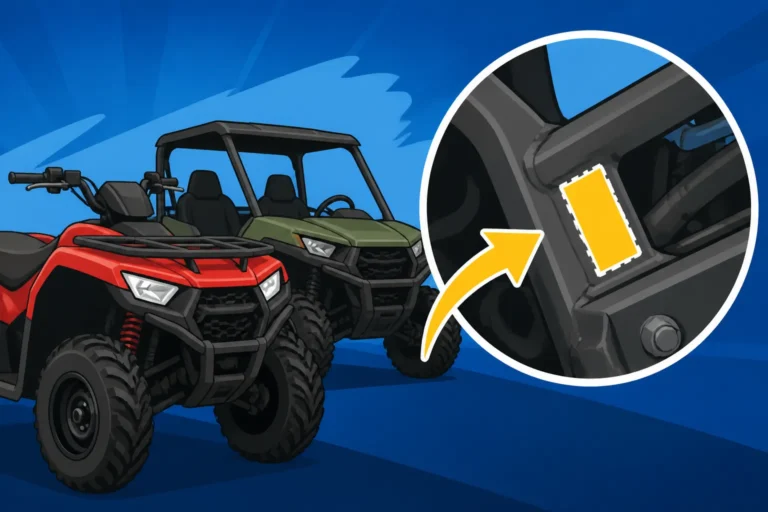
Once you successfully register your ORV, the Indiana BMV will issue you a distinctive decal. This decal is not just a pretty sticker; it's your visual proof of valid registration and must be prominently displayed on your machine. The decal typically lasts for three years, and it's critical to ensure it's always current and clearly visible. The law specifies where this decal should be mounted: on the forward half of the machine, above the lowest point of the frame, and visible from the left side of the ORV. This exact placement is crucial for compliance, as detailed in [Where the Indiana Decal Mounts].
Riding without a valid, properly displayed BMV decal is a ticketable offense in Indiana. Conservation officers and park rangers are diligent about checking for these decals at trailheads and out on the trails. Getting caught with an expired or missing decal can result in fines and disrupt your riding day. It's a simple, avoidable penalty, so always make sure your registration is current and your decal is securely affixed. The cost of a ticket for an unregistered ORV is certainly more than the registration fee itself, a point well covered by [What Riding Without a BMV Decal Costs You].
How to Register a Title-Optional Machine
Registering a title-optional machine is generally a straightforward process. You'll need to visit an Indiana BMV license branch in person. When you go, be prepared to provide:
- Proof of Identity: Your valid Indiana driver's license or state ID.
- Proof of Ownership: For a title-optional machine, this will typically be your comprehensive Bill of Sale. If you do happen to have an old title, even if optional, bring that along too.
- Machine Information: Make, model, year, and the all-important VIN.
- Payment for Fees: There will be a registration fee, which covers the three-year period.
The BMV staff will process your paperwork, input your machine's details into their system, and issue you a temporary registration. Your official decal will then be mailed to you, usually within a few weeks. It's important to keep your temporary registration with you until the decal arrives. Even though your machine is title-optional, the BMV still keeps a record of its registration, allowing them to track its use on public lands. All the specific documents you'll need are typically listed in [Indiana ORV Registration Paperwork].
The Risks and Realities of Title-Optional Ownership
While the "title-optional" designation offers flexibility for owners of older machines, it also comes with certain risks and realities that owners should be aware of. Understanding these can help you better protect your investment and navigate potential challenges down the road.
Challenges with Theft and Recovery
Perhaps the most significant downside of owning a title-optional ORV without a formal certificate of title is the potential difficulty in proving ownership, especially in cases of theft. Imagine your prized ATV goes missing from your garage. When you report it to law enforcement, they'll ask for proof of ownership. If all you have is a Bill of Sale, even a meticulously drafted one, it might not carry the same weight as an official state-issued title. While police can still use the VIN to identify your machine, establishing your legal claim to it after recovery can be more cumbersome without that clear, government-backed document.
This isn't to say recovery is impossible, but it can be more complicated. Law enforcement agencies often prioritize recovering vehicles with clear title records. Without a title, you might need to provide additional evidence like photographs of you with the machine, old registration cards, insurance policies, or maintenance records that clearly list the VIN. The clearer your paper trail, even without a title, the better your chances. This underscores the importance of keeping all purchase and registration documents in a safe, accessible place, and taking numerous photos of your machine, noting unique features or modifications.
Resale Value and Market Perceptions
Another reality of title-optional ownership is its potential impact on resale value and market perceptions. While a seasoned Indiana rider might understand and accept the "title-optional" status for an older machine, a less experienced buyer, or someone from out of state, might be hesitant to purchase an ORV without a title. Many buyers naturally seek the security and peace of mind that a clear title provides. It simplifies the transaction for them and reduces perceived risk.
When you go to sell your title-optional ORV, be prepared to educate potential buyers about the Indiana laws regarding these machines. Be ready to provide a thorough Bill of Sale (again, a document generated by LawDepot can add significant credibility) and any other supporting documentation you have. Transparency is key. A buyer might offer less for an untitled machine simply because of the perceived hassle or risk, even if it's perfectly legal to own and sell without a title. It's a factor you should consider when pricing your ORV for sale.
Voluntarily Titling an Older Machine
Given these potential challenges, many owners of title-optional machines choose to voluntarily obtain a certificate of title, even though it's not legally mandated. This is absolutely an option, and it's a smart move for several reasons. By obtaining a title, you solidify your claim of ownership, making future sales smoother and providing irrefutable proof in case of theft or dispute.
To title a title-optional machine, you'll generally follow the process for obtaining a title for a machine with no existing title. This involves submitting an Ownership Affidavit (State Form 55000) to the Indiana BMV. You'll need to present all your supporting documentation, such as your Bill of Sale, previous registration cards, and any other evidence of ownership. The BMV will review your application, and once approved, they will issue you a new certificate of title for your machine. While it requires an extra step and some paperwork, the peace of mind and enhanced security that a formal title provides often make it well worth the effort. For a deeper dive into the titling process, consider [Titling an ORV in Indiana].
Disclaimer
This article is for general informational purposes only and does not constitute professional advice. Laws, prices and regulations vary by location and change over time. Consult a qualified professional for guidance on your specific situation.