The Indiana BMV and Off-Road Vehicles
Navigating the world of off-road vehicle (ORV) registration and titling in Indiana can feel like trying to find your way through a dense forest with an outdated map. Many of us just want to get our ATVs and UTVs out on the trails or use them around the farm without the nagging worry of whether our paperwork is in order. This comprehensive guide is here to shed light on how the Indiana Bureau of Motor Vehicles (BMV) fits into your ORV ownership, helping you understand the process, avoid common pitfalls, and ensure you're riding legally and confidently.
Why the BMV Handles Your Off-Road Vehicle Paperwork
It might seem a bit counterintuitive at first glance. We often think of the Department of Natural Resources (DNR) as the primary authority when it comes to outdoor recreation, trails, and state parks. So, when you're told you need to go to the Bureau of Motor Vehicles for your ATV or UTV, it can certainly raise an eyebrow or two. However, there's a very logical reason behind this system, designed to create a consistent and manageable approach for all types of vehicles in the state.
It’s Not Just About the Dirt Trails Anymore
While your primary goal for your ATV or UTV might be to conquer the mud pits at Redbird or explore the vast trails of Interlake, the state of Indiana views these machines with a broader lens. They are, at their core, motorized vehicles capable of significant speeds and power. Like cars, trucks, and motorcycles, they require a formal system for identification, ownership tracking, and accountability. This is especially true as more counties in Indiana are considering or have already opened certain roads to ORV traffic, making these machines more visible on public thoroughfares than ever before.
The BMV's role extends beyond just road-legal vehicles. Their infrastructure is built to handle vehicle identification numbers (VINs), track changes in ownership, collect taxes, and issue official documentation that holds up in legal and financial contexts. If your machine is stolen, having it properly registered and titled with the BMV provides a critical paper trail for law enforcement to follow. It’s about more than just trail access; it’s about establishing a clear record of your machine as a valuable piece of property.
A Centralized System for All Vehicles
Imagine if every type of vehicle in Indiana had its own separate registration and titling agency. It would be an administrative nightmare, a tangled web of departments and rules that would make even the most patient person throw their hands up in frustration. By centralizing the core functions of registration and titling under the BMV, Indiana creates a streamlined, albeit sometimes complex, system that aims for efficiency.
This centralization means that many of the processes and forms you encounter for your ORV are similar to those for your car or truck. The staff at your local license branch are trained to handle vehicle transactions, whether it's a sedan, a pickup, or your beloved side-by-side. This consistency helps ensure that the data collected is uniform and that there's a singular official record-keeper for all vehicle-related matters, preventing confusion and duplication of effort across state agencies. This is why when you ask "Why the BMV and Not the DNR in Indiana?", the answer ultimately comes down to creating a more unified and accountable system for managing property and public safety.
What the DNR Still Manages
While the BMV handles the critical "paperwork" side of ORV ownership, the Indiana Department of Natural Resources (DNR) remains your go-to for all things related to where and how you can actually ride your machine. The DNR is the agency responsible for managing Indiana's state parks, forests, and recreational areas, including the popular ORV riding parks like Redbird and Interlake. They set the rules for trail use, age restrictions for riders, helmet requirements on state property, and issue the necessary trail permits.
Think of it this way: the BMV gives you the legal right to own and identify your machine, while the DNR gives you the legal right to operate it on specific public lands. The DNR is concerned with environmental protection, rider safety, and the sustainable use of natural resources. They're the ones maintaining the trails, enforcing park rules, and ensuring everyone has a safe and enjoyable experience. You'll still interact with the DNR for things like purchasing your annual trail permit or checking [Indiana Trail Conditions Before You Ride], but the fundamental vehicle identity and ownership documents come from the BMV.
The Core BMV Processes for Your ORV
When you become an ORV owner in Indiana, there are generally two main administrative hurdles you'll need to clear with the BMV: registration and titling. While they are closely related and often happen simultaneously, they serve distinct purposes. Understanding each process is key to staying compliant and avoiding fines. This is where most ORV owners spend their time interacting with the BMV, so let's break down what each step entails.
Registering Your ORV in Indiana
Registration is essentially your machine's permission slip to operate on designated lands and, in some cases, specific public roads in Indiana. When you [Registering an ORV in Indiana], you're providing the state with proof of ownership, paying a fee, and in return, you receive a registration certificate and a physical decal that must be affixed to your machine. This decal serves as visible proof that your ORV is registered and ready to roll.
The registration process requires specific documentation, such as a bill of sale or previous title, proof of identity, and payment of the required fees. It's a three-year cycle, meaning you’ll need to renew your registration periodically, which we'll discuss more in depth later. Without a valid registration, you could face penalties if stopped by a conservation officer or law enforcement while riding. It's the state's way of knowing who owns which machine and ensuring that all ORVs operating in Indiana are accounted for, which also helps fund trail maintenance and safety programs.
Titling Your ORV in Indiana
Titling is about proving legal ownership of your ORV. A title is a crucial legal document that establishes you as the rightful owner of the machine. It’s akin to the deed to a house, legally declaring who holds claim to the property. In Indiana, ORVs purchased new after December 31, 2009, generally require a title. If you bought your machine before this date, it might fall under older rules where titling wasn't always mandatory. This distinction is vital and often confuses new owners.
The process for [Titling an ORV in Indiana] usually involves presenting your original manufacturer's certificate of origin (MCO) for new machines, or a properly assigned title from the previous owner if buying used. If you're missing paperwork, or dealing with an older machine, the BMV has procedures, like filing an ownership affidavit, to help you establish a title. This is where using a service like LawDepot can be incredibly helpful for generating a robust [An Indiana Bill of Sale for an ORV] or an affidavit of ownership if you're dealing with a private sale or trying to title a machine with missing documents. The title is essential for selling your machine in the future, establishing a lien if you finance it, or proving ownership in a dispute.
The Interplay Between Registration and Titling
It’s easy to get registration and titling confused, especially since they often occur at the same place (your local BMV license branch) and sometimes even at the same time. However, it's important to remember their distinct roles. You generally need to title your ORV before you can register it, as the title provides the ultimate proof of ownership required for registration. The BMV wants to ensure you legally own the machine before they issue official permission for it to operate.
Think of it as two layers of identification and legality. The title is the foundation, confirming "This is my machine, and here's the legal document proving it." The registration is the operational layer, stating "My legally owned machine is now authorized for use in Indiana." While there are specific scenarios where an ORV might be exempt from titling (e.g., certain farm machines or very old models), almost all ORVs intended for recreational use in Indiana will need a valid registration decal. The title proves who owns it, and the registration proves it’s permitted to ride.
Understanding the Timelines and Deadlines
One of the biggest sources of stress and frustration for ORV owners dealing with the BMV often comes down to deadlines. Missed deadlines can lead to late fees, penalties, and delays in getting your machine legally ready for the trails. Being aware of these crucial timeframes is essential for a smooth process and avoiding unnecessary headaches.
The Forty-Five Day Titling Deadline
When you purchase a new or used ORV that requires a title in Indiana, there's a strict window within which you must get it titled. The state gives you [Indiana's Forty-Five Day Titling Deadline] from the date of purchase to submit your titling paperwork to the BMV. This applies whether you buy from a dealer or a private seller. Failing to title your machine within these 45 days can result in an administrative penalty. This penalty isn't just a slap on the wrist; it can add a significant chunk to your overall cost, and it's something you definitely want to avoid.
The reason for this deadline is to ensure prompt recording of ownership changes and to deter potential fraud or tax evasion. It also ensures that a clear chain of ownership is maintained, which is vital for law enforcement and for future resale. If you're buying a used machine, make sure the seller properly assigns the title to you and that you get it to the BMV within this timeframe. If you lose your bill of sale or title during this period, you'll want to act quickly to recreate documents, perhaps with the help of a LawDepot template, to avoid issues.
Renewing Every Three Years in Indiana
Unlike some other states or vehicle types, Indiana's ORV registration isn't an annual affair. Instead, it operates on a convenient three-year cycle. This means once you've successfully registered your machine, you're good to go for 36 months before you need to think about it again. This extended period can be a real blessing, saving you from yearly trips to the BMV and making long-term planning a bit easier. You can find more details on this cycle by looking into [Indiana's Three-Year ORV Registration].
The BMV typically sends out renewal notices before your registration expires, but it's ultimately your responsibility to keep track of the expiration date. Marking your calendar or setting a reminder on your phone can prevent you from inadvertently letting your registration lapse. Renewing is generally a straightforward process, often completable online or by mail, assuming all your information is current. Getting caught with an expired registration could lead to a fine, so it's always best to renew well in advance of your expiration date.
How Long an Indiana Decal Takes to Arrive
After you've successfully completed your ORV registration at the BMV, you'll be given a temporary document, but the actual registration certificate and the physical decal aren't handed to you on the spot. This is another area where many new owners experience a bit of anxiety. The BMV processes these items centrally, and then they are mailed to you. Typically, you can expect to receive your official registration decal and certificate within approximately [How Long an Indiana Decal Takes to Arrive], or about two to three weeks.
While you're waiting for your permanent decal, the temporary proof of registration you receive at the license branch is usually sufficient to ride legally. However, it’s always a good idea to keep this temporary document with you when you ride, especially if your decal hasn't arrived yet. The most frustrating part for many riders is the anticipation; you've done all the paperwork, paid the fees, and you're eager to get that official sticker on your machine. Just remember that patience is key, and the BMV does have a process in place to get those materials to you.
Common Pitfalls and How the BMV Helps You Navigate Them
Even with the best intentions, navigating government bureaucracy can sometimes feel like trying to ride a bogged-down machine out of a deep mud pit. There are common situations that can trip up even experienced ORV owners. Fortunately, the BMV has procedures in place to help you overcome these hurdles, though they may require a bit of extra effort.
Lost Paperwork and Ownership Challenges
It happens to the best of us: you buy an ORV privately, maybe an older model, and the seller either can’t find the original title or doesn’t have a proper bill of sale. Or perhaps you’ve owned your machine for years, and the title has vanished into thin air. This missing paperwork can throw a wrench into your plans for [Registering an ORV in Indiana] or [Titling an ORV in Indiana]. Without a clear chain of ownership, the BMV can’t simply issue you new documents.
In these scenarios, Indiana has a process for establishing ownership through an "Ownership Affidavit." This sworn statement details how you acquired the machine, why you don't have the original paperwork, and confirms that you are indeed the rightful owner. It often requires specific information about the machine, such as the VIN, and sometimes supporting documentation like repair receipts or old registration cards. This is another area where a service like LawDepot can be invaluable. They provide templates and guidance for creating legally sound affidavits or bills of sale, helping you compile the necessary documents to present to the BMV and move forward with your titling or registration, even when the original paper trail is a bit murky.
Buying or Selling a Used Machine
The private sale market for ORVs in Indiana is vibrant, but it also comes with its own set of challenges. As a buyer, your biggest concern is ensuring you receive proper proof of ownership (a correctly assigned title and a valid [An Indiana Bill of Sale for an ORV]) so you can easily transfer the registration and title into your name. Failing to do so can lead to significant headaches down the line, potentially leaving you with a machine you can't legally register. Always double-check that the VIN on the paperwork matches the machine itself, and confirm the seller's identity.
As a seller, your responsibility is to provide the buyer with all necessary documentation to complete their transfer. This includes signing over the title correctly and providing a detailed bill of sale. Remember that the BMV requires the title transfer to happen within 45 days of the sale, so making it easy for the buyer to get their paperwork in order is crucial. If you're looking to simplify the transaction and ensure you have legally sound documents for both parties, generating a comprehensive bill of sale through LawDepot can offer peace of mind, protecting both buyer and seller.
Addressing Special Cases and Exemptions
Not every ORV fits neatly into the standard registration and titling box. Indiana law includes specific exemptions for certain types of machines or uses. For instance, some ORVs used exclusively for farming activities on private land may be exempt from registration. Similarly, older machines purchased before 2010 might have different titling requirements, or even be "title-optional." It's important not to assume your machine is exempt without verifying with official sources, as misunderstanding these rules can lead to fines.
Another special case involves homebuilt machines or those without a readily identifiable VIN. The BMV has procedures for inspecting these machines and assigning a special identification number so they can be legally titled and registered. If you’re bringing an ORV into Indiana from another state, you’ll need to follow specific procedures for [Registering an Out-of-State Machine in Indiana], which usually involves presenting your out-of-state title and registration. While these situations require extra steps and possibly a visit to a BMV inspection station, the system is designed to accommodate a wide range of ORV scenarios, ensuring everyone has a path to legal ownership and operation.
What Happens After You Get Your BMV Decal
Congratulations! You’ve navigated the paperwork, paid the fees, and your shiny new ORV registration decal has arrived in the mail. But the journey isn’t quite over. There are a few more important details to understand about what that decal means, where it goes, and what responsibilities come with it. This final stage is all about ensuring your compliance on the trails and understanding the broader impact of your registration.
Where the Indiana Decal Mounts
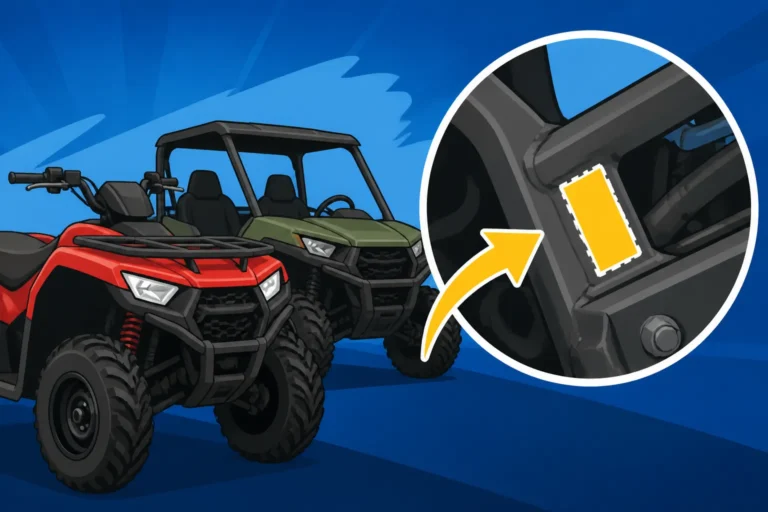
That little sticker might not seem like much, but it's your official badge of approval from the state. The Indiana BMV is quite specific about [Where the Indiana Decal Mounts] on your machine. For ATVs and dirt bikes, the decal must be securely affixed to the forward half of the vehicle, visible from the left side. For side-by-sides or UTVs, it typically needs to be on the forward half of the vehicle, often on the left fender, hood, or roll cage, also visible from the left side.
It's not just about slapping it on anywhere; proper placement ensures that law enforcement or conservation officers can easily verify your registration without having to stop and inspect your machine closely. The decal contains important information, including your registration number and expiration date, so keeping it clean and readable is also crucial. If your decal gets damaged, lost, or becomes illegible due to mud or wear, you'll need to look into [Replacing a Lost Indiana ORV Decal] to avoid potential issues.
What an Indiana Officer Checks Roadside
Picture this: you're enjoying a ride, maybe just pulling off a designated county road or heading into a state ORV park, and you encounter a conservation officer or local law enforcement. What will they be looking for? Beyond safe riding practices, a key part of their roadside check will be your ORV's documentation. They'll verify that your machine has a valid, properly placed registration decal.
They'll also likely ask to see your physical registration certificate. While carrying your paper certificate with you might seem inconvenient, it’s a legal requirement when operating your ORV. Some riders keep a laminated copy or a clear, waterproof pouch for protection. Officers are checking to make sure the information on your certificate matches your machine and the decal. They’re also ensuring that riders meet age requirements and follow safety rules, such as helmet laws if applicable. Understanding [What an Indiana Officer Checks Roadside] can help you be prepared and make these interactions quick and hassle-free.
The Money Behind the Decal
You pay a fee when you register your ORV in Indiana, and it's natural to wonder where that money actually goes. It’s not just disappearing into a black hole! The fees collected for ORV registrations play a crucial role in maintaining and expanding Indiana's off-road riding opportunities. A significant portion of these funds are dedicated to the Off-Road Vehicle Trust Fund.
This trust fund is specifically earmarked for purposes directly benefiting the ORV community. This includes things like the acquisition, development, and maintenance of ORV trails and facilities, promoting safety and education programs, and covering administrative costs associated with the ORV program. So, when you pay your registration fee, you’re directly contributing to the very trails you love to ride and ensuring that future generations of Indiana ORV enthusiasts have places to enjoy their machines. It's a tangible way your dollars support your passion. More details can be found by researching [Where ORV Fees Go].
Getting Started with Your Indiana ORV Paperwork
The thought of tackling bureaucracy can be daunting, but with a clear plan, getting your Indiana ORV paperwork in order doesn't have to be a major ordeal. Preparing in advance, understanding the steps, and knowing your options can make the process surprisingly smooth. Let's outline how you can prepare for a successful trip to the BMV (or online portal!).
Gathering Your Essential Documents
Before you even step foot into a BMV license branch or click "submit" on an online application, the most critical step is to gather all the necessary documentation. Missing even one piece of paper can lead to delays and multiple trips. Generally, you'll need:
- Proof of Ownership: This is typically an original Manufacturer's Certificate of Origin (MCO) for new machines, or a properly assigned title from the previous owner for used machines. If you're buying privately, ensure the seller has completed their portion of the title accurately.
- Bill of Sale: Even if you have a title, a detailed [An Indiana Bill of Sale for an ORV] is always recommended, especially for private sales. It records the purchase date, price, and specifics of the machine, which helps establish your 45-day titling window. Again, LawDepot can provide a robust template here.
- Proof of Identity: Your valid Indiana driver's license or state ID card.
- Proof of Residency: If your address isn't current on your ID, you might need a utility bill or other official mail.
- Payment for Fees: Be prepared for titling fees, registration fees, and any applicable sales tax. Check the BMV website for current methods accepted (e.g., credit card, debit card, cash).
Having all these documents organized and ready will significantly speed up your transaction. For a complete list, always refer to the official [Indiana ORV Registration Paperwork] guidelines on the BMV website.
Visiting Your Local BMV or Online Options
Once you have your documents in hand, you have a couple of primary options for completing your ORV paperwork.
- Visit a Local BMV License Branch: This is often the most common method, especially for initial titling and registration, or if you have complex issues like lost paperwork or a need for a VIN inspection. Visiting in person allows you to ask questions directly, and staff can often help you troubleshoot minor issues on the spot. While it might involve a wait, having a human being guide you through the process can be invaluable. You can typically find your closest branch and even make an appointment online through the BMV website, which can help cut down on waiting times.
- Online Services: For renewals of existing registrations, the BMV often provides convenient online portals. This is a fantastic option if your information hasn't changed, and you just need to update your registration for another three years. It saves you a trip and allows you to complete the process from the comfort of your home. However, for brand new registrations or transfers of ownership, an in-person visit is usually required due to the need to verify original documents and collect sales tax.
Choosing the right option depends on your specific situation. For initial setup, the license branch is usually the safest bet. For simple [Renewing an Indiana ORV Registration], the online portal is a time-saver.
Preparing for a Smooth Process
Beyond gathering your documents, a few other tips can help ensure your BMV visit or online transaction goes off without a hitch:
- Check BMV Hours and Holidays: Always confirm the operating hours of your chosen license branch and be aware of any state holidays that might affect their availability.
- Make an Appointment: Many BMV locations allow you to schedule an appointment online. This can significantly reduce your wait time and streamline your visit.
- Be Patient and Polite: BMV staff handle a high volume of transactions and various vehicle types. A little patience and courtesy go a long way in ensuring a positive experience.
- Double-Check Everything: Before you leave the counter (or hit submit online), carefully review all the information on your new registration certificate and title. Make sure your name, address, machine details, and VIN are all correct. It’s much easier to fix an error on the spot than to try and correct it weeks later.
- Keep Copies: Always make copies of all submitted documents and your final registration and title for your records. Store them securely at home. This can be a lifesaver if anything gets lost in the mail or if you ever need to reference specific information quickly.
By taking these proactive steps, you can turn what might seem like a bureaucratic headache into a straightforward task, getting you back to what you love most: riding your ORV on Indiana's fantastic trails.
Disclaimer
This article is for general informational purposes only and does not constitute professional advice. Laws, prices and regulations vary by location and change over time. Consult a qualified professional for guidance on your specific situation.