Filming at an Indiana ORV Park
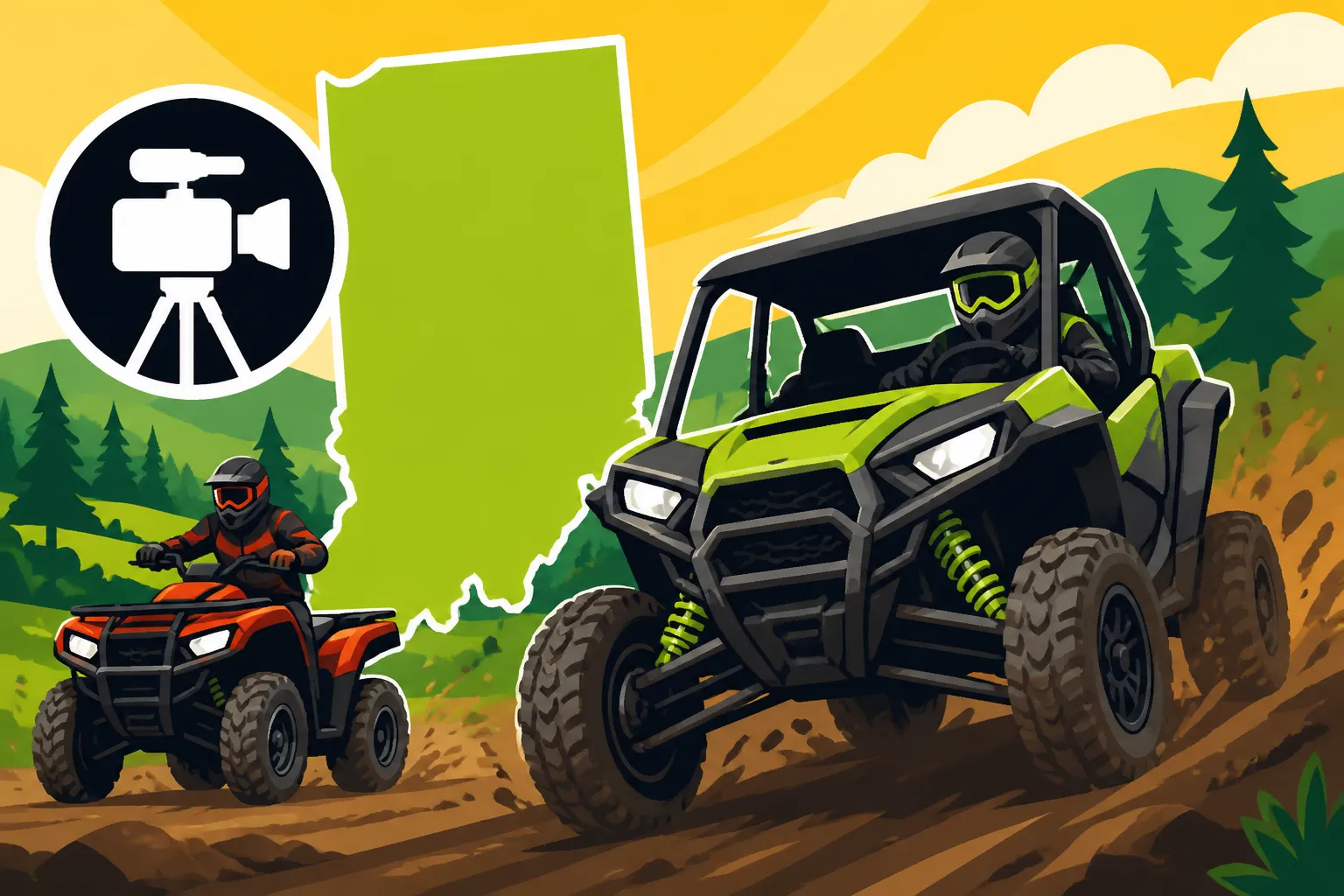
Filming at an Indiana ORV park can be as simple as recording a few clips while you ride—or can involve a planned shoot, crew, equipment and commercial use. The key is not to assume that a riding permit also gives you permission to film. Identify who manages the site, describe your plans and get clear approval before bringing a production setup.
Separate permission to ride from permission to film
A permit or other authorization to ride at an Indiana off-road vehicle area is about using the trails. It does not necessarily cover a camera crew, a commercial shoot, a staged scene, equipment placed on the ground or activity that affects other visitors. Likewise, permission to film should not be treated as permission to ride without meeting the park’s usual requirements.
Start by identifying the kind of place where you plan to film. Indiana has public ORV areas, including state recreation areas, as well as privately operated parks. Each operator may have its own rules, contact process and approval requirements. A permit or answer from one park does not automatically apply to another.
For a public site, contact the managing agency or park office before you plan the shoot. Describe what you want to film, when and where you hope to do it, how many people and vehicles will be involved, and whether you will publish or sell the footage. If your plans involve an organized activity or affect park operations, ask whether a separate event authorization is needed. The process for Filming at an Indiana ORV Park can depend on the location and the details of the production.
For a private park, ask the operator directly. Do not assume that a camera is allowed just because you have paid to ride. Private parks may set their own conditions for filming, including limits on commercial use, drones, access to certain areas, crew size or where equipment can be placed. Get any approval in writing and keep it available during the visit.
| What you plan to do | Why to check first | What to ask |
|---|---|---|
| Record yourself or friends while riding | The park may restrict cameras, mounts or filming in busy areas | Are personal cameras allowed, and are there restrictions on where or how to record? |
| Bring a separate camera operator | A crew member may need to follow different access and safety rules | Does the operator need a riding permit, day access or other approval? |
| Make promotional or monetized content | Commercial use may be treated differently from casual personal recording | Is written filming authorization required, and are there conditions on publication? |
| Stage a scene or repeat a pass | Repeated runs can affect trail flow and create risks for other riders | Is the activity allowed, and does it need to be scheduled or supervised? |
| Use lights, stands or other equipment | Gear can obstruct trails or create trip and collision hazards | Where may equipment be set up, and what areas must remain clear? |
| Film a group ride or organized event | An event can affect staffing, access and other visitors | Is event approval needed in addition to ordinary riding requirements? |
| Fly a drone | Aircraft use may be covered by separate rules or restrictions | Are drones allowed at this location, and which rules apply? |
The practical distinction is simple: ordinary trail access, permission to record, and approval for an organized or commercial production can be separate issues. Ask about each one instead of relying on a general “yes, filming is fine.”
Get a useful answer before you arrive
A vague request such as “Can I film at the park?” may not give staff enough information to answer. Explain the shoot in plain terms. You do not need a polished production proposal for a few action-camera clips, but the more your plan affects park operations, the more detail you should provide.
Include:
- The location and date. Name the park and give your preferred date or date range. If you want to film on a particular trail or feature, identify it if you can.
- The purpose. Say whether the footage is for personal use, a club, a business, a sponsored video, a news story or another use. Be direct about whether it may be monetized or used to promote a product or service.
- The people and vehicles involved. Give the number of riders, camera operators and support people, along with the number and type of machines.
- The equipment. Mention cameras mounted to a helmet or vehicle, handheld cameras, tripods, lights, microphones, generators or other gear. Call out any equipment that might need to be placed near a trail.
- The activity. Explain whether you will simply record normal riding or plan repeated passes, demonstrations, interviews, staged scenes or a group event.
- Your access needs. Ask whether every person needs the usual riding or entrance authorization, even if someone is only filming and will not ride.
- Any special requests. Ask about restricted areas, road or trail closures, parking, staff coordination and whether the shoot can proceed during ordinary public hours.
Ask the park to clarify what its approval covers. For example, does permission apply only to personal recording, or does it also cover commercial publication? Does it include a camera operator who is not riding? Is a separate approval needed for a group or staged activity? Are there limits on where equipment can be set up?
A written response is useful because it reduces the chance of misunderstanding at the entrance. Keep the email or other confirmation with your riding documents, and make sure the people in your group know the conditions. If staff give verbal guidance, ask whether they can confirm the important details in writing.
For public land, do not assume that an ordinary trail permit authorizes production activity. Indiana’s riding requirements and any event or filming approval serve different purposes. Before paying for riding access, confirm what everyone in your party must have. Indiana ORV Permits Explained can help with the separate question of trail access, while Applying for a DNR Special Event Permit is relevant if the plan involves an organized event or another activity the agency treats as requiring event review.
If the shoot is on private property, get permission from the owner or operator rather than relying on a visitor’s pass. A rider’s access agreement may not cover the rights to record, publish or use footage commercially. Check the operator’s current rules and ask about any release or waiver it requires.
Plan the shoot around other riders and park rules
A filming plan should keep trails open and predictable for everyone else. A camera can draw attention away from the route, and a crew may not anticipate how quickly another machine can approach. Choose a location that does not block a trail, entrance, staging area, parking lane or emergency route. Never ask riders to stop, turn around or repeat a pass where doing so would surprise traffic.
If staff approve a particular location or time, follow those conditions. Do not extend the shoot into nearby areas because they look suitable on camera. A closed trail, restricted area or boundary line remains off limits unless the manager specifically authorizes access. When staff direct you to move or stop, pause filming and follow their instructions.
Keep the camera operator’s role clear. Someone standing near a trail should know where riders are expected to travel, where it is safe to stand and how to get out of the way. Avoid placing tripods, bags or cables where they could trip someone or be struck by a machine. Secure loose equipment, and do not leave gear unattended in an area where it could obstruct access.
Camera mounts also deserve care. A helmet or vehicle mount can change how equipment is secured and where it may sit. Use a setup that does not interfere with the rider’s vision, controls, protective equipment or safe operation. Check the park’s rules before using a mount, and do not assume that a setup permitted at one site is allowed at another.
A drone deserves its own discussion with park staff. Do not launch one just because the ground-level filming request was approved. Ask whether drones are permitted at that location and whether there are other requirements. If you cannot confirm that flight is allowed, leave it out of the shoot.
The ordinary conditions of riding still apply while cameras are rolling. Riders need to follow the park’s trail directions, stay within allowed areas and use the required protective equipment. The camera should not encourage risky speed, unsafe stunts or riding beyond a participant’s ability. If the footage involves minors, clarify the park’s requirements for supervision and permissions, and obtain the necessary consent from their parent or guardian.
Rules can vary between public and private riding areas. Review the site’s current notices before unloading, and check Indiana Rules for a Group Ride if your shoot involves multiple riders moving together. If riders will be using public ORV trails, confirm their individual access requirements; Indiana’s Daily and Annual Trail Permits explains the distinction between trail permits and other park charges.
Use a simple pre-shoot checklist
A quick check before travel can prevent a wasted trip. The more people, equipment and planned activity involved, the more important it is to confirm the details directly with the operator.
Before leaving, make sure you have:
- Identified whether the site is public or privately operated.
- Contacted the agency or operator responsible for that exact location.
- Explained the purpose, size and activity of the shoot.
- Confirmed whether ordinary personal filming is allowed.
- Asked whether commercial publication or sponsored content changes the requirements.
- Checked whether a crew member who will not ride still needs access authorization.
- Asked whether an organized shoot or staged activity needs separate approval.
- Confirmed any limits on trails, operating hours, equipment, parking or group size.
- Checked whether drones are permitted, if you intend to use one.
- Obtained written confirmation and shared its conditions with everyone involved.
- Checked the latest park notices for closures, weather-related restrictions and other changes.
If the answer is unclear, ask a narrower question rather than guessing. For example: “May one non-riding camera operator film riders on an open trail during ordinary public hours, and may the resulting video be used in a monetized channel?” That gives the operator a concrete plan to assess.
If approval is denied or conditions do not fit the production, do not film anyway and hope the issue will not come up. Ask whether a different date, location or smaller setup would be acceptable. You can also choose a private site that explicitly allows your intended use, provided you follow its rules and obtain permission in advance.
The main takeaway is to treat filming approval as separate from riding access. Describe the shoot accurately, confirm the requirements with the organization managing the land, and keep the approval and conditions with your group. That approach helps protect access for your production while respecting riders, staff and the park.
Disclaimer
This article is for general informational purposes only and does not constitute professional advice. Laws, prices and regulations vary by location and change over time. Consult a qualified professional for guidance on your specific situation.