Indiana Trespass Law and Off-Road Riders
An open gate, an old tire track, or a trail shown on a phone map can look like an invitation. For Indiana ATV and UTV riders, none of those things automatically grants access. This article explains how trespass risk arises, what permission should cover, and how to check that a route is actually open to your machine.
When an ATV or UTV ride can become trespassing
Indiana trespass law can apply when someone knowingly or intentionally enters another person’s property without permission or stays after being told to leave. The details matter: who controls the property, what notice was given, what the rider knew, and what happened after that notice. A sign, a fence, a direct warning, or a request to leave may all be relevant, but the facts of a particular situation can change how the law applies.
For a rider, the practical rule is simpler than trying to interpret every possible legal scenario: do not assume you may ride on land unless you have a clear reason to believe access is allowed. A track on a navigation app, a path made by previous riders, or an open farm gate does not by itself prove that the owner has agreed to let you in.
Permission matters even when land looks unused. A wooded lot, field edge, abandoned-looking track, or old mine bench may still be privately owned or controlled. Riding there without authorization can lead to a request to leave, a law-enforcement response, or a claim for damage if the machine tears up crops, ruts a trail, breaks a fence, or harms other property. Whether a particular incident leads to a charge or other consequences depends on the circumstances.
Signs and barriers deserve particular attention. Treat “No Trespassing” signs, closed gates, chains, fencing, and clearly marked boundaries as a stop—not as obstacles to ride around. Do not enter simply because another vehicle has made tracks through a barrier or because the sign appears old. If you are uncertain whether a sign applies to the route you are considering, turn around and verify access before continuing.
A rider can also get into trouble by remaining after permission ends. If an owner, tenant, land manager, or other person with authority tells you to leave, leave promptly and safely. Do not argue from the trail, continue to another part of the property, or assume that a past invitation still applies. Permission can have limits and can be withdrawn.
Trespass is separate from vehicle-registration and trail-permit rules. A current BMV decal or a state recreation area permit does not give you permission to cross private property. Likewise, permission from a landowner does not automatically satisfy rules that apply to public trails, designated roads, or a state recreation area. Keep each question separate: may you enter this land, may you operate this machine there, and do you have the required documents or permit?
That distinction is especially important when a route passes between different kinds of land. A public road, a private driveway, a marked trail, and a strip of land beside a road can be subject to different rules. Indiana roads are generally closed to ORVs unless a legal exception or local designation applies; see Why Indiana Roads Are Closed by Default. A county opening certain roads to ORVs does not authorize riding onto nearby private land.
Getting permission and making its limits clear
Before riding on private property, identify who has authority to grant access. The person who lives nearby may not own the land, and an employee, tenant, club member, or neighbor may not have permission to invite riders. Ask the owner or someone the owner has authorized. If the land is leased, managed, or shared, confirm that the person granting access has the right to allow ORV use.
A direct, specific request is more useful than a vague question like “Can we ride around here?” Explain which machines you plan to bring, who will ride, when you expect to be there, and which routes or areas you want to use. Ask whether the permission includes staging or parking, crossing a field, riding after dark, bringing guests, or using a particular access road. Those details can prevent a misunderstanding on ride day.
Written permission is not always a legal requirement, but it is a practical way to record what was agreed. A text or email can help both sides remember the boundaries and conditions. For a more formal arrangement, the owner may prefer a signed document. The key is to make the permission specific enough that everyone understands its scope. The related topic Written Permission From an Indiana Landowner covers what a useful written record can address.
| Permission detail | What to clarify |
|---|---|
| Land and boundaries | Which parcel or area is open, and where the route begins and ends |
| Dates and times | When riders may enter and whether overnight access is allowed |
| Riders and machines | Who may come, what machine types are allowed, and whether guests need separate approval |
| Route and use | Which paths may be used, and whether riding across fields, through woods, or near buildings is allowed |
| Parking and staging | Where to unload, park, and turn around without blocking access |
| Conditions | Speed, noise, gates, passengers, fires, pets, or other limits set by the owner |
| Changes or cancellation | Who to contact if plans change or the owner withdraws permission |
Respect every stated boundary, even if another route looks more convenient. Stay on the agreed path, keep a safe distance from homes, livestock, crops, and equipment, and close a gate only if the owner has asked you to do so. Do not bring additional riders or machines unless they are covered by the permission. If you encounter a locked gate, a newly posted sign, or a person asking you to stop, do not treat an earlier invitation as a reason to push past the new restriction.
It also helps to make clear what permission does not cover. Permission to cross a property to reach a trail may not include riding around the property. Permission for one weekend does not necessarily extend to future visits. Permission for an adult rider may not cover a group of guests or minors. When in doubt, ask again rather than interpreting silence as approval.
Private-property access rules are not a substitute for safe operation or legal vehicle use. An owner may allow riding on their land, but that does not automatically make every machine or activity lawful in every setting. Check the relevant requirements in Indiana Rules for Riding Private Property and [Indiana Landowner Permission Requirements], especially if you are planning a group ride or using a route that connects to public roads.
Routes, trails, and land that are easy to misread
Many trespass problems start with a mistaken assumption about a route. Online maps can show a path without explaining whether it is public, private, open to motorized use, or currently closed. A trail may be visible but unauthorized; a road may have an easement for certain users without being open to ORVs; and a route used in the past may have since been closed. Confirm access with the land manager or owner rather than relying on the line displayed on a map.
A trailhead, parking area, or riding area can also have boundaries that are easy to miss. Stay on signed or marked routes where required, and do not take a side path just because it looks rideable. At an organized ride or club event, follow the event’s route and any landowner instructions. A club’s past access agreement may not apply to independent riders or to a different date. For more on the issue, see [Indiana Rules for Riding a Club Trail].
State and other public lands are not automatically open to ATV and UTV use. Public ownership does not mean unrestricted vehicle access. Different areas can have different rules for motorized vehicles, designated routes, hours, and permits. Indiana’s state recreation areas and private off-road parks have their own access conditions, while many other public areas prohibit ORV riding or allow only limited uses. Check the land manager’s current rules before unloading. For example, Why Hoosier National Forest Bans ATV Riding explains why public forest land should not be assumed to offer ATV trails.
Roadside strips and rights-of-way can be confusing, too. Riding beside a road is not the same as riding on a designated ORV route, and a visible ditch or shoulder does not necessarily create a legal path. If a county has designated certain roads for ORV use, follow the specific route and conditions rather than extending that permission to every connecting road or parcel. How to Find an Indiana County ORV Ordinance can help with checking local rules.
When a route crosses a boundary or runs beside private land, do not use a shortcut to avoid a closure, checkpoint, or crowded trail. An access point on one side of a property does not grant rights across the next parcel. If you cannot verify that a connection is authorized, stop and choose a route you know is open.
A quick check before a trip can prevent a costly detour:
- Identify the land manager or owner for each riding area and connecting route.
- Confirm that the route is open to your type of machine, not just to hikers, bicycles, or other vehicles.
- Check signs, gates, trail notices, and any local ordinance that applies.
- Ask about temporary closures, event restrictions, and private-property boundaries.
- Keep permission details and emergency contact information accessible during the ride.
A phone map can be useful for navigation, but it should not be treated as proof of legal access. Riders who want to keep permission details handy can carry a paper copy or store a digital record. A waterproof document pouch, including one available from Amazon, may help protect paper documents from mud and rain; it does not replace getting permission or checking the route.
What to do if access is challenged
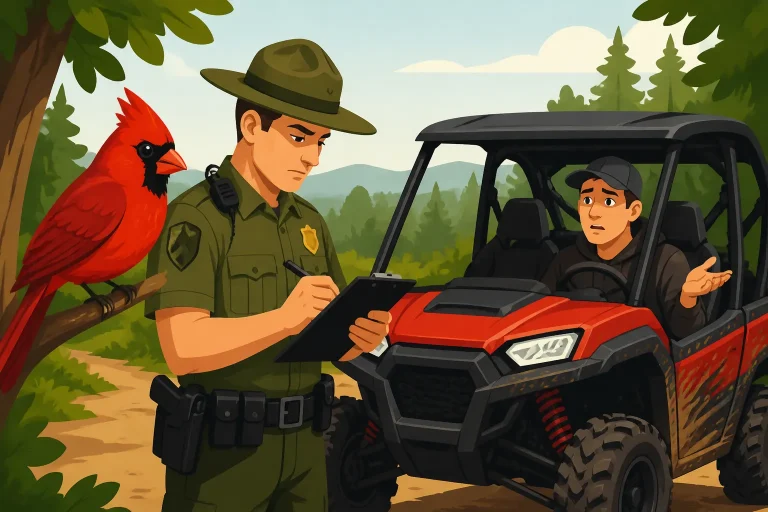
If someone tells you that you are on private land without permission, stop in a safe place and listen. Do not accelerate away, continue deeper onto the property, or try to prove your point by arguing on the trail. If you can leave by the route you came in on without creating a hazard, do so calmly. If the route is blocked or you are unsure how to exit without crossing more land, explain the situation and ask where you may safely go.
Do not damage a gate, fence, sign, crop, or other property while leaving. Avoid taking photos of people or property in a way that escalates the exchange. If law enforcement arrives, be respectful, provide accurate information, and follow lawful directions. If you receive a citation or face a claim, keep relevant records—such as messages granting access, event details, photographs of posted signs, and a note of the route taken—and consider getting advice from a qualified attorney.
If you discover that you have entered land by mistake, do not assume that being lost or following a map automatically resolves the issue. Explain briefly, avoid further travel across the property, and leave as directed. A calm response may help prevent a navigation mistake from becoming a larger dispute, but it does not guarantee a particular legal outcome.
Landowners can also make access conditions clearer by marking boundaries, communicating permitted routes, and giving riders a contact for questions. Riders can help by asking before entering, keeping groups within the agreed route, and reporting hazards without treating a report as permission to explore beyond it. Good communication protects the land and makes future access more likely.
The simplest habit is to verify access before the machine leaves the trailer. Confirm who controls the land, get permission for the specific route and riders, check public-land and local rules separately, and turn around when access is unclear. A permit or registration may be necessary for a ride, but neither one substitutes for the landowner’s permission.
Disclaimer
This article is for general informational purposes only and does not constitute professional advice. Laws, prices and regulations vary by location and change over time. Consult a qualified professional for guidance on your specific situation.