Indiana’s Three-Year ORV Registration
Many off-road vehicle owners in Indiana find themselves wondering about the exact timeline for keeping their ATVs, UTVs, and dirt bikes legally on the trails and designated roads. The state's unique three-year registration period can sometimes be a source of confusion, leading to expired decals or unexpected issues. This comprehensive guide will walk you through everything you need to know about Indiana's three-year ORV registration cycle, from the initial application process to seamless renewal, ensuring you stay compliant and enjoy your ride.
Understanding the Three-Year Registration Cycle
For anyone who loves hitting the trails or using their off-road vehicle (ORV) for work around their property in Indiana, understanding the registration process is fundamental. Unlike some other vehicles or even states, Indiana has adopted a distinct three-year cycle for ORV registrations. This isn't just a minor detail; it's a foundational aspect of how you'll manage your machine's legality.
What "Three-Year" Really Means for Your ORV
When we talk about a "three-year" registration in Indiana, it means that once you register your ATV, UTV, or dirt bike, that registration is valid for three full calendar years. It doesn't mean you renew annually, nor does it mean you get a new decal every twelve months. Instead, you receive one decal that's designed to last for the entire three-year period. This extended validity is a definite perk for owners, as it significantly cuts down on the frequency of paperwork and trips to the Bureau of Motor Vehicles (BMV) or a local license branch. You're not trying to remember a yearly deadline; you have a longer window, which can simplify ownership. This contrasts sharply with typical passenger vehicle registrations, which often require annual renewal, keeping owners on a much tighter leash.
For example, if you register your machine in June 2024, that registration will typically be valid until June 2027. This long-term approach aims to provide greater convenience and less administrative burden for ORV enthusiasts across the state. The idea is to set it and (mostly) forget it for a good stretch of time, allowing you more uninterrupted riding enjoyment.
The Purpose Behind the Extended Period
Why did Indiana decide on a three-year term for ORV registrations when many other vehicle types use an annual system? There are several compelling reasons. Primarily, it's about efficiency and reducing red tape for both the state and the ORV owner. From the state's perspective, processing renewals every year for hundreds of thousands of ORVs would be a monumental administrative task, requiring significant resources. By spreading out the workload over a three-year cycle, the BMV can manage its operations more smoothly.
For ORV owners, the benefit is clear: less frequent hassle. You're not constantly checking your calendar or worrying about an upcoming deadline. This extended period helps ensure greater consistency in how often machines are registered, which in turn leads to more stable funding for Indiana's off-road trails and programs. If registrations were annual, there might be higher rates of lapse or forgetfulness, leading to unpredictable revenue for critical maintenance and development. The three-year cycle offers a balance, ensuring compliance without being overly burdensome.
Decoding Your Registration Decal
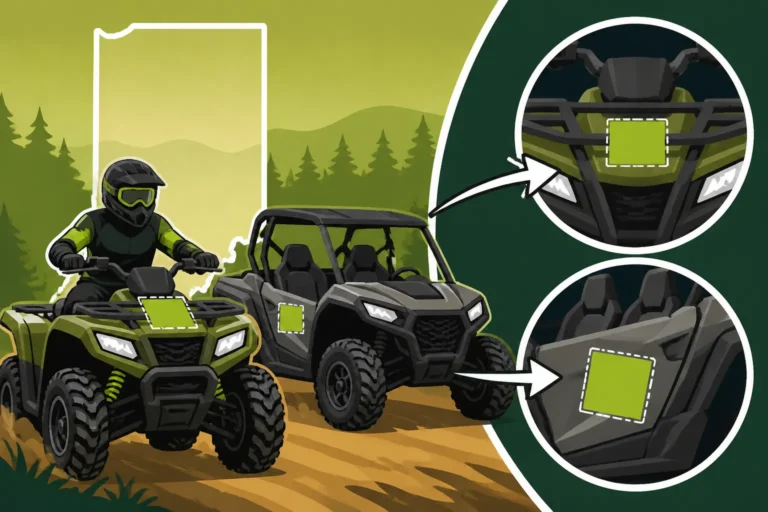
Your Indiana ORV registration decal isn't just a colorful sticker; it's a vital piece of information that clearly communicates the validity of your registration. When you receive your decal, typically a square or rectangular sticker, it will feature key details that confirm your machine's compliance. Most importantly, it will display the year of expiration, and sometimes even the month, making it easy to see at a glance when your three-year term is up. The design and color scheme of these decals often change over the years, which helps enforcement officers quickly identify current registrations.
It's absolutely crucial to know [Where the Indiana Decal Mounts] on your machine. This isn't just for aesthetics; it's a legal requirement to ensure the decal is visible and properly affixed. Typically, it goes on the forward half of the machine, like the frame or fender, in a spot that's easily seen. If your decal ever fades due to sun exposure, gets scratched, or peels off because of mud and debris, you'll need to consider [Replacing a Lost Indiana ORV Decal]. An unreadable or missing decal is just as problematic as an expired one when you're out on the trails or during a roadside check. Getting a new one ensures you remain compliant and avoid any unnecessary fines.
Why Indiana Opted for a Three-Year Term
The decision to implement a three-year ORV registration period in Indiana wasn't arbitrary; it was a deliberate choice aimed at balancing administrative ease with practical benefits for ORV owners. Understanding the rationale behind this extended term helps illuminate the system's design and why it works the way it does.
Streamlining for Owners and the State
From a governmental perspective, processing millions of annual registrations for all vehicle types is a massive undertaking. By extending ORV registrations to a three-year cycle, the Indiana BMV significantly reduces its annual processing volume for these specific machines. This translates to fewer forms, less data entry, and more efficient use of staff resources. For ORV owners, the benefits are equally tangible. Imagine the frustration of having to remember and complete registration paperwork every single year, often coinciding with other annual tasks. The three-year cycle alleviates this burden, offering a longer grace period between renewals.
This streamlined approach means less waiting in line at the license branch, fewer trips to the post office for mailed renewals, and generally less administrative overhead for everyone involved. It’s a pragmatic solution designed to keep things moving smoothly. This is a key reason [Why a BMV Decal Lasts Three Years], providing stability for both the state's administrative efforts and the owner's peace of mind.
Consistent Funding for Off-Road Resources
One of the most vital aspects of the ORV registration system is its direct link to funding the very trails and programs that riders enjoy. The fees collected from ORV registrations are not just for bureaucracy; they are specifically earmarked to support Indiana's off-road recreational opportunities. This includes everything from maintaining existing trails to acquiring new land for riding areas and providing educational programs for riders. A three-year registration cycle provides a much more stable and predictable revenue stream for these initiatives.
If registrations were annual, the state might face fluctuating income due to forgetful renewals, potentially impacting the consistency of funding for trail work. With a three-year commitment, the budget planning for the Department of Natural Resources (DNR) and other related entities becomes far more reliable. This ensures that when you pay your [Indiana ORV Registration Cost], a portion of that investment goes directly back into enhancing your riding experience. It supports [Trail Work Funded by Indiana Registrations] and helps sustain the fantastic places like Redbird SRA and Interlake SRA that we all love to ride. The stability of the three-year system means these resources can be planned and executed more effectively over the long term.
Historical Context of Indiana's ORV Laws
Indiana's approach to ORV regulation has evolved over time, reflecting changes in recreational trends and a growing awareness of the need for structured management of off-road activities. The initial push for ORV registration and titling came from a need to both manage the increasing number of machines and generate funds for their dedicated use areas. Before robust regulations, ORV riding was more unregulated, leading to potential conflicts with landowners, environmental concerns, and a lack of dedicated facilities.
The implementation of specific ORV laws, including the registration requirements and the three-year cycle, was a significant step toward creating a safer, more organized, and sustainable environment for off-road enthusiasts. This historical development sought to strike a balance between allowing public access to trails and ensuring responsible use, all while securing a financial base for ongoing maintenance and development. These laws help define [How Indiana ORV Registration Works] in a broader context of vehicle oversight and recreational management.
The Practicalities of Registering Your ORV
Getting your off-road vehicle registered in Indiana, whether it's a brand-new side-by-side or a used dirt bike, involves a clear process. While the three-year cycle simplifies renewals, the initial registration still requires careful attention to detail and specific paperwork. Knowing what to expect makes the entire process smoother and less stressful.
Initial Registration for a New or Used Machine
The first time you register an ORV in Indiana, the steps are a bit more involved than a simple renewal. You'll need to gather essential documentation to prove ownership and machine details. For a new ORV purchased from a dealer, you’ll typically have a Manufacturer's Statement of Origin (MSO) and a bill of sale. For a used ORV, you'll need the previous owner's signed-over title (if applicable, as machines bought after 2009 require titles in Indiana) and a bill of sale. A detailed [An Indiana Bill of Sale for an ORV] is crucial, whether you draft it yourself or use a reputable online service like LawDepot to ensure all necessary information is captured accurately. This document serves as legal proof of the transaction.
You'll need to visit a local BMV branch or license agency to complete the process. This is [Where to Register an ORV in Indiana]. Be prepared with your identification, the necessary ownership documents, and payment for the registration fees. The staff will verify your paperwork, process the application, and you'll typically receive a temporary permit immediately, with your official decal and registration certificate mailed to you within a few weeks. It's always a good idea to call ahead or check the BMV website for specific requirements and operating hours to ensure you have everything needed for a single trip.
Renewing Your Three-Year Registration
The beauty of Indiana's three-year system really shines during renewal. Once your initial three-year period is nearing its end, the BMV usually sends a renewal notice to the address on file. This notice will typically arrive a few months before your expiration date, giving you ample time to complete the renewal process. You can generally renew online, by mail, or in person at a license branch. [Renewing an Indiana ORV Registration] is usually much simpler than the initial registration, often requiring just your previous registration information and payment for the renewal fee.
It's vital to renew before your current registration expires. While some states have grace periods for other vehicles, riding an ORV with an expired decal in Indiana can lead to fines. If you forget and your registration lapses, you'll still need to go through the renewal process, potentially incurring late fees or penalties, and you won't be able to legally ride until it's current. [Renewing a BMV Registration That Lapsed Over Winter] often means you might have missed the notification, so staying on top of the date is important. Once renewed, a new decal will be issued, typically mailed to you, replacing the old one for the next three-year cycle.
Costs Associated with the Three-Year Cycle
Understanding the financial outlay for ORV registration is important for budgeting your recreational activities. The [Indiana ORV Registration Cost] covers the initial three-year period and is a one-time fee for that term, rather than an annual charge. This fee contributes directly to the state's ORV program, supporting trail maintenance and management. When it comes time for [Indiana ORV Registration Renewal Cost], this fee is typically the same as the initial registration, simply resetting the three-year clock.
It's worth noting that while the registration itself is a three-year fee, there might be other associated costs if you're titling a machine for the first time or if you incur late penalties. For machines bought after 2009, a title is required, and there's a separate fee for that one-time process. When budgeting, consider the main registration fee, potential title fees, and if you're transferring ownership, any transfer fees. This three-year structure essentially means you pay for three years upfront, which can feel like a larger sum initially compared to an annual fee, but it saves you the yearly administrative burden and often ends up being more cost-effective over the long run by avoiding repeated small fees.
What Happens When Your Registration Expires
Allowing your Indiana ORV registration to expire might seem like a minor oversight, especially with the longer three-year cycle, but the consequences can be significant. It's not just about a sticker; it's about legal compliance and ensuring you're able to enjoy your machine without worry.
The Consequences of an Expired Decal
Riding an ORV with an expired registration decal in Indiana is against the law. While you might think "it's just a few days," a conservation officer or law enforcement official views it as operating an unregistered vehicle. This can lead to various legal ramifications, most commonly fines and citations. These aren't just minor tickets; [Indiana Fines for an Unregistered ORV] can be substantial, and repeated offenses can escalate the penalties.
Beyond the financial impact, there's the inconvenience and potential for your riding experience to be cut short. Imagine planning a fun weekend trip to Redbird State Recreation Area, only to find out at the gate, or worse, deep on the trails, that your decal is expired. You'd likely be turned away or ticketed, spoiling your plans and potentially leaving you with a long drive home. [Riding Redbird on an Expired Decal] is simply not worth the risk. It's crucial to understand that public lands and designated trails strictly enforce these regulations to ensure all riders are compliant and contributing to the maintenance of these areas.
How to Get Back on Track After Expiration
If you discover your Indiana ORV registration has expired, don't panic, but do take immediate action. The process to get back on track is essentially a renewal, but you might face additional fees. There isn't a "grace period" for riding without a current registration; the law requires your machine to be actively registered at all times it's in use on public or designated ORV land. This means you should renew your registration before you plan to ride again, not after or during.
To renew a lapsed registration, you'll follow the same steps as a standard renewal: either online, by mail, or in person at a BMV license branch. Be prepared to pay the standard [Indiana ORV Registration Renewal Cost] and potentially any applicable late fees or penalties, which can vary. The key is to address it promptly. For example, if you realize your registration expired last fall before the winter off-season, renew it in early spring before your first ride of the year. This proactive approach ensures you avoid any fines and can hit the trails with peace of mind.
Understanding Enforcement on the Trails
When you're out riding on designated ORV trails or roads where ORVs are permitted in Indiana, it's not uncommon to encounter conservation officers or other law enforcement personnel. These officers are responsible for enforcing ORV laws, including registration requirements. During a routine stop or checkpoint, one of the first things they will look for is a valid, clearly displayed registration decal on your machine. They will also likely ask for your physical registration certificate.
This is why it's so important to have your registration certificate with you, preferably in a waterproof pouch or a secure compartment on your ORV, whenever you're riding. [What an Indiana Officer Checks Roadside] includes not just the decal but also your physical proof of registration. Photos of the certificate on your phone might not always be accepted as sufficient proof, so carrying the original is always the safest bet. Compliance means both a visible, current decal and the corresponding paperwork. Failure to provide either can lead to a citation, even if your machine is technically registered but you simply forgot your documents.
Specific Scenarios and Exceptions
While the three-year registration rule applies broadly to most ORVs in Indiana, there are particular situations and exceptions that riders need to be aware of. These can impact how you register, when you need to register, or even if registration is required at all.
Transferring Ownership and the Three-Year Cycle
When you buy a used ORV in Indiana, the existing three-year registration does not automatically transfer to you. Registration is linked to the owner, not just the machine itself. Therefore, as the new owner, you are responsible for initiating a new registration in your name. This means even if the previous owner had two years left on their decal, you will still need to register the machine as if it were a new acquisition. This ensures that the state has accurate ownership records and that you are properly accounted for in the ORV system.
The process for [Buying a Used ORV in Indiana] involves several critical steps. First, ensure you get a clear and complete bill of sale from the seller. A robust bill of sale, which you can easily generate using a template from a service like LawDepot, will protect both parties and provide essential documentation for your registration. You’ll also need the machine's title, if it was purchased after 2009. Always perform a [Checking a VIN Before an Indiana Purchase] to verify the machine's history and ensure it's not stolen. With these documents in hand, you’ll head to a license branch to register the ORV in your name, starting a new three-year cycle.
Out-of-State ORVs and the Twenty-Day Rule
Indiana welcomes out-of-state ORV riders to its extensive trail system, but there are rules governing how long they can ride before registration becomes a requirement. If you're a non-resident bringing your ORV into Indiana, your machine must be registered in your home state, and you can generally ride in Indiana for up to twenty consecutive days within a calendar year without needing an Indiana registration. This provision is often referred to as the [Twenty Days a Visitor May Ride] rule. It's designed to accommodate tourists and occasional visitors who want to enjoy Indiana's trails without having to go through a full registration process for a short stay.
However, if your visit extends beyond those twenty days, or if you plan to use your ORV in Indiana for longer periods throughout the year, you will be required to [Registering an Out-of-State Machine in Indiana] with the Indiana BMV. This means obtaining an Indiana registration and decal, just like a resident. It's crucial to keep track of your days, as exceeding the limit without registering can lead to fines and legal issues, treating your machine as unregistered. This ensures that all long-term ORV users contribute to the maintenance of Indiana's trail systems.
Exemptions from Registration
Not every ORV operating in Indiana requires registration. There are specific exemptions carved out for certain types of use or ownership. Understanding these can save you unnecessary trips to the BMV and confusion about compliance.
One primary exemption is for machines used exclusively for farming. If your ATV or UTV is solely employed for agricultural purposes on private land, it typically does not need an Indiana ORV registration. This is where the question [Does a Farm-Only Quad Need a BMV Decal?] comes into play. The key word here is "exclusively"; if you occasionally take your "farm quad" to an ORV park or ride it on a designated county road, it would likely lose its exemption.
Another exemption applies to [Dealer Testing Machines in Indiana]. Powersports dealers often have ORVs for test rides or demonstrations. These machines are usually covered under a dealer plate or specific permits, exempting them from individual ORV registration while being used in the scope of dealership operations. Similarly, [Government Machines on the Indiana Exempt List] are typically exempt from registration, as they are operated by state or local agencies for official duties. This includes machines used by DNR personnel, law enforcement, or park maintenance crews.
It's essential to carefully review the specific criteria for any exemption, as misinterpreting the rules can lead to fines. If there's any doubt about whether your machine qualifies for an exemption, it's always best to err on the side of caution and register it.
Preparing for Your Next Registration Renewal
With Indiana's three-year ORV registration cycle, it's easy to let the expiration date slip your mind. Three years can feel like a long time, but it flies by quickly. Being proactive about your renewal can save you stress, potential fines, and ensure uninterrupted riding enjoyment.
Setting Up Reminders for Renewal
Relying solely on memory for a deadline that's three years away is a recipe for forgetting, and the state's renewal notice might get lost in the shuffle. To avoid the "oops, my decal expired!" moment, it's wise to set up multiple reminders. Mark the expiration date prominently on a physical calendar that you consult regularly. Even better, use digital reminders on your smartphone or computer calendar, setting an alert for a few months before the actual expiration date. This gives you plenty of lead time to gather any necessary documents and complete the renewal process without feeling rushed.
Consider also making a note on your ORV itself, perhaps on a hidden part of the frame or inside a glove compartment, with the renewal month and year. This acts as a tangible reminder when you're interacting with your machine. While the BMV typically sends renewal notices, these can sometimes go to old addresses or get mistaken for junk mail, so having your own system provides a critical backup. Being proactive ensures you're never caught off guard and can avoid any riding downtime or penalties.
Keeping Your Paperwork Organized
Effective organization of your ORV documents is paramount, not just for renewal but for any situation involving ownership or legality. You should have a dedicated file, physical or digital, for all your ORV-related paperwork. This should include your initial bill of sale, the machine's title (if applicable, especially since [Why Indiana Titles Machines Bought After 2009] is a key point), and your current registration certificate. Keep these documents together in a safe, accessible place.
When it comes to renewal, having these documents readily available makes the process incredibly smooth. You won't be scrambling to find a VIN or previous registration number. Furthermore, a clean paper trail is invaluable if you ever decide to sell your ORV or if there's a need to prove ownership for insurance purposes. While you carry your current registration certificate on the trail (ideally in a waterproof container for [Keeping Paperwork in a Dry Box]), the originals of titles and initial purchase agreements should be securely stored at home.
Proactive Checks and Maintenance
Before renewing your registration, it’s a good practice to perform a quick "legal check-up" on your ORV, alongside its mechanical maintenance. Ensure your ORV still meets any basic operational requirements for public land use, such as having a working spark arrester and appropriate lighting if you plan on night riding. This isn't usually part of the registration process itself, but it ties into overall compliance.
Also, confirm that your mailing address is current with the Indiana BMV. If you’ve moved since your last registration, update your address promptly to ensure you receive any future renewal notices. You can typically do this online or at a local license branch. While Indiana does not mandate ORV insurance for state-owned trails, some private parks or even county ordinances (if you're riding on designated county roads) might require it. So, reviewing your [Indiana ORV Registration and Insurance Proof] concurrently with your registration renewal is a smart move. Ensuring all these aspects are current means you're not just registered, but fully prepared for safe and legal riding.
Common Pitfalls and How to Avoid Them
Even with a clear understanding of Indiana's three-year ORV registration, riders can still fall into common traps that lead to frustration, fines, or loss of riding time. Being aware of these pitfalls is the first step in avoiding them.
The "It's Only a Few Days" Trap
This is perhaps the most common and easily avoidable pitfall. You notice your registration expired a few days ago, but you have a big weekend ride planned, and you tell yourself, "What's the harm? I'll renew it next week." The harm is significant. As discussed, riding an ORV with an expired decal is illegal in Indiana, regardless of how recently it expired. Law enforcement officers, particularly conservation officers at trailheads or patrolling ORV areas, are vigilant about checking current registrations.
The temptation to ride "just this once" on an expired decal can quickly turn into a costly fine and the immediate termination of your ride. It's simply not worth the risk. Prioritizing your renewal over immediate gratification is key. If your decal is expired, treat your machine as if it cannot be ridden on public land or designated trails until you have a current one affixed. A little patience now can save you a lot of headache and money later.
Incorrect Paperwork or Incomplete Information
The initial registration process, and sometimes even renewal, can be stalled or rejected due to incorrect or incomplete paperwork. Common errors include missing signatures on a bill of sale, incorrect VINs, or failing to provide all required documents, such as a title for a machine purchased after 2009. These errors lead to frustrating delays, often requiring multiple trips to the BMV or license branch.
To avoid this, double-check all your documents before you head out. If you're buying a used machine, ensure the seller provides all necessary paperwork, including a properly signed title and a comprehensive bill of sale. Using a template from a reputable source like LawDepot for your [An Indiana Bill of Sale for an ORV] can help ensure all legally required fields are included. Carefully compare the VIN on your physical machine with the VIN on all documents. Any discrepancies can flag your application for review and delay your registration. Accuracy and completeness are your best friends in this process.
Forgetting About the Title Requirement
While the focus of this guide is on Indiana's three-year ORV registration, it's crucial not to forget about the separate, but related, titling requirement. For any ORV purchased new or used after December 31, 2009, Indiana law mandates that the machine must be titled. This is a one-time process, distinct from the recurring three-year registration. Many owners, especially those new to ORVs, sometimes confuse these two requirements or simply overlook the titling aspect.
The consequence of not titling a machine that requires it can be significant. You won't be able to legally register it, and you'll run into issues when trying to sell it. Understanding [Why Indiana Titles Machines Bought After 2009] is essential; it's a measure to track ownership and deter theft. Always ask [Do You Need a Title for an ATV in Indiana?] when considering a purchase. Ensure you receive a properly assigned title from the seller if buying used, or an MSO from the dealer if buying new. Address the titling requirement first, as it's a prerequisite for registration for many machines.
Broader Impact of the Registration System
Indiana's three-year ORV registration system does more than just ensure individual compliance; it has a significant broader impact on the entire off-road community and the state's natural resources. Understanding these wider implications helps emphasize the importance of every rider's participation in the system.
Supporting Indiana's ORV Trail Network
Perhaps the most direct and tangible benefit of ORV registration is the financial support it provides for Indiana's public trail network. The fees collected from each registration are specifically allocated to a dedicated fund that goes directly toward the development, maintenance, and operation of ORV riding areas. This includes popular destinations like Redbird SRA and Interlake SRA, which offer thousands of acres of trails. Without these funds, the trails would quickly deteriorate, become unsafe, or simply cease to exist.
Every three-year registration helps ensure that existing trails are maintained, new trails can be developed, and facilities like parking areas, restrooms, and staging grounds are kept in good condition. It's a collective investment by the ORV community into the very infrastructure that makes their hobby possible. When you renew your registration, you're not just getting a decal; you're directly contributing to the future of ORV riding in the Hoosier State. This also extends to [Where Indiana ORV Fees Go] and how they fund essential trail work.
Ensuring Accountability and Safety
Beyond financial support, the registration system plays a crucial role in promoting accountability and enhancing safety within the ORV community. By registering machines, the state maintains a record of ownership, which is invaluable in cases of theft recovery. If your ORV is stolen, having it properly registered and titled makes it significantly easier for law enforcement to track and return your machine. This helps deter theft in the first place, as unregistered machines are often easier targets.
Furthermore, the registration system, combined with other ORV laws, helps to foster a culture of responsible riding. Knowing that your machine is officially registered means you're part of a regulated community, which often encourages adherence to rules regarding age limits, helmet use, and trail etiquette. While registration doesn't directly teach safety, it creates a framework where rules can be enforced and riders can be identified, ultimately contributing to a safer environment for everyone on the trails. This intertwines with broader efforts to curb [Indiana ORV Theft and Insurance].
Planning for the Future of Indiana ORV Riding
The data collected through the ORV registration system provides valuable insights for state agencies, informing future policy decisions and resource allocation. By understanding how many ORVs are registered, where they are concentrated, and what types of machines are most popular, the DNR and BMV can make more informed choices about expanding trail networks, adjusting regulations, or targeting safety campaigns.
This data also empowers the ORV community. A strong, consistent registration base demonstrates the popularity and economic impact of off-road riding in Indiana, which can be crucial when advocating for ORV rights, new trail access, or funding from state legislators. Rider participation in the registration system is not just about individual compliance; it's about contributing to the collective voice and future vitality of off-road recreation in the state. By consistently registering and renewing, ORV owners are actively helping to shape and secure the future of their sport in Indiana.
Disclaimer
This article is for general informational purposes only and does not constitute professional advice. Laws, prices and regulations vary by location and change over time. Consult a qualified professional for guidance on your specific situation.