Buying a $50 Annual Park Entrance Pass
An Indiana ATV or UTV trip can involve more than one gate charge, and it is easy to assume an annual park pass covers the trails too. The $50 annual park entrance pass is intended to help with park entry costs, but it is not the same as an off-road trail permit. Here’s how to tell what each pass covers and plan before you load up.
What the $50 annual park entrance pass is for
Park entry and trail riding are separate costs
An annual park entrance pass is meant to cover qualifying entrance fees at participating Indiana parks. It can be useful if you expect to visit covered properties more than once, but do not treat it as permission to ride an ATV or UTV on an off-road trail.
At Indiana riding areas, you may need to account for separate charges for entering the property and using the trails. That distinction is easy to miss when you are planning around one advertised “annual pass.” A pass that saves money at the entrance gate does not automatically replace a trail permit, and a trail permit does not necessarily cover the entrance fee.
Before buying, check the pass’s current terms and the rules for the specific park you plan to visit. The [Indiana State Recreation Area Entrance Fee] guide can help you understand the entrance-fee side of the decision, while [Indiana's Daily and Annual Trail Permits] explains the separate trail-permit question.
Why the distinction matters at an ORV park
Imagine you buy an annual park entrance pass for a family road trip, then bring the machines to Redbird or Interlake. The entrance pass may help with the park-entry portion of the visit if that property accepts it, but you should still check whether each machine needs a trail permit. You may also need to pay a separate entrance charge, depending on the property and pass terms.
That can feel like paying twice, especially when you have already bought something called an “annual pass.” In practice, the charges can apply to different things: one gets you into a property, while another authorizes use of its off-road trails. The explanation in [Why an Entrance Fee Sits on Top in Indiana] is useful when you are comparing those line items.
| Charge or document | What it may cover | What to confirm before leaving |
|---|---|---|
| Annual park entrance pass | Entry fees at participating parks under the pass terms | Which properties accept it, who or what it covers, and its validity period |
| ORV trail permit | Use of designated trails under the permit rules | Whether each machine needs its own permit and which areas accept it |
| Daily entrance fee | Entry for a visit when an annual pass does not apply | Whether the fee is per vehicle, person, or another unit |
| Daily trail permit | Trail use for a limited visit | Whether it is required in addition to park entry |
The exact rules can vary by property and pass type. A quick review of the official park information before departure is much less frustrating than discovering a missing permit at the gate.
Decide whether an annual pass suits your riding plans
Add up the visits you realistically expect to make
The annual pass makes the most sense when you are likely to return to participating parks often enough to offset its cost. Start with the parks you actually plan to visit, not every destination you might ride someday. A family that makes several trips to the same area may value the pass differently from someone planning one weekend ride.
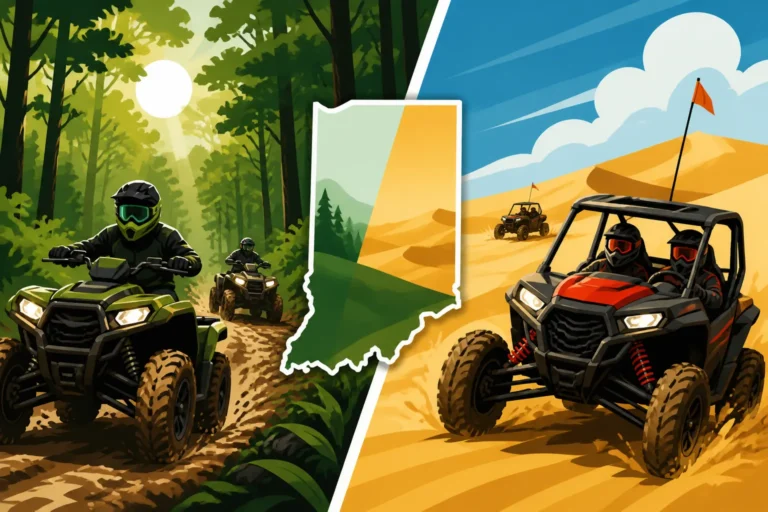
Make a simple list of likely visits and separate each trip’s entrance costs from its trail-permit costs. If you ride at more than one location, check whether the annual entrance pass applies at all of them. The [Indiana's Two State ORV Areas Compared] guide can help you think through the differences between Indiana’s major state riding areas, including how your preferred destination affects trip planning.
The $50 amount in the article title is a useful reference for evaluating the pass, but entrance-pass prices and terms can change. Confirm the current amount and rules through the official Indiana DNR or park information before purchasing. Also check whether a pass is tied to a vehicle, owner, or another condition; do not assume it works like a person’s admission ticket.
Consider the rest of the trip budget
A park pass is only one part of a riding day. You may also be planning for an ORV permit, fuel, food, camping, and the cost of getting a trailer and machines to the park. If you are comparing an annual pass with day fees, make sure you are comparing the same set of expenses.
For example, an annual entrance pass could be worthwhile for repeated park visits even if it does not reduce your trail-permit spending. On the other hand, if your riding plans are uncertain or you expect one visit, paying the applicable daily entrance fee may be simpler. You do not have to buy every possible annual product just because it sounds like the best deal.
A practical comparison might look like this:
- List the parks you expect to visit.
- Check which ones accept the entrance pass.
- Estimate how many visits you will make to those properties.
- Add likely entrance charges without the pass.
- Keep trail permits and other trip costs in a separate column.
- Compare the totals, then check the pass conditions before buying.
This keeps the decision grounded in your real riding calendar instead of a best-case scenario that may never happen.
Buy and use the pass without a gate surprise
Confirm the sales channel and the pass terms
Use an official Indiana DNR or participating park sales channel to check how the pass is sold and what proof you receive. Depending on the current process, the purchase may be handled online or through an in-person location. Confirm the available options directly rather than relying on an old receipt, a third-party listing, or a social media post.
Before completing the purchase, look for the pass’s effective period, the properties where it is accepted, and any vehicle or display requirements. If the pass must be displayed in a particular way, follow those directions. Keep the receipt or confirmation accessible until you know the pass is active and properly associated with your vehicle.
If you are also buying an ORV permit, verify that separately. [Where to Buy an Indiana ORV Permit] focuses on that process, which is not necessarily the same as purchasing an entrance pass. It is worth confirming both documents before the trip, particularly if you are heading to a park where the entrance and trail-use charges are collected separately.
Check maps and conditions before choosing a destination
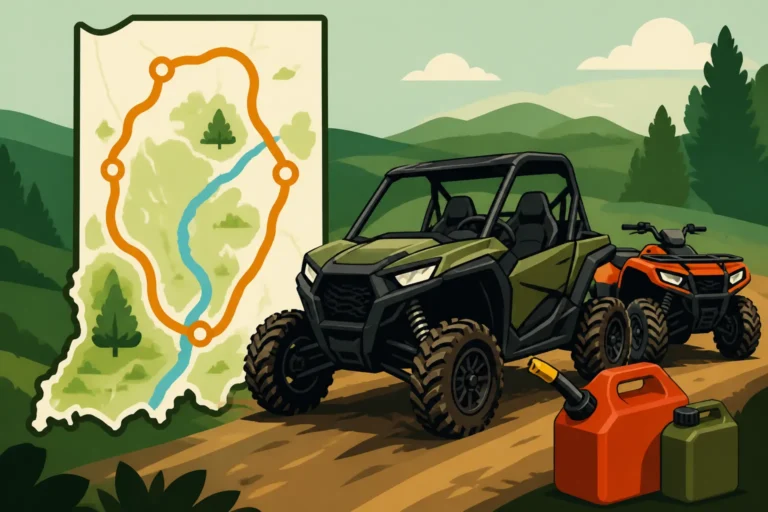
A pass does not guarantee that every trail is open, suitable for your machine, or appropriate for your group. Trail closures, weather, maintenance, and seasonal conditions can change what a park offers on the day you arrive. Check official park notices and the DNR’s trail information before unloading. [Indiana Trail Maps From the DNR] and [Indiana Trail Conditions Before You Ride] are useful starting points for that planning.
For route planning, onX Offroad can help you explore riding areas and think through where you want to go. Treat a mapping app as a planning aid, not as proof that a route is open or that you have permission to ride it. Confirm access, closures, and current park rules through official information before heading out.
That extra check can prevent a familiar kind of disappointment: towing a machine across southern Indiana, arriving ready for a full day, and then finding that the route you expected to ride is closed or unsuitable after rain. A pass can make entry easier, but it cannot replace checking trail conditions.
Common questions about Indiana’s annual entrance pass
Does the annual entrance pass cover Redbird or Interlake trail riding?
Do not assume that it does. Entrance access and ORV trail use can be separate, so check both the pass terms and the riding area’s requirements. For area-specific planning, see [Redbird Off-Road State Recreation Area] and [Interlake Off-Road State Recreation Area]. Confirm the current entry and trail-permit rules for your intended destination before buying or traveling.
You can also use onX Offroad to help plan where you hope to ride, then compare your route with official maps and park notices. That combination helps you avoid relying on a map layer alone for permission or trail status.
Does one annual pass cover every machine in the trailer?
The answer depends on the terms of the particular entrance pass. Do not assume that one pass covers every vehicle or person in your group, and do not assume it covers the machines’ trail permits. Check the coverage details before purchasing, especially if you are hauling multiple ATVs or UTVs.
For riders visiting from another state, entrance access is still separate from the rules for using an out-of-state machine on Indiana trails. Review [Indiana's Out-of-State Annual Permit] along with the destination’s entrance requirements. Keeping each charge and document separate makes it easier to see what is covered and what still needs attention.
What should I check before leaving home?
Before you hitch up, make sure you know:
- Whether your destination accepts the annual entrance pass
- Whether the pass is valid for your vehicle or group
- Whether a separate ORV trail permit is required for each machine
- Whether the trails you want to ride are open
- Whether the park has additional entry, camping, or use requirements
- How you must display or show the pass and permits
A few minutes of checking can save a long, frustrating conversation at the gate. Keep your confirmation and any required documents easy to reach, and recheck official notices close to your trip.
Disclaimer
This article is for general informational purposes only and does not constitute professional advice. Laws, prices and regulations vary by location and change over time. Consult a qualified professional for guidance on your specific situation.