Indiana Trails That Fill Up on Weekends
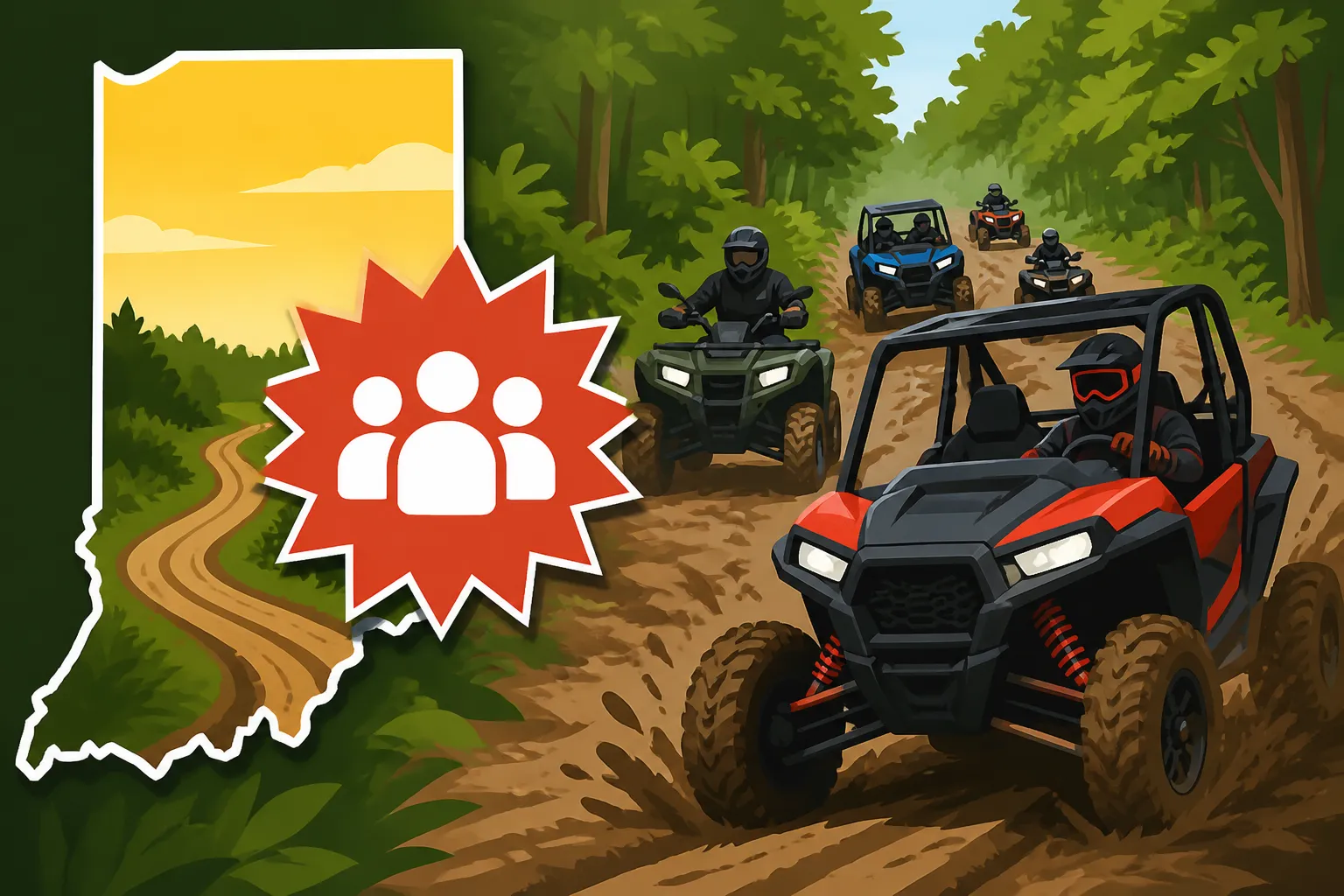
Indiana’s most popular off-road areas can feel very different on a Saturday than they do midweek: crowded staging lots, slower-moving trail traffic, and fewer easy places to pause. This guide explains where weekend congestion is most likely, how to plan around it, and what to check before hauling your ATV or UTV to a trailhead.
Where Indiana ATV and UTV trails are most likely to get busy
Crowds tend to gather at established riding parks with broad trail networks, recognizable names, and convenient staging areas. That does not mean every Saturday will be packed, but holiday weekends, pleasant-weather days, and the first dry weekend after a stretch of rain can bring more riders out at once.
For a wider look at the state’s riding options, start with [Best Places to Ride an ATV in Indiana]. If you’re deciding between the two state recreation areas, [Indiana's Two State ORV Areas Compared] can help you understand the basic differences before you choose a destination.
Redbird at Dugger
Redbird Off-Road State Recreation Area, near Dugger in Sullivan County, is a familiar destination for riders looking for reclaimed-mine terrain and a substantial network of routes. Its name recognition and range of riding opportunities make it a place worth planning ahead for on a weekend, especially when the weather is comfortable and trails are open.
A busy day can affect more than the parking lot. You may spend extra time unloading, meet more machines on shared routes, or need to wait for a group to clear a narrow section. If you’re new to the area, get familiar with the park’s layout before arriving. The guide to [Redbird Off-Road State Recreation Area] can help you prepare for the setting, while [Indiana Trail Etiquette on Shared Ground] covers the basics of riding considerately when traffic builds.
Interlake near Lynnville
Interlake, near Lynnville, offers a different riding experience, with trails and terrain spread across a large area in Pike and Warrick counties. Its size can make it tempting to assume that a crowd will simply disperse. In practice, popular staging locations, trail junctions, and familiar routes can still feel busy even when the property is extensive.
Before you go, think about how your group will handle navigation and regrouping. A rider who knows the way may be comfortable exploring; a mixed group with different experience levels may prefer to agree on a simpler route and meeting point. [Interlake Off-Road State Recreation Area] offers a useful starting point for learning about the park, and [Staging Early at Interlake] is especially relevant if you want to avoid arriving after the busiest part of the morning rush.
Private parks such as Badlands and Haspin Acres
Private riding parks can also draw weekend traffic. Badlands Off Road Park in Attica and Haspin Acres near Laurel are well-known destinations, but their rules, terrain, access arrangements, and facilities are not identical. Don’t assume that a plan that worked at one park will fit another.
Check the park’s own information before you load up, especially if you’re traveling a long distance. Confirm current operating details, what types of machines are allowed, any required paperwork or waivers, and whether the terrain suits your group. The park guides for [Badlands Off Road Park in Indiana] and [Haspin Acres in Southern Indiana] can help you compare the destinations without treating them as interchangeable.
What makes a weekend feel crowded
A park can feel busy even when the trail network is large. Congestion is usually concentrated: at entrances, staging areas, popular loops, junctions, and sections where riders need to slow down or take turns. Understanding where those bottlenecks form helps you plan more realistically than simply asking whether a park is “crowded.”
| Weekend pressure point | What you may notice | A practical response |
|---|---|---|
| Entrance and check-in | Lines, slower unloading, more vehicles arriving together | Arrive with paperwork and gear organized |
| Staging lot | Limited convenient parking or trailers maneuvering around one another | Park thoughtfully and keep access lanes clear |
| Popular trail junction | Groups pausing to check maps or decide where to go | Move fully off the riding line before stopping |
| Narrow or technical section | Riders waiting for space or helping one another through | Be patient and leave room for the group ahead |
| Fuel and break planning | More riders stopping at the same time | Start with a realistic fuel and water plan |
| Post-rain conditions | Slower travel and more people looking for open routes | Check conditions and closures before setting out |
Weather and the calendar change the picture
A mild, dry Saturday often attracts more riders than a cold or wet one. The first sunny weekend after a long rainy spell can be particularly popular because people are eager to get back outside. Holidays and school breaks may also affect traffic, but local weather and trail conditions can matter just as much as the calendar.
Rain can create a different kind of slowdown. Reclaimed clay and other soft surfaces may become slick, and riders may take longer on routes that would be straightforward when dry. That can lead to backups on challenging stretches and more stop-and-go traffic. Before leaving home, review [Indiana Trail Conditions Before You Ride] and [Indiana Trail Closures to Check First]. If a park is closed or conditions are poor, don’t treat the drive as a reason to ride anyway.
The staging area can be the real bottleneck
Some riders picture a crowded trail as machines packed tightly together from gate to gate. Often, the bigger frustration is getting parked, unloaded, organized, and moving. A trailer that blocks a turn, loose gear spread across a shared lane, or a group deciding its route in the middle of the staging area can slow everyone down.
Make your loading and unloading routine simple. Put commonly used gear where you can reach it, keep paperwork easy to find, and agree on a meeting spot before your group separates. If you arrive and the main area is busy, follow posted directions rather than improvising a parking location. Keeping the staging area clear helps the whole day start more smoothly.
How to plan a weekend ride with fewer delays
You can’t control how many people choose the same park, but you can avoid some of the most predictable sources of stress. The goal is not to race through the day or avoid other riders entirely. It’s to arrive prepared, choose a suitable plan, and leave enough flexibility for the conditions you find.
Choose your arrival time and plan before you reach the gate
Arriving earlier can make it easier to park, unload, and settle your group before the day gets underway. It does not guarantee an empty trail, and opening arrangements can vary, so check the park’s current information rather than assuming you can arrive or enter at a particular time.
Have each rider’s essential items ready before you reach the entrance. Confirm what permits, registration documents, safety equipment, or other requirements apply to your trip. For state riding areas, [Indiana's Daily and Annual Trail Permits] explains a key part of the planning picture; make sure you check the applicable park and state requirements for your specific ride.
If your group is traveling separately, agree on a rendezvous location and a backup plan. Cell service can be uneven in rural and wooded areas, so don’t rely on a last-minute phone call to find one another. A clear plan is especially helpful when someone arrives late or a vehicle has trouble on the drive.
Pick a route that matches the least experienced rider
A crowded weekend is not the best time to pressure a new rider into a route they are not ready for. Agree on a manageable plan before heading out, and let the least experienced person’s comfort level help set the pace. A confident rider may be happy to take on harder terrain, but the group needs a plan for staying together and handling delays.
Study the park map ahead of time and identify a few landmarks or meeting places. A navigation tool such as onX Offroad can help your group review routes and stay oriented, but check that the information you need is available for your destination and save anything useful before you lose signal. Do not stop in the middle of a trail to compare screens; pull over where it is safe and permitted.
If your group splits by skill level, set a specific time and location to meet again. Keep the arrangement simple enough that everyone can remember it without dependable cell coverage. onX Offroad may also help with pre-ride route planning, but it should support—not replace—park signage, posted closures, and your own awareness of the trail.
Build extra time into fuel, food, and regrouping plans
Crowds can make a short ride take longer than expected. You may wait at a difficult section, stop to let another group pass, or need to regroup after taking a wrong turn. Plan fuel and breaks around the machine, route, and conditions rather than assuming you’ll cover a familiar distance at your usual pace.
Pack drinking water, basic tools, and any supplies your group may need during a longer day. Decide what you’ll do if a machine has a mechanical issue or someone wants to turn back early. A second meeting point can prevent the whole group from having to make rushed choices when the day changes.
For navigation, onX Offroad can be useful as one part of your preparation if it provides the mapping details you need for the area. Still, carry a backup plan: know how to follow park signs, agree on a turnaround point, and make sure riders understand what to do if they lose sight of the group.
How to ride courteously when trails are busy
Crowded conditions are easier to manage when riders communicate clearly and avoid creating new bottlenecks. A little patience at a narrow section or junction can prevent confusion, close passes, and unnecessary tension.
Keep trail junctions and narrow sections clear
If your group needs to check directions, discuss a repair, or wait for another rider, move out of the riding line when it is safe to do so. Gather in a place where other machines can see you and pass without squeezing between people or parked vehicles. Avoid stopping just beyond a blind turn or on a steep section where approaching riders have little room to react.
When you come up behind another group, leave space and wait for a safe opportunity to pass. Don’t assume that the riders ahead have seen you, especially when engines are loud or dust is rising. On a busy day, a few extra minutes of patience are better than an abrupt pass in a place with limited visibility.
Keep the group size and pace manageable
Large groups can be fun, but they are harder to keep together at busy intersections and on mixed-difficulty terrain. If your party includes several machines, choose a leader and a sweep rider, agree on regrouping points, and avoid spreading out so far that riders cannot communicate. Smaller subgroups may be easier to manage where park rules permit.
Do not let the fastest rider set a pace that leaves less experienced people behind. A gap in the group can lead to wrong turns or anxious riders trying to catch up. Regular regrouping keeps everyone included and gives the group a chance to check equipment, hydration, and the plan for the next section.
Leave the site ready for the next group
At the end of the ride, load without blocking travel lanes or taking over a shared staging area longer than necessary. Check your machine and gear before leaving, and follow the park’s directions for parking, waste, and trail access. If weather or trail conditions have changed during the day, adjust your return plan rather than trying to squeeze in one last route.
A little preparation can make Indiana’s busiest riding weekends feel far less hectic. Choose a park that fits your group, check conditions and rules before traveling, arrive organized, and keep your plan flexible. When you encounter other riders, clear communication and considerate trail behavior go a long way toward making the day safer and more enjoyable for everyone.
Disclaimer
This article is for general informational purposes only and does not constitute professional advice. Laws, prices and regulations vary by location and change over time. Consult a qualified professional for guidance on your specific situation.