Indiana’s $95 Annual ORV Permit
An annual ORV permit can make frequent rides at Indiana’s state off-road areas easier to budget, but it does not automatically cover every cost or every place you ride. This guide explains what the $95 annual permit is for, how it compares with daily permits, what riders should check before buying, and how to plan a trip without confusing a trail permit with registration or an entrance fee.
What Indiana’s Annual ORV Permit Covers
Where you use the permit
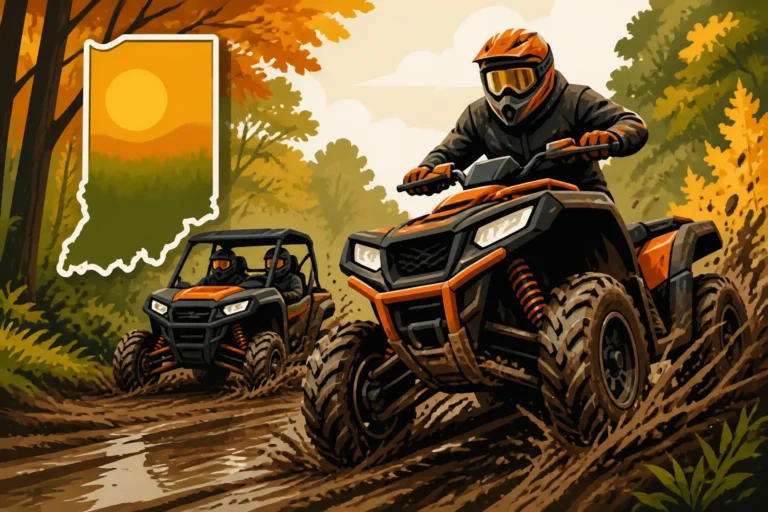
Indiana’s off-road riding rules depend on the land you plan to visit. A permit for riding at a state-managed ORV area is not a general license to ride anywhere in Indiana. Areas such as Redbird Off-Road State Recreation Area near Dugger and Interlake Off-Road Vehicle Recreation Area near Lynnville are popular examples of places where riders should check the applicable state trail permit requirements before unloading.
A state permit also does not give you permission to ride on a closed trail, cross private property, or use a public road where ORVs are not allowed. Access rules can differ among state recreation areas, private parks, local roads, and private land. Before a trip, check the riding area’s current rules and notices, rather than assuming a permit from another location will be accepted.
For planning, a map app such as onX Offroad can help you visualize a route and nearby roads, but a map is not proof that a trail is open or that riding is permitted there. Confirm the legal boundary and current access rules with the land manager. Our guide to [Where to Ride an ORV in Indiana] can help you think through the main types of riding areas.
How the permit differs from registration and entrance fees
An ORV trail permit and BMV registration serve different purposes. The trail permit is tied to riding access at the places that require it. Registration is handled separately and concerns the machine’s registration and decal requirements. Having one does not automatically replace the other, so check both sets of rules before traveling.
An entrance fee may also be charged separately from a trail permit. That can surprise riders who have already bought an annual permit: the permit may cover trail use, while the entrance charge covers access to the recreation area. The distinction matters when you are estimating the cost of a day trip or a full season. See [Why an Entrance Fee Sits on Top in Indiana] for more on this separate charge, and [Indiana ORV Registration Explained] for the registration side of the picture.
| Cost or document | What it generally relates to | What to check before your ride |
|---|---|---|
| Annual ORV permit | Trail use at locations that require a state permit | The current fee, validity dates, eligible areas, and machine requirements |
| Daily ORV permit | Trail use for a limited visit | Whether it is available for your destination and how it is issued |
| Entrance fee | Entry to a recreation area | Whether it is charged per person, vehicle, or another basis |
| BMV registration and decal | Registration requirements for the machine | Whether your machine needs registration and where the decal must be displayed |
| Private park fee | Access to a privately operated riding area | The park’s own admission, waiver, and vehicle rules |
Rules and fee schedules can change, so use this table as a way to separate the questions—not as a substitute for the destination’s posted requirements.
Is the $95 Annual Permit Worth It?
Compare the annual option with daily permits
The annual permit is most useful for riders who expect to visit Indiana state ORV areas repeatedly. The stated $95 annual figure can be compared with the listed $15 daily permit figure: at those amounts, six daily permits total $90, while a seventh brings the total to $105. On that simple permit-only comparison, the annual option costs less once you expect to ride on seven or more permit-required days.
That calculation is only a starting point. It does not include entrance fees, fuel, lodging, food, vehicle maintenance, or any charges at a private park. It also assumes the daily and annual options are available on the same terms for your situation. Check the official fee schedule and permit conditions before buying, especially if you are planning a long weekend or riding with several machines.
Think about your real calendar rather than an ideal one. A rider who lives near Lynnville and visits Interlake on several weekends may find an annual permit convenient. Someone hauling a machine from Indianapolis for one carefully planned visit may prefer a daily option, even if the annual permit looks more economical on paper. For a fuller comparison of the permit choices, see [Indiana's Daily and Annual Trail Permits].
Consider your riding habits and trip plans
An annual permit can be a good fit when your schedule is flexible. If you can take advantage of several weekends across the season, the upfront purchase may reduce the need to make a new permit decision for each trip. It can also make it easier to plan a spontaneous ride when weather and trail conditions line up.
On the other hand, buying an annual permit does not guarantee you will get the number of rides you planned. Heavy rain can make reclaimed mine clay slick, trail closures can change your destination, and family schedules can fill a weekend quickly. If you are unsure whether you will ride more than a few times, compare the annual cost with the number of trips you are realistically likely to make—not the number you hope to make.
A useful approach is to list likely visits to Redbird, Interlake, and any other permit-required location, then separately budget for admission and travel. Use onX Offroad or another mapping tool to plan routes and estimate the drive, but verify trail access and closure notices directly with the park. Guides to [Indiana's Two State ORV Areas Compared] and [Indiana Trail Conditions Before You Ride] can help you narrow down where and when you are likely to go.
Buying and Using an Annual Permit
Check the purchase process before you leave
Before heading out, confirm where the permit is sold, what information you need, and whether you can purchase it online or at the park. Do not assume that every entrance or gate handles permit sales in the same way. If you are arriving early, traveling on a busy weekend, or bringing a group, checking in advance can prevent an avoidable delay at the entrance.
Keep your purchase confirmation or permit details accessible, and follow the park’s instructions for displaying or presenting the permit. A permit stored in an email account you cannot open at the trailhead is not much help. If the park requires a physical permit, decal, or other proof, make sure it is attached or carried as directed before you start riding.
It is also worth checking the permit’s validity period. “Annual” can refer to a defined permit season or another validity period, so do not assume it lasts exactly twelve months from the day you buy it. Confirm the dates and renewal process with the issuing agency. For help with the buying step, see [Where to Buy an Indiana ORV Permit] and [Buying an ORV Permit Online Before You Leave Home].
Plan for every machine in your group
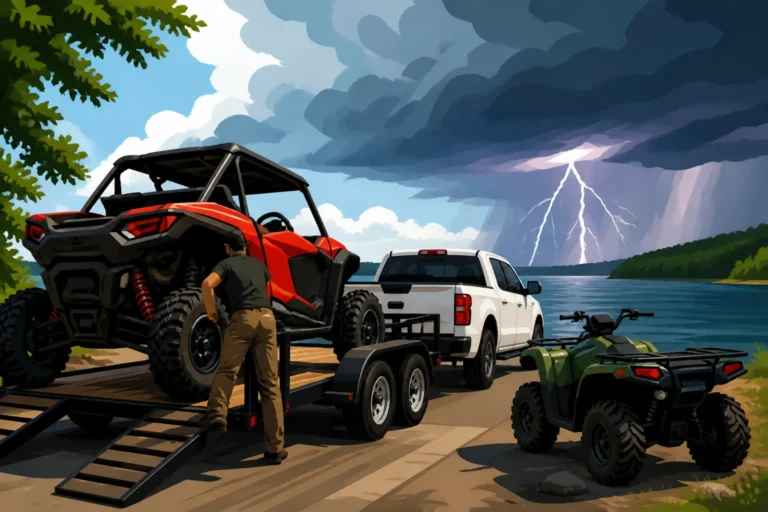
A common budgeting mistake is treating one annual permit as a group pass. The permit rules may require a separate permit for each machine, so check the conditions for every ATV, UTV, dirt bike, or other ORV in your vehicle or trailer. If one person is towing two machines but only riding one at a time, do not assume the permit automatically transfers between them.
Before departure, make a simple list of the machines you are bringing and match each one to the required permit. This is especially helpful for families or groups where one person handles the booking and other riders load their own machines. A quick check can catch the “we thought the other person bought it” problem before the group reaches the gate.
Keep in mind that an annual permit for one machine does not necessarily cover a borrowed machine, a rental, or a friend’s vehicle. Rental operators may have their own arrangements, but you should confirm what is included rather than relying on an assumption. Our related guide, [Does Every Machine in the Truck Need Its Own Permit?], explains why it is important to check the permit’s machine-specific terms.
Out-of-State Riders and Other Requirements
Do not confuse an annual permit with the visitor rule
Out-of-state riders should check two separate questions: whether their machine’s registration is accepted for the visit, and whether they need an Indiana trail permit for the area they plan to ride. These are not interchangeable. An out-of-state registration may address registration recognition, while the trail permit concerns access to a particular state riding area.
Indiana’s visitor rules can also apply to how long a nonresident machine may be operated in the state before additional registration requirements become relevant. Do not treat an annual trail permit as an extension of that period. If you are bringing a machine from Ohio, Michigan, Illinois, or Kentucky, confirm both the registration rules and the destination’s trail permit requirements before you travel.
For example, a family coming from Louisville for a weekend at Redbird should check the park’s permit and entrance requirements, then separately confirm the rules for bringing their Kentucky-registered machines into Indiana. A route-planning app such as onX Offroad can help with navigation, but the app cannot decide whether a machine meets Indiana registration rules. See [Indiana's Twenty-Day Visitor Rule] and [Riding Indiana With an Out-of-State Decal] for the registration questions.
A permit does not replace safety and park rules
Even with the right permit, riders must follow the rules of the area. Those can include staying on marked trails, obeying closures, observing age and supervision requirements, wearing required protective equipment, and following rules for passengers, lighting, and vehicle operation. Requirements may differ between state recreation areas and private parks, so do not carry one park’s rules over to another without checking.
Conditions matter as much as paperwork. After heavy rain, reclaimed clay can become slick and ruts can deepen. In summer, heat and humidity can make a long ride more tiring than expected. Before leaving, check the park’s operating status, trail notices, weather, and any posted restrictions. If you use onX Offroad to help plan a route, compare it with official park information and stay on authorized trails.
A permit also does not protect you from enforcement if you ride somewhere that is closed or unauthorized. Keep your paperwork available, tell your group where the boundaries are, and agree on a plan if riders become separated. For useful preparation, review [Indiana Trail Closures to Check First] and [Indiana Trail Etiquette on Shared Ground].
Planning a Cost-Effective Indiana ORV Season
Build a full-season budget, not just a permit budget
The annual permit is only one line in the cost of riding. A realistic season budget may include park entrance charges, fuel for the tow vehicle and machine, meals, camping, protective gear, routine maintenance, and repairs. If you travel from northern Indiana to Redbird or Interlake, transportation can easily become a larger part of the day’s cost than the permit itself.
Try estimating expenses by trip. For each planned visit, record the expected entrance charge, fuel, food, and any overnight costs. Then add the permit cost once, rather than counting it as a new expense every time you ride. This makes it easier to compare several day trips with one weekend away—and to see whether the annual option matches your actual plans.
Leave room in the budget for maintenance. Dust, mud, and reclaimed clay can put extra demands on filters, brakes, bearings, tires, and cooling systems. A machine that is ready to ride is part of the cost of a good season, even when repairs do not happen on a predictable schedule. For related planning, see [Cost of Riding a Full Season in Indiana].
Use a pre-trip checklist
A short checklist can prevent a lot of gate-side frustration. Before loading, confirm the permit is valid for your trip, check whether each machine needs its own permit, and review the park’s current entrance and operating rules. Make sure you have any required registration documents and that your decal is in the required location.
Then check the ride itself. Confirm the park is open, review weather and trail conditions, pack water and basic tools, and make sure your trailer and tie-downs are ready for the drive. If your route depends on a particular gate or trail section, verify that it is accessible rather than assuming it will be open when you arrive. onX Offroad can assist with route planning, but use the park’s official notices for operational decisions.
A practical checklist looks like this:
- Confirm the destination requires a state ORV permit.
- Check the current annual and daily permit fees and validity dates.
- Confirm the permit applies to each machine you are bringing.
- Check whether an entrance fee is separate.
- Review registration, decal, age, passenger, and safety rules.
- Check park hours, closures, and trail conditions.
- Keep permit and registration proof accessible during the trip.
Taking a few minutes to do those checks at home is far easier than trying to sort out a fee, a missing document, or a closed trail after the trailer is already parked at the gate.
Disclaimer
This article is for general informational purposes only and does not constitute professional advice. Laws, prices and regulations vary by location and change over time. Consult a qualified professional for guidance on your specific situation.