Reading an Indiana Decal Number
It's incredibly frustrating when you're trying to make sense of all the official stickers and numbers plastered on your ATV or UTV, especially that little decal from the Indiana Bureau of Motor Vehicles (BMV). What do all those letters and numbers really mean, and why is it so important to keep track of them? This guide is here to break down exactly how to read your Indiana ORV decal number, understand its significance, and troubleshoot common issues you might face.
What's on Your Indiana ORV Decal?
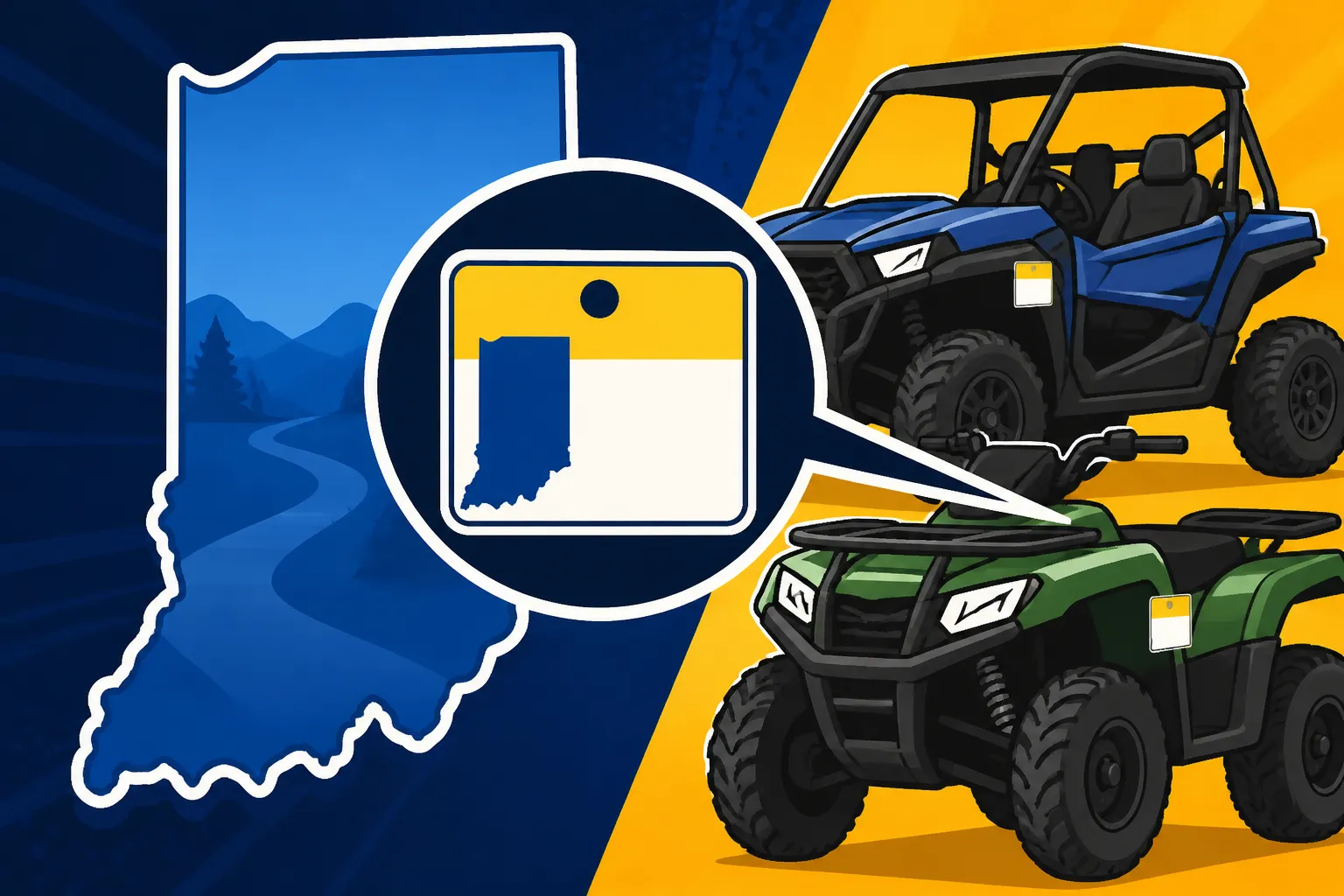
That small, adhesive rectangle on your machine carries a surprising amount of information, acting as your vehicle's public declaration of legal registration in Indiana. It’s not just a decorative sticker; it’s a crucial identifier that connects your off-road vehicle to you and to the state’s registration system. Understanding each component of this decal number can save you headaches down the line, whether you're dealing with law enforcement, selling your machine, or simply trying to renew your registration.
Decoding the Numbers and Letters
At first glance, the Indiana ORV decal number might look like a random string, but it's actually a carefully constructed code. Typically, you'll see a two-digit year, followed by a series of numbers, and sometimes letters indicating the vehicle type. For example, a decal might read something like "26-123456-ATV." The initial two digits, "26" in our example, represent the expiration year of your registration. Remember, Indiana ORV registrations are valid for three years, so if you see "26," it means your decal expires in 2026. This is a key piece of information, letting you know at a glance how much time you have left before needing to [Renewing an Indiana ORV Registration].
The longer sequence of numbers, like "123456," is your unique sequential registration number. This is essentially your ORV's specific ID within the Indiana BMV system. It's tied directly to your machine and its owner, serving as a primary link in the state's database. Finally, you might see an abbreviation like "ATV" or "UTV," clearly indicating the type of off-road vehicle the decal is issued for. While this might seem redundant given you're looking at the machine, it ensures accuracy in records and helps differentiate between various categories of ORVs. Knowing these elements helps you confirm that the decal belongs to your machine and is current.
Understanding the Expiration Date
The most critical piece of information on your decal, for day-to-day riding purposes, is undoubtedly the expiration date. As mentioned, the first two digits signify the year your current three-year registration period ends. So, a decal starting with "26" means it's valid until December 31st of 2026. It’s not a rolling date from when you registered; rather, it’s a fixed endpoint within the [Indiana's Three-Year ORV Registration] cycle. This fixed expiration date means that regardless of whether you registered in January or December of the starting year, it will still expire on the final day of the designated third year.
Ignoring this date can lead to unpleasant surprises, like fines for riding an unregistered machine. Imagine you're planning a trip to Redbird Off-Road State Recreation Area, excited for a weekend of trail riding, only to realize your decal expired last month. This oversight can quickly turn a fun outing into a costly headache, as riding with an expired decal is just like riding without one. Always make a note of this date and consider setting a reminder for when your renewal is due. The state wants to ensure all machines using public lands or county-designated roads are properly registered, contributing to trail maintenance and safety initiatives.
The Importance of Legibility
Picture this: you're out on the trails, maybe at Interlake, and a conservation officer approaches for a routine check. They ask for your registration, and you point to your decal, only for them to squint, unable to make out the faded numbers. This is a surprisingly common scenario and can be just as problematic as not having a decal at all. The Indiana BMV decal needs to be clearly visible and legible. It's usually placed in a conspicuous spot, often on the forward half of the machine, as specified by regulations on [Where the Indiana Decal Mounts].
Over time, exposed to sun, mud, water, and general wear and tear, these decals can fade, crack, or peel. When the numbers become difficult to read, it essentially defeats the purpose of the decal as proof of registration. An officer might issue a citation if they cannot verify your registration number readily. It's your responsibility as the owner to ensure the decal remains in good condition. Regularly cleaning the area where the decal is placed and gently wiping down the decal itself can help preserve its integrity. Avoid harsh chemicals or abrasive scrubbing that could damage the print. If your decal reaches a point where the numbers are illegible, it's time to consider a replacement, which is far better than facing a fine for what might appear to be an unregistered machine.
| Decal Segment | Meaning | Example (Hypothetical) |
|---|---|---|
| Expiration Year | Two digits indicating year of expiration | 27 |
| Unique ID | Sequential number for your specific machine | 876543 |
| Vehicle Type | Identifies ATV, UTV, Dirt Bike | UTV |
| State Identifier | Confirms Indiana registration | IN |
Why Your Decal Number Matters
Beyond simply being a sticker you have to apply, the Indiana ORV decal number is the cornerstone of your machine's legal identity within the state. It's what allows you to confidently hit the trails at state parks or navigate designated county roads without fear of legal repercussions. This seemingly small detail carries significant weight in ensuring accountability, safety, and proper funding for off-road recreation in Indiana.
Proof of Registration
The decal number is your primary, visible proof that your off-road vehicle is registered with the Indiana BMV. When you're stopped by an officer on public land or a county road, one of the first things they'll look for is this decal. The numbers on it directly correspond to the registration certificate you received and should ideally carry with you, perhaps stored safely in a dry box on your machine. Without a current and legible decal, or without the ability to provide your registration certificate, you're essentially riding an unregistered vehicle in the eyes of the law. This can lead to citations and fines, even if you did technically complete the registration process.
Think of it like a license plate for your car; it's the visible testament that your vehicle is legitimate and compliant. If an officer cannot easily read the decal number, they have no immediate way to confirm your registration status, leading to delays and potential penalties. This is why discussions around [What an Indiana Officer Checks Roadside] often highlight the decal's importance. It's not just about having a decal, but having the correct and readable decal for your specific machine.
Connecting to Your Machine's Records
Every Indiana ORV decal number is unique and directly linked to your machine's VIN (Vehicle Identification Number) and your owner information in the BMV's database. This connection is vital for several reasons. For law enforcement, it means they can quickly verify the machine's ownership, check for stolen vehicle reports, or confirm registration status. If your ORV is ever stolen, this unique decal number, along with the VIN, becomes crucial in identifying and recovering your property. It provides an undeniable link between the physical machine and its legal documentation.
Furthermore, this connection simplifies administrative processes for you. When you need to renew your registration, the BMV uses this number (or your VIN) to pull up your existing records. It also helps if there's ever a question about the machine's history or previous ownership, as the decal number serves as a consistent identifier across its life. While checking a VIN is often the go-to for buyers of used machines, as detailed in [Checking a VIN Before an Indiana Purchase], the decal number acts as a handy cross-reference that can quickly confirm current registration status and provide a quick lookup point.
Transferring Ownership and Renewing
When the time comes to sell your ORV, the decal number plays a role in the transfer of ownership, though the focus will shift more heavily to the title and a proper bill of sale. A new owner will need to register the machine in their name, and having the previous decal number, combined with the VIN, helps the BMV process the new registration smoothly. It provides a clear lineage for the machine's registration history. Similarly, for [Renewing an Indiana ORV Registration], the BMV often references the existing decal number or your vehicle's VIN to ensure you're renewing the correct machine. While you don't necessarily need to provide the old decal number if you have your registration certificate, it's part of the comprehensive record.
For instance, when preparing a bill of sale, like those found through services like LawDepot, it’s good practice to include not only the VIN but also the current decal number. This adds an extra layer of detail and proof for the transaction. A clear [An Indiana Bill of Sale for an ORV] ensures both buyer and seller have documented the transaction properly, and including the decal number reinforces the machine's current legal status. While the decal itself isn't transferred (the new owner gets a new one), its unique identifier ensures continuity in the state's records, making the transition smoother for both parties.
Common Issues and Troubleshooting Your Decal
Life with an ORV is full of adventure, and sometimes that adventure takes a toll on your gear, including that important registration decal. It’s not uncommon for decals to face challenges from the elements or accidental damage. Knowing how to troubleshoot these common issues can prevent delays in your riding plans and keep you compliant with Indiana law.
When Your Decal Number Fades Past Reading
One of the most common and frustrating problems is when your decal, through sun exposure, mud splatter, or repeated washing, becomes so faded that the numbers are practically invisible. You might still see the outline of the sticker, but the crucial details, like the expiration year and unique ID, are no longer legible. This situation is explicitly addressed as [When Your Decal Number Fades Past Reading] in official guidance, and it's treated much like not having a decal at all. An officer cannot verify your registration if they can't read the numbers, and this could lead to a citation for riding an unregistered machine.
If your decal reaches this point, you absolutely need to obtain a replacement. The process usually involves contacting the Indiana BMV or visiting a local license branch. While you might be able to ride with your physical registration certificate in your pocket, as outlined in [Riding Without Your Registration Certificate in Your Pocket], the decal is still a mandatory visual identifier. It's a quick fix that saves you potential legal headaches. When creating important documents like an ownership affidavit, a service like LawDepot ensures you capture all necessary machine identifiers, which can be critical if your decal is unreadable and you need to affirm ownership.
Lost or Damaged Decals
Picture this: you're loading your quad onto the trailer after a muddy weekend, and you notice your decal is gone – perhaps it peeled off in deep mud, or maybe a branch snagged it on a tight trail. Or, just as bad, it's torn or scuffed beyond recognition. A lost or severely damaged decal requires the same action as a faded one: replacement. Riding without a visible, intact decal is non-compliant. The good news is that replacing a lost or damaged decal is a straightforward process.
You'll need to submit a request for a replacement decal through the Indiana BMV. There is typically a nominal fee associated with this service, which covers the cost of production and mailing. You can find details on the [Indiana ORV Decal Replacement Cost] to budget for this. It might take a little time for the new decal to arrive, as outlined by [How Long an Indiana Decal Takes to Arrive], so it's best to address this issue as soon as you notice it. Don't wait until the day before your next big riding trip to discover you're missing this vital piece of identification. Planning ahead means you won't have to miss out on trail time at places like Redbird or Interlake.
Verifying a Decal on a Used Machine
When you're in the market for a used ORV, checking the decal is just as important as inspecting the engine or tires. It's easy to get caught up in the excitement of a new-to-you machine, but a quick check of the decal can reveal crucial information about its registration status. First, ensure the decal is present, legible, and matches the type of machine you're looking at (ATV for an ATV, UTV for a UTV). Next, look at the expiration year. An expired decal isn't necessarily a deal-breaker, but it tells you that you'll immediately need to factor in the [Indiana ORV Registration Cost] into your purchase.
More importantly, compare the decal's sequential number to any paperwork the seller provides, especially the title if the machine is titled. While the decal number won't be on the title, it should correspond to the machine's VIN, which is on the title. If the decal looks tampered with, or if the numbers don't make sense, it's a major red flag. Always get a proper [An Indiana Bill of Sale for an ORV], and use a reputable template from a service like LawDepot to ensure all fields are correctly filled out, including the VIN. If a seller is hesitant about you inspecting the decal or can't produce a matching registration certificate, it's wise to proceed with caution or even walk away. A valid, current decal is a sign of a responsible owner and a legally compliant machine.
Disclaimer
This article is for general informational purposes only and does not constitute professional advice. Laws, prices and regulations vary by location and change over time. Consult a qualified professional for guidance on your specific situation.