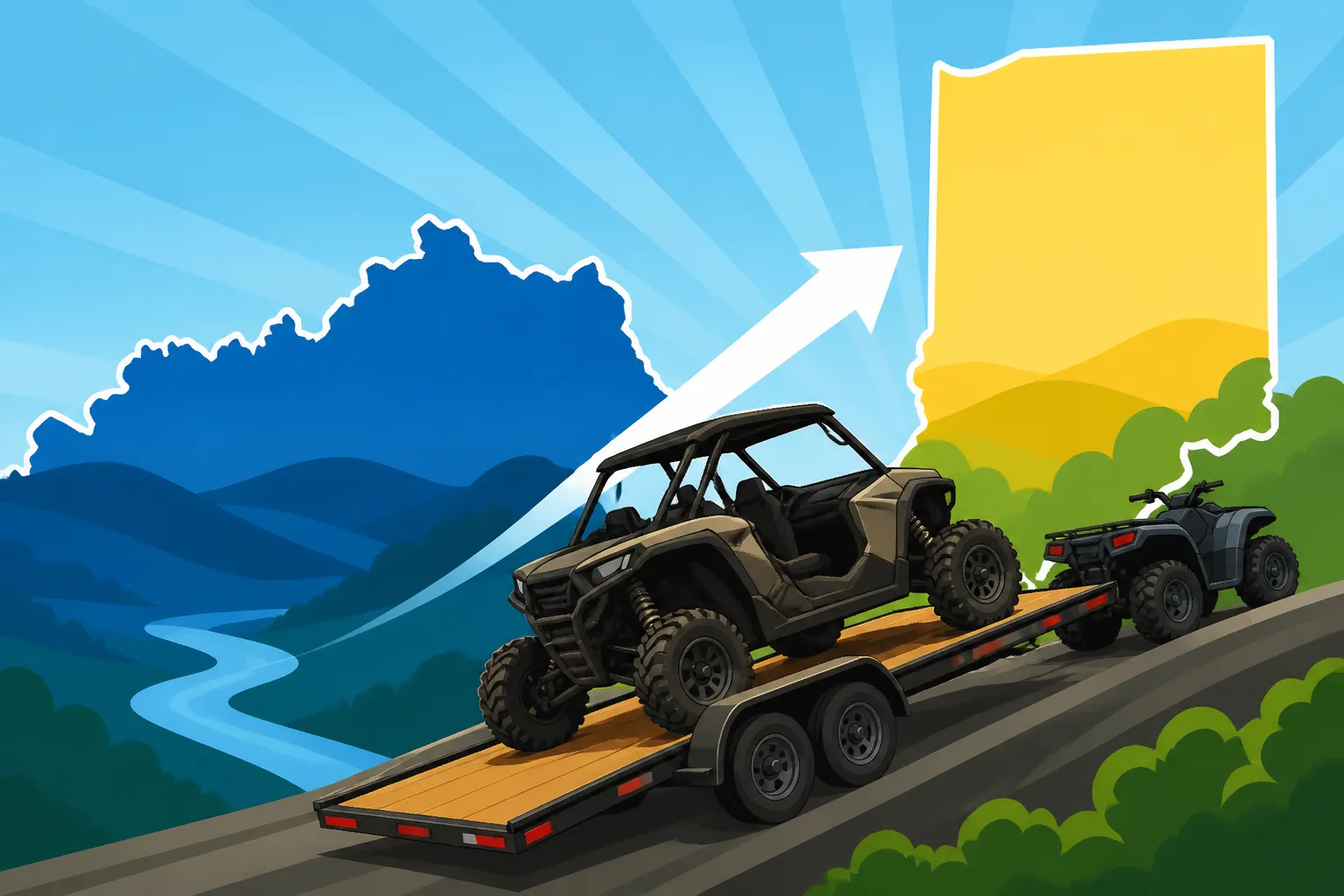
Hauling a Machine Up From Kentucky
Bringing an off-road vehicle across state lines, especially from Kentucky to Indiana, often sparks a lot of questions and sometimes a little dread about navigating new paperwork. You've got your ATV or UTV, you're ready for new adventures on Indiana's trails, but before you hit the dirt, you need to make sure your machine is properly registered and titled in its new home. It can feel like a bureaucratic maze, but don't worry—this guide will help you understand and tackle the specific steps for getting your Kentucky-purchased or Kentucky-registered ORV legal in Indiana.
Understanding Indiana's ORV Registration and Titling for Out-of-State Machines
When you bring an ORV into Indiana from another state like Kentucky, you're essentially starting fresh with Indiana's system. Indiana has its own unique set of rules for off-road vehicles, and they can differ significantly from what you might be used to across the Ohio River. It's not just about slapping on a new sticker; it's about establishing a clear record of ownership and ensuring your machine contributes to the state's ORV trail system.
Why Indiana Requires Registration and Titling
First off, let's understand the "why." Indiana requires the registration and titling of ORVs primarily for two main reasons: public safety and funding for trail maintenance. When your ORV is registered, it helps authorities identify owners in case of an accident, theft, or other incident. More importantly, the fees collected from registration go directly into funding the development, maintenance, and operation of Indiana's fantastic public ORV riding areas, like Redbird SRA and Interlake SRA. Without these funds, our trails wouldn't be nearly as well-kept or accessible. It's an investment in the riding community.
When you're coming from Kentucky, where the rules might be different regarding titles or even registration depending on the age or type of machine, the Indiana Bureau of Motor Vehicles (BMV) needs to establish a clear chain of ownership. This is crucial for preventing the sale of stolen machines and ensuring that if you ever decide to sell your ORV, the next owner will have a clear, undisputed path to ownership. Think of it as formally introducing your machine to its new state.
Key Indiana Titling Requirements for Out-of-State ORVs
One of the biggest hurdles for many people bringing a machine from Kentucky is the title. Indiana has a very specific rule: if your ORV was purchased new or used after December 31, 2009, it must have an Indiana title. This means if you bought your machine in Kentucky in 2010 or later, Indiana will absolutely require you to get an Indiana title for it, even if Kentucky didn't require one or had a different process. This particular date, [Why Indiana Titles Machines Bought After 2009], is a common point of confusion for riders moving their machines.
If your Kentucky ORV is older—meaning it was purchased on or before December 31, 2009—it's generally considered "title-optional" in Indiana. This doesn't mean you can't get a title; it just means it's not strictly mandated by the state. Many owners choose to get a title even for older machines because it provides a stronger proof of ownership, which can be invaluable when selling the machine later on or dealing with insurance. However, for those newer machines, getting an Indiana title isn't optional; it's a critical first step. You'll want to review [Indiana ORV Title Requirements] to ensure you meet all the necessary criteria.
The Twenty-Day Grace Period for Out-of-State Machines
Indiana does offer a small window of flexibility for nonresident ORV owners. If you're just visiting Indiana with your Kentucky-registered machine, you're typically allowed to ride for up to twenty days in a calendar year without needing an Indiana registration. This is a fantastic feature for weekend warriors or those just passing through to hit a specific trail park. However, if your stay extends beyond those twenty days, or if you're actually moving to Indiana and establishing residency, that grace period flies by quickly.
Once you've made Indiana your permanent home, or if you plan to use your ORV here for more than twenty days annually, you need to get it registered. The clock starts ticking, and understanding this initial allowance versus the long-term requirement is vital to avoid fines. For visitors, it's a sweet deal, but for residents, it's a temporary reprieve before needing to fully integrate your ORV into Indiana's system. This period is carefully explained in [Twenty Days for a Nonresident Machine in Indiana].
Your Step-by-Step Playbook for Bringing a Kentucky ORV to Indiana
Okay, let's get down to the brass tacks. You're ready to make your Kentucky machine an official Hoosier. This process, while detailed, is entirely manageable if you prepare properly. Don't show up at the BMV without your ducks in a row – that's a surefire way to multiply your frustration.
Gathering Your Kentucky Paperwork
The first and arguably most critical step is to gather all the existing paperwork from Kentucky. This means digging out the original Kentucky title, if one was issued. If your machine didn't come with a title in Kentucky (which is common for older machines or specific types), you'll need the original bill of sale. Not a photocopy, but the original. This document is your proof of purchase and a vital link in the chain of ownership. If you've been riding it in Kentucky for a while, any previous registration documents you have might also be helpful, though the title or bill of sale are the absolute must-haves.
What if you've lost the original bill of sale? This is where things can get a bit tricky but not impossible. You might need to contact the person you bought the ORV from to get a duplicate, or at least a new bill of sale that they can sign. If that's not possible, Indiana has a process for filing an Ownership Affidavit. This affidavit essentially states under oath that you are the rightful owner and explains the circumstances of missing documentation. Services like LawDepot can provide templates for a comprehensive bill of sale, or even an ownership affidavit, which can be useful if you need to formalize these documents. Remember, the goal is to provide a clear, undisputed path of ownership to the Indiana BMV. For further assistance with a lost document, refer to [Filing an Ownership Affidavit for a Quad With No Paperwork].
The Indiana Bill of Sale Requirement
Even if you have a Kentucky title, Indiana still requires a specific bill of sale, especially if you recently bought the machine. The Indiana BMV will want to see a bill of sale that includes crucial information: the full names and addresses of both the buyer and seller, a detailed description of the ORV (make, model, year, and crucially, the Vehicle Identification Number or VIN), the purchase price, and the date of sale. Both parties should sign and date it. This document is not just for your records; it's what the state uses to calculate sales tax and verify the transaction. [An Indiana Bill of Sale for an ORV] provides more specifics on what needs to be included.
Be aware that an Indiana bill of sale is generally considered valid for 45 days. If you delay your titling and registration beyond that, you could face late penalties. It's a common mistake for new owners, especially after a private sale, to think a simple handshake is enough. It's not. Getting a proper bill of sale, perhaps using a template from a reputable source like LawDepot, signed and dated correctly, is paramount. This document also directly impacts your sales tax obligation; Indiana charges a 7% sales tax on the purchase price of ORVs, which you'll typically pay when you title the machine.
Visiting the Indiana BMV for Titling and Registration
With all your documents in hand – the Kentucky title (or original bill of sale/ownership affidavit), a valid Indiana bill of sale, and proof of your Indiana residency – it's time for the main event: a visit to an Indiana BMV branch. You'll need to fill out an Application for Certificate of Title for an Off-Road Vehicle (Form 44788) and an Off-Road Vehicle (ORV) and Snowmobile Registration Application (Form 55301). You can often find these forms on the Indiana BMV website to fill out beforehand, saving you time at the branch.
At the BMV, a clerk will review all your paperwork. They will check the VIN on your documents against the machine (you won't bring the machine itself, just the VIN documentation) to ensure it's not stolen and that all details match. You'll pay the applicable fees, which include the title fee and the three-year registration fee. Remember, Indiana ORV registrations last for three years, so you're good to go for a while after this visit. You'll walk out with your new Indiana registration certificate, and your shiny new Indiana title will usually be mailed to you within a few weeks. Don't forget to ask about [Indiana ORV Registration Cost] and [Indiana ORV Title Cost] before your visit to be prepared.
Avoiding Headaches: Common Issues and Smart Solutions for Indiana ORV Transfers
Even with a checklist, transferring an ORV from Kentucky to Indiana can throw some curveballs. Foreseeing these common issues can save you a lot of time and frustration. The key is to be proactive and understand the nuances of Indiana's regulations.
The Forty-Five Day Titling Deadline and Penalties
Indiana is quite strict about its titling deadline: you have 45 days from the date of purchase to title your ORV. If you miss this window, you'll be hit with an administrative penalty. This penalty can add up, so it's really in your best interest to get to the BMV as soon as possible after acquiring your machine, especially if you're coming from Kentucky where deadlines might be different or non-existent.
Imagine you bought your dream UTV in Louisville, Kentucky, on a Friday. You had a busy weekend, then a hectic work week, and suddenly a month has flown by. Before you know it, day 46 rolls around, and you're facing an unnecessary charge. This isn't unique to out-of-state transfers; it applies to all ORV purchases in Indiana. The BMV wants to process these transactions efficiently, and penalties are a way to encourage timely compliance. Always prioritize that BMV visit. For more details on avoiding this, check out [Indiana's Forty-Five Day Titling Deadline] and [Indiana ORV Late Title Penalty].
What If Your Kentucky ORV Has No Serial Number?
While uncommon, some very old or custom-built ORVs might lack a readily apparent or standard VIN or serial number. This presents a challenge, as a serial number is absolutely essential for titling and registration in Indiana. If your Kentucky ORV falls into this category, you can't just skip this step. The Indiana BMV has a process for issuing a special identification number (SIN).
You'll need to fill out a request for an SIN and possibly have a law enforcement officer or a BMV inspector verify that the machine indeed has no existing identifiable number. This process can add extra time and steps to your overall registration, so it's best to address it early if you suspect your machine has this issue. Providing clear photos and any historical documentation you might have will help streamline the process. While LawDepot doesn't assist with SINs, they can help formalize other affidavits you might need to support your claim of ownership while awaiting a new number.
Navigating Sales Tax on Your Kentucky Purchase
When you bring a machine into Indiana that you recently purchased in Kentucky, you'll be liable for Indiana's 7% sales tax on the purchase price, if you haven't already paid a comparable sales tax in Kentucky. If you paid sales tax in Kentucky, Indiana might offer a credit for that, meaning you'd only pay the difference if Indiana's rate is higher. However, you'll need proof of sales tax paid in Kentucky. If you bought it from a private party in Kentucky and paid no sales tax, you will pay the full 7% to Indiana.
This is often where the original bill of sale becomes critical. The purchase price listed on that document is what Indiana will use to calculate the sales tax. If the bill of sale lists a suspiciously low price, or if it's missing, the BMV might require an appraisal or use fair market value, which can sometimes be more than you actually paid. Ensure your bill of sale accurately reflects the transaction. This tax is typically collected when you title the machine, so be prepared to pay it at the BMV.
| Required Document | Purpose | Important Notes |
|---|---|---|
| Kentucky Title (if applicable) | Proof of prior ownership and legal transfer | Original required. If lost, apply for a duplicate in KY before starting IN process. |
| Original Bill of Sale | Proof of purchase, sales tax calculation | Crucial if no KY title. Must include buyer/seller, ORV details (VIN), purchase price, date. Valid for 45 days in IN. |
| Indiana Ownership Affidavit (if no title/bill of sale) | Attests to ownership under oath when primary docs are missing | Use for older machines without a KY title or if original bill of sale is lost. LawDepot can assist with templates. |
| Indiana Residency Proof | Verifies you are an Indiana resident | Indiana Driver's License/ID card, utility bill, etc. |
| Application for Certificate of Title | Formal request for an Indiana title | Form 44788. Fill out completely and accurately. |
| ORV and Snowmobile Registration Application | Formal request for Indiana registration sticker | Form 55301. Fill out completely and accurately. |
Bringing your ORV up from Kentucky to Indiana shouldn't be a source of stress. By understanding Indiana's specific requirements for titling, registration, and deadlines, and by preparing your paperwork thoroughly, you can ensure a smooth transition for your machine. Soon enough, you'll be out enjoying Indiana's fantastic trail systems, knowing your ORV is fully legal and ready for adventure.
Disclaimer
This article is for general informational purposes only and does not constitute professional advice. Laws, prices and regulations vary by location and change over time. Consult a qualified professional for guidance on your specific situation.