How Long an Indiana ORV Registration Lasts
Many off-road vehicle owners in Indiana find themselves scratching their heads when it comes to the nitty-gritty of registration. It's not always clear how long that precious decal on your ATV or UTV is actually good for, leading to confusion, expired registrations, and sometimes, unexpected fines. This guide is designed to clear up all that uncertainty, walking you through the lifespan of an Indiana ORV registration so you can ride with confidence.
The Standard Indiana ORV Registration Term
Let's cut right to the chase because it's the question on every ORV owner's mind: how long does an Indiana ORV registration truly last? The answer, for the vast majority of machines, is a solid three years. That's three full calendar years from the date your registration is processed, and it's something many folks don't realize until they're looking at their decal or getting ready to renew. This three-year cycle is a key part of the state's system for keeping track of off-road vehicles.
This isn't just an arbitrary number; it's a structured approach by the Indiana Bureau of Motor Vehicles (BMV) to manage the enormous volume of ORV registrations across the state. Instead of annual renewals, which could easily become a bureaucratic nightmare for both owners and the state, the three-year period offers a good balance. It provides a reasonable window before you have to worry about renewal, without being so long that owners forget about it entirely. Think of it as a helpful buffer that gives you plenty of trail time between trips to the license branch.
What this means for you, the rider, is that once you've gone through the process of [Registering an ORV in Indiana], you're set for a good chunk of time. You won't be scrambling every single year to get new paperwork or a new decal. This longevity is particularly beneficial for those who might not ride year-round or whose schedules make frequent administrative tasks a challenge. It gives you peace of mind that your machine is legally compliant for a significant period.
However, it's crucial not to confuse this three-year registration with any other deadlines or requirements. For instance, while your registration lasts three years, if you just purchased a machine, you still have a specific window, usually [Indiana's Forty-Five Day Titling Deadline], to get that machine titled in your name. The registration period applies to the active use permission, not the initial administrative steps of ownership transfer. These are two distinct processes, and understanding their individual timelines is vital.
When the Clock Starts on Your Registration
Your three-year registration period begins the moment your application is processed and approved by the Indiana BMV. This isn't necessarily the day you submit your paperwork; it's the date the state officially registers your machine in its system. You'll typically see this effective date printed on your registration certificate and often on the decal itself. It's important to verify this date, especially if you submitted your application by mail or through a third party, to ensure you know exactly when your three years begin ticking.
For new machines purchased from a dealer in Indiana, often the dealer will handle the initial registration process for you as part of the sale. This is a huge convenience! They'll submit all the necessary paperwork, and the registration will be effective from the date the BMV processes it. You'll then receive your registration certificate and decal, which will clearly display the start and end dates. Always double-check this information when you receive it to confirm everything is accurate.
If you're buying a used ORV from a private seller, the process might be a little different. Even if the previous owner had a valid three-year registration, that registration doesn't automatically transfer to you. You'll need to register the machine in your name, which will initiate a brand new three-year cycle. This is why it's so important when [Buying a Used ORV in Indiana] to understand that you'll be starting fresh with your own registration clock. Don't assume the previous owner's decal covers you for the remainder of their period; it generally does not once ownership changes hands.
The point is, always pay attention to the dates provided on your official registration documents. That little sticker on your machine, known as [The Indiana ORV Decal Explained], will have a clear expiration date printed on it, which will be three years from the effective registration date. This visual cue is your primary reminder of when you'll need to start thinking about renewing your registration.
Understanding Your Registration's Expiration Date
Knowing your registration lasts three years is one thing, but pinpointing the exact expiration date is another. The Indiana BMV uses a specific system for this, which is designed to be clear and consistent. Your registration generally expires on the last day of the month, three years after it was initially issued or renewed. For example, if your ORV was registered on June 15, 2024, it would typically expire on June 30, 2027. This consistent end-of-the-month expiration helps simplify the renewal process for everyone involved.
This system is helpful because it means you don't have to remember a specific day of the month; it's always the end of the month. This gives you a bit of wiggle room to get your renewal in before the very last minute. However, it's not a grace period for riding with an expired decal. The moment that date passes, your registration is considered expired, and you could face consequences if you're found operating your ORV on public lands or designated trails without a current registration.
One of the best habits you can get into is checking your decal and registration certificate regularly. Don't wait until the last minute before a big trail ride to discover your registration expired two months ago! Make it a routine to glance at the decal's expiration date every few months, perhaps when you're doing routine maintenance like an oil change or checking tire pressure. This proactive approach will save you a lot of headaches and ensure you're always prepared for renewal.
Keeping track of your registration can sometimes feel like another chore in a long list of responsibilities, but it's essential for legal and safe riding. If you're someone who likes to keep digital records, taking a photo of your registration certificate and decal and saving it with a reminder on your phone can be a simple yet effective way to stay on top of things. You might also want to set a calendar reminder a couple of months before the expiration date to give yourself ample time to complete the renewal process without any last-minute stress.
What Happens When Your Registration is About to Expire?
As your registration approaches its expiration, the Indiana BMV typically sends out a renewal notice as a courtesy. This notice will be mailed to the address on file, so it's critically important to ensure your address is always up-to-date with the BMV. If you've moved and haven't updated your address, you might miss this important reminder, potentially leading to an expired registration without you even realizing it. Missing this notice is one of the most common reasons people end up with an expired registration.
The renewal notice will outline the steps you need to take to [Renewing an Indiana ORV Registration], including any required fees and documentation. It's usually a straightforward process that can often be completed online, by mail, or in person at a BMV license branch. Don't discard this notice! It contains important information specific to your machine and can make the renewal process much smoother.
Even if you don't receive a renewal notice, it's still your responsibility as the ORV owner to ensure your registration is current. The absence of a notice doesn't exempt you from the requirement to maintain a valid registration. This is why the habit of regularly checking your decal is so vital. It puts the power in your hands to stay compliant, regardless of whether a piece of mail makes it to your mailbox.
Once you receive your renewal notice, or if you've simply noted the upcoming expiration date, try to initiate the renewal process well in advance. While the BMV processes renewals efficiently, there can sometimes be a slight delay in receiving your new decal and registration certificate, especially if you're renewing by mail. You don't want to miss out on a prime riding weekend because your new decal hasn't arrived yet. Plan ahead, and you'll keep your ORV adventures on track.
Why Three Years? The BMV's Approach to ORV Registration
The decision by the Indiana BMV to implement a three-year registration cycle for ORVs is a practical one, designed to balance administrative efficiency with owner convenience. Unlike annual vehicle registrations, which many drivers are accustomed to, a longer ORV cycle reduces the administrative burden on the state. Imagine processing hundreds of thousands of ORV renewals every single year – it would be an immense task. By spreading this out over three years, the workload is distributed, allowing for a smoother operation.
From the ORV owner's perspective, this three-year period is definitely a perk. It means less paperwork, fewer trips to the BMV, and a longer stretch of time where you don't have to think about renewal. For many hobbyists and casual riders, an ORV might not be used as frequently as a daily driver, so an annual renewal could feel like an unnecessary hassle. The three-year cycle acknowledges this usage pattern, providing a more reasonable interval for compliance.
This system also helps in the long-term tracking of machines. While the [Indiana's Three-Year ORV Registration] period is standard, it's one piece of a larger system. For instance, ORVs purchased after 2009 generally require a title in Indiana, a separate document that proves ownership and has no expiration date itself. The registration, however, is about the legal permission to operate the machine on designated trails and public lands. The three-year window for registration helps ensure that even with infrequent use, the state has a relatively current record of active off-road vehicles.
It's also worth noting that the fees associated with ORV registration are collected every three years, rather than annually. This might seem like a larger lump sum at the time of renewal, but it averages out to the same amount as an annual fee spread over that period. The funds collected from these registrations go towards important initiatives, such as trail maintenance and the development of new riding areas, directly benefiting the ORV community. So, that three-year renewal isn't just about a decal; it's an investment in the future of off-roading in Indiana. [Where Indiana ORV Fees Go] is a topic many riders are curious about, and it's good to know your dollars are being reinvested in the sport.
The Decal's Role in Signaling Validity
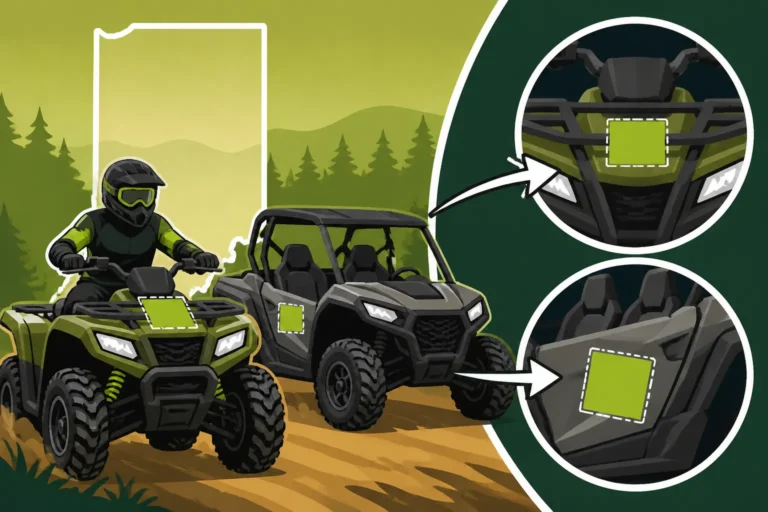
The physical decal that you affix to your ORV is more than just a sticker; it's the primary visual indicator of your machine's current registration status. [The Indiana ORV Decal Explained] often has the expiration month and year clearly printed on it, making it easy for law enforcement or park rangers to quickly verify if your registration is current. This is why proper placement, usually on the front half of the machine, is so important, ensuring it's visible and readable.
This visible decal acts as an immediate check. Imagine a conservation officer at Redbird Off-Road State Recreation Area seeing a machine without a current decal. Their first thought is likely that the ORV isn't legally registered for use. If you're pulled over or checked while riding, the officer will look for this decal and may also ask to see your physical registration certificate. If the decal is missing, expired, or unreadable, it raises immediate questions about your compliance.
Sometimes, decals can get damaged, fade, or even fall off due to mud, brush, or harsh weather conditions. If you find yourself in this situation, you need to act quickly. Riding with a damaged or missing decal is essentially like riding without registration, as its purpose is to clearly display your machine's valid status. Thankfully, replacing a lost or damaged decal is usually a straightforward process through the BMV. [Replacing a Lost Indiana ORV Decal] is a wise step to take to avoid any unnecessary hassle or fines.
Think of your decal as your machine's ID card for public lands. It's a small but mighty piece of plastic that communicates a lot about your ORV's legal standing. Keeping it clean, visible, and ensuring it's current are simple steps that prevent a lot of potential headaches and help you stay on the right side of Indiana's ORV regulations.
What Happens When Your Registration Expires?
An expired ORV registration in Indiana is more than just a minor oversight; it carries real consequences that can quickly turn a fun day of riding into a stressful and expensive ordeal. The moment your registration officially expires, your machine is no longer considered legally registered to operate on public ORV trails, state recreation areas like Interlake, or any county roads that may be open to ORVs. This means you could be subject to fines and penalties if caught.
Riding an ORV with an expired registration is generally treated as a Class C infraction in Indiana. While the exact fine amount can vary depending on the jurisdiction and the discretion of the enforcing officer, a Class C infraction can result in a significant monetary penalty. This is often the primary concern for riders, as nobody wants to face an unexpected financial hit. It's far cheaper and less stressful to simply renew your registration on time.
Beyond the financial penalties, there can be other inconvenient repercussions. If you're pulled over by a conservation officer or local law enforcement and found to have an expired registration, they may not only issue a citation but could also prevent you from continuing your ride. Imagine being halfway through a fantastic day at Redbird, only to be told you have to load your machine back on the trailer because your decal expired last month. It's a frustrating scenario that can easily be avoided. [Riding Redbird on an Expired Decal] is a risk you really don't want to take.
So, what should you do if you realize your registration has expired? The most important thing is to stop riding the machine immediately until you've renewed it. There's no special penalty for renewing late, beyond the fact that you've been riding illegally during the lapsed period. The process to renew an expired registration is generally the same as renewing a current one. Get your paperwork in order, pay the fees, and wait for your new decal to arrive. If you need a temporary proof of ownership or a form to create a new bill of sale for a machine, resources like LawDepot can provide templates for necessary documents, although for state-specific registration, you'll work directly with the BMV.
Penalties for Riding with an Expired Decal
The penalties for riding with an expired ORV decal are designed to encourage compliance and ensure all machines using public lands are properly documented. As mentioned, the primary consequence is a fine, which can add up quickly. A single instance of being caught with an expired registration can cost you much more than the three-year renewal fee itself, making it a costly mistake. [What an Indiana Officer Checks Roadside] always includes that visible decal.
It's also important to understand that ignorance of the law is not an excuse. Claiming you didn't know your registration expired, or that you never received a renewal notice, will likely not absolve you of the fine. The responsibility ultimately falls on the ORV owner to ensure their machine is legally registered. This underscores the importance of those proactive checks of your decal and setting your own reminders.
In some situations, particularly if there are repeated offenses or if the expired registration is combined with other violations, an officer might have the discretion to take further action. While less common for a first offense of expired registration, such actions could theoretically include impounding the vehicle until it's properly registered, though this is usually reserved for more serious infractions. The inconvenience and cost of retrieving an impounded vehicle would far outweigh any registration fees. [Indiana Fines for an Unregistered ORV] are not something to take lightly.
To avoid all of these headaches, make renewal a priority. Set a reminder on your phone or mark it on your calendar several weeks or even a couple of months before your decal's expiration date. This gives you ample time to gather any necessary paperwork, pay the [Indiana ORV Registration Renewal Cost], and wait for your new decal to arrive. Remember, your new decal isn't instantaneous, so plan for the [Indiana ORV Registration Processing Time] to ensure you don't have any downtime when you want to hit the trails. Using a reputable service like LawDepot to draft a comprehensive bill of sale can also streamline your private sale documentation, which can be useful when you’re dealing with the transfer of ownership of an ORV, ensuring all details are correctly recorded for future registration needs.
| Event/Document | Standard Duration/Validity | Key Action/Note |
|---|---|---|
| ORV Registration Decal | 3 Years | Must be renewed before expiration date; expires end of month |
| ORV Title | Indefinite | Proof of ownership, no expiration (for machines 2010+) |
| Bill of Sale (as temporary ride proof) | 45 Days (from purchase) | For new purchases only, while awaiting title/registration |
| Non-Resident Permit | 20 Days (per calendar year) | For out-of-state registered machines, no Indiana registration required |
| Ownership Affidavit | No set duration (for filing) | Used when proving ownership for machines without title |
Considerations for New Purchases and Transfers
When you acquire an ORV, whether it's brand new from a dealer or used from a private seller, the three-year registration clock essentially resets for the new owner. Even if the machine had a year left on its previous registration, that registration doesn't automatically transfer with the change of ownership. You, as the new owner, are responsible for [Registering an ORV in Indiana] in your name, which starts a fresh three-year cycle.
This is a point of confusion for many first-time buyers, especially those new to ORV ownership in Indiana. They might see a current decal on a used machine they just bought and assume they're good to go for the remainder of that decal's life. However, ownership and registration are tied to the individual, not solely the machine itself in this context. The state needs to know who is legally operating the vehicle. To ensure you have all your bases covered when acquiring an ORV, and to have proper records of your transaction, consider using LawDepot for drafting a robust bill of sale or other ownership transfer documents, which can then support your BMV registration application.
The process of getting your new registration and decal after a purchase can take a little time. While you might get a temporary operating permit or simply rely on your bill of sale for a brief period, that temporary status only lasts so long. It's crucial to submit your registration application promptly after acquiring your ORV to avoid any gaps in coverage. Remember, [How Indiana ORV Registration Works] is a system designed for clear accountability of machine ownership and usage.
Therefore, when you purchase a machine, factor in the time and effort required to initiate a new three-year registration. It's part of the overall cost and responsibility of ORV ownership in Indiana. By understanding that a change of ownership restarts the registration clock, you can plan accordingly and ensure your adventures on the trails are always legal and hassle-free.
Disclaimer
This article is for general informational purposes only and does not constitute professional advice. Laws, prices and regulations vary by location and change over time. Consult a qualified professional for guidance on your specific situation.