The Indiana ORV Decal Explained
Okay, let's talk about that little sticker that means so much for your off-road adventures here in Indiana: the ORV decal. It might seem like just a small adhesive, but ignoring it can lead to a lot of headaches, fines, and stalled rides. This guide is all about demystifying the Indiana ORV decal – what it is, why you need it, how to get it, and what to do if it goes missing or expires, so you can hit the trails with confidence and stay on the right side of the law.
What is the Indiana ORV Decal and Why Do You Need One?
For anyone who loves tearing up trails on their ATV, UTV, or dirt bike in the Hoosier State, the Indiana ORV decal is your ticket to ride legally on designated public lands. It's not just a fancy sticker; it's tangible proof that you've fulfilled your registration obligations with the Indiana Bureau of Motor Vehicles (BMV). Many folks get confused about whether they truly need it, especially if they only ride on private land, but understanding its purpose is key to avoiding unnecessary trouble.
More Than Just a Sticker: What the Decal Represents
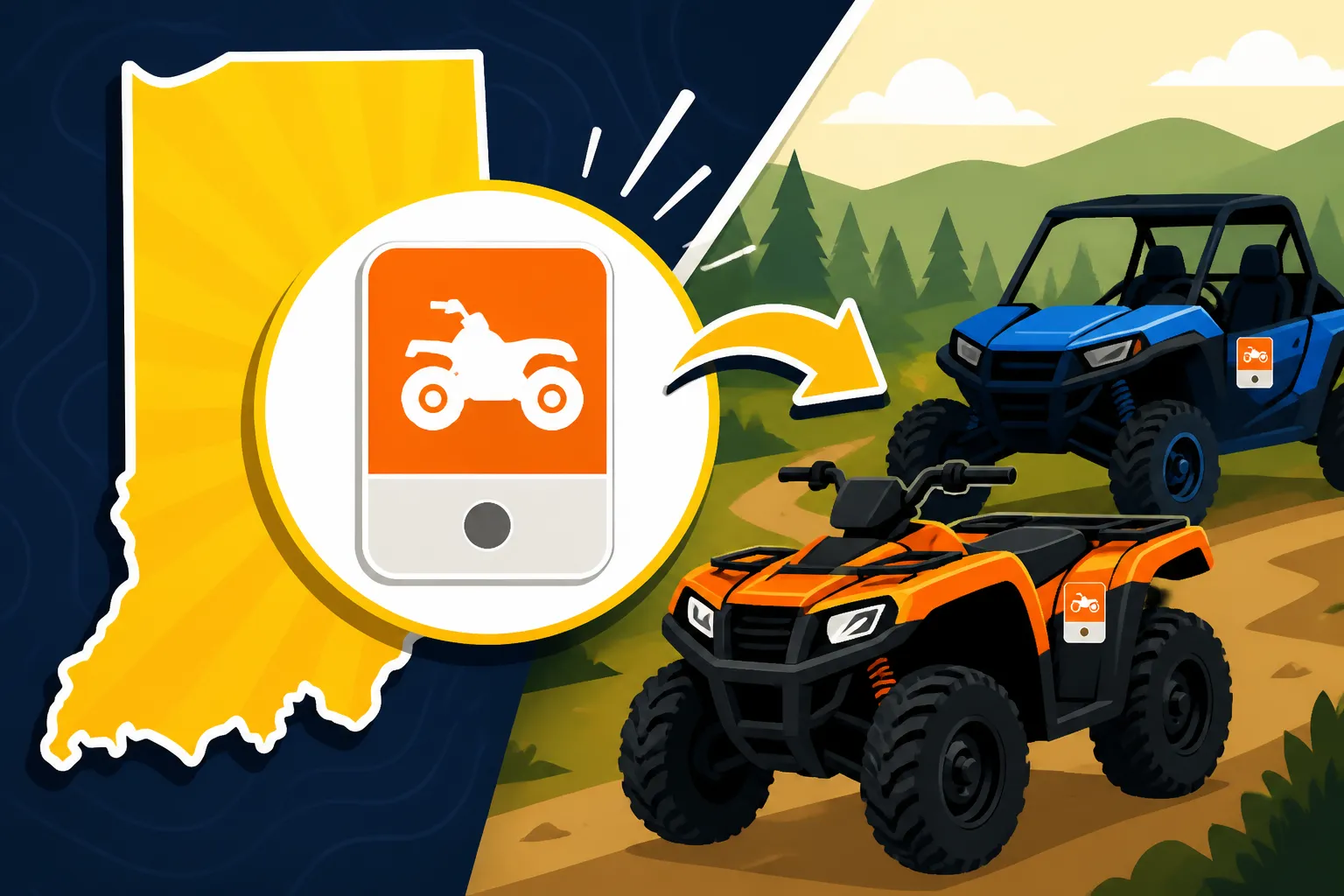
Think of your Indiana ORV decal as the equivalent of a license plate for your off-road machine, but designed specifically for non-highway use. It's a small, square sticker with a unique number, indicating that your off-road vehicle (ORV) has been properly registered with the state. This registration, evidenced by the decal, serves several critical functions. First and foremost, it helps ensure that all ORVs operating in Indiana are accounted for, which is vital for law enforcement and for managing trails. Without this decal, authorities have no easy way to confirm your machine's legal status, leading to potential stops and questions.
Beyond simply identifying your machine, the decal also represents your contribution to Indiana's ORV trail system. The fees collected from ORV registrations directly support the development, maintenance, and operation of our state's fantastic riding areas, like Redbird Off-Road State Recreation Area and Interlake Off-Road State Recreation Area. So, when you slap that decal on your machine, you're not just complying with the law; you're actively helping to preserve and improve the very places you love to ride. It's a tangible link between your personal enjoyment and the broader community of off-road enthusiasts and the public lands we share. This little piece of vinyl is a big deal for keeping our trails in top shape for everyone.
The Legal Necessity: Riding Responsibly in Indiana
The simple truth is, if you plan to ride your ORV on any public land in Indiana – whether it's a state-managed trail, a private park that requires state registration, or even if a county has opened some roads to ORV traffic – you absolutely need a current Indiana ORV decal. There's no getting around it. Riding an unregistered machine on these lands isn't just a minor oversight; it's a Class C ORV infraction, which can carry a significant fine. And let me tell you, those fines can add up quickly, making that registration fee seem like a bargain in comparison.
Beyond public lands, some private parks might also require your machine to be registered with the state, even if they're on private property. They do this to ensure a baseline level of accountability and often to align with state safety initiatives. For instance, if you're planning a weekend trip to places like Badlands Off Road Park or Haspin Acres, while they are private, always check their specific requirements regarding state registration. It's always better to be over-prepared than to be turned away at the gate after a long drive. Keeping your decal current and properly displayed is a fundamental part of responsible ORV ownership and ensures your adventures don't end prematurely with an unexpected ticket. When an Indiana conservation officer stops you on the trail, the first thing they'll look for is that decal.
Getting Your Indiana ORV Decal: The Registration Process
So, you understand why you need the decal. Now, how do you actually get one? The process involves registering your ORV with the Indiana BMV, which means gathering the right paperwork, knowing where to go, and understanding the timeline. It's not overly complicated, but a little preparation goes a long way to make it a smooth experience.
The Paperwork Journey: What You'll Need
Gathering the correct documents is often the trickiest part of any registration process. For your Indiana ORV decal, you'll need several key items. First, you'll need proof of ownership. This usually means your certificate of origin if your machine is new, or a title if it's used and was previously titled. Indiana requires a title for all ORVs purchased after December 31, 2009, so this is a critical document for many owners. If your machine was purchased before that date and never titled, or if you're dealing with a lost title, you might need an ownership affidavit, which can sometimes be drafted using resources like LawDepot.
In addition to proof of ownership, you'll need a completed Indiana ORV registration application form (Form 39534, if you're looking it up). You'll also need proof of your identity, typically a valid Indiana driver's license or state ID card. The BMV will also collect the appropriate registration fees, so make sure you have your payment method ready. If you've just bought a used machine, a well-documented bill of sale is crucial, especially if there's no title involved for older machines. Make sure all your ducks are in a row before heading to the BMV to avoid multiple trips. You can find more details on [Indiana ORV Registration Paperwork].
The BMV's Role: Where to Submit Your Application
Unlike some states where ORV registrations are handled by the Department of Natural Resources (DNR), in Indiana, it's the Bureau of Motor Vehicles (BMV) that manages all ORV registrations and issues those all-important decals. This means you'll need to visit a local Indiana BMV license branch to submit your application and get your process started. While the DNR manages the actual trails and recreational areas, the BMV is the administrative hub for the registration itself. This distinction sometimes confuses new riders, so it's good to keep in mind.
You can't typically get your initial ORV registration or decal at a state park gate or DNR office. It's a BMV operation through and through. So, once you have all your paperwork organized, plan a visit to your nearest license branch. While you're there, they'll process your application, collect your fees, and initiate the mailing of your decal. Don't expect to walk out with the physical decal in hand immediately; there's usually a short wait as they process and mail it out. The folks at the license branch are there to help, so don't hesitate to ask if you have any questions about your specific situation. You can learn more about [The Indiana BMV and Off-Road Vehicles].
The Waiting Game: How Long Until it Arrives
After you've successfully submitted your application and paid your fees at the BMV, the next step is patiently waiting for your decal to arrive in the mail. This isn't an instant gratification process. Typically, you can expect your Indiana ORV decal to arrive within 21 business days from the date of your application. That's about three weeks. It can feel like a long time when you're eager to hit the trails, but it's the standard processing time.
During this waiting period, it's important to understand that you might not be legally allowed to ride on public lands, even if you have your registration receipt. The law generally requires the decal to be physically displayed on your machine. Some might argue that having the receipt shows intent, but a conservation officer needs to see that decal. So, plan your rides accordingly and don't schedule a big trail trip for the weekend immediately after you register. Factor in that three-week window to ensure your decal has plenty of time to arrive and be properly affixed before you head out. You can find more information about [Indiana's Twenty-One Day Wait for a Decal] and [How Long an Indiana Decal Takes to Arrive].
Where Does Your Indiana ORV Decal Go? Placement Rules
Once that precious decal finally arrives in the mail, you can't just slap it anywhere. Indiana has specific rules about where your ORV decal must be placed on your machine. Proper placement ensures that the decal is visible and easily identifiable by law enforcement, and it helps you avoid potential issues or even tickets for improper display.
The "Forward Half": Precise Placement Guidelines
Indiana law is quite specific about where your ORV decal needs to be displayed. It states that the decal must be affixed to the forward half of the ORV in a "conspicuous place." What exactly does "forward half" mean in practical terms? It generally refers to any non-removable component on the front portion of your machine, such as the frame, a-arm, or front bumper. The key is that it needs to be clearly visible and not obscured by mud, accessories, or other parts of the machine.
For an ATV or quad, this often means placing it on the front fender, the front rack support, or a prominent part of the frame near the front. For a side-by-side (UTV), it might go on the front brush guard, the hood, or a visible part of the roll cage up front. The goal is easy visibility. Imagine a conservation officer pulling up alongside your machine; they should be able to spot that decal quickly and easily without having to get off their machine or search for it. If you're ever in doubt, err on the side of over-visibility. This small detail ensures compliance and a smooth experience if you encounter law enforcement on the trails. Learn more about [Where the Indiana Decal Mounts] and [Indiana ORV Decal Placement].
Common Mistakes and How to Avoid Them
Even with clear guidelines, riders sometimes make mistakes when placing their ORV decals. One of the most common errors is placing the decal on a removable part of the machine, such as a toolbox, a temporary cargo bag, or even a windshield that can be easily detached. The law specifies a "non-removable component" precisely because the decal is meant to be permanently associated with that specific ORV. If the decal can be easily taken off or moved to another machine, it defeats its purpose.
Another frequent mistake is placing the decal in an area prone to excessive mud, wear, or damage. While ORVs are designed for rugged terrain, an obscured or illegible decal is as good as no decal at all. Avoid low-lying areas or parts that frequently scrape against brush or rocks. Before you peel and stick, clean the surface thoroughly to ensure good adhesion, and pick a spot that's relatively protected but still highly visible. Think about where it won't get caked in mud during your first puddle run or scuffed up by trail debris. Taking an extra minute to choose the right, clean, and visible spot will save you potential grief down the line. And remember, the forward half means you shouldn't be sticking it on the rear fender or the back of the machine!
What Happens if Your Decal is Lost, Damaged, or Expired?
Life happens. Decals can get ripped off by branches, fade in the sun, disappear during a deep creek crossing, or simply expire. Don't panic if this happens to you, but do take action. Riding with an invalid or missing decal is an open invitation for a ticket.
When Your Decal Disappears: Replacing a Lost Decal
It's a frustrating moment: you're getting ready for a ride, glance at your ORV, and realize your decal is gone! Whether it peeled off, was stolen, or got torn by an errant tree branch, a missing decal needs to be replaced promptly. The good news is that replacing a lost or damaged Indiana ORV decal is a straightforward process through the BMV. You'll typically need to fill out a form for a replacement decal and pay a nominal fee. This usually involves another trip to your local BMV license branch.
While you wait for your replacement to arrive (and yes, there will be another waiting period, usually around that same 21-day mark), you're technically still in a bit of a gray area regarding riding on public lands. Some might carry their replacement receipt, hoping it serves as proof, but it's always safest to have the physical decal displayed. If your decal is damaged but still somewhat legible, try to keep it on until the new one arrives. If it's completely gone, you might have to temporarily pause your public land rides. Always consult the official BMV resources or call your local branch for the most current procedures on replacement decals to ensure you're fully compliant. The cost for a replacement is usually much less than a new registration, but it's still an unexpected expense. You can find more information on [Indiana ORV Decal Replacement Cost].
Keeping it Current: Renewing Your Indiana ORV Registration
Your Indiana ORV registration and its accompanying decal are not forever. They typically last for a three-year period. This means that every three years, you'll need to go through the renewal process to keep your machine legally registered and your decal current. The BMV usually sends out renewal reminders, but it's ultimately your responsibility to track the expiration date. Mark it on your calendar, set a reminder on your phone – whatever it takes!
Renewing is generally simpler than the initial registration. If your information hasn't changed, you might even be able to do it online or by mail, saving you a trip to the BMV. However, if there are changes to your address or ownership, an in-person visit might still be necessary. Ensure you renew before your current decal expires to avoid any lapse in coverage and potential issues if you're stopped. A continuous, up-to-date registration is key to uninterrupted riding fun. For more details on this, check out [Renewing an Indiana ORV Registration] and [Indiana's Three-Year ORV Registration].
The Consequences of an Expired Decal
Riding with an expired Indiana ORV decal is akin to riding with no decal at all in the eyes of the law. It's a clear violation of Indiana's ORV statutes and can lead to significant penalties. A conservation officer or other law enforcement official can issue you a ticket for operating an unregistered (or improperly registered) ORV. As mentioned before, this falls under a Class C ORV infraction.
Beyond the immediate financial penalty, having an expired decal can also complicate things if you're involved in an accident on public land. While Indiana doesn't mandate ORV insurance, riding without a valid registration could potentially impact liability or other legal proceedings. Imagine planning a fun weekend ride at Redbird, only to be stopped at the gate or on the trail and turned around because your decal is out of date. It's a frustrating, entirely avoidable scenario. Make it a habit to check your decal's expiration date annually, just like you would your vehicle's license plate tags, to ensure your off-road adventures remain legal and stress-free. Don't let a lapsed decal ruin your ride. Take a look at [Riding Redbird on an Expired Decal] and [What Riding Without a BMV Decal Costs You].
Understanding the Cost and Duration of Your Indiana ORV Decal
Let's talk numbers and timelines. Knowing what you'll pay and how long your decal is valid helps you budget and plan your riding season without surprises.
Breaking Down the Fees: What You'll Pay
When you go to register your ORV and get that decal, there are a few fees involved. The primary cost is the ORV registration fee itself. Remember, this fee helps fund our state's ORV program, so your money goes towards maintaining and expanding the trails you love. In addition to the registration fee, there might be a small title fee if your machine requires a title and you're getting it processed for the first time or transferring ownership. Sometimes, if you're at a license branch, there might be a nominal service fee on top of the state-mandated charges.
It's always a good idea to check the current fee schedule on the official Indiana BMV website or call your local license branch before you go. Prices can change, and you want to be prepared. Keep in mind that these fees are typically per machine, so if you have multiple ATVs or UTVs, you'll need to register and pay for each one separately. This is a one-time cost for the three-year period, not an annual fee, which makes it quite reasonable when you break it down annually. For specific figures, you'll need to consult the BMV's current rates, but it's a relatively modest investment for three years of legal riding. You can also explore [Indiana ORV Registration Cost].
Three Years of Riding: How Long Your Decal Lasts
One of the great things about Indiana's ORV registration is its duration: your decal is valid for a full three years from the date of registration. This isn't an annual renewal like a car's license plate, which saves you the hassle of yearly paperwork. Once you've registered and received your decal, you're set for a good chunk of time before you need to think about it again. This three-year cycle is consistent for all ORVs registered in the state, regardless of whether it's a brand-new side-by-side or a vintage dirt bike.
This extended validity makes it easier to manage your ORV paperwork, but it also means it's crucial to mark that expiration date prominently. Three years can fly by, and you don't want to inadvertently let your registration lapse. Consider setting a calendar reminder for about two or three months before the expiration date, giving you ample time to receive your renewal notice, gather any necessary documents, and complete the renewal process without feeling rushed. This ensures your riding season won't be interrupted by an expired decal, allowing you to enjoy Indiana's trails for years to come. For more details, see [How Long an Indiana ORV Registration Lasts] and [Renewing Every Three Years in Indiana].
Here's a quick summary table of key decal-related information:
| Aspect | Detail | Important Notes |
|---|---|---|
| Purpose | Proof of ORV registration, funds trail maintenance. | Required for public land use, some private parks. |
| Issuing Authority | Indiana Bureau of Motor Vehicles (BMV). | Not the DNR. Visit a local BMV license branch. |
| Required Documents | Proof of ownership (Title/Certificate of Origin/Bill of Sale/Ownership Affidavit), ID, application form. | For private sales or lost titles, consider using legal document services like LawDepot for affidavits or bills of sale. |
| Placement | Conspicuous place on the forward half of a non-removable component. | Examples: front fender, frame, brush guard. Ensure visibility and avoid easily damaged/removed areas. |
| Processing Time | Approximately 21 business days to arrive by mail. | Plan rides accordingly; physical decal required for legal riding on public lands. |
| Duration | Valid for three years from the date of registration. | Mark your calendar for renewal; BMV usually sends reminders, but it's your responsibility. |
| Renewal | Required every three years. Can often be done online or by mail if no changes. | Ensure timely renewal to avoid lapse in registration and potential fines. |
| Replacement | Needed for lost, stolen, or illegible decals. Processed through BMV, nominal fee. | Another 21-day waiting period; try to keep damaged decal until replacement arrives if still somewhat legible. |
| Consequences of Non-Compliance | Class C ORV infraction, fines, potential impoundment. | Avoid riding on public lands without a valid, properly displayed decal. Costs significantly more than registration. |
Disclaimer
This article is for general informational purposes only and does not constitute professional advice. Laws, prices and regulations vary by location and change over time. Consult a qualified professional for guidance on your specific situation.